A rotator cuff injury can turn simple daily tasks like reaching for a coffee mug, brushing your hair, or putting on a jacket into a painful challenge. The shoulder is the most mobile joint in the human body, but that incredible range of motion comes at a price: it is also one of the most susceptible to injury. Whether you are an athlete or someone dealing with the natural wear and tear of aging, a rotator cuff tear or strain can significantly impact your quality of life.
At Tonic Physio, we focus on restoring function through a comprehensive range of services designed to get you back to your active lifestyle. Understanding the symptoms and the science behind the recovery is the first step toward a pain-free shoulder.
What is the Rotator Cuff?
The rotator cuff isn’t just one muscle; it is a group of four tendons and muscles (the supraspinatus, infraspinatus, teres minor, and subscapularis) that come together to cover the head of the upper arm bone (humerus). Think of it as a “cuff” that holds the arm bone firmly in the shallow shoulder socket. It allows you to lift and rotate your arm while providing the necessary stability to keep the joint centered.
Recognizing the Symptoms
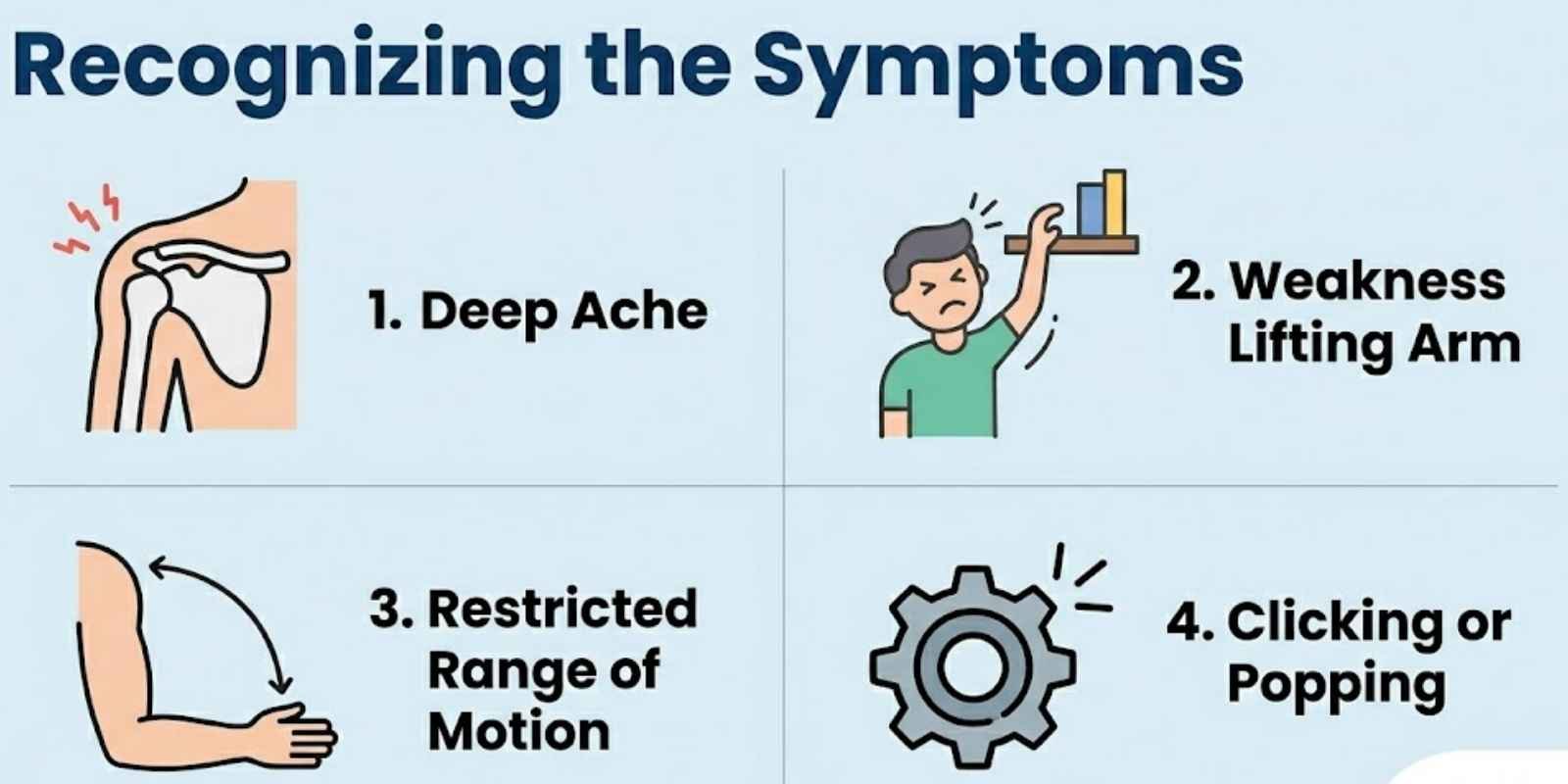
A rotator cuff injury can happen suddenly during a fall or a heavy lift, or it can develop gradually over time. Common symptoms include:
- A Dull, Deep Ache: This is often felt deep within the shoulder, especially when trying to sleep on the affected side.
- Weakness in the Arm: You may find it difficult to lift objects or even hold your arm out to the side.
- Limited Range of Motion: Difficulty reaching behind your back or overhead is a classic sign.
- Clicking or Popping: You might feel or hear a “snapping” sensation when moving your arm in certain directions.
If you are experiencing persistent discomfort, it is often a sign of underlying joint pain and stiffness that needs professional attention to prevent further tearing.
Types of Rotator Cuff Injuries
- Rotator Cuff Tendonitis: This is inflammation of the tendons, often caused by repetitive overhead activities like painting, swimming, or tennis.
- Bursitis: The bursa is a fluid-filled sac that cushions the tendons. When it becomes inflamed, it creates a “pinching” sensation during movement.
- Rotator Cuff Tears: These can be partial (where the tendon is frayed) or full-thickness (where the tendon is completely detached from the bone).
How Physiotherapy Leads the Recovery

The primary goal of physiotherapy for a rotator cuff injury is to restore the “rhythm” of the shoulder joint. If one muscle is injured, others often overcompensate, leading to poor movement patterns and secondary pain.
1. Pain Management and Inflammation Control
In the early stages, we focus on settling the irritation. This may involve manual therapy, ultrasound, or icing protocols. To help release the secondary tension that often develops in the neck and upper back, many patients benefit from registered massage therapy to improve blood flow and reduce muscle guarding.
2. Restoring Range of Motion
Once the sharp pain subsides, we introduce passive and active-assisted stretches. The goal is to ensure the shoulder capsule doesn’t tighten up, a condition known as “frozen shoulder,” which can occur if you stop moving the arm entirely.
3. Progressive Strengthening
This is the most critical phase. We focus on the “scapular stabilizers,” the muscles around your shoulder blade. A stable shoulder blade provides a solid foundation for the rotator cuff to pull against. Strengthening these muscles reduces the load on the injured tendons, allowing them to heal.
4. Functional Retraining
We don’t just want your shoulder to feel better in the clinic; we want it to work in the real world. This involves sport-specific or job-specific drills to ensure your shoulder can handle the demands of your daily life without re-injury.
Preventing Future Shoulder Injuries
Once you’ve recovered, maintenance is key. You can protect your rotator cuff by:
- Practicing Good Posture: Slumping rounds the shoulders forward, which narrows the space for the rotator cuff tendons and increases the risk of “impingement.”
- Balanced Training: Avoid focusing only on “mirror muscles” like the chest; ensure you are also strengthening the muscles in the back of the shoulder.
- Taking Breaks: If your job involves repetitive reaching, take frequent micro-breaks to let the tissues recover.
Conclusion
A rotator cuff injury doesn’t always require surgery, but it does require a dedicated plan. By combining specialized exercises with therapeutic modalities, most people can return to full strength and mobility. If your shoulder is clicking, aching, or feeling weak, don’t wait for a partial tear to become a full one.