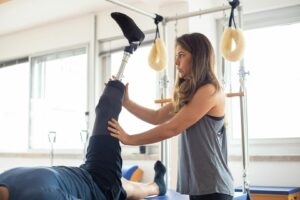
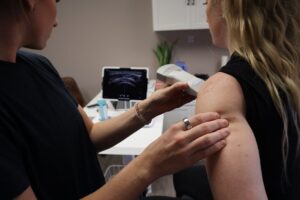
Back pain is more than just a physical sensation. For many residents in Milton, it is a barrier that disrupts sleep, limits productivity and takes the joy out of simple activities like walking through the Conservation Area or playing with children. Most people approach back pain by trying to “manage” it, using heat pads or over-the-counter creams to dull the sensation. But there is a fundamental difference between managing pain and achieving total recovery.
True recovery is the process of restoring the spine’s structural integrity and improving the body’s ability to handle load without triggering a pain response. At Tonic Physio, we view back pain not as a problem to be silenced, but as a signal from the body that a specific system is failing. Whether it is a disc issue, a joint restriction or a muscular imbalance, the goal is to identify the root cause and systematically resolve it.
When we talk about a “Total Recovery” approach, we are moving away from the traditional medical model of symptomatic relief. In the symptomatic model, the goal is to remove the pain. In the recovery model, the goal is to remove the reason for the pain. This requires a sophisticated understanding of the musculoskeletal system, the nervous system’s role in pain perception, and the specific biomechanical demands of your daily life in Milton.
The Anatomy of Spinal Failure: Understanding the Mechanics of Back Pain
The human spine is a complex assembly of vertebrae, intervertebral discs, ligaments, and muscles. When we talk about back pain, we are usually discussing a failure in one of these components. The lumbar spine, particularly the L4-L5 and L5-S1 segments, bears the brunt of our daily weight and is the most common site of injury. These segments are the pivot points of the lower body; they must be stable enough to support the torso but mobile enough to allow for bending and twisting.
A herniated disc occurs when the soft center of a spinal disc, known as the nucleus pulposus, pushes through a crack in the tougher exterior, the annulus fibrosus. This doesn’t just cause local pain: it can put direct pressure on the spinal nerve roots. This is where sciatica enters the picture. When the L5 or S1 nerve roots are compressed, pain radiates down the leg, often accompanied by tingling or numbness. This is why a focused sciatica treatment in Milton is critical: you cannot treat the leg pain without addressing the disc failure in the lower back.
Facet joint dysfunction is another primary driver of back pain. These are the small joints at the back of the spine that guide and limit movement. When these joints become restricted or inflamed, often due to poor posture or sudden twisting movements, the resulting stiffness can be debilitating. This restriction often forces the body to compensate by overusing other muscles, which leads to the same cycle of pain and stiffness.
Muscle strain is perhaps the most common form of back pain, but it is often the most misunderstood. This happens when the fibers of the erector spinae or quadratus lumborum muscles are overstretched or torn. While less severe than a disc herniation, chronic muscle strain can lead to significant stiffness and limit your range of motion. Over time, this puts more stress on the spinal joints, eventually causing the structural issues we see in more advanced cases. The key to recovery here is not just resting the muscle, but retraining it to fire in the correct sequence.
Acute vs. Chronic: Identifying Your Stage of Pain
Understanding whether your pain is acute or chronic changes the entire approach to recovery. Acute pain is typically the result of a specific event, such as lifting a heavy box incorrectly, a sudden fall, or a sports injury. This pain is often sharp, intense and localized. The primary goal in the acute phase is to calm the nervous system and reduce inflammation without immobilizing the patient completely. Total bed rest is an outdated concept: the modern approach is “relative rest” combined with gentle movement to maintain joint lubrication.
Chronic pain is a different beast. It is a persistent ache that lasts longer than three months. In many cases, chronic back pain is no longer just about tissue damage: it is about “central sensitization.” This is a process where the brain and spinal cord become hyper-aware of pain signals. The nervous system becomes “wound up,” meaning it perceives threat even when the original tissue injury has healed. This is why some patients still feel pain even after their MRI shows the disc has healed.
Recovery for chronic pain requires a shift in focus toward movement re-education and desensitization. We use a combination of manual therapy and guided activity to tell the brain that the body is safe to move. If you are unsure which category your pain falls into, a professional assessment is the only way to know. Using a combination of orthopedic testing and movement screens, we can determine if your pain is coming from a structural issue or a functional imbalance.
The 4-Step Path to Total Recovery: A Clinical Blueprint
Recovery is not linear. It is a systematic progression that requires patience and precision. At Tonic Physio, we follow a specific clinical pathway to ensure safety, efficacy and long-term resilience. We do not jump to strengthening if the joint is still locked, and we do not stop at pain relief if the muscle is still weak.
Step 1: The Assessment and Decompression. We start by identifying the “pain trigger.” If a patient has a disc bulge, we use specific positions and manual techniques to create space in the joint and reduce nerve pressure. This is the “decompression” phase. The goal is to reduce the immediate “threat” perceived by the brain. Once the pressure on the nerve is relieved, the inflammatory response settles, and we can begin moving the joint.
Step 2: Mobilization and Nerve Glide. Once the acute pain is managed, we focus on moving the joints through their natural range of motion. Using manual therapy, we glide the joints to break down adhesions and restore fluidity. We also implement nerve gliding exercises. Imagine the sciatic nerve as a string in a tube: if the tube is tight or the string is stuck, movement hurts. Nerve gliding ensures the nerve can slide freely through the spinal canal without being pinched.
Step 3: Progressive Loading. You cannot protect a back by keeping it still. The goal is to introduce “safe loads.” We start with isometric holds, where the muscle contracts without moving the joint. We then move toward functional movements. This rebuilds the strength of the multifidus and transverse abdominis muscles. These deep stabilizers act as a natural brace for the spine, taking the pressure off the discs and joints.
Step 4: Functional Integration. The final stage is returning the patient to their specific life demands. Whether you are an athlete, a parent or a corporate professional in Milton, we tailor the final exercises to your daily movements. If you spend 8 hours a day at a desk, your recovery plan must include desk-specific ergonomics and movement breaks. This ensures you can handle the stresses of your environment without regressing back into pain.
Physiotherapy vs. Manual Osteopathy vs. Chiropractic: Which Logic Fits Your Pain?
Patients in Milton often ask whether they should see a chiropractor or a physiotherapist for back pain. The answer depends on the intended logic of the treatment. These are not competing services, but different tools in the recovery toolbox.
Chiropractic care often focuses on high-velocity manipulations to “align” the spine. This can be very effective for short-term relief of joint restriction and providing a quick “reset” to the nervous system. However, manipulation alone does not address the muscular imbalances that caused the misalignment in the first place.
Physiotherapy takes a broader, more rehabilitative approach. We focus on the entire movement chain. If you have lower back pain, we check your hip mobility and ankle stability, because a stiff hip often forces the lower back to over-rotate. This is why physiotherapy in Milton is the foundation of long-term recovery: it focuses on a sustainable change in how the body moves.
Manual Osteopathy, as practiced at Tonic Physio, bridges the gap. It is a holistic approach that looks at the relationship between the musculoskeletal system and the body’s overall function. We use joint mobilizations, myofascial release and muscle energy techniques. The goal is to restore the balance of fluids and tissues. For those dealing with disc issues or chronic nerve pain, the gentle, mobilization-based approach of manual osteopathy is often safer and more effective than high-velocity thrusts.
Advanced Recovery: Breaking Plateaus with Shockwave Therapy and Bracing
Sometimes, standard exercises and manual therapy hit a plateau. This is where advanced technology comes into play to trigger a new healing response.
Shockwave therapy uses high-energy acoustic pulses to create micro-trauma in chronic tendon or muscle areas. This sounds counterintuitive, but this controlled trauma triggers a massive increase in blood flow and breaks down calcifications. For patients with chronic lower back stiffness or “frozen” fascia, shockwave therapy can provide the breakthrough needed to start moving again. It effectively “reboots” the healing process in tissues that have become stagnant.
In some cases, temporary support is necessary to protect a healing injury. Custom and OTC bracing provides external stability to the lumbar region, preventing excessive rotation or flexion during the early stages of recovery. When paired with a strengthening program, bracing allows the patient to remain active while the deeper tissues heal. The danger is over-reliance: we use bracing as a bridge to strength, not as a replacement for it.
Recovery Timelines: What to Expect in Milton
A common frustration for patients is the lack of a clear timeline. While every body is different, most back pain recovery follows a general pattern. Knowing this helps patients stay committed during the slower phases of rehab.
The First Two Weeks: The Pain Control Phase. The focus is on reducing the “threat” signal. You should expect a reduction in sharp pain and an improvement in your ability to sleep. You will likely be given 2-3 gentle movements to prevent stiffness. The goal here is not strength, but the reduction of inflammation.
Weeks Three to Six: The Mobility Phase. You will notice an increase in your range of motion. You can likely sit for longer periods and begin walking longer distances. This is the time when manual therapy is most effective at restoring joint glide. We move from “pain control” to “movement restoration.”
Months Two to Four: The Strength and Stability Phase. The focus shifts to the gym or the clinic floor. Your goal is to build a “resilient back.” We introduce progressive loads, ensuring the core and posterior chain can support the spine during heavy activity. By the end of this phase, you should be able to return to 90% of your normal activities.
Long Term: Maintenance. Recovery doesn’t end when the pain stops. A monthly check-in or a dedicated home exercise routine ensures that the imbalances that caused the pain in the first place do not return. This is the transition from “patient” to “person in charge of their health.”
Preventing the “Pain-Rest-Pain” Cycle: Long-Term Health and Wellness
The tragedy of back pain is its tendency to return. Most patients fall into the “Pain-Rest-Pain” cycle: they feel pain, they stop moving, their muscles weaken, and the pain returns as soon as they try to be active again. This cycle is driven by fear-avoidance behavior, where the brain associates movement with danger.
Breaking this cycle requires a commitment to movement. This includes simple changes like using a standing desk, taking short walking breaks every 30 minutes and practicing “spinal hygiene.” Spinal hygiene means moving your spine through its full range of motion daily, even when you don’t feel pain. It is like brushing your teeth: you do it to prevent the problem, not just to fix it.
Integrating registered massage therapy into your routine can also prevent re-injury. Massage helps manage the tension in the hips and glutes, which often pull on the lower back. By keeping the entire pelvic region mobile, you reduce the mechanical stress on your lumbar discs. A body that is mobile and balanced is a body that resists injury.
Frequently Asked Questions About Back Pain Recovery
How do I know if my back pain is a disc issue or a muscle strain?
Muscle strains usually feel like a dull ache or stiffness and are often tender to the touch. Disc issues, however, often involve “radicular” pain, meaning the pain travels down the leg (sciatica) and may be accompanied by tingling or numbness. While these descriptions help, a professional assessment is required for a definitive diagnosis.
Can I exercise while I have back pain?
Yes, but the type of exercise matters. In the acute phase, “exercise” means gentle movement to avoid stiffness. In the recovery phase, it means targeted strengthening. You should avoid high-impact activities or heavy lifting until your therapist has cleared you. The goal is to move without triggering a pain response.
How many sessions of physiotherapy will I need?
It depends on the severity of the injury. Acute strains may resolve in 4-6 sessions, while chronic disc issues or post-surgical recovery can take several months of consistent work. We provide a detailed plan after your first assessment so there are no surprises.
Does manual osteopathy actually help with back pain?
Yes. Manual osteopathy focuses on the relationship between the musculoskeletal system and the body’s overall function. It is excellent for reducing joint restrictions and improving the flow of fluids around the spine, which accelerates the natural healing process.
Is shockwave therapy painful?
Shockwave therapy can be intense, as it delivers high-energy pulses to the tissue. However, the intensity is adjustable, and most patients find that the long-term reduction in chronic pain far outweighs the temporary discomfort during the treatment.
Conclusion: Take the First Step Toward a Pain-Free Life
Recovering from back pain is not about a magic cure: it is about a logical, staged process of rehabilitation. From the first assessment to the final strength test, the goal is to move you from a state of fragility to a state of resilience. Whether you are battling sciatica, a herniated disc, or chronic stiffness, the path to recovery is the same: proper diagnosis, systematic mobilization, and progressive loading.
If you are tired of managing your symptoms and are ready for a real solution, a consultation is the best way to start. Our team in Milton is here to help you map out your recovery and get you back to the activities you love.
Book a consultation today to see how our blended approach to physiotherapy and manual osteopathy can help you regain your mobility and live without the fear of back pain.