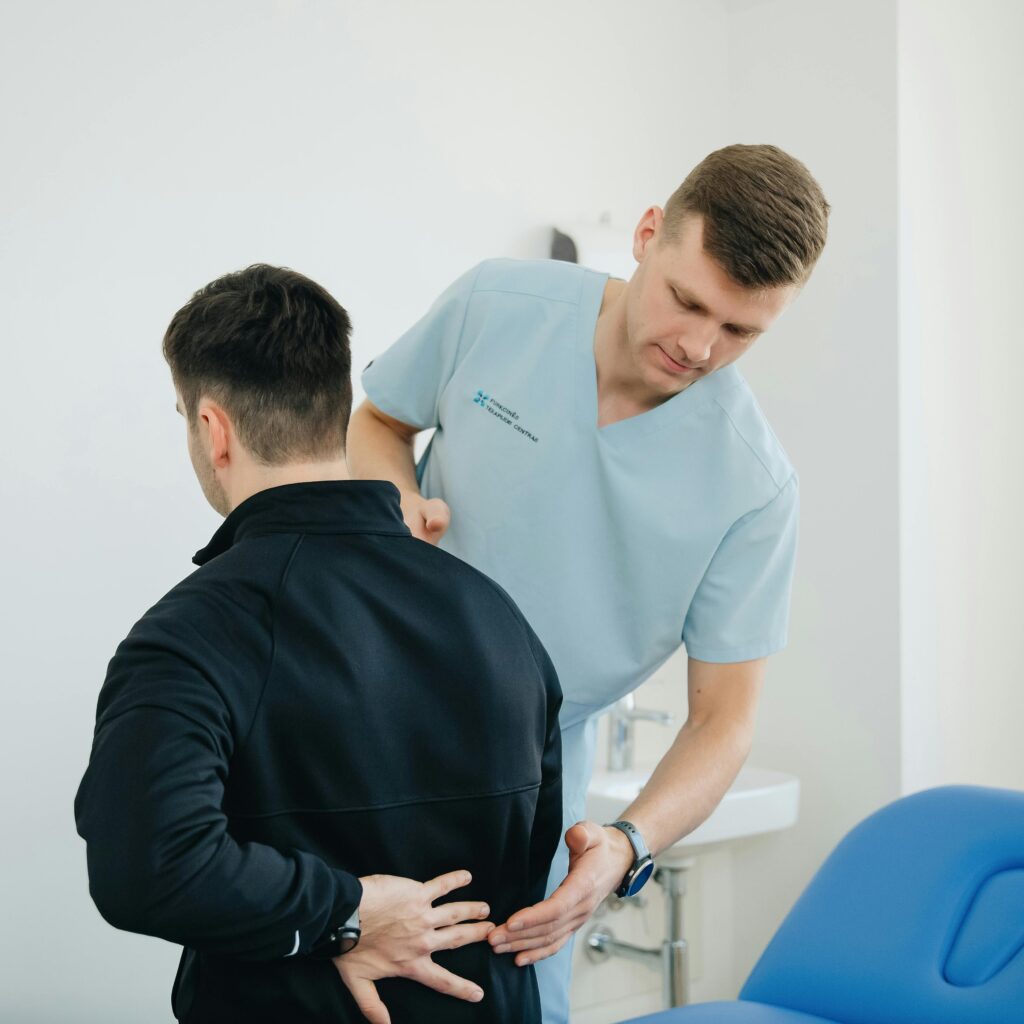
Back pain, especially low back pain, is very common. It can disrupt sleep, work and everyday activities. It often improves within a few weeks, but it can sometimes last longer or keep coming back. This guide covers common causes, what recovery usually involves, the warning signs that need urgent care, and how physiotherapy can help.
Key takeaway: Staying active and continuing normal activities is usually recommended. Exercise is the core of treatment for back pain that needs more support, and hands-on treatment is used only alongside exercise. A few symptoms need urgent medical care.
Common Causes of Back Pain
It is not always obvious what causes back pain, and it often gets better on its own. A common cause is an injury such as a pulled muscle (strain). Sometimes a medical condition, such as a slipped disc, sciatica or ankylosing spondylitis, is involved. Very rarely, back pain is a sign of something serious, such as a broken bone, cancer or an infection.
Sciatica is caused by a trapped nerve. Read about how we treat sciatica.
Acute and Chronic Back Pain
Back pain lasting less than three months is usually called acute, and pain lasting three months or longer is called chronic. The intensity of chronic pain can go up and down over time. Your assessment helps decide how much support you need.
What Recovery Usually Involves
Stay Active
Try to continue with your daily activities, and avoid staying in bed for long periods. Advice and information to help you manage your own back pain are part of care at every stage.
Exercise
For back pain that needs more support, an exercise program is a core part of treatment. The type of exercise is chosen to suit your needs, preferences and abilities. Walking, swimming, yoga and pilates may also help.
Hands-On Treatment
Manual therapy, such as mobilisation, manipulation or massage, may be considered, but only as part of a treatment package that includes exercise. At Tonic, this can include physiotherapy, manual osteopathy or registered massage therapy alongside your exercise plan.
Returning to Work and Normal Activities
Getting back to work and your normal routine is part of recovery, and your physiotherapist can help you plan it. Learn more about physiotherapy for back and neck pain and our orthopedic physiotherapy.
What Is Not Recommended
UK guidance on low back pain advises against belts or corsets, foot orthotics, rocker sole shoes, traction, acupuncture, ultrasound and TENS for managing low back pain. Routine imaging is not usually needed, and is considered in specialist care only if the result is likely to change management.
Other Options Your Physiotherapist May Discuss
UK guidance on low back pain does not include shockwave among its recommended treatments. If you have another condition alongside your back pain, your physiotherapist can explain whether shockwave suits your condition. Your physiotherapist will recommend the number of sessions after your assessment.
If you have not been assessed by a Tonic physiotherapist before, your first visit is a 30 minute Shockwave Initial Assessment for $120. Follow-up visits are $90 for 15 minutes, or $125 for 45 mins shockwave therapy.
Shockwave is not used over a pregnancy in the treatment field, a tumour or malignancy at the site, or a pacemaker or similar device in the field. Tell us first about bleeding or clotting disorders, blood thinners, thrombosis, infection or wounds at the site, or a recent cortisone injection to the area. Your physiotherapist decides timing and suitability under clinic policy.
Pain Relief
Anti-inflammatory medicine such as ibuprofen may help some people, but it is not suitable for everyone. Paracetamol on its own is not recommended for back pain. Check with a pharmacist or doctor about what suits you. Ice or heat packs, wrapped in a towel, can also ease pain or stiffness.
When to Get Urgent Care
Call 911 or go to the emergency department if you have back pain with any of these: pain, tingling, weakness or numbness in both legs; loss of feeling around your genitals or bottom; changes in your bladder or bowels, such as difficulty peeing or losing control; changes in sexual sensation or function; chest pain; or pain that started after a serious accident, such as a car crash.
Get same-day medical care if you feel hot, cold, shivery or generally unwell, or if the pain is severe, starts suddenly or is getting worse quickly.
See a doctor if your back pain does not improve after a few weeks, stops your day-to-day activities, is worse at night, is worse when sneezing or coughing, comes with weight loss you cannot explain, or if there is a lump, swelling or change in the shape of your back.
Insurance and Booking
Physiotherapy is often covered by extended health plans. Direct billing may be available depending on your insurer and plan; confirm coverage before you book.
Tonic Physio is at 100 Nipissing Rd #5, Milton. Call (905) 878-7775 or use our contact page to book an assessment. You can also read our lower back pain guide.
Frequently Asked Questions
Should I rest in bed?
No. Try to stay active and continue your daily activities. Staying in bed for long periods is not recommended.
Do I need an X-ray or MRI?
Usually not. Imaging is not routinely needed for low back pain, and is considered in specialist care only if the result is likely to change your treatment.
Can I exercise with back pain?
Usually, yes. Exercise is a core part of treatment. Stop any exercise that makes your pain worse and ask your physiotherapist or doctor for advice.
How many physiotherapy sessions will I need?
It depends on your back pain and goals. Your physiotherapist gives you a plan after your assessment and reviews it as you go.
Is a back brace a good idea?
Belts and corsets are not recommended for managing low back pain.