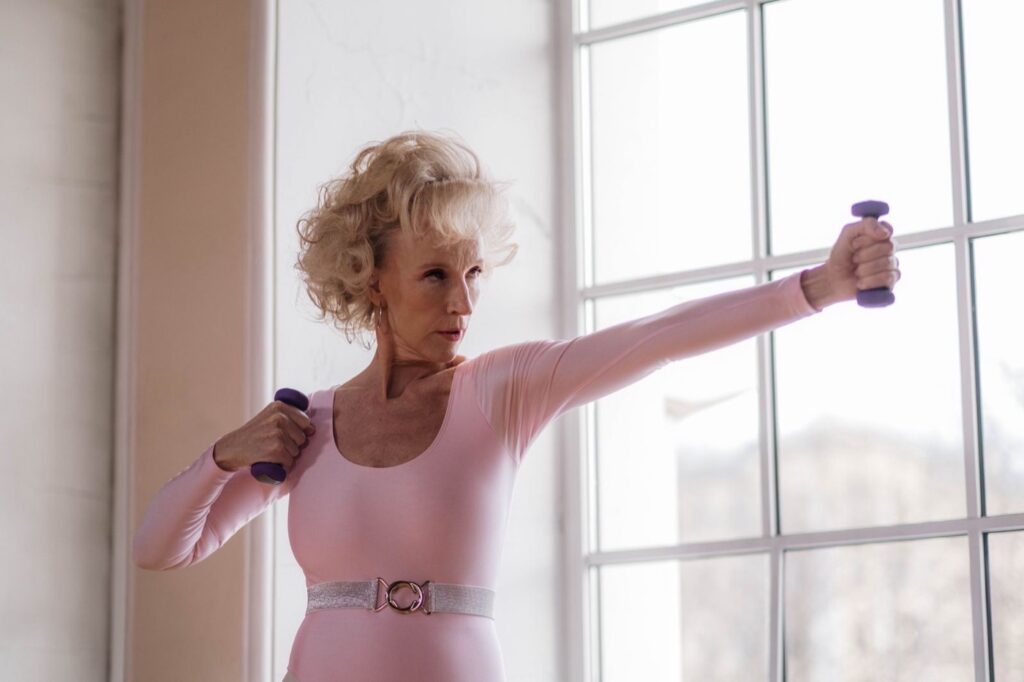
The best exercises for bone health combine weight bearing activity such as brisk walking with strength training and balance work. Aim to move most days, load your muscles at least twice a week and practise balance often. If you have osteoporosis or a past fracture, check with your doctor before you begin, then build up slowly.
Key Takeaway: An international expert panel strongly recommends a program that mixes resistance and balance training for people with osteoporosis, rather than walking alone. Start gently, avoid deep forward bending and twisting with load if you have fragile bones, and ask a physiotherapist to tailor the program to you.
What are weight bearing exercises for osteoporosis?
Weight bearing exercises are activities you do on your feet that make your bones and muscles work against gravity. Walking, climbing stairs and dancing are common examples. The NHS advises regular exercise that includes weight bearing, strengthening and balance exercises to keep bones strong.
Weight bearing versus non-weight bearing
In weight bearing exercise, your skeleton carries your body weight. In swimming and cycling, water or the bike supports you. Those activities are excellent for heart health and joints, but they place less load on the bones, so they work best alongside weight bearing and strength work.
Why bone loading matters
Bone responds to the forces placed on it. Muscle pulling on bone during lifting and walking signals the body to keep bone strong.
Exercise does not replace medicines when your doctor prescribes them, but it is part of the plan. The 2023 Canadian osteoporosis guideline calls exercise, nutrition and medicines the key parts of fracture prevention.
Who this guide is for
This guide suits adults who want to protect bone health, including people with low bone density or a diagnosis of osteoporosis. It is general information, not a prescription. If you have had a spine fracture, a recent break or severe pain, ask your doctor what is safe before you start.
Which types of exercise help bone health?
A good program uses more than one type of exercise, because each does a different job. Think of three groups: weight bearing activity, muscle strengthening and balance training. The table shows how they fit together.
| Type | Examples | What it does |
|---|---|---|
| Weight bearing | Brisk walking, stairs, dancing, low-impact aerobics | Loads the legs, hips and spine with body weight |
| Strength training | Sit-to-stand, band rows, wall push-ups, heel raises | Builds muscle that pulls on bone and supports posture |
| Balance training | Tandem stand, single-leg stand with support, tai chi | Lowers fall risk, which is where most fractures begin |
| Non-weight bearing | Swimming, cycling | Supports fitness and joints; less direct bone loading |
What the expert panel recommends
The Too Fit To Fracture exercise recommendations strongly recommend a multicomponent program including resistance and balance training for people with osteoporosis. The panel advises against doing aerobic training to the exclusion of resistance or balance work. The authors note that the recommendations are conditional and that there are few trials in people with spine fractures.
Why falls matter most
The same panel found that the evidence for exercise is strongest for reducing falls. That matters because many fractures in people with osteoporosis follow a fall. Balance and leg strength therefore deserve as much attention as bone-loading exercises.
How can you start weight bearing exercise safely?
Start where you are and increase gradually. A small, steady routine is more helpful than a big effort that leaves you sore or hurt. These steps suit many healthy adults, and your own limits may differ.
Walking and stairs
Walk at a pace that makes you slightly breathless but still able to talk. Begin with 10 to 15 minutes and build toward 30 minutes most days as comfortable. When ice makes outdoors risky in Milton winters, walk indoors at a mall or on a safe treadmill, and use stairs with a rail.
Low-impact activity you may enjoy
Dancing, tai chi, low-impact classes and gardening all load the body in gentle ways. Choose something you like because you will keep doing it. Higher-impact activity such as jogging or jumping may be suitable for some people but not for those with fragile bones, so ask first.
Warming up and cooling down
Spend five minutes on easy walking and gentle joint movements before you begin. Finish with slower movement and easy breathing. A warm-up gets muscles and joints ready, and it lowers the chance of a strain.
What strength exercises build and protect bone?
Strength training gives muscles a reason to pull on bone and helps you stand tall. Two sessions a week on non-consecutive days is a useful target, as the guidelines for older Canadians support regular muscle-strengthening. Use a firm chair, a wall or a kitchen counter for support.
A starter strength routine
- Sit-to-stand from a firm chair: 2 sets of 8 to 10
- Wall push-ups: 2 sets of 8 to 10
- Resistance band row: 2 sets of 10 to 12
- Heel raises holding a counter: 2 sets of 10
- Standing side leg raise holding a counter: 2 sets of 8 per side
Rest for a minute between sets. Move slowly, breathe out on the effort and stop if you feel sharp pain.
How to progress
When the last few repetitions feel easy, add a few repetitions, a stronger band or a light weight. Change only one thing at a time. A mild muscle ache the next day is expected, but sharp joint pain or back pain is a sign to stop and ask for advice.
Posture and upper back strength
Gentle exercises for the upper back, such as shoulder blade squeezes and standing wall slides, help you hold a taller posture. Stronger back muscles can make daily tasks more comfortable. Do these without forcing the motion, and stay within a pain-free range.
How does balance training prevent falls?
Balance training teaches your body to react quickly and stay steady, which lowers the chance of falling and breaking a bone. Practise a few minutes most days. Stand next to a counter or sturdy chair so that you can steady yourself.
Simple balance exercises
- Feet together stand: hold for 30 seconds, 2 times
- Tandem stand, heel to toe: hold for 20 to 30 seconds per side
- Single-leg stand with fingertip support: hold for 10 to 20 seconds per side
- Heel-to-toe walking along a hallway: 10 steps, 3 times
Other ways to challenge balance
Tai chi, balance classes and dance steps train balance in a fun way. The Canadian movement guidelines for adults 65 and over link regular physical activity with fewer falls and fall-related injuries and better bone health. Our guide to geriatric physiotherapy explains how we build balance programs.
Making your home safer
Remove loose rugs, add night lights, keep steps clear and use non-slip mats in the bath. Wear shoes with a good grip indoors and out. The NHS also suggests careful moving and lifting to reduce strain on the body.
What does a week of bone-friendly exercise look like?
A weekly plan turns good intentions into habits. The sample below is general, and it assumes you have your doctor’s go-ahead. Adjust the days to suit your routine and how you feel.
A sample week
- Monday: 20 to 30 minutes of walking, plus 5 minutes of balance work
- Tuesday: strength routine, plus a short walk
- Wednesday: easy activity such as tai chi or gentle dancing
- Thursday: strength routine, plus 5 minutes of balance work
- Friday: 20 to 30 minutes of walking
- Weekend: one longer, enjoyable activity and a rest day
Keeping it going in winter
Ice and cold are the main reasons people stop walking from November to March. Choose indoor options such as mall walking, home strength work or a seniors’ class, and wear boots with deep tread on any outdoor days. Skip walks when the ground is glazed with ice.
Food and habits that support bone
The NHS suggests eating foods that are high in calcium, getting enough vitamin D from sunlight in summer and a supplement in winter if your doctor advises it, and eating a balanced diet with enough protein. It also advises against smoking and drinking too much alcohol. Ask your doctor before starting any supplement.
Tracking your progress
Write down how long you walk, how many repetitions you do and how long you can hold a balance position. Small gains over weeks show that the plan is working. Share these notes with your physiotherapist so that the program can progress at the right pace.
A calendar on the fridge works well for this. Tick each day you complete a session, and mark any days you felt unwell or unsteady. After a month, the pattern shows whether you are doing enough, and it gives you a clear and encouraging record to talk through with your care team.
Which movements should you take care with if you have osteoporosis?
Some movements place extra stress on fragile bones, especially in the spine. If you have osteoporosis, a spine fracture or very low bone density, ask your doctor or physiotherapist which movements to avoid. Exercises should be personal.
Forward bending and twisting
Many osteoporosis programs advise caution with deep forward bending of the spine and with twisting, particularly when you are loading or lifting. Hinge at the hips instead of rounding your back, and keep objects close to your body. Sit-ups and toe touches are common movements to review.
High-impact and heavy lifting
Jumping, running and heavy lifting add impact and load. These can be appropriate for some people with strong bones and good technique, but they are not right for everyone. Build up carefully and get guidance first.
Pain after exercise
Mild muscle soreness is normal. New or sudden back pain after a small strain or fall, however, needs a doctor’s attention, because it can signal a spine fracture. Do not push through pain, and note when it started.
When should you see a doctor or go to emergency?
The NHS advises seeing a doctor if you have back pain that is not getting better after a few weeks, a spine that becomes curved or hunched, or concerns about your risk. Bone loss often has no symptoms until a bone breaks, so talk with your doctor about risk and testing.
Urgent signs
Get urgent medical advice if pain after a fall or injury is not improving. Call 911 or go to emergency for severe pain after a fall, a limb that looks out of shape, inability to stand, loss of bladder or bowel control, or new weakness or numbness. In Ontario, Health811 (8-1-1) can advise where to go.
Exercise and osteoporosis medicines
Exercise works alongside osteoporosis medicines and does not replace them. If your doctor has prescribed a medicine, keep taking it as directed and tell your physiotherapist what you take. Never stop or change a medicine because you have started exercising.
Ask your doctor if any side effects, such as dizziness, are affecting your balance. Report new symptoms early, because a small change in medicine or timing can sometimes help. Your physiotherapist can also watch for balance changes during sessions.
Talking with your doctor about bone health
Ask whether you should have a bone density scan, how your risk is assessed and whether you need vitamin D, calcium or medicines. Osteoporosis Canada offers patient information on its website. Bring a list of your medicines and past fractures to your visit.
How can physiotherapy in Milton help with bone health?
A physiotherapist turns general advice into a safe, progressive plan. They test your strength, balance and movement, choose exercises that suit your bones and health, and show you the right technique. At Tonic Physio, our geriatric physiotherapy service includes bone health and fall prevention.
What an assessment includes
We ask about your bone density results, past fractures, medicines and goals. We then test balance, leg strength, posture and walking, and explain what we find in plain words. If something needs a doctor, we tell you and help with the next step.
Ongoing support
We progress your exercises as you get stronger, check technique and adjust the plan if pain or health changes. Our post on gentle osteopathy for seniors describes another hands-on option. Extended health plans often cover physiotherapy, and plans vary.
Booking
If you would like a bone-friendly exercise plan that feels safe, you can book an assessment online and we will build one with you.