
Who Delivers Spinal Decompression at Tonic Physio
Spinal decompression at Tonic is offered by our physiotherapists and our chiropractor. You can read about each clinician’s training on our team page and learn more about our chiropractic care.
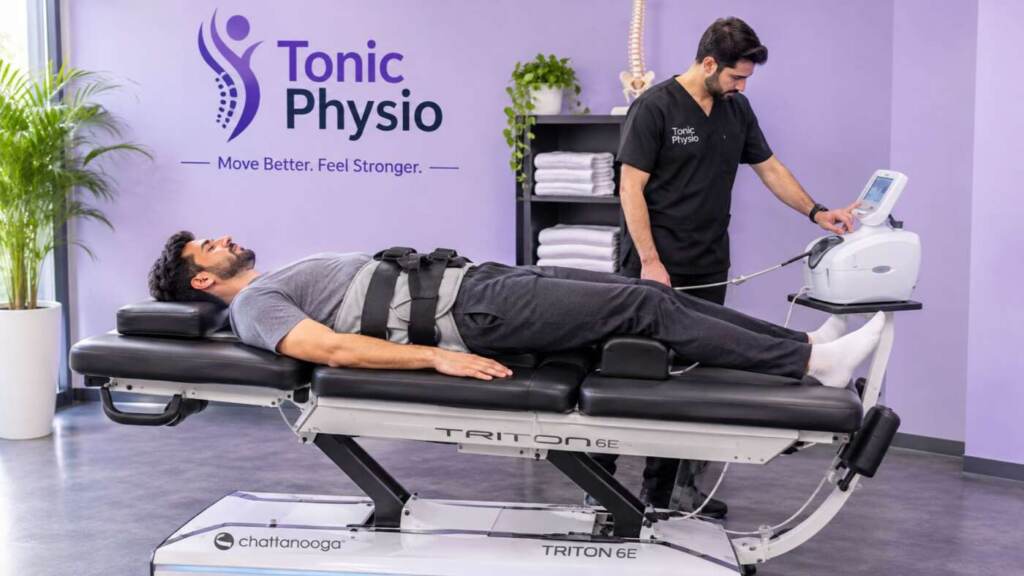
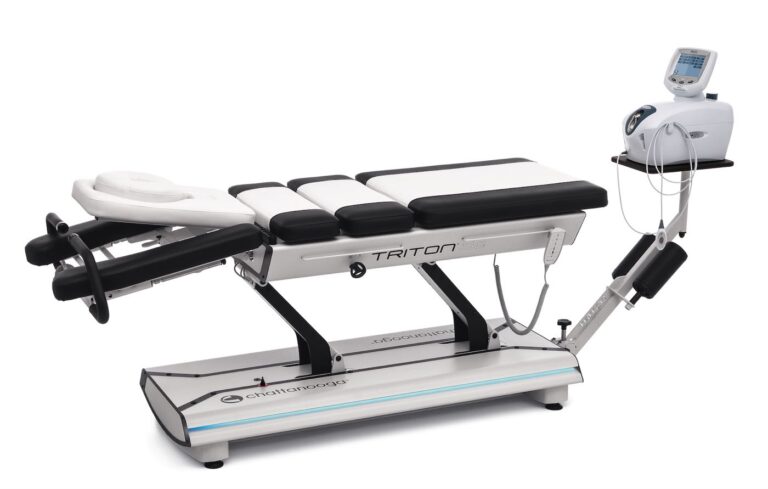
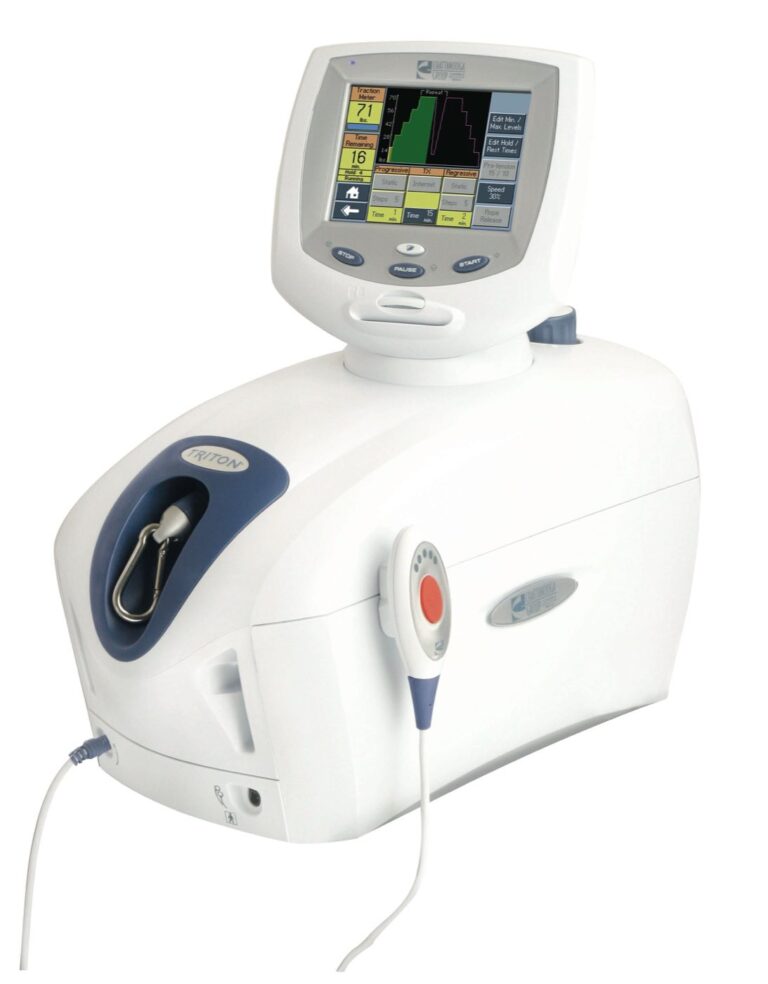
We added spinal decompression to the clinic in 2026 and use a Chattanooga Triton 6E traction table. The table is in two sections: a computer-controlled traction unit on a stand at the foot of the table gently pulls on the lower section, and your clinician sets and adjusts the pull. The manufacturer describes the Triton system as able to give lumbar (lower back) and cervical (neck) traction in static, intermittent or cycling patterns. Your clinician chooses the setup that suits you.
Treatment starts with an assessment. Traction is one tool inside a care plan that usually includes exercise and advice, not a stand-alone fix.
Is Spinal Decompression Right for You?
It may be worth trying when back or neck pain has lasted for weeks and your clinician thinks gentle traction could help alongside exercise. People we may consider it for include:
- Low back pain that spreads into the buttock or leg (sciatica).
- Back or neck pain linked to a bulging or herniated disc.
- Ongoing stiff, aching low back or neck pain.
- Neck pain with arm pain, tingling or numbness, or neck stiffness from wear and tear.
- Pain that has not settled with exercise and hands-on care alone, where your clinician decides traction is worth a trial.
For more on these conditions, see our pages on sciatica treatment, herniated disc treatment, back and neck pain and cervical spondylosis, or read about spinal traction for sciatica.
The evidence is mixed. A Cochrane review found that traction, alone or added to other treatments, has little or no effect on low back pain with or without sciatica, and UK NICE guidance advises against offering traction for low back pain. A 2023 review of trials found short-term pain relief in some studies, but the evidence quality was low. Some people do find it helpful, which is why we use it as a trial inside a wider plan and review your progress as you go. If it is not helping, your clinician changes the plan. See how the research and mechanics of spinal decompression are explained in our guide, or read about the Triton 6E table.
What Happens at Your Spinal Decompression Visit
Your clinician asks about your health, medicines and symptoms, examines your back or neck, and checks that traction is safe for you. Before treatment, they explain the expected benefits, risks, alternatives and what may happen without treatment, and ask for your consent.
You lie on your back on the treatment table with your knees supported. Our team fits a harness around your pelvis and a second harness around your chest, and checks that both are comfortable. The traction unit then gently pulls on the lower section of the table. The pull is controlled by the computer and set by your clinician. A session on the table takes about 30 minutes.
Most people find it comfortable, and some find it relaxing. You may feel a gentle stretch. Tell your clinician straight away if anything hurts or feels wrong. The pull can be reduced or stopped at any time.
How Many Sessions You May Need
Your clinician will recommend a number of sessions after your assessment. Many people need several sessions over a few weeks, and your progress is reviewed as you go. Results are not guaranteed. If you are not improving, your plan changes.
Spinal Decompression Fees and Booking in Milton
Our online booking site lists a free 15-minute spinal decompression trial. Assessment fees are below.
- 1Spinal Decompression Free Trial: 15 minutes, $0 (online booking)
- 2Physiotherapy initial assessment: 60 minutes, $120
- 3Chiropractic initial assessment: 60 minutes, $125
- 4Treatment sessions on the table: call 905-878-7775 for current pricing
- 5Coverage depends on your insurer and plan; direct billing to most insurers
Assessment fees match our fees page and online booking. We offer direct billing to most insurance companies, but coverage depends on your insurer and plan, so confirm before you book. Also read Who Should Not Have Spinal Decompression and After Your Session below.
Visit Our Milton Clinic
TONIC Physiotherapy and Rehabilitation Centre Milton, 100 Nipissing Rd #5, Milton, ON L9T 5B2. Phone 905-878-7775. Free parking is available at our Milton location. Find Tonic Physio on Google Maps. Book a spinal decompression trial or an assessment online through JaneApp, or call the clinic.
Who Should Not Have Spinal Decompression
Traction is not used when it could cause harm. It is generally avoided with pregnancy, a spinal fracture, a spinal tumour or cancer, a spinal infection, spinal instability or significant vertebral slippage, spinal cord compression, an aortic aneurysm, or recent spinal surgery or spinal hardware. Tell us first about osteoporosis or fragile bones, high blood pressure or heart conditions, a stomach ulcer, a hernia, or any numbness or weakness that is getting worse. Your clinician decides whether traction is suitable for you under clinic policy.
Get Urgent Medical Care If You Have These Symptoms
Go to an emergency department or call 911 if back pain comes with new bladder or bowel problems, numbness around the groin, genitals or buttocks, or leg weakness that is spreading or getting worse. These can be signs of cauda equina syndrome, which needs emergency care. Also seek urgent care for back or neck pain after a significant fall or injury, or with fever, unexplained weight loss, or a history of cancer. Do not wait for a clinic appointment.
After Your Session: What to Expect
Most people can go about their day after a session. Mild soreness or stiffness can happen, similar to after exercise, and it usually settles within a day or two. Keep doing the exercises your clinician gives you, and let them know how you felt before your next session.
Call the clinic if your pain or leg symptoms are clearly worse after treatment. If you have sudden severe pain, new numbness or weakness, or any of the urgent symptoms above, seek medical care straight away.
Sources
1. Cochrane review: traction for low back pain with or without sciatica (2013)
2. NICE guideline NG59: low back pain and sciatica in over 16s
4. Performance Health (Chattanooga): Triton traction unit product information
5. StatPearls: cervical traction, indications and contraindications
6. Cleveland Clinic: cauda equina syndrome symptoms and emergency care
