Spinal traction is a treatment that applies a steady or rhythmic pulling force to the spine to gently separate the vertebrae. So does spinal traction help sciatica? The honest answer is that the research is mixed, and some people feel short-term relief.
Large reviews have not shown that traction on its own improves sciatica more than other care. If it helps at all, it works best as one part of an active plan.
This article explains how traction works, what the evidence says, who may be a reasonable candidate, who should not have it, and what else helps sciatica recover.
Key Takeaway: Spinal traction may ease leg pain for some people with sciatica, especially when it is combined with exercise and advice. Results vary from person to person and the research is mixed. It works best as one part of a plan built around movement, strengthening and a gradual return to activity, not as a treatment on its own.
What Is Sciatica?
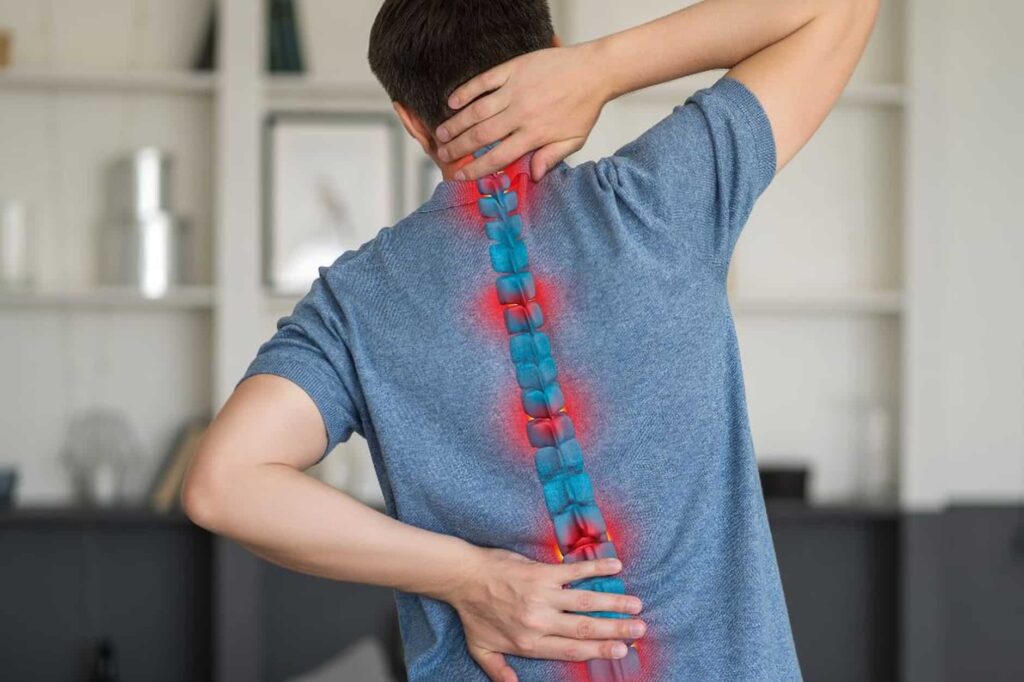
Sciatica is pain, tingling, numbness or weakness that travels along the path of the sciatic nerve, from the lower back through the buttock and down the leg. It is a symptom rather than a diagnosis, because something is irritating the nerve root. The pain usually affects one side and can range from a dull ache to a sharp, electric feeling.
Sciatica often feels worse with long periods of sitting, coughing or sudden movements. Many cases settle within weeks to a few months with time, activity and exercise.
Common Causes of Sciatica
- Herniated or bulging disc: disc material presses on or irritates a nerve root, often in adults under 50
- Spinal stenosis: narrowing of the spinal canal or nerve exits, more common after 60, often worse with standing and walking
- Degenerative disc changes: discs lose height with age, which can narrow the space for the nerve
- Piriformis syndrome: a tight buttock muscle irritates the nerve and mimics sciatica
Why the Cause Matters for Treatment
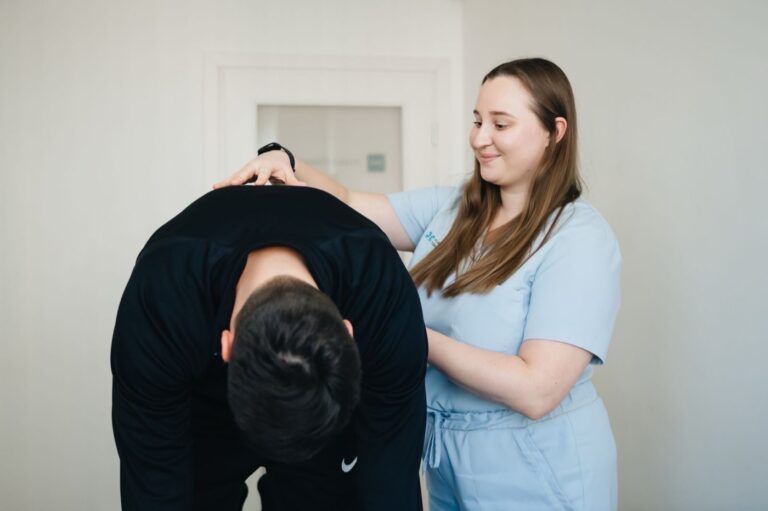
The cause shapes which treatments are likely to help. A disc problem, stenosis and a muscle problem each respond differently to movement, position and load. A physiotherapist will assess your back, hips, nerves and strength before suggesting any treatment, including traction.
Our article on physiotherapy for sciatica and nerve pain covers assessment and treatment in more detail.
How Does Spinal Traction Work?
Spinal traction uses a pulling force along the length of the spine. The idea is to slightly increase the space between vertebrae, reduce pressure on discs and nerve roots, and relax the muscles around the spine.
Types of Traction
- Mechanical traction: a motorized table applies a set force, either steady or in cycles of pull and rest
- Manual traction: a clinician applies the pull with their hands, usually for short periods
- Positional or home traction: body positions, inversion devices or home units, which vary widely in quality and safety
Computer-controlled tables, such as the one described in our article on the Triton 6E electronic traction table, allow the force, angle and hold times to be adjusted precisely.
What a Traction Session Feels Like
You lie on a padded table, usually on your back with your knees supported. A harness around the pelvis and lower ribs connects to the table, and the force builds slowly. Most people describe a mild, steady stretch rather than pain.
Sessions often last 10 to 20 minutes. You stay clothed and can ask for the force to be reduced or the session stopped at any time.
What Traction May Do in the Body
In theory, traction may reduce pressure on an irritated nerve root while the pull is applied. It may also ease muscle guarding and make movement feel easier for a short time. The changes in disc height are small and usually reverse once you stand up, so any lasting benefit is more likely to come from moving more comfortably afterwards.
Does Spinal Traction Help Sciatica? What the Evidence Says
Traction has been studied for decades, and the overall picture is not strong. Results vary between studies, and many trials are small or have design problems.
What the Large Reviews Found
A Cochrane review of traction for low back pain with or without sciatica looked at 32 trials. It found that, on average, people who had traction did about as well as people who had other care. Averages hide individual differences, so some people report clear relief and others notice little change.
The UK guideline on low back pain and sciatica in over 16s (NICE NG59) puts exercise and staying active at the centre of care, with manual therapy as part of an exercise-based plan. That is why traction is used as an add-on to exercise and advice, and why progress is reviewed after a short trial.
Why Some People Still Feel Better
Some people do report less leg pain during or after traction. This may be because of short-term nerve relief, muscle relaxation, the comfort of a supported position, or simply the natural improvement that many cases of sciatica show over time. Individual responses vary, and averages in research can hide people who respond well.
For this reason, traction is best seen as an optional extra that may make it easier to move and exercise, not as a treatment that fixes the cause.
Traction Compared With Other Options
| Treatment | What the Evidence Suggests | Role in Sciatica Care |
|---|---|---|
| Exercise and staying active | Supported by guidelines for most people | Main treatment for most cases |
| Manual therapy with exercise | May help as part of an active plan | Useful add-on |
| Spinal traction | Mixed; little benefit on its own | Optional, short-term, alongside exercise |
| Pain medication | Short-term relief for some, with side effects | Ask your doctor or pharmacist |
| Surgery | Can help severe or worsening nerve compression | For selected cases after specialist review |
Who May Be a Candidate for Traction?
Because the evidence is mixed, traction is not a first choice for most people. It may be reasonable to try in some situations, after a full assessment and with clear goals.
People Who May Try Traction
- Adults with leg-dominant pain from a disc problem whose symptoms ease when the spine is unloaded, such as lying down
- People whose pain stops them doing their exercise program, where a short trial may make movement easier
- People with mild stenosis symptoms who find relief in flexed or unloaded positions
What a Fair Trial Looks Like
A fair trial is short, with a clear way to measure change, such as leg pain, walking distance or sitting time. If there is no meaningful improvement after a few sessions, it is reasonable to stop and focus on other treatments. Traction should always sit alongside exercise and advice, not replace them.
Who Should Not Have Spinal Traction?
Traction is not safe for everyone. Your physiotherapist will screen for health issues before considering it.
Reasons to Avoid Traction
- Suspected fracture, spinal infection or cancer in the spine
- Severe osteoporosis
- Recent spinal surgery, or spinal fusion or implants at the level being treated
- Pregnancy
- Uncontrolled high blood pressure, or serious heart or lung disease
- Abdominal aortic aneurysm or hernia
- Spinal instability or inflammatory joint disease affecting the spine
- Pain that clearly gets worse with the pull
Possible Side Effects
Side effects are usually mild, such as temporary back soreness, muscle spasm or increased leg symptoms. Stop and tell your physiotherapist if pain, numbness or weakness increases during or after a session.
What Happens at a Physiotherapy Assessment for Sciatica?
A physiotherapy assessment for sciatica looks for the likely source of the nerve irritation and checks for any signs that need medical review. It also helps decide whether traction is worth trying at all.
Questions and Physical Tests
Your physiotherapist will ask where the pain travels, what makes it better or worse, and how it affects sleep, work and walking. They will check how your back and hips move, test strength and reflexes in your legs, and check skin sensation. Gentle nerve tension tests, such as a straight leg raise, show how sensitive the nerve is.
Building a Plan Around Your Goals
The findings are used to build a plan around what matters to you, such as sitting through a workday, walking the dog or sleeping through the night. Most plans include advice on positions, a short home exercise program and a gradual return to normal activity.
Imaging such as an MRI is not usually needed for sciatica unless there are warning signs or surgery is being considered. Many disc changes seen on scans are also found in people with no pain at all.
Tracking Your Progress
Simple measures make it easier to see change over time. These might include how far down the leg the pain reaches, how long you can sit, how far you can walk, and a pain score from 0 to 10. Leg pain that moves back up toward the buttock is often a good sign that the nerve is settling.
What Else Helps Sciatica Recover?
Most people with sciatica improve with time and an active plan. The aim is to calm the nerve, keep moving and build strength so flare-ups are less likely.
Stay Active and Adjust Positions
Bed rest is not recommended. Short walks, changing position often and avoiding long periods of sitting usually help more than staying still. Find positions that ease leg pain and use them to rest during the day.
Nerve Glides and Stretching
Nerve glide exercises gently move the sciatic nerve through its range, which may reduce sensitivity. Gentle stretches for the hips, hamstrings and buttock muscles can also ease tension. Hold stretches for about 30 seconds and keep them comfortable.
Strengthening
Building strength in the trunk, hips and legs helps support the spine over time. Start gently and increase as pain settles. Our guide to core strengthening exercises for back pain shows safe exercises to start with.
Sitting, Driving and Work
Long periods of sitting are often hard with sciatica. Use a small rolled towel behind your lower back, keep your hips level with or slightly above your knees, and stand up every 20 to 30 minutes. For driving, move the seat closer so you do not reach for the pedals, and plan breaks on longer trips.
If your job is physical, a graded return with lighter duties for a few weeks may help. Talk to your employer early about what you can and cannot do yet.
A Typical Recovery Pattern
Many cases of sciatica settle over 6 to 12 weeks, although some take longer. Leg pain often eases before back pain, and numbness can take longer to fade than pain. Progress is rarely a straight line, so a bad day does not mean you are back at the start.
When to See a Doctor or Go to Emergency
Most sciatica is not dangerous, but some signs need urgent medical care. Do not wait for a physiotherapy appointment if you notice them.
Go to Emergency Right Away If You Have
- Numbness around the genitals, buttocks or inner thighs (saddle area)
- New trouble passing urine, loss of bladder or bowel control, or new sexual dysfunction
- Sudden or worsening weakness in one or both legs, or a foot that drops when you walk
- Sciatica in both legs at once
- Back pain with fever, recent infection, a history of cancer or unexplained weight loss
These can be signs of cauda equina syndrome or another serious condition. The NHS sciatica page lists the same warning signs.
See a Doctor or Physiotherapist If
See a doctor or physiotherapist if leg pain lasts more than a few weeks, keeps getting worse, or stops you sleeping or working. In Ontario, you do not need a doctor’s referral to see a physiotherapist, although some insurance plans ask for one before they reimburse.
Is Traction Right for You?
Spinal traction is one tool among many, and it is not the main treatment for sciatica. If you are curious about it, a physiotherapist can assess whether it is safe for you and how it would fit into an active plan. You can read more about our spinal decompression therapy, including what a session involves.
Book an Assessment
If sciatica is affecting your daily life, you can book an appointment online to have your back and nerves assessed.