Spinal traction therapy is a non-surgical treatment that applies a slow, controlled pull to the spine to ease pressure on discs, joints and nerves. The Triton 6E Electronic Traction Table delivers that pull through computer control. This article explains how it works, who it may help and what a session involves.
Key Takeaway: Spinal traction therapy on the Triton 6E table gently separates the vertebrae to ease pressure on irritated discs and nerves. It may help some people with disc problems, sciatica or a pinched neck nerve, and results vary. It works best as one part of a plan built around exercise and advice.
What Is Spinal Traction Therapy?
Spinal traction therapy is a hands-off treatment in which a table or device gently stretches the spine along its length. The aim is to create a little more space between the vertebrae for a short time, which may ease pain coming from a disc or nerve.
How Traction Is Thought to Help
Traction is thought to work in a few ways. It may reduce pressure on an irritated nerve root, lower the pressure inside a bulging disc and relax the tight muscles that guard a sore back or neck.
Traction is not new, and clinicians have used some form of it for decades. What has changed is the precision of electronic tables, which can hold a set force smoothly instead of relying on hanging weights.
Neck Traction and Low Back Traction
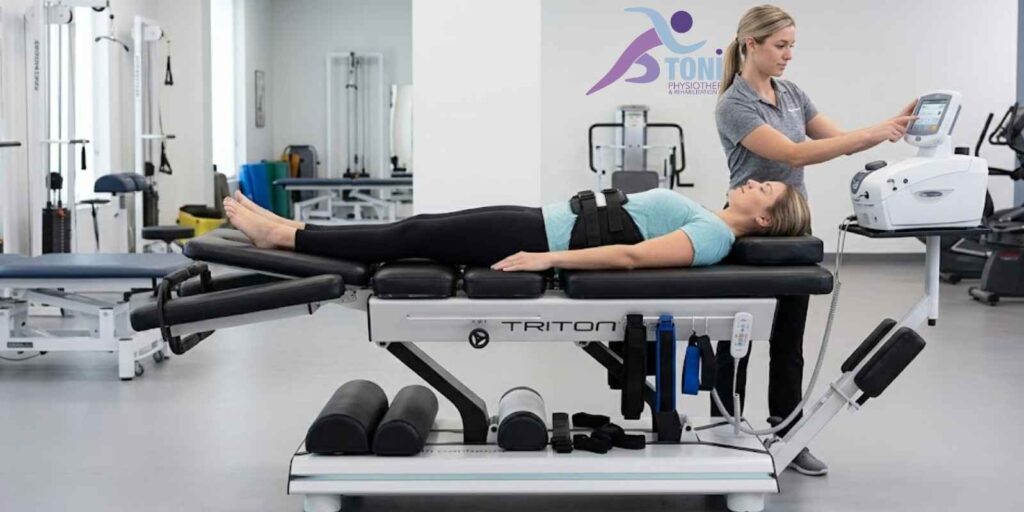
Traction can target the cervical spine (neck) or the lumbar spine (low back). For the low back, you lie on your back with a harness around the pelvis and chest. For the neck, a soft cervical harness supports the base of the skull while the table applies the pull.
What Makes the Triton 6E Different?
Older traction tables used manual weights, pulleys or a winch. The Triton 6E is computer-controlled, which improves precision, comfort and safety.
Computer Control and Programming
Before you get on the table, your physiotherapist sets the force, hold time, rest interval and total session length. During treatment, the table holds those settings consistently. It also has pre-set protocols for disc, nerve and joint problems that can be adjusted to suit you.
Older Tables Compared With the Triton 6E
| Feature | Older manual tables | Triton 6E electronic table |
|---|---|---|
| Force control | Weights, hard to fine-tune | Computer-controlled in small steps |
| Programming | Set once at the start | Pre-set protocols for disc, nerve and joint problems |
| Safety | Therapist monitors by hand | Built-in safety cut-offs and a patient stop button |
| Comfort | Can feel jerky or uneven | Smooth, gradual ramp-up and release |
| Records | Therapist notes only | Digital session log to track progress |
Safety Features
You hold a stop button for the whole session, so you can end the pull at any moment. Built-in safety cut-offs stop the table if settings go outside the planned range. Because the table handles the precise work, your physiotherapist can watch how you respond and adjust the plan.
Which Low Back Conditions May Traction Help?
Traction is not for every kind of back pain. It is most often considered when pressure on a disc or nerve seems to be driving the symptoms.
Herniated or Bulging Discs
A herniated disc happens when the soft centre of a spinal disc pushes through its tougher outer ring and presses on a nearby nerve. The NHS page on slipped discs explains that many disc problems settle over weeks with activity and pain relief. Traction may be added to ease symptoms alongside manual therapy and core strength work.
Most disc problems are managed without surgery. Staying as active as pain allows tends to help more than bed rest.
Sciatica and Nerve Root Compression
Sciatica is a sharp or burning pain that travels from the low back down the leg, sometimes with tingling or numbness. It usually comes from an irritated nerve root in the lower spine, as the NHS guide to sciatica describes.
Lumbar traction aims to take some pressure off that nerve root. It is usually paired with nerve gliding exercises and a walking plan, and our post on whether spinal traction helps sciatica goes into more detail.
Spinal Stenosis
Stenosis is a narrowing of the space around the spinal cord or nerves, often linked to age-related change. Severe stenosis may need a surgical opinion, but many people manage symptoms with mobility work, strength training and, in some cases, traction.
Which Neck Conditions May Traction Help?
Neck traction is often considered when arm symptoms or neck stiffness point to pressure on a joint or nerve. It is always paired with exercise for the deep neck and upper back muscles.
Cervical Radiculopathy
Tingling, numbness or weakness down the arm often comes from a pinched nerve in the neck. Gentle cervical traction aims to open the space where the nerve leaves the spine, which may ease the arm symptoms.
Cervical Spondylosis and Disc Degeneration
As we age, the discs in the spine lose height and the joints stiffen. Traction cannot reverse that change, but it may ease stiffness and help the neck move more freely. Our guide to exercises for cervical spondylosis shows the type of home work that goes with it.
Whiplash and Posture-Related Neck Pain
After a car accident, the neck muscles often tighten to protect the area. Once serious injury has been ruled out, gentle traction may help ease that guarding. The week-by-week car accident recovery guide explains how care usually progresses.
Long hours at a desk can weaken the deep neck muscles and overwork the upper shoulders. In this case traction is paired with posture retraining and workstation changes.
What Does the Research Say About Traction?
Research on spinal traction is mixed, and results vary between people and conditions. Some people feel clear relief, while others notice little change.
Why Results Vary
Back and neck pain have many causes, and traction targets only some of them. Studies also use different forces, positions and session lengths, which makes them hard to compare. A careful assessment helps decide whether your pain fits the pattern traction is meant for.
Traction as One Part of a Plan
Traction is not used as a stand-alone fix. It works alongside exercise, advice on daily tasks, hands-on care and a home program. If your pain does not improve after a few visits, your physiotherapist reviews the plan with you and changes course.
Questions to Ask Before You Start
- What do you think is causing my pain, and why might traction help it?
- What should I feel during and after a session?
- Which exercises should I do at home alongside traction?
- How will we know whether traction is working for me?
- What is the plan if my symptoms do not change?
Clear answers to these questions help you take part in decisions about your care. They also set shared goals you and your physiotherapist can check as you go.
How Does Traction Fit With Exercise and Daily Habits?
Traction can ease pain for a while, but exercise and daily habits are what help the spine cope with load over time. That is why every traction plan includes work you do yourself, both in the clinic and at home.
Core and Nerve Exercises
Core activation exercises teach the deep muscles of the trunk to support the low back during daily tasks. Nerve glides gently move an irritated nerve through its path, which may ease tingling and tightness down the leg or arm. For the neck, deep neck flexor and upper back exercises help hold a more comfortable posture.
These exercises are short and simple. Your physiotherapist checks your form and raises the challenge as your symptoms settle, so the plan keeps pace with your progress.
Daily Habits That Support Your Spine
- Change position often, and avoid sitting for more than 30 to 45 minutes at a time
- Walk most days, starting with short, comfortable distances
- Lift with a hip hinge and keep loads close to your body
- Set up your desk so the screen is at eye level and your feet rest flat
- Choose a pillow that keeps your neck level with your spine when you sleep
Pacing on Good and Bad Days
Back and neck pain often goes up and down. On a good day, it can be tempting to do a lot at once, which may lead to a flare the next day. Spreading tasks through the week and building activity in small steps tends to give steadier progress.
Is Spinal Traction Safe?
For the right person, spinal traction is generally well tolerated. Your first visit always includes a screen for reasons not to use it before you go on the table.
Common After-Effects
Mild muscle soreness after the first one or two sessions is the most common side effect. It usually settles within a day. If anything feels sharp or your symptoms spread, tell your physiotherapist straight away so the settings can be changed or the session stopped.
When Traction Is Not Used
- Acute spinal fracture
- Severe osteoporosis
- Spinal infection or tumour
- Recent abdominal or spinal surgery, reviewed case by case
- Pregnancy, for lumbar traction
- Groin numbness or new loss of bladder or bowel control, which needs emergency care
If traction is not right for you, your physiotherapist builds a different plan using manual therapy, exercise and other pain-relief options.
What Happens During a Traction Session?
A full visit usually takes 30 to 45 minutes, including setup, time on the table and exercises afterwards.
Before the Table
Your physiotherapist reviews your medical history, current symptoms and any imaging you have. A focused exam confirms that traction is safe for you. You are asked to sign a treatment consent form before the first session.
On the Table
You lie on your back for low back traction, or a soft harness is fitted for neck traction. Time on the table is usually 15 to 25 minutes. Most people feel a mild stretch, not pain, and heat, ice or soft-tissue work may be added.
After the Table
Your physiotherapist checks your movement and pain again. You leave with two or three home exercises, often a nerve glide and a core activation, to help keep the gains. The digital session log helps you both see how you are responding over time.
Who Is Most Likely to Benefit?
Traction is most likely to help when pain has a clear mechanical source, such as a disc, a pinched nerve or degenerative change. It is often considered when rest, medicine or general exercise alone have not been enough.
Signs Traction May Suit You
- Leg or arm pain that seems to come from the spine
- Pain that eases when you lie down or gently stretch the spine
- A disc or nerve problem confirmed by your doctor or physiotherapist
- Stiffness from age-related change that limits daily movement
When Another Approach May Suit Better
Traction is less likely to help if pain comes from muscle spasm alone, a cause outside the spine or widespread inflammation. In those cases, exercise, hands-on care and advice usually come first. Our article on how spinal decompression works explains how the two approaches relate.
When Should You See a Doctor or Go to Emergency?
Most back and neck pain is not dangerous, but some signs need urgent medical care rather than traction or physiotherapy.
Go to Emergency Straight Away If You Have
- Numbness around the genitals, buttocks or inner thighs
- New trouble passing urine, or loss of bladder or bowel control
- Weakness in both legs or rapidly worsening weakness in one leg
These can be signs of cauda equina syndrome, which needs same-day hospital care.
See a Doctor Soon If You Have
- Back or neck pain with fever or unexplained weight loss
- A history of cancer with new spinal pain
- Pain after a significant fall or accident
- Pain that is worse at night and does not ease with rest or position changes
Getting Started With Traction
The first step is an assessment to see whether traction fits your problem. If it does not, your physiotherapist will explain which approach is more likely to help.
Referral and Imaging
In Ontario, you do not need a doctor’s referral to see a physiotherapist. If you have recent imaging such as an MRI or X-ray, bring the report along, as it helps tailor the settings to your condition.
Tonic Physio uses the Triton 6E table for its spinal decompression therapy. When you are ready, you can book an assessment online.