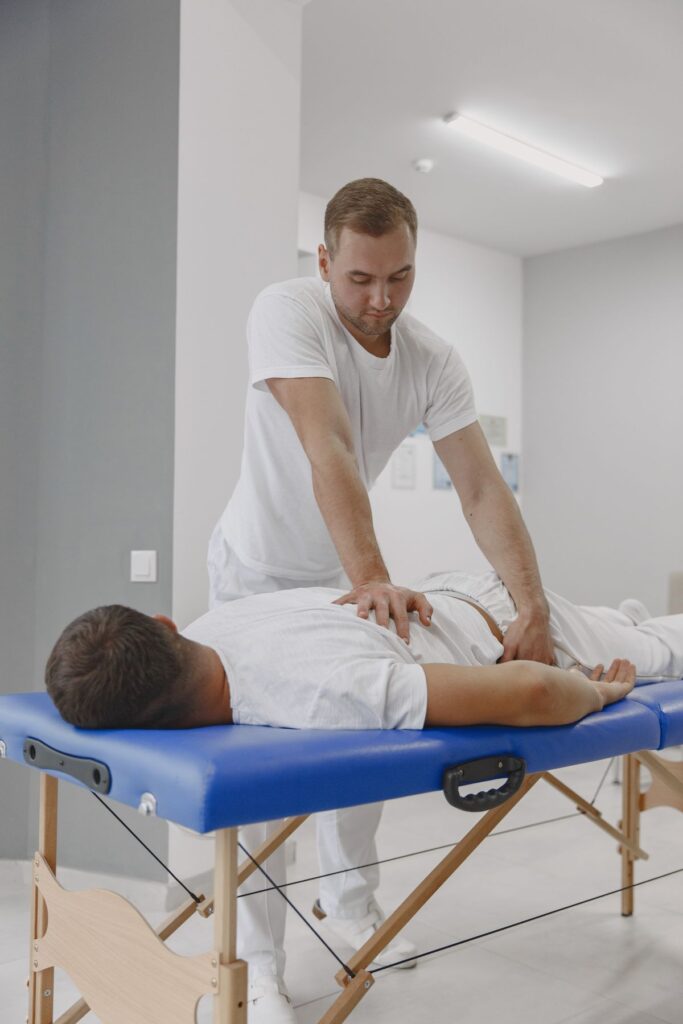
Spinal decompression is a form of motorised traction that gently stretches the spine to reduce pressure on the discs, joints and nerves. A computer-controlled table applies a measured pull in cycles of stretch and rest. This article explains how it works, what a session involves and what research says.
Key Takeaway: Spinal decompression uses a computer-controlled table to stretch the spine in gentle cycles, aiming to ease pressure on discs and nerves. Study results vary, and it works best as one part of a plan built around exercise and advice. An assessment checks whether it suits you.
What Is Spinal Decompression?
Spinal decompression is a non-surgical treatment that uses motorised traction to create a little more space between the bones of the spine. It is most often used for lower back and neck pain linked to disc problems or nerve irritation. Sessions are given on a padded table while you lie fully clothed.
How the Spine Is Built
The spine is made of stacked bones called vertebrae, with discs between them that act like shock absorbers. Each disc has a tough outer ring and a softer, gel-like centre. Nerves leave the spine through small openings at each level.
What Goes Wrong in Disc-Related Pain
When a disc bulges or herniates, its soft centre can push outward and irritate a nearby nerve. This may cause back pain, or pain, tingling and numbness that travels into the leg or arm. Age-related disc changes and narrowing of the spinal canal can also crowd the nerves.
How Decompression Differs From Traditional Traction
Traditional traction applies a steady pull to the spine. Computerised decompression alternates between stretching and relaxing in timed cycles. This cycling is designed to reduce muscle guarding, the natural tendency of muscles to tighten against a pull, so the stretch can reach the spine more comfortably.
How Does Spinal Decompression Work?
Spinal decompression is thought to work through a few related effects. Some are measured directly in research, while others are proposed explanations that are still being studied.
Mechanical Traction
The table gently pulls the spine in a controlled way, creating a small amount of separation between the vertebrae. A computer controls the force, the length of each cycle and the total treatment time. The angle of pull can be adjusted to focus on a particular level of the spine.
Changes in Disc Pressure
Discs do not have a strong blood supply of their own. They rely on movement and pressure changes to draw in fluid and nutrients. Traction may lower the pressure inside the disc during treatment, and some researchers propose this could help fluid and nutrients move into the disc, although this is still being studied.
Easing Pressure on Nerves
When a disc bulges into the space where a nerve runs, the nerve can become irritated. By opening that space slightly, decompression aims to ease pressure on the nerve and reduce symptoms that travel into the leg or arm. Pain can also ease as muscles relax during the gentle cycles.
What Does a Spinal Decompression Session Involve?
Most people find a session comfortable and relaxing. The table below outlines the usual steps.
| Step | What happens | What you may feel |
|---|---|---|
| Set-up | You lie fully clothed on the padded table; straps are fitted around the pelvis and torso | Snug but comfortable support |
| Treatment | The table applies a gentle pull that cycles between stretch and rest | A mild, steady stretching sensation |
| Monitoring | The physiotherapist checks comfort and can adjust the force at any time | Relaxed; some people doze off |
| Afterwards | You get up slowly and may be given exercises or advice | Mild soreness at times, similar to after a workout |
How Long a Session Lasts
Sessions typically last 20 to 30 minutes on the table. Treatment is usually given as a series of visits, and the plan is adjusted as your symptoms change. Your physiotherapist will explain how often to attend after your assessment and review it as you progress.
What It Should Feel Like
You should not feel pain during the session, although a gentle stretch in the lower back or neck is normal. If anything feels sharp or uncomfortable, tell your physiotherapist, who can lower the force straight away. Mild soreness afterwards usually settles within a day.
Equipment Used at the Clinic
Our clinic uses the Triton 6E electronic traction table, which offers computerised force control, programmable settings, adjustable angles and cyclic decompression. Our article on the Triton 6E electronic traction table explains its features in more detail.
Which Conditions Is Spinal Decompression Used For?
Spinal decompression is most often used for back or neck pain that involves the discs or nerve roots. A physiotherapy assessment helps decide whether it is a reasonable option for your symptoms.
Herniated and Bulging Discs
A herniated disc happens when the soft centre pushes through the tougher outer ring. Decompression aims to reduce pressure on the disc and the nearby nerve. It is usually combined with exercise and advice on movement, so the back is also getting stronger as symptoms settle.
Sciatica and Nerve Pain
Sciatica is pain that travels along the sciatic nerve from the lower back down the leg, often linked to a disc pressing on a nerve root. Some people with sciatica use traction as part of their plan. Our article on whether spinal traction helps sciatica looks at this question in more depth.
Spinal Stenosis and Disc Degeneration
Spinal stenosis is a narrowing of the spaces in the spine that can crowd the nerves, often with age. Degenerative disc disease describes discs that have lost height and flexibility over time. Decompression cannot reverse these structural changes, but some people find it helps them move more comfortably.
What Does Research Say About Spinal Decompression?
Research on spinal decompression and traction is mixed, and results vary between studies, devices and patient groups. Some studies report improvements in pain and disc measures, while others find smaller differences compared with other treatments. Researchers continue to study which people respond best.
Studies on Disc Height and Herniation
An observational study of non-surgical spinal decompression reported that increases in disc height were associated with lower back pain in the group studied. A randomised trial in people with lumbar disc herniation compared physiotherapy with and without decompression and reported a greater reduction in herniation size when decompression was added.
Why Results Vary
Studies use different machines, forces, schedules and patient groups, which makes them hard to compare. Many trials are small, and back pain often improves over time on its own, which can blur results. For these reasons, decompression is best seen as one option within a wider plan rather than a stand-alone answer.
How Decompression Fits Into a Wider Plan
Most current approaches to back pain put exercise, staying active and education at the centre of care. Decompression may be used alongside these to ease symptoms enough for people to move and exercise more comfortably. Your physiotherapist will explain the options and help you choose what suits your goals.
How Does Spinal Decompression Compare With Other Options?
People with back pain often weigh several approaches. Each has a different role, and many plans use more than one.
Decompression and Inversion Tables
Inversion tables use gravity to stretch the spine by tipping the body upside down. The force is not measured or targeted, and inversion is not suitable for people with high blood pressure, glaucoma or heart problems. A computerised table applies a set force to a chosen area while you lie flat.
Decompression and Surgery
Surgery may be considered when symptoms are severe, nerve function is getting worse or conservative care has not helped. Spinal decompression is non-surgical and can be stopped or adjusted at any time. Your doctor or surgeon can advise whether surgery is something to discuss.
Decompression and Exercise
Exercise remains a core part of recovery from most back pain. Traction and exercise are not competing choices; decompression may ease symptoms while exercise builds the strength and movement that help protect the spine over time. Your plan will usually include both.
Who Should Not Have Spinal Decompression?
Spinal decompression is not suitable for everyone. Your physiotherapist will screen carefully during the first assessment and suggest other treatments if decompression is not right for you.
Common Reasons to Avoid Decompression
- Pregnancy
- Severe osteoporosis or fragile bones
- Spinal fractures or recent spinal surgery
- Spinal implants, rods or artificial discs
- Spinal tumours or infection
- Marked spinal instability or significant spondylolisthesis
- Abdominal aortic aneurysm or other vascular conditions
- Cauda equina syndrome, which is a surgical emergency
- Progressive nerve damage with worsening weakness
What Happens if It Is Not Suitable
If decompression is not a good fit, your physiotherapist will suggest other approaches, such as manual therapy, exercise and advice. The goal is always a plan that matches your condition and your health history.
How Can You Support Your Back Between Sessions?
What you do between visits matters as much as the time on the table. Decompression may ease symptoms for a while, and movement and exercise help build on that relief.
Stay Gently Active
Short walks spread through the day are often easier on the back than long periods of sitting or lying down. Change position often, and build activity up gradually. Your physiotherapist may give you a few simple exercises to do at home, such as pelvic tilts, gentle knee-to-chest stretches or core bracing.
Daily Habits That Help
- Break up long spells of sitting with a short walk or stretch
- Keep loads close to your body and bend at the hips and knees when lifting
- Use a pillow between the knees when sleeping on your side
- Avoid heavy lifting or high-impact activity straight after a session
- Note which activities ease or aggravate your symptoms to share at your next visit
Tracking Your Progress
Keep a simple record of pain levels, how far you can walk and how long you can sit comfortably. These everyday markers often show change before pain fully settles. Sharing them with your physiotherapist helps guide decisions about your plan.
If symptoms flare after a session, note what you did that day and how long the flare lasted. Short flares are common as the back adapts, and this detail helps your physiotherapist adjust the force or timing.
What Happens at Your First Assessment?
Before any decompression session, a physiotherapist completes an assessment. This checks whether the treatment is suitable and looks at anything else that may be adding to your symptoms.
What the Assessment Covers
The assessment reviews your medical history and any imaging, such as an MRI or X-ray, if you have had one. A physical examination checks movement, strength, reflexes and sensation. Your physiotherapist also looks for muscle imbalances, posture habits and movement patterns that may need attention.
Building Your Plan
Based on the findings, your physiotherapist explains what may be causing your pain and sets out options. If decompression is suitable, it is usually combined with exercise and advice. Our guide on what to expect at your first physiotherapy appointment walks through the visit step by step.
When Should You See a Doctor or Go to Emergency?
Most back pain is not caused by a serious problem, but some symptoms need urgent medical care rather than traction or physiotherapy.
Go to Emergency Right Away If You Have
- Numbness between the legs, around the genitals or buttocks
- New difficulty passing urine, or loss of bladder or bowel control
- Weakness in both legs, or weakness that is getting rapidly worse
- Severe back pain after a fall or serious injury
These can be signs of cauda equina syndrome. The NHS page on back pain lists the warning signs that need urgent care.
See a Doctor Soon If
- Back pain comes with fever, unexplained weight loss or a history of cancer
- Pain is severe at night and does not ease with rest or position changes
- Symptoms keep getting worse despite treatment
Getting Help With Back and Neck Pain
A physiotherapist can assess your back or neck pain, check whether spinal decompression suits you and build a plan around exercise and advice. In Ontario, you do not need a doctor’s referral to see a physiotherapist.
Next Steps
You can read more about our spinal decompression therapy and who it may suit. When you are ready, you can book an assessment online to talk through your options.
This article is for general information and is not a substitute for advice from your doctor or physiotherapist.