Leg pain that shoots from your back or buttock down the back of your thigh usually gets labeled sciatica, but roughly one in six cases has nothing to do with the spine. Piriformis syndrome mimics sciatica so convincingly that treating the wrong structure is one of the most common reasons leg pain lingers for months.
Key Takeaway: True sciatica starts with nerve irritation in the lumbar spine, while piriformis syndrome starts when a deep buttock muscle compresses the same nerve further down. The pain patterns differ in telling ways, and the treatments differ completely, so sorting out which one you have is the first step toward recovery that actually lasts.
What sciatica actually is
Sciatica is not a diagnosis. It is a symptom description: pain following the path of the sciatic nerve, which runs from the lower back through the buttock and down the back of the leg. The cause lives upstream, most often a disc bulge or narrowed opening in the lumbar spine compressing a nerve root.
Details on physiotherapy for sciatica in Milton are on our service page.
The pattern signature of true sciatica
- Pain typically starts in the lower back or just beside it before radiating below the knee
- The pain often travels in a clear band: down the back of the thigh, into the calf, sometimes into the foot
- Numbness, pins and needles, or weakness may accompany the pain in specific patches
- Coughing, sneezing, or straining commonly sharpens the pain because spine pressure spikes
- Sitting usually aggravates it, and long drives or desk stretches predictably worsen symptoms
Why the location rule matters
Pain that stops at the buttock or back of the thigh rarely involves the sciatic nerve root itself. Nerve pain that reaches below the knee, especially with sensory changes, points to spinal involvement. That distance line is one of the first things a clinician maps during assessment.
What piriformis syndrome actually is
The piriformis is a small muscle deep in the buttock that rotates the hip. The sciatic nerve passes beneath it, and in some people directly through it. When the muscle tightens, spasms, or swells, it can compress the nerve right there in the buttock, producing leg pain with a completely healthy spine.
The pattern signature of piriformis syndrome
- Pain centers in the buttock, often described as deep and aching, sometimes with a tender spot you can find by sitting on a tennis ball
- Pain may extend down the leg, but back pain is usually absent or minimal
- Long sitting on hard surfaces provokes it: car seats, stadium benches, and office chairs are classic triggers
- Climbing stairs or inclines often aggravates symptoms because the muscle works hardest there
- Foot numbness is uncommon, and whole-leg electrical shooting is less typical than in spinal sciatica
Why the distinction changes treatment completely
Spinal sciatica responds to spine-directed care: repeated movement testing, graded loading, and positions that centralize symptoms toward the back and out of the leg. Piriformis syndrome responds to hip-directed care: releasing the deep rotators, correcting hip mechanics, and retraining how the muscle fires. Treating the wrong one explains a lot of stalled recoveries.
The side-by-side comparison
| Feature | Spinal sciatica | Piriformis syndrome |
|---|---|---|
| Pain origin | Lower back first | Buttock first |
| Back pain | Usually present | Usually absent |
| Pain reach | Often below the knee to foot | Thigh and buttock, less often below knee |
| Sitting on hard surface | Aggravates mildly | Strongly aggravates |
| Stairs and hills | Variable | Typically worsens pain |
| Sneezing or coughing | Usually sharpens pain | Little effect |
Patterns overlap and no table replaces testing. Roughly one patient in five presents with features of both, because a compressed nerve is a compressed nerve wherever it happens. The table guides suspicion; hands-on testing confirms it.
How clinicians tell them apart
Assessment sorts the mimics in a single structured session. No scan needed for most cases, because imaging findings correlate poorly with symptoms: plenty of pain-free people carry disc bulges, and plenty of painful buttocks show clean scans.
We cover non-surgical treatment for a herniated disc in its own article.
The tests that separate the two
- Repeated spinal movement testing: if bending or extending the spine repeatedly moves leg symptoms closer to the back or further away, the spine is driving the pain
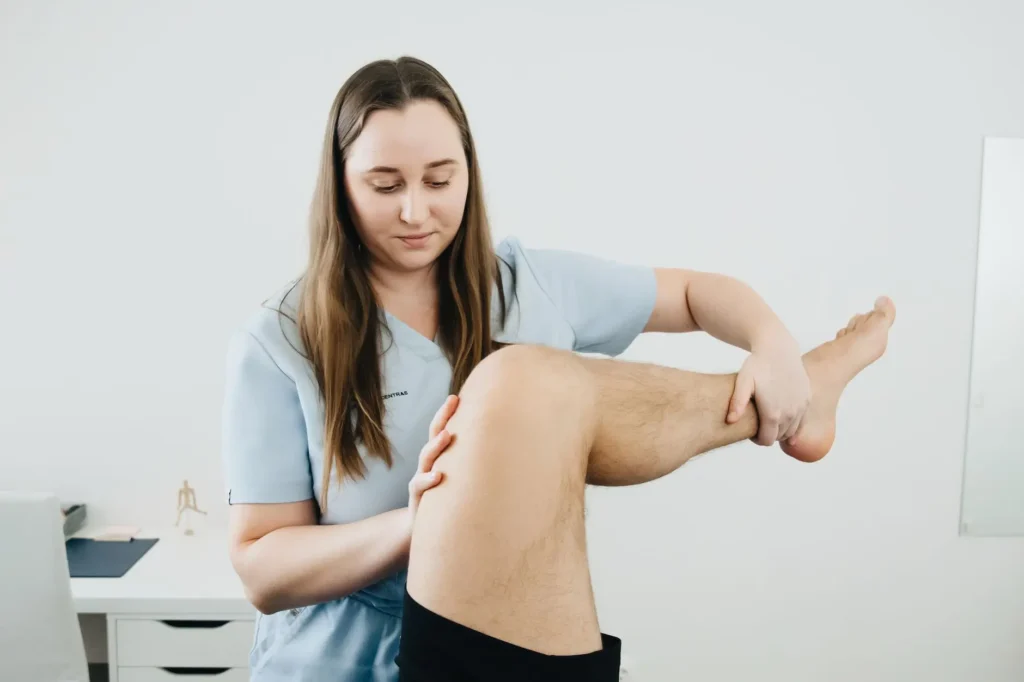
- Straight leg raise and slump testing: tension on the nerve from the foot end reproduces symptoms in spinal sciatica more readily
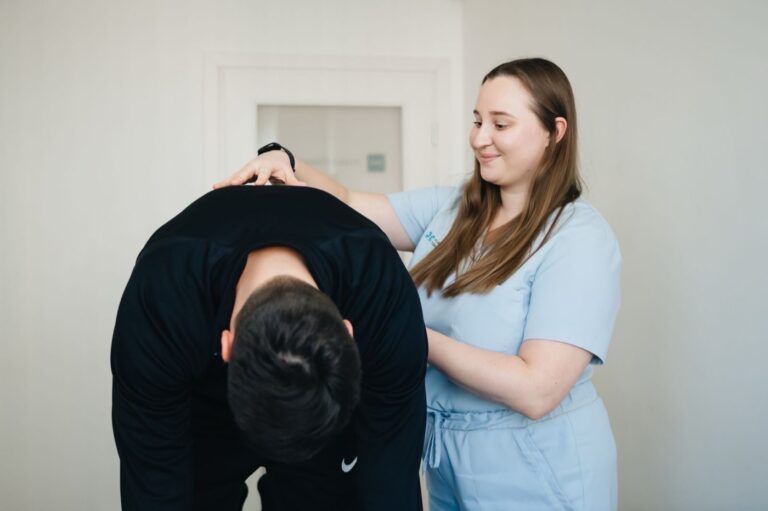
- Seated piriformis stretch test: resisted hip rotation or a sustained stretch reproduces buttock pain in piriformis involvement
- Palpation: an exquisitely tender piriformis with reproduced symptoms points away from the spine
When both tests light up, the plan treats the spine first because central pressure on the nerve dominates the picture. When only the buttock tests reproduce symptoms, the hip gets the attention. That decision tree is exactly what a structured assessment resolves, and patients who come to our Milton clinic with months of stalled sciatica often discover the target was the buttock all along.
Our physiotherapists explain orthopedic physiotherapy at our Milton clinic on its own page.
Why piriformis syndrome hides behind a sciatica label
The mislabeling happens for a simple reason: both conditions irritate the same nerve, so both produce sciatica-style pain. Family doctors see leg pain, apply the umbrella term, and hand over stretches meant for the spine. Weeks pass, the stretches never touch the actual compression site, and the frustration compounds.
The three situations that raise piriformis suspicion
- Symptoms began after a sudden increase in hill running, stair climbing, or squatting volume
- Pain flares with long car or desk sitting, but eases within minutes of standing and walking
- Spine-directed exercises changed nothing after four to six honest weeks
Any of those three shifts the suspicion strongly toward the deep hip. When deep gluteal involvement drives the pain, targeted treatment such as dry needling for deep gluteal pain releases the muscle directly, something spine stretches and general hip mobility work cannot reach.
What recovery looks like for each condition
Spinal sciatica recovery path
Most spinal sciatica improves substantially within six to twelve weeks with correctly dosed exercise. The first goal is centralization: moving leg pain up the leg toward the back, which reliably predicts recovery. Positions and exercises that produce centralization get repeated; positions that push pain down the leg get dropped. Improvement follows a direction, not a calendar.
Piriformis recovery path
Piriformis syndrome usually responds faster once correctly targeted, often within four to eight weeks. Treatment releases the overactive muscle, strengthens the gluteus medius that should be sharing the workload, and corrects the movement habits that keep overloading the deep rotators. Runners get a gradual return-to-hills progression so the flare does not return on the first spring route.
When imaging or a specialist referral earns its place
- Progressive weakness: foot drop or inability to rise on toes needs prompt medical assessment
- Saddle numbness or bladder changes: emergency presentation, same day
- Twelve weeks of correct treatment without meaningful change: imaging reconsidered
Outside those situations, movement testing beats MRI for deciding treatment, because the scan shows anatomy while the tests show behavior.
Preventing the next episode
Both conditions reward the same maintenance habits. Hip strength that shares load evenly, hamstring flexibility that spares the back, and graded progression on any training change. The difference is where the emphasis sits.
For spinal sciatica survivors
Keep a regular walking habit, maintain the directional exercises that centralized your symptoms, and respect morning spine rules: no deep bending in the first hour, warm up before lifting, and hinge from the hips during the day. Halton runners returning from sciatica should reintroduce speed and hills separately rather than together.
For piriformis survivors
Keep the deep hip rotators supple with regular targeted stretching, build single-leg strength so the piriformis stops compensating for weak gluteus medius, and monitor hill and stair volume the way you would monitor any training load. The muscle flares when its workload spikes, and steady progression prevents the spike.
Living with the symptoms while they settle
Recovery is not linear for either condition, and knowing what a normal rough patch looks like prevents panic decisions. Symptoms typically fluctuate with workload, sleep, and sitting time. A bad Tuesday after a heavy Monday is data, not failure.
Sleep positions that help both conditions
Sidelying with a pillow between the knees keeps the hip neutral and reduces buttock compression overnight. Back sleepers benefit from a pillow under the knees, which flattens the lumbar curve slightly and eases nerve tension. Stomach sleeping twists the neck and spine, and is worth breaking for either condition.
What to do on a flare day
- Keep walking in short, comfortable bouts rather than collapsing into total rest
- Use the positions your assessment identified as relievers, in 2 to 3 minute holds, several times through the day
- Skip heavy lifting and hill sessions until symptoms quiet for 48 hours
- Resume the program at about 80 percent of your previous dose and rebuild over a week
Heat, ice, and honest expectations
Heat relaxes the deep buttock muscles and eases piriformis-dominant pain; ice calms spinal irritation for some sciatica presentations. Neither fixes the underlying problem, and neither is wrong. Use whichever settles your symptoms for 15 to 20 minutes, and let the exercise program do the actual repairing.
Why assessment beats imaging for these two conditions
An MRI of the lumbar spine cannot see the piriformis compression, and a scan of the buttock cannot grade a disc. Each test looks where the other condition lives, which is why the movement tests matter more. They reproduce or relieve your actual symptoms, which is the evidence that counts.
What your first assessment session covers
Expect a structured hour: symptom history and training history, repeated movement testing of the spine, hip rotation and stretch testing, nerve tension tests, and strength screening of the hips. You leave with a working diagnosis, a direction of care, and a starting program. Most patients begin their first exercises the same day.
Sciatica and piriformis in Halton runners and commuters
Local routines shape local symptoms. The QEW and 407 commutes load buttocks for an hour at a time, Milton’s Escarpment routes load hills, and the indoor training months change how both conditions present through the winter.
For trail and road runners
Escarpment descents load the piriformis eccentrically on every stride. Runners who flare on downhill segments but stay quiet on flats are describing piriformis behavior, and their progression should reintroduce descents gradually, twice weekly, before daily hill work returns.
For desk-bound commuters
Long drives plus desk hours compress the buttock for most of the waking day. The two-minute stand rule applies to the car as much as the office: on any drive over 45 minutes, get out and walk briefly. A lumbar cushion that keeps the spine neutral and a wallet out of the back pocket both reduce daily provocation more than people expect.
For hockey and ski season transitions
The skate stride and the ski carve both load hip rotation hard after months of relative rest. Two weeks of pre-season glute and hip rotator work prevents most of the November flare-ups we see at the clinic from returning players.
Answers to the questions patients ask most
Can piriformis syndrome cause back pain too?
Mild backache can accompany piriformis syndrome because guarded buttock muscles change how you move all day. The distinguishing feature remains the source: with piriformis, the buttock pain leads, and any back ache follows, while spinal sciatica starts in the back and travels outward.
How long does a piriformis flare last without treatment?
Unaddressed flares commonly smolder for 6 to 12 weeks because the sitting, driving, and training habits that provoked the muscle keep provoking it. Correctly targeted care usually shortens that to 4 to 8 weeks, and the prevention work keeps it from settling in as a recurring pattern.
Is it safe to keep running with mild sciatica?
Often yes, with modified load. Flat, short runs at conversational pace usually stay on the safe side of the line when symptoms are mild and centralizing. Pain moving further down the leg, new numbness, or weakness are stop signals. When in doubt, get the pattern assessed before the next block starts.
Do I need a referral to be assessed?
Physiotherapy in Ontario does not require a physician referral to book privately. Most extended health plans reimburse directly, and patients across Milton and Halton book assessments without a doctor visit first.
Getting a straight answer on leg pain in Milton
Leg pain with an unclear label deserves a clear assessment, not another round of generic stretches. Tonic Physio at 100 Nipissing Rd #5 serves Milton, Oakville, Burlington, and the wider Halton region with assessments that separate spinal sciatica from piriformis syndrome through movement testing rather than guesswork.
If your leg pain has outlasted every stretch you have found online, one session of structured testing tells you which structure is actually compressing the nerve and what specific path settles it. Bring your symptom history and your training calendar; leave with the right target and a progression you can start that week.