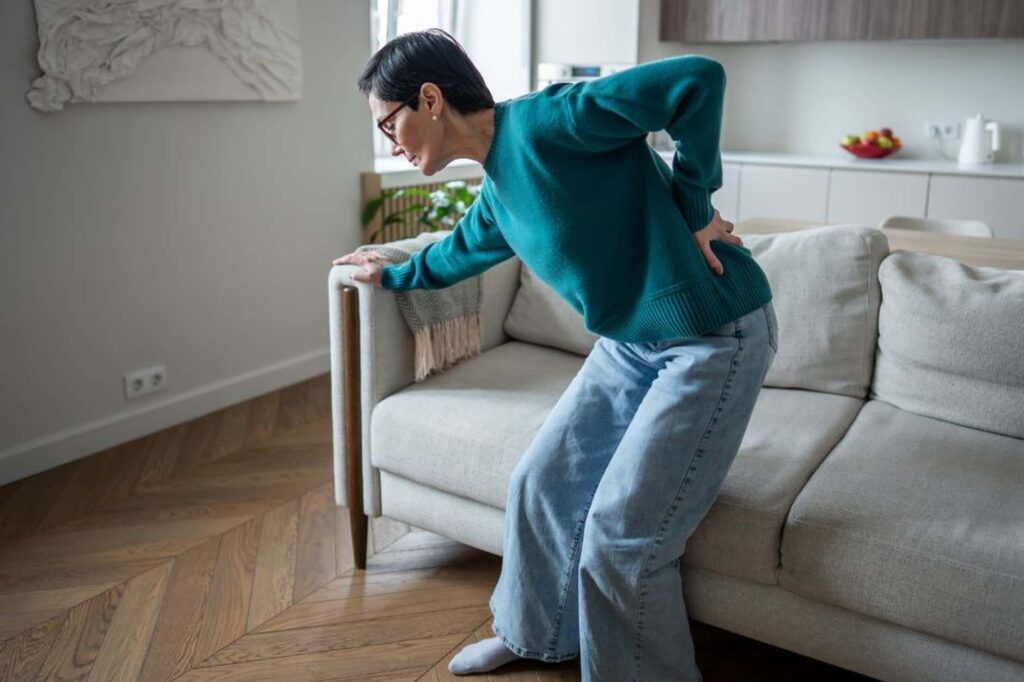
A herniated disc is a spinal disc whose soft inner material has pushed out through a weak spot in its tougher outer ring, sometimes pressing on a nearby nerve. Can a herniated disc heal without surgery? In most cases, yes: symptoms often ease within weeks to a few months, and research shows the disc material itself can shrink on its own.
Key Takeaway: Most herniated discs improve without surgery, usually over six weeks to three months. Studies show the bulging disc material often shrinks naturally, especially larger herniations. Staying active, guided exercise and pain relief help, while loss of bladder or bowel control, numbness in the saddle area or worsening leg weakness need emergency care.
What Happens When a Disc Herniates?
Spinal discs sit between the bones of the spine and act as shock absorbers. Knowing how they are built helps explain why many herniations settle on their own.
How a Disc Is Built
Each disc has a firm outer ring, called the annulus, and a soft gel-like centre, called the nucleus. With age, the discs lose water and the outer ring can develop small cracks. A herniation happens when part of the soft centre pushes through one of these weak spots.
Why It Can Cause Leg Pain
A herniated disc is not always painful. Pain usually comes when the disc material presses on or irritates a nerve root, causing inflammation. In the lower back this often leads to sciatica, a pain that travels down the buttock and leg, sometimes with tingling, numbness or weakness.
Not All Disc Changes Cause Symptoms
Scans of people with no back pain often show bulging or herniated discs, especially in older adults. This means a scan finding does not always explain the pain. A careful clinical assessment of your symptoms matters as much as any image.
Can a Herniated Disc Heal Without Surgery?
For most people, the answer is yes. Both symptom recovery and changes on scans support this.
What the Research Shows About Natural Resorption
A systematic review in Clinical Rehabilitation pooled studies that scanned people more than once after a lumbar disc herniation. It found that the herniated material shrank on its own in many cases. The larger and more displaced the herniation, the more likely it was to regress.
Why Larger Herniations Often Shrink More
This can seem surprising, but it makes sense. When disc material breaks through the outer ring, the immune system treats it as foreign tissue. Immune cells move in and gradually break it down, a process called resorption, which is more active when the fragment is exposed to the blood supply.
A contained bulge, by contrast, stays mostly behind the outer ring and is less exposed to these immune cells. That is one reason small bulges often change little on scans, even when symptoms improve. Pain can settle as nerve inflammation calms down, whether or not the disc looks different.
Regression Rates by Herniation Type
The review reported different rates of natural regression depending on the type of herniation. The figures below are from that review and describe changes seen on scans, not pain levels.
| Herniation type | What it means | Rate of spontaneous regression in the review |
|---|---|---|
| Sequestration | A fragment has broken off completely | About 96% |
| Extrusion | Material has pushed well out through the outer ring | About 70% |
| Protrusion | Material bulges out but stays mostly contained | About 41% |
| Bulging | A broad, shallow bulge of the disc | About 13% |
How Long Does a Herniated Disc Take to Heal?
Recovery varies a lot from person to person. The time frames below are typical, but they are not promises, and some people recover faster or slower.
The First Few Weeks
Pain is often at its worst in the first days to two weeks. Moving can feel hard, and leg pain may be stronger than back pain. Many people notice the first real improvement somewhere between two and six weeks, especially if they keep gently active.
Six Weeks to Three Months
By around six to twelve weeks, many people have much less leg pain and are back to most daily tasks. Numbness or tingling can take longer to settle than pain, because nerves recover slowly. Strength in the leg usually returns as nerve irritation eases.
Beyond Three Months
A smaller group still has significant pain after three months. This does not always mean surgery is needed, but it is a good time to review the plan with your doctor or physiotherapist. Some people have occasional flare-ups over the following year, which usually settle more quickly than the first episode.
Keeping a simple record of what eases and what aggravates your symptoms can help during this stage. It gives your doctor or physiotherapist useful detail when reviewing your progress.
How Does Surgery Compare With Non-Surgical Care?
Surgery has a role for some people, but for most it is not the first step. Large studies help put the choice in context.
What a Major Trial Found
A trial in the New England Journal of Medicine compared early surgery with prolonged non-surgical care for sciatica lasting six to twelve weeks. Leg pain eased faster after surgery, but after one year the results were similar in both groups. Many people in the non-surgical group never needed an operation.
When Surgery May Be Considered
Surgery is usually discussed when severe leg pain does not improve after several weeks of good non-surgical care, or when there is significant or worsening nerve weakness. It is needed urgently for cauda equina syndrome, a rare emergency described below. A spine surgeon will weigh your symptoms, scan and goals.
Making the Decision With Your Doctor
Choosing between surgery and continued non-surgical care is a personal decision. Faster relief may matter more to some people, while others prefer to avoid an operation if the long-term result is similar. Talking through the trade-offs with your doctor helps you make an informed choice.
What Helps a Herniated Disc Heal?
Non-surgical care aims to ease pain, keep you moving and protect the nerve while the body does its work. The NICE guideline on low back pain and sciatica supports exercise, self-management and, in some cases, manual therapy alongside exercise.
Stay Active Within Your Comfort
Bed rest for more than a day or two tends to slow recovery. Short walks, gentle movement and changing position often are usually better than lying still. The type of activity matters less than finding something you can do without making leg pain much worse.
Guided Exercise and Physiotherapy
A physiotherapist can assess which movements ease your symptoms and which aggravate them, then build a plan that progresses as you improve. This may include directional exercises, such as the approach described in McKenzie exercises for back and neck pain, along with core and hip strength work and advice on returning to work and sport.
Pain Relief and Other Treatments
Over-the-counter pain relief may help you stay active, and your pharmacist or doctor can advise what suits you. Heat, gentle massage and manual therapy can ease muscle spasm. If pain is severe, your doctor may discuss other options, including medication or a spinal injection in some cases.
What Can Slow Recovery?
Some factors make recovery take longer. Many of them can be changed, which is good news.
Fear of Movement
It is natural to worry that moving will cause more damage. In reality, discs and nerves usually benefit from gentle, gradual movement. Avoiding all activity can lead to stiffness, weakness and more pain over time.
Smoking, Sleep and Stress
Smoking reduces blood flow to the discs and is linked with slower healing. Poor sleep and high stress can make pain feel stronger and harder to manage. Small changes in these areas may support recovery alongside exercise.
Doing Too Much Too Soon
On a good day it can be tempting to catch up on lifting, gardening or a hard workout. Building up gradually is safer than big jumps in activity. A steady plan reduces the risk of flare-ups that set recovery back.
How Can You Tell a Disc Problem From Other Back Pain?
Not every back or leg pain comes from a disc. Getting the cause right helps you choose the right care.
Common Signs of a Disc Problem
Disc-related pain often travels below the knee, may come with tingling or numbness and can be worse with sitting, bending or coughing. Our post on how to tell a herniated disc from a muscle strain explains the differences in more detail.
Other Causes of Leg Pain
Spinal stenosis, piriformis syndrome, hip problems and some circulation problems can also cause leg pain. Read more about physiotherapy for sciatica and nerve pain for how nerve-related leg pain is assessed and treated.
Do You Need a Scan?
Most people with a herniated disc do not need an MRI at first, because the result rarely changes early treatment. A scan is usually considered if symptoms are severe, not improving after several weeks, or if surgery or an injection is being discussed. The NHS guide to slipped discs gives a clear overview of when tests are used.
Does a Herniated Disc in the Neck Heal the Same Way?
Disc herniations can also happen in the neck, known as the cervical spine. The healing process is similar, although the symptoms are different.
Symptoms of a Neck Disc Herniation
A herniated disc in the neck can cause neck pain along with pain, tingling or numbness that travels into the shoulder blade, arm or hand. Some people notice weakness in the grip or in lifting the arm. Turning or tilting the head toward the painful side often makes arm symptoms worse.
Recovery Without Surgery
As in the lower back, many neck disc herniations settle without surgery over weeks to months. Gentle movement, posture changes at work, guided exercise and pain relief are usually the first steps. Signs such as clumsy hands, trouble with balance or changes in walking need prompt medical assessment, because they can point to pressure on the spinal cord.
Can You Lower the Chance of It Coming Back?
Once a disc has settled, many people want to know how to keep it that way. There is no way to remove all risk, but some habits may help.
Keep Building Strength
Strong muscles around the trunk, hips and legs share the load placed on the spine. Continuing a simple strength routine after your symptoms settle is one of the most useful things you can do. It does not need to be complicated, and consistency matters more than intensity.
Move Often Through the Day
Long periods of sitting can leave the back stiff and sore, especially in the early months after a disc problem. Standing up, walking for a few minutes and changing position every 30 to 45 minutes can ease that build-up. Adjusting your desk, chair and screen may also help if you work at a computer.
Lift and Load Sensibly
Bending and lifting are normal and healthy for the spine, and you do not need to fear them. What tends to cause trouble is a sudden jump in load, such as a weekend of heavy yard work after weeks of little activity. Building up gradually and keeping heavy loads close to your body may reduce strain.
When Should You See a Doctor or Go to Emergency?
Most herniated discs are not dangerous, but a few symptoms point to serious nerve compression or another cause that needs urgent care.
Go to Emergency Straight Away
Go to emergency if you have new numbness around the genitals, buttocks or inner thighs, difficulty passing urine or loss of bladder or bowel control. These can be signs of cauda equina syndrome. Sudden or rapidly worsening weakness in one or both legs, such as a foot that drags, also needs emergency care.
See a Doctor Soon
See a doctor if you have back pain with fever, unexplained weight loss, a history of cancer or a recent significant fall or injury. Pain that is severe at night and not eased by any position, or symptoms that keep getting worse after a few weeks, should also be checked.
Getting Help With Recovery
If your symptoms are settling but you want a clear plan, our herniated disc treatment service in Milton offers assessment, exercise and hands-on care to support natural recovery. When you are ready, you can book an assessment online.