Back pain can come from many places, and two common sources are a muscle strain and a herniated (slipped) disc. They can feel similar at first, but the symptoms often differ. This guide explains the differences, what causes each, and when to get help. For treatment and recovery, see how a herniated disc is usually treated.
Key takeaway: Muscle strains usually cause back pain without nerve symptoms. A herniated disc can also cause leg pain, numbness, tingling or weakness if it presses on a nerve. Both usually improve without surgery, and a few symptoms need urgent care.
What Is a Muscle Strain?
A muscle strain, or pulled muscle, is an injury to the muscles of the back. It is a common cause of back pain. It is not always obvious what causes back pain, and it often gets better on its own.
What Is a Herniated Disc?
Between the bones of your spine are soft cushions of tissue called discs. A herniated disc is when one of these bulges outwards. It is painful if it presses on a nerve. Not all herniated discs cause symptoms.
Key Differences in Symptoms
Muscle Strain
- Pain in the back itself, often with stiffness
- Usually no numbness, tingling or weakness in the legs
Herniated Disc
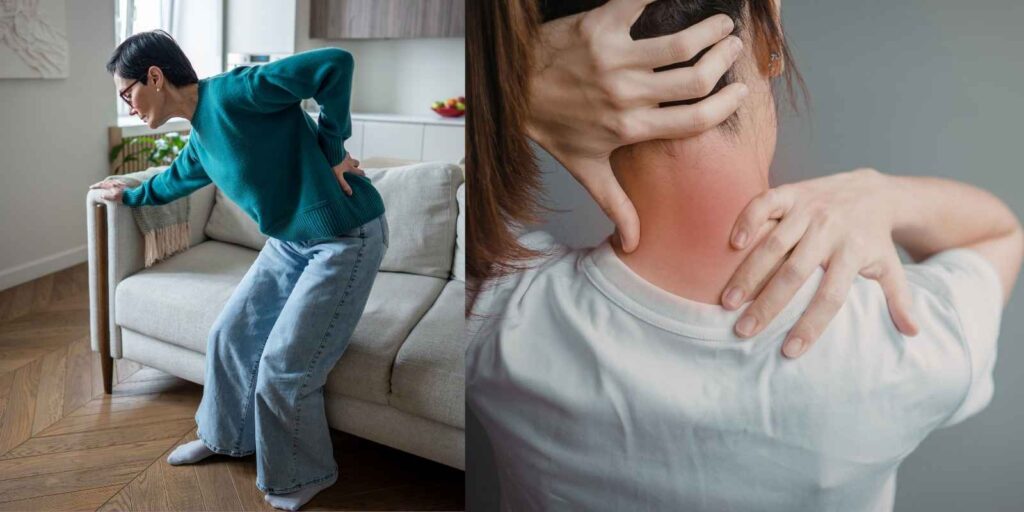
- Lower back or neck pain
- Numbness or tingling in the shoulders, back, arms, hands, legs or feet
- Problems bending or straightening your back
- Muscle weakness
- Pain in the buttocks, hips or legs if the disc presses on the sciatic nerve (sciatica)
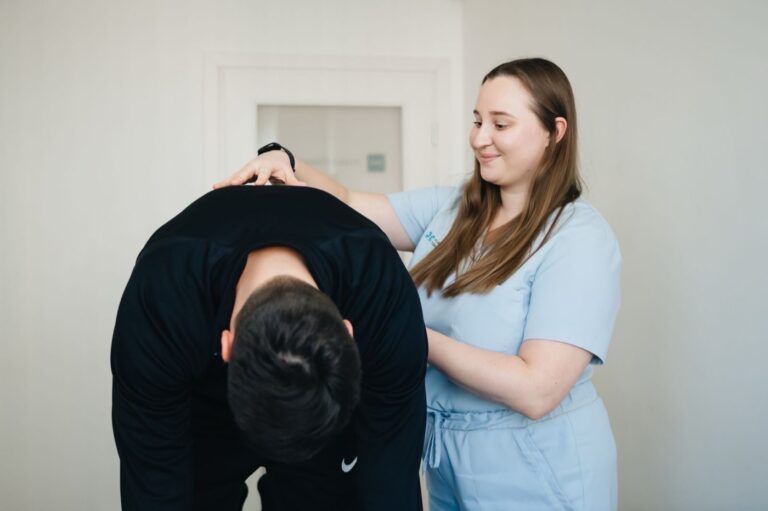
These patterns are a guide, not a diagnosis. A physiotherapist or doctor can usually tell from your symptoms and an examination, without a scan.
Common Causes
A herniated disc can happen with ageing, exercising too hard, lifting heavy objects the wrong way, sitting or driving for long periods, or being inactive or overweight. A muscle strain is a common cause of back pain from injury, but often there is no obvious reason for back pain.
Easing the Pain Yourself
- Stay active and try to continue your daily activities
- Avoid long periods in bed
- Try gentle exercise, such as walking, swimming or yoga
- Use ice or heat packs, wrapped in a towel
- Ask a pharmacist about anti-inflammatory painkillers, which are not suitable for everyone
If your pain is not settling, physiotherapy can help with either problem. See physiotherapy for back and neck pain or our lower back pain guide. Your physiotherapist may include shockwave therapy for some disc-related pain after assessment, alongside exercise and hands-on care, although UK guidance on low back pain and sciatica does not list it among its recommended treatments.
When to Get Urgent Care
Call 911 or go to the emergency department if you have back pain with numbness around your bottom or genitals, you cannot pee, you cannot control when you pee or poo, you lose feeling in one or both legs, or the pain started after a serious accident. These can be signs of a serious nerve problem, such as cauda equina syndrome.
See a doctor if painkillers are not helping, the pain is not getting better after a few weeks, you have a very high temperature or feel hot, cold or shivery, you have unexplained weight loss or a swelling in your back, or the pain is worse at night.
Insurance and Booking
Physiotherapy is often covered by extended health plans. Direct billing may be available depending on your insurer and plan; confirm coverage before you book.
Tonic Physio is at 100 Nipissing Rd #5, Milton. Call (905) 878-7775 or use our contact page to book an assessment.
Frequently Asked Questions
Can a muscle strain cause leg pain?
Leg pain, numbness or tingling is more typical of a nerve being pressed, as with a herniated disc and sciatica. Get it assessed if you have leg symptoms.
Do I need a scan to know which one I have?
Usually not. Imaging is not routinely needed for back pain, and a slipped disc can usually be diagnosed from symptoms and an examination. Read more about when an MRI is needed for a herniated disc.
Should I rest or keep moving with a muscle strain?
Keep moving where you can. Staying active and continuing your daily activities helps, and long periods in bed are best avoided.
Sources
NICE (UK) guideline NG59: low back pain and sciatica in over 16s