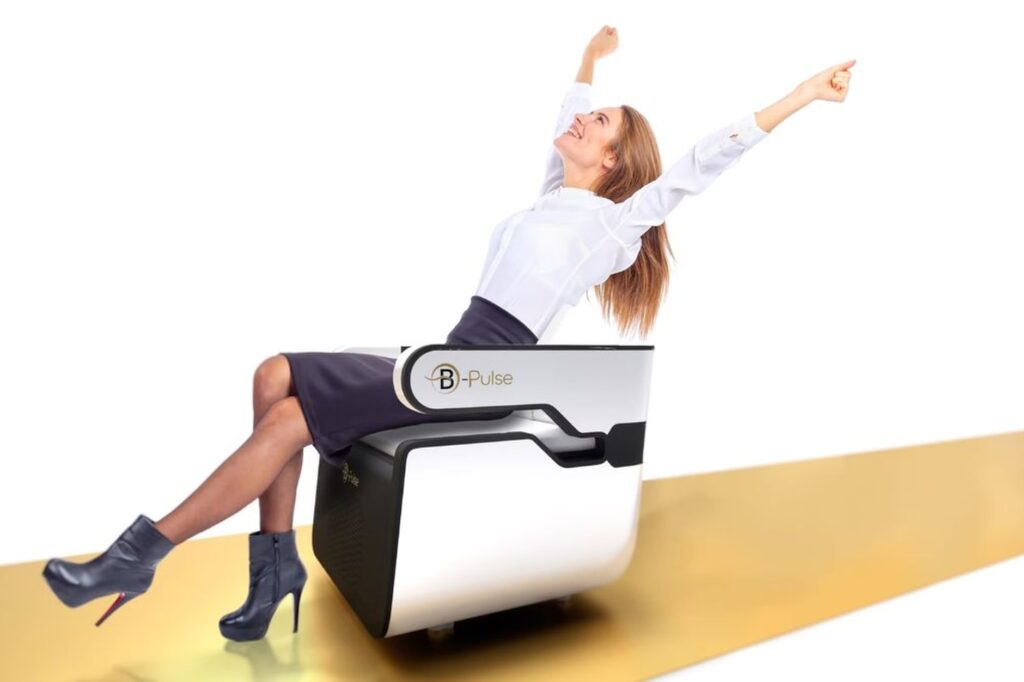
Pelvic floor dysfunction affects one in three women and many men, yet most suffer in silence. Symptoms like urinary leakage, pelvic pressure, and lower back pain are common but not normal. At Tonic Physio in Milton, Ontario, we offer specialized pelvic floor therapy using the B-Pulse chair, a non-invasive treatment that strengthens pelvic muscles without internal exams or embarrassing exercises.
What You’ll Learn: Pelvic floor therapy treats urinary incontinence, pelvic pain, and postpartum weakness using targeted exercises and the B-Pulse chair. This guide covers symptoms, causes, treatment options, and what to expect at your first appointment in Milton.
What Is Pelvic Floor Therapy?
Pelvic floor therapy is a specialized physiotherapy treatment that strengthens the muscles, ligaments, and connective tissues at the base of your pelvis. These muscles support your bladder, uterus, and bowel, and control urination, defecation, and sexual function. When they weaken or malfunction, the symptoms can be embarrassing and disruptive.
The Role of the Pelvic Floor
Your pelvic floor is a hammock of muscles spanning the bottom of your pelvis. It supports your internal organs, controls your bladder and bowel, and contributes to core stability. Every time you cough, sneeze, laugh, or lift something heavy, your pelvic floor activates to prevent leakage and protect your spine.
How Pelvic Floor Therapy Works
At Tonic Physio, pelvic floor therapy combines hands-on assessment, targeted exercise prescription, and the B-Pulse chair for non-invasive muscle strengthening. The B-Pulse delivers controlled electromagnetic pulses that contract your pelvic floor muscles far more intensely than you can achieve voluntarily. A single 30-minute session delivers thousands of contractions, equivalent to doing thousands of Kegel exercises.
Symptoms of Pelvic Floor Dysfunction
Recognizing the symptoms is the first step toward treatment. Many people live with pelvic floor dysfunction for years because they assume the symptoms are a normal part of aging or childbirth.
Urinary Symptoms
Leaking urine when coughing, sneezing, laughing, or exercising is the most common sign. You may also feel sudden, urgent needs to urinate or wake multiple times at night to use the bathroom. These symptoms indicate stress incontinence or overactive bladder, both of which respond well to pelvic floor therapy.
Pelvic Pain and Pressure
A feeling of heaviness or pressure in your pelvis, pain during intercourse, or chronic pelvic pain can all stem from pelvic floor dysfunction. Tight, overactive pelvic muscles cause pain just as weak ones cause leakage. Both patterns require professional assessment and targeted treatment.
Lower Back and Hip Pain
Your pelvic floor connects directly to your lower back and hip muscles. Weakness or tension in the pelvic floor often contributes to chronic lower back pain that does not respond to traditional back treatment. If you have persistent back pain alongside any urinary or pelvic symptoms, the pelvic floor may be the missing piece. Our back and neck pain treatment in Milton team can assess whether pelvic floor involvement is contributing.
What Causes Pelvic Floor Dysfunction?
Pelvic floor dysfunction has many causes, and most patients have more than one contributing factor. Understanding your specific causes helps us design a targeted treatment plan.
Pregnancy and Childbirth
Pregnancy stretches and weakens the pelvic floor as the growing uterus places increasing pressure on these muscles. Vaginal delivery can cause further damage, including tearing and nerve compression. Even cesarean deliveries affect the pelvic floor because the pregnancy itself stretches the muscles for 9 months.
Aging and Menopause
Pelvic floor muscles naturally thin and weaken with age. Menopause accelerates this process because estrogen helps maintain pelvic muscle tone. The decline in estrogen after menopause can lead to increased urinary urgency, frequency, and incontinence.
Chronic Constipation and Straining
Years of straining on the toilet place constant downward pressure on the pelvic floor. Over time, this pressure stretches and weakens the muscles, leading to prolapse and incontinence. Treating constipation is often part of a complete pelvic floor therapy plan.
High-Impact Activities
Running, jumping, and heavy lifting repeatedly impact the pelvic floor. Female athletes, particularly runners and CrossFit participants, have higher rates of stress incontinence than the general population. Strengthening the pelvic floor allows athletes to continue their sports without leakage.
The B-Pulse Chair: Non-Invasive Pelvic Floor Treatment
The B-Pulse chair is the centerpiece of our pelvic floor therapy program at Tonic Physio. It uses focused electromagnetic energy to stimulate deep pelvic floor muscle contractions that you cannot achieve on your own.
How the B-Pulse Works
You sit fully clothed on the B-Pulse chair while it delivers electromagnetic pulses to your pelvic floor. The pulses trigger supramaximal contractions, meaning the muscles contract more intensely than voluntary exercise can achieve. Each 30-minute session delivers approximately 10,000 contractions, building muscle strength and endurance efficiently.
Who Can Benefit From the B-Pulse
The B-Pulse is suitable for most adults experiencing pelvic floor weakness. This includes postpartum mothers, menopausal women, men with prostate issues, athletes with stress incontinence, and anyone with mild to moderate pelvic organ prolapse. A consultation determines if the B-Pulse is right for your specific condition. Learn more on our B-Pulse pelvic floor strengthening page.
What a B-Pulse Session Feels Like
Most patients describe the sensation as a deep muscle contraction, similar to an intense workout. You remain fully clothed and seated throughout the session. There is no internal exam, no undressing, and no discomfort. Sessions last 30 minutes, and most patients read or relax during treatment.
Pelvic Floor Therapy Treatment Plan in Milton
Your treatment at Tonic Physio follows a structured plan designed around your specific symptoms and goals.
Initial Assessment
Your first visit includes a thorough discussion of your symptoms, medical history, and goals. We assess your pelvic floor strength through external observation and muscle testing. For patients who consent, an internal assessment provides the most accurate information, but it is not required for B-Pulse treatment. Learn more about what to expect at your first appointment.
B-Pulse Sessions
Most patients begin with 2 B-Pulse sessions per week for 3 to 4 weeks. Each session lasts 30 minutes. You sit on the chair fully clothed while the electromagnetic pulses strengthen your pelvic floor. Many patients notice improvement after just 2 to 3 sessions.
Home Exercise Program
We prescribe specific pelvic floor exercises to do at home between sessions. These exercises complement the B-Pulse by teaching you to activate your pelvic floor correctly. Proper technique matters more than quantity: 10 correct Kegels are more effective than 100 incorrect ones.
Progress Review
After 6 to 8 sessions, we reassess your symptoms and pelvic floor strength. Most patients see significant improvement in leakage, urgency, and pelvic pressure. Treatment continues or transitions to a maintenance program based on your results.
Pelvic Floor Therapy Results: What to Expect
Most patients see measurable improvement within 3 to 4 weeks of starting treatment. The B-Pulse chair builds muscle strength rapidly, while home exercises maintain and reinforce those gains.
Typical Timeline
| Week | What Happens | Expected Improvement |
|---|---|---|
| 1 to 2 | B-Pulse sessions begin, home exercises start | Awareness of pelvic floor activation |
| 3 to 4 | Continued B-Pulse, exercise progression | Reduced leakage with coughing or sneezing |
| 5 to 6 | Sessions continue, strength builds | Significant reduction in urinary urgency |
| 7 to 8 | Reassessment, maintenance plan | Improved continence, confidence, comfort |
Long-Term Maintenance
Pelvic floor muscles behave like any other muscle: use it or lose it. After your initial treatment, monthly B-Pulse sessions and daily home exercises maintain your results. Most patients find that 10 minutes of pelvic floor exercises daily keeps symptoms from returning.
Who Should Not Use the B-Pulse Chair
The B-Pulse is safe for most adults, but certain conditions are contraindicated. You should not use the B-Pulse if you have a pacemaker, are pregnant, have metal implants in the pelvic area, or have active pelvic cancer. Your physiotherapist will review your medical history before starting treatment.
When to See a Doctor First
Certain symptoms require medical evaluation before starting pelvic floor therapy. These include blood in your urine, severe pelvic pain, sudden onset of incontinence, or a feeling of something falling out of your vagina. These may indicate conditions that need medical treatment before physiotherapy.
Insurance and Coverage for Pelvic Floor Therapy
Most extended health insurance plans in Ontario cover physiotherapy, including pelvic floor therapy. The B-Pulse chair is part of your physiotherapy treatment, so it is covered under the same plan. If you have WSIB coverage for a related condition, pelvic floor therapy may be included. Contact our team to verify your coverage before starting treatment at our Milton physiotherapy clinic.
OHIP-Covered Physiotherapy
If you qualify for OHIP-covered physiotherapy, certain pelvic floor treatments may be included. OHIP coverage has specific eligibility requirements, so call us at (905) 878-7775 to confirm your eligibility.
Pelvic Floor Therapy for Men
Pelvic floor dysfunction is not just a women’s issue. Men experience pelvic floor problems too, particularly after prostate surgery or with chronic pelvic pain syndrome. The B-Pulse chair treats male pelvic floor weakness the same way it treats women’s, with no internal exams required. Our existing post on B-Pulse benefits for men and women covers this in detail.
Post-Prostate Surgery Recovery
Prostate surgery often weakens the pelvic floor, causing urinary incontinence. B-Pulse therapy rebuilds pelvic floor strength after surgery, helping men regain continence faster than exercises alone. Most post-prostate patients see improvement within 4 to 6 weeks of starting treatment.
Pelvic Health Beyond B-Pulse
The B-Pulse chair is powerful, but pelvic floor health requires a whole-body approach. At Tonic Physio, we combine B-Pulse with other treatments for comprehensive care. Our pelvic health physiotherapy in Milton includes manual therapy, biofeedback, and exercise prescription tailored to your specific condition. We also offer post-natal massage in Milton for mothers recovering from childbirth.
Pelvic Floor Therapy for Athletes in Milton
Female athletes in Milton and the Halton Region face a hidden challenge that affects performance and confidence. High-impact sports like running, gymnastics, and CrossFit place repeated stress on the pelvic floor, leading to stress urinary incontinence.
The Athletes Incontinence Problem
Up to 30 percent of female athletes experience urine leakage during training or competition. The repetitive impact of running and jumping weakens the pelvic floor over time, and most athletes never mention it to their coaches or doctors. B-Pulse therapy strengthens the pelvic floor without requiring athletes to stop training.
Return to Sport After Pelvic Floor Treatment
Most athletes see reduced leakage within 3 to 4 weeks of B-Pulse treatment. Once the pelvic floor is strong enough to handle impact without leaking, athletes return to full training with confidence. Our return to sport program in Milton supports athletes through every phase of recovery and performance optimization.
Frequently Asked Questions About Pelvic Floor Therapy
Does the B-Pulse Chair Hurt?
No. The B-Pulse delivers electromagnetic pulses that feel like deep muscle contractions, similar to an intense workout. Most patients find it comfortable and relaxing. You sit fully clothed for 30 minutes while the chair works.
How Many Sessions Will I Need?
Most patients need 6 to 8 sessions over 3 to 4 weeks. Your physiotherapist will recommend a specific plan based on your symptoms and progress. Maintenance sessions may be recommended monthly or quarterly.
Can I Do Pelvic Floor Exercises at Home?
Yes, and we encourage it. Home exercises complement B-Pulse sessions and maintain results. We teach you proper Kegel technique and progressive exercises during your appointments. Doing 10 correct repetitions daily is more effective than 100 incorrect ones.
Is Pelvic Floor Therapy Covered by Insurance?
Most extended health insurance plans in Ontario cover physiotherapy, including pelvic floor therapy with the B-Pulse. WSIB may cover it for workplace-related conditions. Call us to verify your specific coverage.
Why Choose Tonic Physio for Pelvic Floor Therapy in Milton
Tonic Physio is one of the few clinics in the Halton Region offering the B-Pulse chair for non-invasive pelvic floor strengthening. Our physiotherapists have specialized training in pelvic health and treat these conditions with sensitivity and professionalism. We were named Milton’s Best Rehabilitation Centre in 2025, and our pelvic floor therapy program is one of our most-requested services.
Privacy and Comfort
We understand that pelvic floor concerns are personal. Your assessment and treatment take place in a private room. The B-Pulse requires no undressing, no internal exams, and no awkward positions. You sit, relax, and let the chair do the work.
Serving Milton and the Halton Region
We serve patients from Milton, Burlington, Oakville, Georgetown, Campbellville, and across the Halton Region. Call us at (905) 878-7775 to book your pelvic floor assessment, or book online through JaneApp for an appointment that fits your schedule.