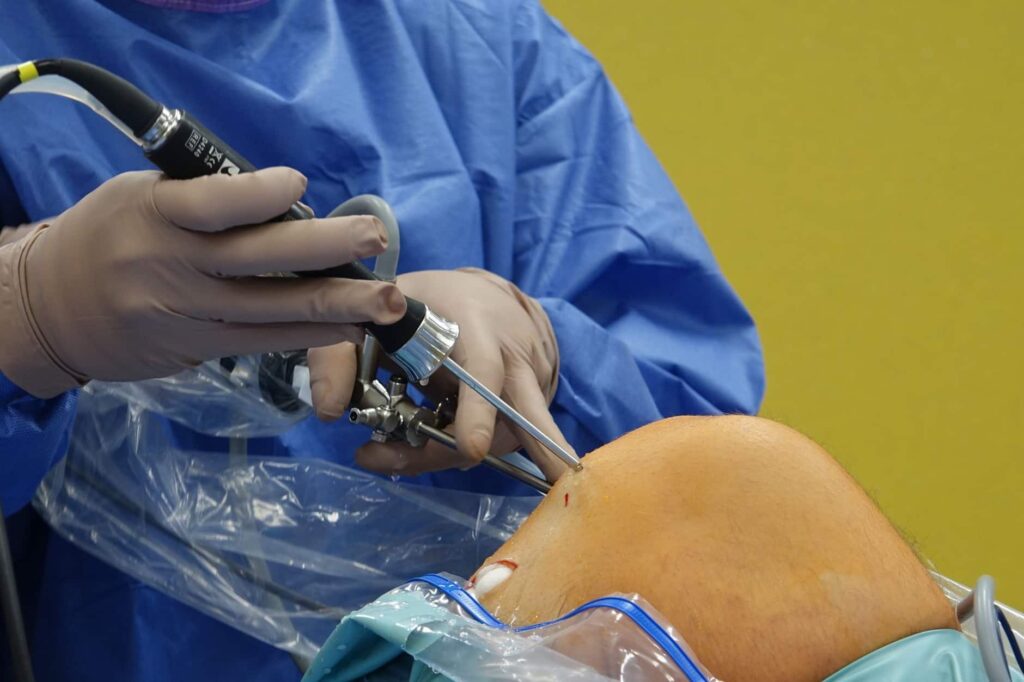
The knee replacement surgery date comes with a window the calendar rarely advertises: the weeks between the surgical decision and the surgery day, when the body that will recover is still trainable. Prehabilitation, rehab before the surgery, uses that window, and the research says the patients who train before joint replacement recover measurably faster and report less pain after. This article is the prehab guide. For a fuller picture, see whether poor posture causes neck pain.
Key Takeaway: Prehabilitation before knee or hip replacement combines strength training, mobility work, education, and nutrition, and the evidence shows faster functional recovery and reduced post-operative pain. Programs run 4 to 6 weeks before surgery, the exercises are safe for arthritic joints, and the patients who train before the operating room walk out ahead of the ones who start after.
Why prehab works: the recovery’s starting line
Post-surgical recovery is a race from your pre-operative function to your post-operative function, and the starting line matters:
- The strength you enter with is the strength the early rehab builds from: the pre-op quadriceps capacity predicts the post-op trajectory
- The movement patterns learned before surgery: the exercises started pre-op are performed fluently on day 1 post-op, while the untrained patients learn them through pain
- The confidence effect: the patients who trained know their body responds to work; the psychological advantage is real and measurable
What the research shows
- Systematic reviews of prehabilitation before joint replacement show improved post-operative function and faster recovery milestones
- Pain reduction: prehab patients report lower pain in the early recovery window in several trials
- The education effect: the patients who know the recovery phases progress through them with less anxiety and better adherence
Patients beginning a Pre-Surgical Rehabilitation program in Milton get the strength, mobility, and education plan that the surgery’s date allows, with the timeline built around the operation date.
What prehab trains: the program’s components
| Component | Exercises | Why |
|---|---|---|
| Leg strength | Sit-to-stands, mini squats, leg presses, step-ups | The post-op weeks’ working capital |
| Upper body strength | Push-ups, rows, the crutch and walker muscles | The walking aids’ demands arrive day one |
| Mobility | Range work within the joint’s comfort, the opposite hip and knee | The recovery’s motion foundation |
| Balance and gait | Single-leg work, gait practice | The post-op walking starts from here |
| Education | The exercises practiced, the equipment ordered, the home prepared | The fluency that makes day 1 productive |
The prehab program’s structure: 4 to 6 weeks
- Weeks 1 and 2: the assessment, the baseline measurements, the program started at the joint’s tolerable intensity
- Weeks 3 and 4: the progression, the exercises deepened, the education completed
- Final week: the peak, the taper to surgery, the home setup confirmed
Every session is done within the arthritic joint’s comfort: the prehab is progressive, not punishing, and the arthritis’s stage sets the dose.
The education layer: what prehab teaches
- The post-op exercises, practiced before surgery: the day-1 fluency that makes the hospital program work
- The equipment: the walker’s height, the raised toilet seat, grab bars ordered and placed
- The home setup: the bedroom’s relocation, the stairs’ plan, the first two weeks’ logistics
- The recovery timeline: the milestones dated, the expectations set, the family briefed
Education is what turns the surgery’s chaos into a plan the patient already knows, and the family’s confidence rises with the patient’s.
The exercises, described for the arthritic joint
- Sit-to-stands: the chair’s height adjusted to ability, hands used as needed, progressed toward arms-crossed
- Stationary bike: the arthritic knee’s kindest loading, the range earned progressively
- Mini squats to tolerance: the pain-guided depth, progressed as the joint allows
- Straight leg raises: the quad that the surgery will need, pre-activated
- Upper body: the push-ups and rows that the walker demands
The exercises are dosed daily, the joint’s response guides the progression, and the surgeon’s restrictions are respected throughout.
The prehab plus the post-op plan: one continuous program
The prehab’s real power is the continuity: the program that starts before surgery does not end at it. The full arc:
- Pre-op: the strength, mobility, education, and equipment preparation
- Day 1 post-op: the exercises already fluent, the program’s next phase already known
- The post-op phases: the progression that the pre-op baseline informed
- The return-to-function testing: the same metrics measured throughout, the recovery’s evidence
The physiotherapy team that runs both halves writes one continuous program, and the patient experiences one recovery rather than two disconnected phases.
The nutrition and the prehab: the pairing
The pre-surgical nutrition is part of the prehab, covered in our nutrition article, and the pairing matters:
- The protein at full target: the reserves the surgery draws from, filled in advance
- The supplement pause per the surgeon: the blood-thinning ones stopped on schedule
- The post-op plan written: the protein’s maximum dose, the energy floor, the fiber plan
The home setup checklist: the family’s prehab
- The bedroom: the ground-floor option if stairs exist, the night path lit
- The bathroom: the raised seat, the grab bars, the non-slip surfaces
- The kitchen: the week’s meals prepped, the frequently-used items moved to counter height
- The transport: the first appointments’ rides scheduled, the car’s entry practiced
The family’s preparation is half the recovery’s logistics, and the prehab’s education session walks the checklist with everyone who will help.
The hip replacement prehab: the same principles, different joints
- The hip precautions: the surgeon’s post-op movement rules, practiced before they matter
- The upper body emphasis: the walker and the chair-push-off demands
- The gait practice: the walking pattern that the new hip will inherit
The hip’s prehab mirrors the knee’s structure with the hip’s specifics, and the same evidence supports both.
The honest limits of prehab
- The pain’s ceiling: the arthritic joint tolerates a limited dose, and the program respects it; prehab is not pain-endurance training
- The surgery’s outcome: the prehab improves the trajectory; it does not control the surgical variables, and the surgeon’s skill and the implant are their own chapters
- The comorbidities: the diabetes, the heart conditions, and the other health factors that the program accommodates rather than overrides
The prehab improves the odds it can improve; the honest program says so, and the surgeon’s plan leads where the medical picture requires.
The prehab exercises, written out for the arthritic knee
The exercises that tolerate arthritic joints and build the recovery capital:
- Sit-to-stands: the chair’s height matched to ability, hands as needed, 2 sets of 10, progressed toward arms-crossed
- Stationary bike: the seat high enough that the knee never grinds, 10 to 15 minutes, the range earned pedaling
- Straight leg raises: the quad’s activation, 2 sets of 10, the exercise the surgery’s day 1 needs fluent
- Mini squats: the depth pain-guided, the range progressive
- Heel raises: the calves that the walker and the stairs demand
- Upper body rows and pushes: the band versions, the walking aids’ muscles prepared
The daily dose runs 20 to 30 minutes, the joint’s morning report guides the day’s intensity, and the weekly progression is earned by the tissue’s response rather than by the calendar’s ambition.
The prehab timeline, week by week
For the patient with the surgery date circled, the calendar map:
Six weeks out
- The prehab assessment: the baseline measure, the program written, equipment list started
- The physician conversation: the surgery clearance, the medications reviewed, the supplements paused where indicated
Four weeks out
- The program’s mid-point: the strength progressing, the mobility improving, the education sessions done
- The equipment ordered: the walker, the raised seat, the grab bars arriving
Two weeks out
- The peak training week: the exercises at their best tolerated intensity
- The home setup completed: the bedroom, the bathroom, the kitchen’s first-week logistics
- The family briefed: the schedule shared, the helpers assigned
The final week
- The taper: the exercises lighter, the fluency kept, the fatigue saved for the recovery
- The surgeon’s pre-op visit: the final clearance, the questions asked from the written list
- The bags packed: the exercises printed, the equipment staged, the home ready to receive a recovering patient
The timeline is the prehab’s spine, and each week’s tasks are small: the accumulation is what walks into surgery prepared.
The mental preparation: the recovery’s least discussed component
- The expectations set: the recovery timeline’s honest version, the good days and the frustrating ones both named
- The pain plan: the medications discussed with the surgeon, the ice protocol, the elevation routine
- The support network assigned: who drives, who cooks, who checks in; the calendar shared
- The goal named: the walk, the garden, the trip; the reason the surgery is happening, kept visible
The patients who prepared mentally as deliberately as physically report calmer recoveries, and the calm is functional: the sleep, the adherence, and the effort all follow it.
The questions to ask the surgeon before the date
The prehab assessment generates the surgery conversation’s best questions, and the list worth bringing:
- What are my post-operative weight-bearing and motion restrictions, and when do they lift?
- Which exercises do you want on day 1, and can I learn them before?
- What are my return-to-function milestones, and when do we measure them?
- Do I need any equipment ordered before the surgery, and what exactly?
- What pain plan do you recommend, and what is my role in it?
Five questions, one appointment, and the recovery’s whole shape becomes visible before the first cut. The surgeons who answer these well are the ones worth their lists, and the answers belong in the prehab program’s design.
The prehab assessment, mapped
- Minutes 1 to 15: the history, the surgery plan, the goals, the home situation
- Minutes 15 to 35: the strength and range testing, the baseline measured
- Minutes 35 to 55: the program started, the exercises taught and practiced
- Minutes 55 to 60: the equipment checklist, the education plan, the schedule set
One hour, one baseline, one program, and the surgery’s date becomes the plan’s midpoint rather than its beginning.
Getting prehabilitation in Milton
Tonic Physio’s pre-surgical rehabilitation serves Milton, Oakville, and Halton patients facing knee and hip replacement: the assessment, the program, the education, the equipment, and the post-op continuity that makes the surgery’s recovery one plan instead of two.
The surgery date is the fixed point; everything before it is trainable. Book the assessment, start the program, and take the recovery’s starting line with the strength the weeks before it can build.
Getting prehab started in Milton
Tonic Physio’s pre-surgical rehabilitation serves Milton, Oakville, and Halton patients facing joint replacement: the assessment, the strength and mobility program, the education and equipment preparation, and the post-op plan that continues seamlessly from the surgery day.
If your surgery date is on the calendar, the window is open: book the prehab assessment, start the program, and walk into the operating room with the body, the knowledge, and the home that recovery will need. The race to recovery has a starting line; the prehab is where you take your mark.
Answers to the questions pre-surgical patients ask most
Is it safe to exercise an arthritic joint before replacement?
Yes, within tolerance: the prehab exercises are pain-guided and progressive, and the research on prehabilitation shows no increased harm. The assessment sets the safe dose, and the joint’s complaints are respected as information.
How much does prehab actually help?
The reviews show faster functional recovery and reduced early post-operative pain; the size of the benefit varies with the program’s quality and the starting point. The consistent finding: the stronger you enter, the stronger you recover.
How many weeks do I need?
Four weeks produces measurable benefit; six is better; more is fine. The surgery date and the assessment’s findings set the plan’s length.
What if the surgery date is only 2 weeks away?
Start anyway: two weeks of training and education still improve the day-1 fluency and the family’s preparation. The prehab’s education half delivers value even in the shortest window.
Can I do prehab at home?
Partially: the exercises are learnable, and the assessment plus the periodic check-ins is the standard model. The supervised option adds the progression discipline and the equipment practice.
Who Benefits Most From Prehabilitation in Milton
Prehab before joint replacement is not reserved for athletes. The clients who gain most at our Milton clinic fall into three groups. First, the scheduled surgery crowd: knee and hip replacement patients who train the surrounding muscles for four to six weeks before the operating date, arriving at surgery stronger and leaving rehab sooner. Second, the deconditioned: patients whose joint pain has quietly shrunk their activity for a year or more, whose baseline needs rebuilding before the joint is replaced.
The third group is often overlooked: the worried. Patients who delay surgery and lose strength every month they wait. A structured prehab block stops that slide, and the research is blunt about the payoff. Every week of strength built before surgery is repaid with interest during recovery, because the muscles are already trained to fire, the movement patterns are already rehearsed, and the confidence is already banked.