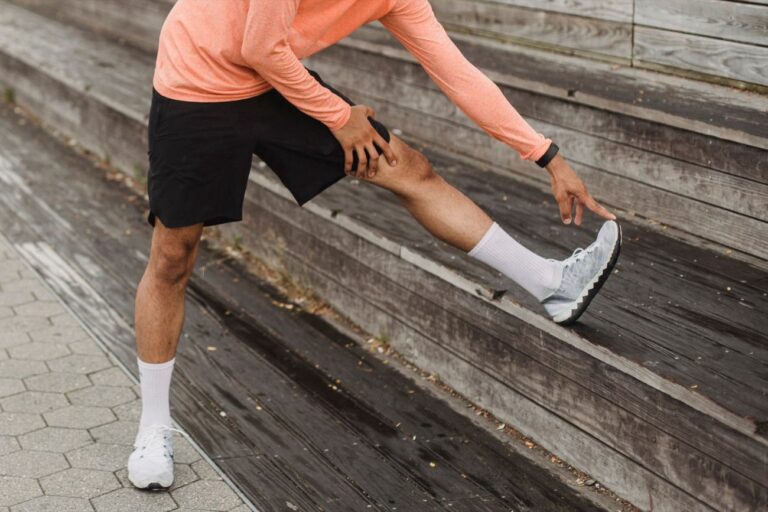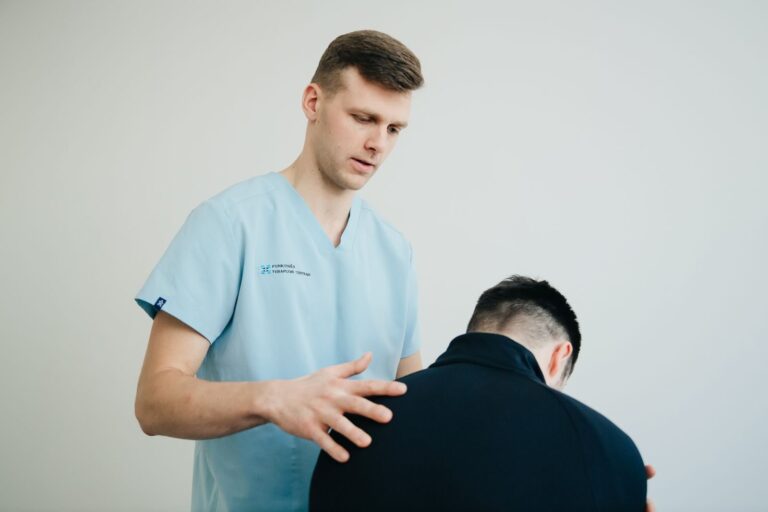
Golf physiotherapy checks the movements a golf swing demands, such as hip and upper back rotation, shoulder and wrist motion, balance and strength. It then treats the limits that overload your back, elbow or shoulder. It can help golfers who are in pain and golfers who simply want to swing with less strain.
Key Takeaway: Most golf aches trace back to a movement limit somewhere else in the body, often the hips, mid-back or ankles, not just the sore spot. A golf physiotherapy assessment finds that limit, and a plan of mobility, strength and sensible practice helps you swing with less strain. See a doctor first for chest pain, new leg weakness or numbness, or severe pain after a fall.
What is golf physiotherapy, and why does golf cause aches?
Golf physiotherapy is physiotherapy that assesses and treats the movement limits, strength gaps and overload patterns that affect your golf swing and the body parts it stresses.
Golf looks gentle, but a full swing is a fast, repeated twist that asks several joints to share the work. When one joint does not move well, a neighbouring joint often moves too much to make up for it. That extra movement is where many golf aches begin.
What the swing asks of your body
A swing turns your shoulders and hips away from the ball, then unwinds through impact and into the follow-through. Your hips, mid-back, shoulders, wrists and ankles all take part. The legs and trunk must also stay steady while the arms move quickly.
Most golfers hit dozens of full swings in a round, plus practice swings and range sessions. Small limits add up when they are repeated that often.
Where golfers hurt most
The low back is the most common trouble spot, followed by the elbow, shoulder, wrist and lead hip. The pain often shows up the day after a round, not during it.
A 2022 study followed 41 injury-free golfers for six months. Seventeen of them developed low back pain, and their swing measurements at the start differed from the golfers who stayed pain free.
The authors reported less lead ankle dorsiflexion and lead knee bend in the golfers who later developed back pain. That suggests the lower body matters as much as the spine, and it is why we test the ankles and hips as well as the back.
What is a mobility limit, and how can it cost you strokes?
A mobility limit is a joint or area of the body that does not move as far as the swing needs. You may not feel it in daily life, but a golf swing finds it quickly. The rest of your body then bends, tilts or slides to complete the motion.
Hips and mid-back come first
Rotation in the hips and the middle of the spine lets your body turn without forcing the lower back to do the twisting. If the hips stay stiff, the low back is often asked to rotate more than it comfortably can.
Long hours of sitting can leave both areas tight. Many golfers who work at a desk notice the stiffness first on the range, in the opening swings of the day.
How a stiff chain changes your swing
When rotation is limited, golfers often cut the backswing short, slide the hips, lift out of the posture or flip the hands at impact. Each habit is a way of getting around a limit, and each can affect contact and distance.
A physiotherapist cannot teach you a swing, which is your coach’s job. What we can do is find out whether your body can physically make the movement your coach is asking for.
What does a golf physiotherapy assessment include?
An assessment starts with your history: where it hurts, when it hurts, how often you play and how your swing has changed. We then test the movements and strength a swing relies on. The aim is a clear map of which limits link to which complaint.
Movement screen
- Hip rotation on both sides, because the lead and trail hips do different jobs
- Mid-back rotation, tested sitting and lying down
- Shoulder, elbow and wrist range, especially on your lead side
- Ankle and big toe movement, which affect balance during the swing
Differences between the left and right sides matter as much as the numbers themselves.
Strength and balance
We test how well your trunk resists unwanted twisting, how strongly your hips and legs push into the ground, and how steady you are on one leg. Grip and forearm strength are checked as well, since they relate to elbow strain.
Your swing on video
If you bring a short phone video of your swing, we can compare what you see on screen with what we find on the table. For example, an early lift out of the posture may match a stiff hip or weak gluteal muscles.
This does not replace a golf lesson. It does help your coach and your physiotherapist work from the same information, so the advice you hear lines up.
How can golf physiotherapy help common golf injuries?
Treatment depends on what the assessment finds. It usually combines hands-on care, specific exercises and advice on how much to play while you recover. Most golfers can keep playing in some form, with changes.
Low back pain
For back pain, we look first at the hips, mid-back and ankles, then at the trunk muscles that control the twist. Hands-on treatment may ease stiffness so that exercises feel easier. Our post on why lower back pain keeps coming back explains why treating only the sore spot often fails.
Golfer’s elbow
Golfer’s elbow causes pain on the inner side of the elbow, often with gripping or at impact. Treatment usually includes gradually loaded forearm exercises, grip changes and a sensible plan for range practice. You can read more in our golfer’s elbow awareness tips.
Lead shoulder pain
The lead shoulder works hard to slow the club after impact. Rotator cuff strengthening, shoulder blade control and mid-back mobility often form the core of the plan. Our guide to physiotherapy for shoulder pain describes what that care looks like.
Which exercises help a golf swing?
Golfers often ask for one magic stretch. In practice, the best exercise is the one that targets your own limit, so two golfers with the same back pain may get quite different plans.
Exercises should match what your assessment found, so the examples below are general ideas, not a prescription. Move slowly, stay within comfortable ranges and stop if you feel sharp or travelling pain. Ask a physiotherapist before starting if you are in pain now.
| Goal | Example exercise | What it supports |
|---|---|---|
| Hip rotation | 90/90 hip switch | A smoother turn that spares the low back |
| Mid-back rotation | Open book | Shoulder turn without forcing the spine |
| Trunk control | Pallof press | Staying steady while the arms swing |
| Single-leg balance | One-leg stand | A stable base through the swing |
| Grip and forearm | Light wrist curls | Elbow tolerance at impact |
Mobility drills
- Open book: lie on your side with knees bent and slowly open your top arm toward the floor behind you
- Seated trunk rotation: sit tall with arms crossed and turn gently to each side
- 90/90 hip switch: sit with both knees bent and gently rotate your legs from side to side
- Ankle rocks: kneel in a half-lunge and glide your knee over your toes, keeping the heel down
Strength and stability work
- Glute bridge: lift your hips from the floor, hold briefly and lower with control
- Pallof press: hold a resistance band at your chest and press it forward without letting your trunk twist
- Single-leg balance: stand on one leg for 30 seconds, then progress to a slow half-swing
- Wrist and forearm curls: use a light weight and move slowly in both directions
Start with one or two sets and build up over several weeks. Doing a little often tends to beat doing a lot rarely.
Pick three or four moves, do them on non-golf days and keep a note of how your swing feels. If a drill makes your pain worse the next day, reduce it and tell your physiotherapist.
How should you warm up and recover around a round?
Many golfers walk from the car to the first tee and swing a driver cold. A short routine makes the first holes more comfortable and may lower the load on cold tissue. It also takes less time than a bucket of range balls.
Cooler Ontario mornings in spring and fall make this more important, because muscles feel stiffer when it is cold. Dress in layers you can remove as you warm up.
Before the first tee
- Walk briskly for a few minutes to raise your heart rate
- Do hip circles, leg swings and gentle trunk rotations
- Take slow practice swings with a short club, then increase the speed gradually
- Hit short clubs on the range before the driver
The day after
A short walk, light mobility work and normal daily movement usually serve you better than complete rest. Some stiffness after a long round is common. Pain that is getting worse from one round to the next is a sign to ask for an assessment.
If you pick up a new swing change or increase practice suddenly, expect the body to need a few weeks to catch up. Raise the volume gradually, as you would with any new training.
Is golf physiotherapy useful for older and younger golfers?
Yes, though the plan looks different. Older golfers often benefit from gentle mobility and balance work, while young golfers benefit from sensible practice limits and good movement habits. Both groups do better when someone checks their movement before a problem builds.
Older golfers
Plenty of people take up golf after they retire, and they are often surprised by how much walking and twisting it involves.
Golf is one of the few sports people can play for decades. Arthritis, stiffness and reduced balance can make it harder, but they do not have to end the game. Mobility, leg strength and balance work can help older golfers keep walking the course and swinging comfortably.
Young and growing golfers
Growing golfers who practise often can develop overuse pain. A physiotherapist can look at flexibility, strength and training volume, and suggest rest days. Your coach, your parents and your physiotherapist should all agree on a realistic practice load.
How does golf physiotherapy fit with lessons and club fitting?
Your physiotherapist, your swing coach and your club fitter each see a different part of the picture. The best results usually come when they know what the others have found. None of them replaces the others.
Working with your coach
A coach can only ask for a movement your body can make. If a drill keeps failing because of a stiff hip or a weak trunk, a physiotherapy plan may open the door for the lesson. Sharing a short note or video between the two of you can save weeks of frustration.
Equipment and club fit
Grip size, shaft length and club weight can change how much load reaches your hands, elbows and back. Golfers with sore hands or elbows sometimes find a different grip more comfortable. A club fitter can advise on equipment, while your physiotherapist advises on what your body can comfortably do.
Practising smartly
A bucket of range balls is a lot of full-speed swings in a short time, often off a firm mat. If you are returning from pain, hit fewer balls, take breaks and stop the session if pain builds. Build volume gradually over several weeks, just as you would with any other training.
When should you see a doctor?
Most golf aches are mechanical and respond to a change in movement and load. A few symptoms need medical attention first, and it is better to be careful with them.
Urgent signs
Go to an emergency department or call 911 if you have chest pain, shortness of breath or faintness on the course. Seek urgent care for back pain with new leg weakness, numbness in the groin or saddle area, or loss of bladder or bowel control. The NHS back pain guidance lists these as warning signs.
See a doctor if pain follows a hard fall or direct blow, if you have a fever with joint pain, or if night pain keeps waking you. You can also call Health811 at 8-1-1 for free advice from a registered nurse.
When to book an assessment
Book a visit if pain has lasted more than a couple of weeks, if it returns every time you play, or if you notice a loss of range that is changing your swing. You do not need a doctor’s referral to see a physiotherapist in Ontario, though some insurers ask for one.
How can physiotherapy in Milton help your golf?
Golf physiotherapy at Tonic Physio focuses on why your body is struggling with the swing, not just where it hurts. We work with the Milton and Halton golf season, from early spring preparation through the fall. In winter we can help with indoor practice, simulators and getting ready for the next season.
What a visit looks like
Your first visit covers your history, a movement and strength screen and a review of your swing video if you have one. You leave with a short exercise plan and clear advice on how much to play.
Our golf physiotherapy service page explains the program in more detail. Our sports physiotherapy overview shows how we approach performance and injury for other sports.
Extended health benefits may cover physiotherapy, depending on your plan. WSIB or auto insurance may apply if an injury happened at work or in a collision, but not for ordinary golf aches.
Booking
If aches are shortening your rounds, you can book an assessment online to see whether a mobility and strength plan suits you.