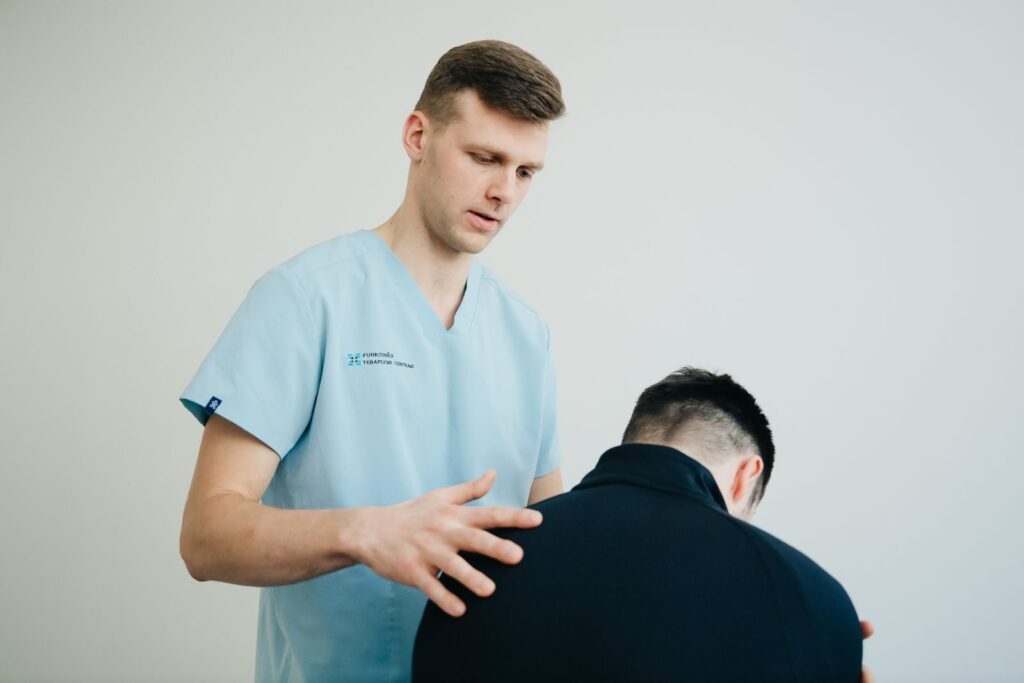
A functional movement screen is a set of simple tests that look at how you squat, step, lunge, reach and balance. It can reveal stiffness, weakness and left-to-right differences worth working on. Research suggests the score alone does not reliably predict who will get injured, so the useful part is the plan that follows.
Key Takeaway: A functional movement screen is a quick check of how you squat, step, lunge, reach and balance that can point out stiffness, weakness and side-to-side differences. The score alone does not reliably predict injury, so its value lies in the plan built from what it finds. Pain during a screen means you need a proper assessment instead.
What is a functional movement screen?
A functional movement screen checks the basic movement patterns that sport and daily life rely on. The best known version is the Functional Movement Screen, or FMS, which uses seven tests and a score out of 21. Each test is graded from 0 to 3, with the aim of spotting limits and imbalances early.
The movements it looks at
- Deep squat, hurdle step and in-line lunge for lower body control
- Shoulder mobility and active straight leg raise for flexibility
- Trunk stability push-up and rotary stability for core control
Our functional movement assessment in Milton uses standard tests such as the overhead squat, hurdle step and in-line lunge to check movement quality.
Screen versus assessment
A screen is a quick, general check. An assessment goes further, adding strength tests, joint range, balance and sport-specific movements. A physiotherapist interprets the results alongside your history, not from the score alone.
A screen is usually short, which makes it practical for a first look. Expect to repeat each test a few times. You can stop at any point.
Who it is designed for
Screening is designed for people without a current injury who want to find weak links. If you are already in pain, a physiotherapy assessment is a better first step, because it focuses on diagnosing and treating the problem.
How are the movement tests scored?
Each FMS test is scored from 0 to 3. A 3 means the movement was done cleanly, a 2 means it was done with a compensation, a 1 means it could not be completed, and a 0 means pain occurred. Several tests are done on both sides, and the lower score counts.
| Score | What it means | Usual next step |
|---|---|---|
| 3 | The movement was done cleanly | Keep up your current routine |
| 2 | Done with a compensation | May prompt a closer look at ankle, hip or core control |
| 1 | Could not complete the movement | Worth a fuller assessment |
| 0 | Pain occurred | Stop and have a physiotherapy assessment |
What the scores are meant to show
The scoring aims to flag movements that look limited or uneven, so they can be looked at more closely. A 2 on a lunge, for example, might prompt a check of ankle, hip and core control. It is a prompt for further questions, not a diagnosis.
Why pain changes everything
A score of 0 is given when a movement is painful, and that means it needs a proper physiotherapy assessment. Pain during a screen should never be ignored or pushed through. It may point to an injury that is not yet obvious.
Can a movement screen predict injuries?
The evidence says a screen is not a crystal ball. Two large reviews looked at whether the FMS composite score predicts later injury, and they reached cautious conclusions. This is worth knowing before you pay for any screening.
What the research found
A 2017 systematic review with meta-analysis pooled 24 studies. It found a small association between low scores and later injury in male military personnel, and concluded that the association does not support using the composite score as an injury prediction tool. For many other groups, including soccer, basketball, hockey and running, evidence was limited or conflicting.
A separate 2017 review reported excellent reliability between testers. It also found higher odds of injury in people scoring 14 or below, while noting flaws in the validity of the test. The two reviews do not agree on how much weight a score deserves.
Why the results differ, and what that means for you
Studies used different cut-off scores, different athlete groups and different follow-up periods. Injuries were also defined in different ways. Those differences make it hard to draw one clear conclusion, which is one more reason to treat a score with caution.
A low score does not mean you will get hurt, and a high score does not mean you are safe. The more useful question is whether the screen shows something you can change, such as a stiff ankle or a weak hip. If it does, working on it is sensible whatever the score.
Why left-to-right differences matter
Many clinicians pay close attention to differences between your two sides, such as one hip rotating less or one leg balancing worse. These findings are easy to act on, because you can train the weaker side. They also give a baseline you can check again later.
What does a good movement assessment include?
The screening score is only one part of a good assessment. The value comes from combining several measures, interpreting them with your history and goals, and ending with a plan you can follow.
Movement quality and mobility
The therapist watches how you squat, lunge, bend and reach, and notes where the movement breaks down. They also measure joint range, such as ankle bend, hip rotation and upper back rotation. Restrictions in these areas can force other joints to compensate.
Strength, balance and control
Balance and single-leg tests show how well you control your body when load or speed increases. Strength tests, such as calf raises, hip strength and hop tests, show differences between sides. Together, these give a fuller picture than a single score.
Tests are repeated so the therapist can compare your first attempt with later ones. Fatigue, shoes and even nerves can change how you move. Several attempts give a fairer picture.
Your sport, job and history
A runner, a hockey player and an office worker have different demands. Past injuries, training load and work habits all affect which findings matter. Our running gait assessment is one example of a sport-specific check.
Can you check your own movement at home?
You can notice a lot with a few simple checks, although they are not a substitute for a professional assessment. Treat them as a way to start a conversation with your physiotherapist rather than a way to judge yourself.
Simple checks to try
- Single-leg balance: stand on one leg near a counter for 30 seconds, then repeat on the other side
- Squat video: film a bodyweight squat from the front and side, and compare your two knees
- Knee-to-wall: with your foot a hand’s width from a wall, see whether your knee can touch it without lifting your heel
Stop if anything hurts. Use a stable counter for support, and have someone nearby if you feel unsteady.
What to do with what you notice
If one side is clearly stiffer or weaker, mention it at your next appointment. Avoid starting an intense new program based on a home check. Gentle, gradual exercise is a safer starting point.
Film your checks in the same spot and in the same clothes each time. That way any change you see later reflects your movement, not the camera angle. Save the clips to show your therapist.
What happens after the screen?
A screen without a plan is just information. The real benefit comes from picking the few findings that matter and working on them. Keeping the plan small makes it easier to follow.
A short, targeted plan
Most plans focus on two or three priorities, with simple exercises you can do at home. Examples include ankle mobility drills, glute and hip strengthening, single-leg balance, or thoracic rotation work. Your physiotherapist can show you how to progress them over several weeks.
Re-checking your progress
After several weeks of practice, the same tests can be repeated to see what has changed. Seeing improvement in a squat, balance time or side-to-side difference can be motivating. If nothing has changed, the plan can be adjusted.
It also helps to note how you feel during daily tasks, such as getting out of a low chair or climbing stairs. Changes in these everyday movements often matter more to people than a test score.
How often to repeat a screen
There is no firm rule. Many people re-check at the start of a new season, after an injury, or before a big increase in training. A yearly check is a common choice for people who train regularly.
Who might benefit from a functional movement assessment?
You do not need to be an athlete. Anyone who wants to move better, return to activity safely or understand repeated niggles can benefit. It is a planning tool, not a promise of injury prevention.
Runners and field or court athletes
Runners and players in soccer, hockey or basketball may use a screen at the start of a season. Pairing it with a gradual training plan, such as in our post on increasing running mileage without injury, can help you spot problems earlier.
Gym-goers, desk workers and people returning to exercise
If your squat or deadlift feels uneven, or you are returning to training after a break, a screen can show whether stiffness or weakness is holding you back. It also gives a starting point to measure progress against.
Long hours at a desk can stiffen the hips and upper back. A movement assessment can show where your body is compensating. Our guide to workplace ergonomics adds practical desk tips.
Teams, clubs and young athletes
Some coaches use screening at the start of a season to find players who need extra support. The same caution applies to teams as to individuals. Findings should lead to practical conversations and training changes, not to dropping anyone from a roster.
Growing athletes can go through phases of tightness or clumsiness. A screen can help parents and coaches notice patterns, though it should not be used to label a child. Any concern should be followed up by a qualified clinician.
What are the limits of movement screening?
Every test has limits, and it helps to know them. A screen cannot diagnose an injury, cannot see inside a joint, and cannot account for training load, sleep, stress or bad luck. Those all influence injury risk too.
A score is not a verdict
Scores can vary with how warmed up you are, how the tester grades a move, and how you feel on the day. Treat the number as one data point. The pattern of findings tells you far more.
Pain during a test
If a movement causes pain during a screen, tell the therapist right away. Pain is not part of a standard score, and it may point to an injury that needs a proper assessment. You should never push through sharp pain to complete a test.
When should you see a doctor or get assessed instead?
A screen suits healthy people who want to prevent problems. It is not the right step if you have symptoms that need medical attention.
See a doctor first
See a doctor promptly if you have chest pain, dizziness or shortness of breath with exercise, or numbness, weakness or loss of control of your bladder or bowels. Go to emergency or call 911 if these symptoms are sudden or severe.
Book a physiotherapy assessment instead
If you already have pain, swelling or a recurring injury, a physiotherapy assessment is more useful than a screen. Pain that lingers for more than a few weeks, or that limits your daily activities, should be checked. Health811 on 8-1-1 offers free nurse advice if you are unsure.
How can functional movement assessment help in Milton?
At Tonic Physio, our physiotherapists use movement screening as one part of a wider assessment. We look at your goals, your sport or job, and your history. You leave with a short, practical plan you can follow.
What to bring
Wear comfortable clothes you can move in, and bring the shoes you train in. Tell us about past injuries, current aches and what you want to achieve. If you have imaging or medical reports, bring them along.
Arrive a few minutes early so you are warm and not rushed. Tell the therapist if any movement worries you, and ask them to explain each test before you start.
Coverage and booking
Assessments are physiotherapy services, and many extended health plans cover physiotherapy, although coverage varies. We offer direct billing to many insurers. Read about return to sport testing criteria if you are coming back from injury, then book an assessment online to talk through your goals.