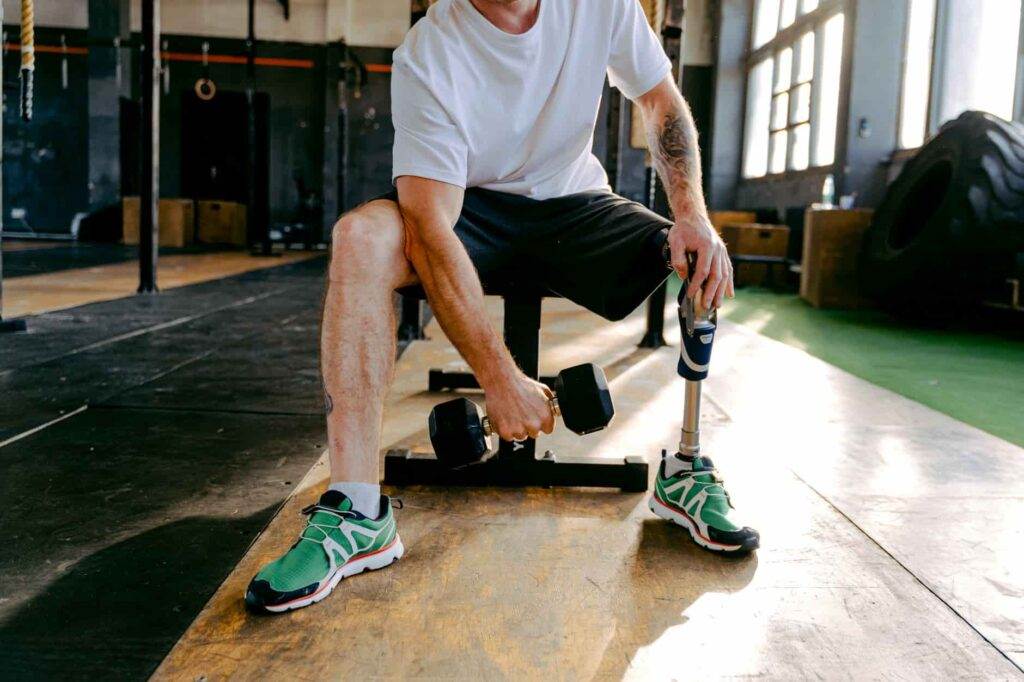
Athletes return to play by calendar all the time: six weeks for a sprain, nine months for an ACL. The calendar never watched you move, never tested your strength, and never asked whether your knee trusts a cut. Criteria-based clearance does all three, and it is the difference between athletes who return ready and athletes who return to the same injury.
Key Takeaway: Time-based clearance is a guess with a date on it. Real clearance comes from passing a test bettery: strength within 10 percent of the other side, hop test symmetry at 90 percent or better, sport-specific movement quality, and psychological readiness. Athletes who clear on tests, not weeks, return safer and perform better.
Why counting weeks fails the injured athlete
Healing timelines describe populations, not people. A six-week ankle sprain guideline assumes a moderate sprain in an average adult doing average rehabilitation. Your actual readiness depends on injury severity, your rehab quality, your sport’s demands, and the asymmetries you carried into the injury.
The calendar also carries a hidden cost: fear. Athletes cleared by date, without proof of readiness, hesitate. Hesitation changes mechanics, changes mechanical load tissues in new ways, and the re-injury that follows gets blamed on bad luck rather than on a clearance that never measured anything.
The re-injury numbers behind the argument
- ACL-reconstructed athletes under 20 who return before meeting strength and hop criteria carry re-injury rates several times higher than those who clear criteria first
- Hamstring injuries recurring within the same season are strongly associated with strength deficits that were never retested
- Across sports, athletes who pass objective test batteries before return miss fewer subsequent games than those cleared by time alone
The core test that decides readiness
A proper test battery measures the abilities your sport will demand, compares them to your uninjured side and to normative data, and produces numbers rather than impressions. The core battery covers strength, power, and confidence.
Strength symmetry: the foundation gate
- Quad and hamstring strength measured on both sides, ideally with a dynamometer, targeting 90 percent or better on the injured side
- Calf endurance: single leg raise capacity matching the other side, because the calf drives every push-off in sport
- Hip abduction and external rotation strength, which control the knee’s alignment under cutting loads
Strength symmetry below the target means the nervous system is still guarding. Clearing sport tests on a guarded system produces exactly the compensation patterns that shift load somewhere weaker.
Hop testing: power under real conditions
Hop tests measure power, landing control, and confidence in a single number. The standard battery uses four tests: single hop for distance, triple hop, crossover hop, and a 6-meter timed hop. Symmetry of 90 percent or better across all four is the conventional clearance standard, and the crossover hop adds a change-of-direction stress that plain forward hops miss.
| Test | What it measures | Clearance standard |
|---|---|---|
| Single hop for distance | Raw power, push-off capacity | 90% of uninjured side |
| Triple hop | Repeated power under fatigue | 90% symmetry |
| Crossover hop | Lateral control, cutting readiness | 90% symmetry |
| 6-meter timed hop | Speed, landing absorption | 90% symmetry |
Landing quality: the number of tests hides
Two athletes can hop identical distances while absorbing landings completely differently. Knee position on landing, trunk control, and quiet versus slapping foot contacts distinguish a ready knee from a guarded one. Video or a trained eye on the hop battery catches what distance measurements alone miss, and that layer is where post-surgical rehab programs earn their results: the battery is administered, but it is interpreted with eyes on every landing.
Sport-specific tests: the last gate
Generic numbers clear generic athletes. Your sport gets the final say, through tests that reproduce its actual demands.
- Court and field athletes: timed agility patterns, cutting on command, deceleration from sprint speed
- Runners: graded return-to-run progression with gait observation under fatigue
- Overhead athletes: throwing or serving volume tolerance without next-day symptoms
- Contact sports: controlled contact exposure in practice before full clearance
Psychological readiness: the test nobody schedules
Fear of re-injury predicts both poor performance and actual re-injury, and it hides inside physical tests until it fails. Athletes who pass every physical test but describe their knee as not trustworthy are telling you something the hop tests cannot.
Reading psychological readiness honestly
- Ask the athlete to rate trust in the limb from 0 to 100; anything under 90 is unfinished business
- Watch for hesitation on the first few cuts in open play after clearance
- Use structured scales where available; the ACL-RSI scale predicts return-to-sport outcomes better than most physical tests
Confidence rebuilds through graded exposure: the sport’s movements practice at submaximal intensity, then full intensity in practice, then game speed with unpredictability. Skipping the ladder is how athletes pass the physical battery and still freeze on the field.
The timeline vs the test battery: how to use both
Timelines still matter; they just stopped being the finish line. Tissue healing follows biology on a minimum clock: bone, tendon, and ligament each have physiological minimums that no test result can shortcut. The professional sequence uses the calendar as a floor and the test battery as the actual gate.
| Injury | Physiological minimum | Typical test-cleared return |
|---|---|---|
| Grade 2 ankle sprain | 3 to 4 weeks | 4 to 8 weeks, hop battery |
| Hamstring strain grade 1 to 2 | 2 to 4 weeks | 3 to 6 weeks, strength plus sprint tests |
| ACL reconstruction | 9 months tissue healing | 9 to 12 months, full battery plus psychological readiness |
| Grade 2 MCL knee | 3 to 4 weeks | 4 to 8 weeks, cutting battery |
Note what the table implies: the test battery typically adds weeks to a naive calendar return. Those weeks are the cheapest re-injury insurance in sports medicine.
Building the battery into your rehab from day one
The most common failure is treating testing as an event at the end of sports rehab. Rehab work when they start early and repeat monthly, because the trend line tells you whether rehab is actually working.
The monthly rhythm that keeps rehab honest
- Baseline the uninjured side in week 1, while the injury is fresh, because that side will detrain too
- Re-run the relevant tests monthly; chart the symmetry numbers
- Let plateaus trigger program changes rather than longer waits
- Clear return only when strength, hops, sport tests, and confidence all cross threshold in the same month
Re-testing also catches the quiet failures: an athlete whose strength hit 90 percent in month three and silently slid back to 80 by month five. Without the numbers, nobody notices until the season starts.
Injury-specific test additions beyond the core battery
The core battery travels to every injury. Each injury adds its own sport-relevant gates, and a clearance without them is half a clearance.
ACL reconstruction: the extra gates that matter
- Quadriceps strength at 90 percent minimum, ideally tested with isometric dynamometry rather than estimates
- Single leg drop landing with knee control observed from the front and side
- Limb Symmetry Index across all four hop tests, not just the best one
- Twelve months minimum post-surgery for young athletes, because every month under nine multiplies re-injury odds
Ankle sprains: the most under-tested return in sport
- Single leg balance with eyes closed, 30 seconds, matching sides: proprioception is the ankle’s first casualty and last recovery
- Calf raise endurance to fatigue on both sides, counted, not estimated
- Lateral hop-and-stick test: hop laterally, land, hold for 2 seconds without a wobble
- Star excursion reach symmetry for dynamic control
The ankle deserves special mention because almost nobody tests it. Chronic ankle instability is what an untested ankle sprain becomes, and the fix costs six weeks when caught early and a season when caught late.
Details on our return to sport program are on our service page.
Hamstring strains: sprinting is the test
- Progressive sprint exposure: 70, then 80, then 90 percent effort with 48 hours between steps and no next-day symptoms
- Nordic strength symmetry or bridge testing to verify eccentric capacity returned
- Full-speed sprinting with a change of direction before game clearance, because game speed hides nothing
For parents and coaches: reading a clearance properly
Parents in Milton and Halton Hills navigate return-to-play decisions for school and club athletes constantly, and most clearance conversations happen without numbers. Three questions separate a real clearance from a calendar guess.
- What was tested, and what were the numbers on both sides?
- Did the testing include sport-specific movements at game intensity?
- What is the plan for the first weeks back, in terms of minutes and exposure?
Athletes returning after long layoffs also need managed minutes: full clearance is not full workload. A 70-minute soccer match after months away is a load spike no test fully replicates, so the first weeks back cap playing time while match fitness catches up. Clubs and physiotherapists who coordinate this handoff produce the cleanest returns.
Answers to the questions athletes ask most
What if I pass the tests but still do not feel ready?
The feeling is data. Psychological readiness is a gate in the battery, not a footnote, and low trust scores delay clearance legitimately. The fix is graded exposure with support: sport movements at 70 percent, then 85, then full, with the battery re-run alongside. Confidence follows demonstrated capability in almost every athlete who works the ladder.
Can I test myself at home?
Partially. Hop distances and single leg raise counts are measurable at home with a tape measure and a wall, and symmetry numbers you collect yourself are better than none. The blind spots are landing quality and sport-specific demands, which need trained eyes. Self-test monthly and book professional testing for the final gate.
How common is it to fail a return-to-sport battery test?
Common, and that is the point. In our testing experience a large share of athletes who feel ready fail at least one component, most often hop symmetry or calf endurance. Every failure found before return is an injury that never happened; the test did its job precisely by saying not yet.
Does insurance cover return-to-sport testing?
Testing happens within regular physiotherapy visits, so extended health plans that cover physiotherapy cover the battery as part of progression. No referral is needed to book privately in Ontario.
Return to sport after surgery vs after sprain: same principle, different battery
Surgical and non-surgical recoveries share the criteria-first philosophy while differing in emphasis. Post-surgical athletes test against long timelines and deep strength deficits. Sprain and strain recovery test speed, because their risk window opens early.
This ties in closely with returning to hockey after a groin strain, covered in a separate article.
The post-surgical emphasis
Post-operative athletes fight deconditioning: months of guarding leave the whole limb weak, not just the surgical site. Their battery weight, strength, symmetry, and landing quality heavily, and their timelines respect tissue biology. The nine-month ACL floor exists because biology does not negotiate, and the battery sits on top of it.
The sprain and strain emphasis
Muscle and ligament strains return fast, which is exactly why they need testing early. A hamstring cleared on feel alone at week three carries its deficit into game speed, where hamstrings fail. Batteries for these injuries, weight sprint progression, eccentric strength, and the ankle-style dynamic control tests.
Making the test battery part of your season plan
Smart clubs and committed athletes schedule testing twice a year, even without injury: pre-season and mid-season. The pre-season baseline catches the asymmetries that become injuries; the mid-season check catches the slow drift that heavy schedules produce. Symmetry numbers maintained across a season are the cheapest performance insurance available to a Halton athlete.
Return to sport after surgery vs after sprain: same principle, different battery
Surgical and non-surgical recoveries share the criteria-first philosophy while differing in emphasis. Post-surgical athletes test against long timelines and deep strength deficits. Sprain and strain recovery test speed because their risk window opens early.
The post-surgical emphasis
Post-operative athletes fight deconditioning: months of guarding leave the whole limb weak, not just the surgical site. Their battery weight, strength symmetry, and landing quality heavily, and their timelines respect tissue biology. The nine-month ACL floor exists because biology does not negotiate, and the battery sits on top of it.
The sprain and strain emphasis
Muscle and ligament strains return fast, which is exactly why they need testing early. A hamstring cleared on feel alone at week three carries its deficit into game speed, where hamstrings fail. Batteries for these injuries are weight sprint progression, eccentric strength, and the ankle-style dynamic control tests.
Making the test battery part of your season plan
Smart clubs and committed athletes schedule testing twice a year, even without injury: pre-season and mid-season. The pre-season baseline catches the asymmetries that become injuries; the mid-season check catches the slow drift that heavy schedules produce. Symmetry numbers maintained across a season are the cheapest performance insurance available to a Halton athlete.
What proper testing looks like in Milton
Tonic Physio runs criterion-based return-to-sport testing for athletes across Milton, Oakville, Burlington, and Halton Hills, from club soccer and hockey through varsity and recreational leagues. The battery is baseline-tested, sport-matched, and repeated on a schedule, with the results handed to you in numbers you can read.
If your return date is approaching and nobody has measured symmetry yet, one assessment session runs the battery and tells you exactly where the gaps are. Athletes can clear on evidence and return with trust in the limb; that combination is what keeps you playing after the comeback.
Start Your Recovery at Tonic Physiotherapy in Milton
Physiotherapy in Milton has never been more accessible. Tonic Physiotherapy and Rehabilitation Centre brings together physiotherapists, massage therapists, osteopaths, and acupuncturists under one roof at 100 Nipissing Rd #5 in Milton. Whether you are recovering from a car accident, managing chronic pain, seeking sports injury rehabilitation, or looking for specialized pelvic floor therapy, our team has the expertise to help you recover fully.
Booking is simple. Call (905) 878-7775 or book online through our JaneApp scheduling system. We offer direct billing to most insurance providers at our clinic at 100 Nipissing Rd #5, Milton, and personalized treatment plans based on your goals.
Milton residents deserve physiotherapy that works. At Tonic Physiotherapy, we combine evidence-based treatment with genuine care to deliver the recovery outcomes our community expects. Visit us and experience why we were voted Best Rehabilitation Centre in Milton.