Knee osteoarthritis is wear-related change in the knee joint that can cause pain, stiffness and trouble moving. Regular exercise is one of the best-supported ways to manage it. Gentle strengthening, walking or cycling, and range-of-motion work may ease pain and improve how your knee works, even though they will not reverse the arthritis.
Key Takeaway: Gentle strengthening, walking or cycling and range-of-motion work are among the best-supported ways to manage knee osteoarthritis. They may ease pain and improve how the knee works, although they will not reverse the arthritis. Build up slowly, and see a doctor for a hot, red, very swollen knee or pain after a fall.
What is knee osteoarthritis?
Knee osteoarthritis is a long-term change in the knee joint and the most common type of arthritis. Arthritis Society Canada describes it as a condition of the whole joint, in which cartilage and the underlying bone gradually change. The knee is one of the joints most often affected, along with the hips and small joints of the hands.
Symptoms to look for
The NHS lists joint pain, stiffness and problems moving the joint as the main symptoms. Some people also notice swelling, tenderness, or a grating or crackling sound when the knee moves. Symptoms often come and go, and they vary a lot from person to person.
Who is more likely to get it?
Risk rises with age, previous knee injury, family history and excess body weight, according to the NHS. It is also more common in women. Overusing a joint before it has healed from injury can add to the risk.
Having risk factors does not mean you will develop osteoarthritis, and many people with changes on a scan have little pain. How your knee feels and works matters more than the picture. That is why a movement-based plan makes sense.
Is osteoarthritis a sign of “wear and tear”?
That phrase is a bit misleading. Joints are living tissue that adapt to load, and Arthritis Society Canada notes that the body is constantly repairing them. Osteoarthritis may develop when repair cannot keep up, which is why finding the right amount of activity matters.
Why does exercise help knee osteoarthritis?
It may seem odd to move a painful joint, but the research supports it. Exercise strengthens the muscles that support the knee, keeps the joint moving, and helps with weight, mood and sleep. The NHS calls exercise one of the most important treatments for osteoarthritis at any age or fitness level.
What the research found
A Cochrane review of 54 studies found high-quality evidence that land-based exercise reduced knee pain and improved quality of life, and moderate-quality evidence that it improved physical function. The authors estimated that exercise reduced pain by the equivalent of about 12 points on a 0 to 100 scale.
Eight studies reported side effects, all of which were temporary increases in knee or back pain. None reported a serious adverse event.
What exercise cannot do
Exercise does not regrow cartilage or reverse osteoarthritis. The NHS notes that treatments cannot reverse it, but that the condition does not necessarily get worse over time. The goal is a more comfortable, more capable knee.
Will exercise make it worse?
A little aching is normal when you start. The NHS warns that doing too much too quickly, or the wrong type of exercise, may aggravate the joints, which is why gradual progress matters. Pain that stays high the next day is a signal to reduce the load.
Which exercises are good for knee osteoarthritis?
The exercises below suit many people with mild to moderate knee osteoarthritis. They are general examples, not a prescription. Move slowly, and keep your effort comfortable.
Range-of-motion and warm-up
- Heel slides: lie on your back and slide your heel towards your buttock, 10 to 15 repetitions
- Seated knee extension: straighten the knee and hold for 3 seconds, 2 sets of 10 each side
These ease stiffness and prepare the knee for loading. Do them at the start of your session or first thing in the morning.
Warm the knee first with a few minutes of easy walking or cycling if you can. A warm shower beforehand also helps some people feel looser. Move gently until the joint feels freer.
Strengthening the thigh, hip and calf
- Straight leg raise: lie on your back, tighten the thigh and lift the leg 30 cm, 2 to 3 sets of 8 to 12
- Sit-to-stand: stand up from a chair and sit back slowly, 2 to 3 sets of 8 to 10
- Mini squat to a chair: lower partway and push back up, 2 sets of 8 to 12
- Glute bridge: lift your hips from the floor, 2 to 3 sets of 10 to 12
- Side-lying leg raise: lift the top leg slightly behind you, 2 to 3 sets of 10 each side
- Heel raise: rise onto your toes holding a counter, 2 sets of 10 to 15
Aim for strengthening two to three times a week, with a rest day between sessions. Keep the effort moderate, and use a stable chair or counter for support.
Use slow, controlled movements, taking about three seconds to lower. Breathe steadily and avoid holding your breath. If one knee is more painful, start with the easier version and progress when it feels comfortable.
Low-impact fitness
Walking, stationary cycling, swimming and water exercise let you build stamina with less joint stress. The NHS advises combining muscle strengthening with exercises that improve general fitness. Start with 10 minutes and build gradually, aiming for regular sessions across the week.
How do you know whether an exercise is too much?
You do not need to avoid all discomfort, but you do need to pay attention to how the knee responds. A simple check after each session can guide your next one. Adjust the load rather than abandoning exercise altogether.
| What you feel | What it suggests | What to do |
|---|---|---|
| Mild to moderate ache that settles within a day | Usually acceptable | Continue and progress slowly |
| Sharp, stabbing pain during an exercise | Too much load or the wrong movement | Stop that exercise and reduce the range |
| More swelling or pain the next morning | The load was too high | Cut back sets, range or weight |
| Hot, red, very swollen knee, especially with fever | A possible infection or other cause | Seek emergency care |
A simple pain guide
A mild to moderate ache while exercising is usually acceptable if it settles within a day. Sharp, stabbing or worsening pain is not. If your knee is more swollen or painful the next morning, reduce the sets, the range or the weight.
How long until you notice a difference?
Many people notice small changes in stiffness and confidence within a few weeks, while strength gains usually take longer. Progress is rarely a straight line. Keeping a simple log of your pain and activity helps you see the trend, rather than judging by one bad day.
Common adjustments
- Use a higher chair for sit-to-stands, and a smaller range for squats
- Swap deep bending for straight-leg work on a bad day
- Break walking into two or three short blocks
- Rest the joint for a day or two after a flare, then restart gently
Flare-ups happen, and they do not mean exercise has failed. Return to a lower level and build back up.
During a flare, a warm pack or a cold pack for 10 to 15 minutes may ease discomfort, whichever feels better. Keep gentle movement going rather than stopping altogether. If a flare lasts more than a few days, check in with your physiotherapist or doctor.
Which everyday activities need adjusting?
You rarely need to give up what you enjoy, but some activities may need a different approach. The aim is to keep moving while sharing the load across your joints. Small changes often make a big difference to comfort.
Stairs, kneeling and hills
Use the handrail on stairs, and lead with your stronger leg going up and your weaker leg going down. Use a cushioned kneeler or avoid deep kneeling for gardening. Walk hills at a gentler pace, and take breaks on long slopes.
Running, hockey and racquet sports
Many people with knee osteoarthritis can still enjoy sport, though impact and twisting may need to be dialled back. Mixing cycling or swimming with shorter runs or lower-intensity play can spread the load. A physiotherapist can help you decide what is reasonable for you.
Sitting and rest breaks
Long sitting can leave the knee stiff. Stand up and move every 30 to 45 minutes, and do a few heel slides or knee extensions. Gentle movement after rest, rather than long complete rest, usually feels better.
Plan your day so you alternate between sitting and moving. A short walk after meals, or household jobs spread through the day, can add up. Keep a chair with arms nearby if standing up from low seats is hard.
What else helps with knee osteoarthritis?
Exercise works best as part of a wider plan. Body weight, footwear, pain relief and supports can all make daily life easier. The right mix depends on how severe your symptoms are.
Weight and daily load
The NHS and Arthritis Society Canada both note that extra body weight adds strain to the knees. For people living with overweight, even modest weight loss may reduce that load. Discuss any plan with your doctor, and focus on steady, sustainable changes.
Footwear, braces and walking aids
Supportive, cushioned shoes may make walking more comfortable. Some people find a knee brace or a cane in the opposite hand helpful, although results vary. Our guide to custom versus over-the-counter bracing explains the options.
Pain relief and medical options
The NHS notes that a doctor may suggest pain relief medicine, and that surgery is considered in a few cases when other treatments have not helped. If you are thinking about surgery, read our guides to prehab before joint replacement and knee replacement rehab.
How does physiotherapy help with knee osteoarthritis?
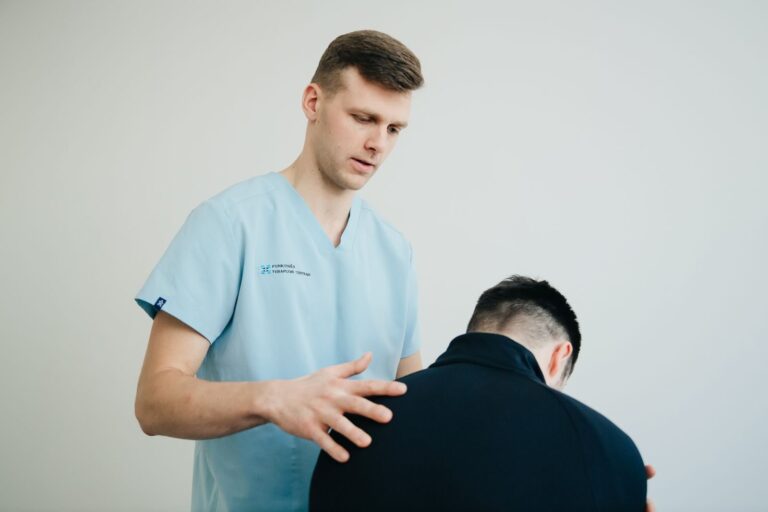
A physiotherapist designs an exercise plan around your knee, your goals and your daily routine. They also check that the pain is arthritis and not something else. You get guidance on pacing, progression and what to do during a flare.
What an assessment involves
At Tonic Physio in Milton, we ask about your symptoms and goals, then examine knee movement, strength, balance and walking. We may also look at your hips and ankles, which affect how the knee is loaded. You leave with a plan you can follow at home.
Hands-on care and other tools
Manual therapy may ease stiffness so that exercise feels easier. Our osteoarthritis treatment service combines exercise with other options, depending on your needs. Read about physiotherapy for arthritis for more detail.
Coverage and referrals
In Ontario you can see a physiotherapist without a doctor’s referral, although some insurers ask for one. Our guide to OHIP versus private physiotherapy coverage explains what is funded and what is not. We offer direct billing to many insurers, and coverage varies by plan.
When should you see a doctor or go to emergency?
Most knee arthritis is slow and manageable, but some symptoms need prompt attention. They may signal an infection, a fracture, a clot or another condition.
Go to emergency straight away
Go to the nearest emergency department or call 911 if your knee becomes suddenly hot, red and very swollen, especially with fever or feeling unwell. Also go if you cannot put any weight on the leg after a fall, or if there is an obvious deformity.
Call 911 if calf pain and swelling come with chest pain or shortness of breath, since this can signal a blood clot.
See a doctor soon
The NHS advises seeing a doctor if you have persistent joint symptoms, so the diagnosis can be confirmed. Book an appointment if your knee locks, gives way, or hurts at night or at rest. Health811 on 8-1-1 offers free nurse advice if you are unsure.
How do you get started?
Start small and stay consistent. Choose two or three exercises from the list above, do them every other day, and add one new element each week. Keeping a short note of pain and activity helps you spot patterns.
A simple first-week plan
- Day 1: heel slides, straight leg raises and a 10-minute walk
- Day 3: sit-to-stands, glute bridges and a short bike ride or walk
- Day 5: mini squats, heel raises and a 10 to 15 minute walk
Rest on the other days, and move gently if you feel stiff. Build volume slowly over the following weeks.
Staying active through a Halton winter
Ice and snow make outdoor walking riskier, and a fall can be serious. In the cold months, consider indoor walking, a stationary bike, swimming or home strength sessions, and use ice grips on boots when you do go out. Keep warm-ups a little longer when the weather is cold.
Booking
If knee pain is keeping you from walking, stairs or the activities you enjoy in Milton, you can book a physiotherapy assessment online to build a plan that suits your knee.