Bad posture is a habit of holding the body in positions that put extra strain on certain muscles and joints for long periods. Learning how to fix bad posture usually starts with small daily changes rather than one big correction.
The most useful steps are to change position often, set up your desk and phone use well, and build strength in the muscles that hold you upright. Most people notice a difference within a few weeks of steady practice.
This article explains what bad posture is, what causes it, the daily habits and exercises that help, and how long change usually takes.
Key Takeaway: There is no single perfect posture, and research suggests that moving often matters more than sitting perfectly still and straight. Fixing bad posture usually means changing position regularly, adjusting your workspace and doing simple strength and mobility exercises. Many people feel less stiffness within two to six weeks, while longer-standing habits can take three months or more.
What Is Bad Posture?
Bad posture is any position, held for a long time, that loads some muscles and joints much more than others. A slumped back, a head that pokes forward or a pelvis that tips forward are common examples. On their own, these positions are not harmful, but holding them for hours without a break can lead to stiffness, fatigue and aches.
Is There a “Correct” Posture?
Research has not found one ideal posture that prevents pain. A 2019 review titled “Sit Up Straight”: Time to Re-evaluate concluded that people with many different postures live without pain, and that varying your position is more helpful than forcing yourself to sit bolt upright all day.
A better goal is a comfortable, balanced position that you change often. Think of your next posture as your best posture.
Common Types of Posture Habits
- Forward head posture: the head sits in front of the shoulders, often from screens and phones
- Rounded shoulders: the shoulders roll forward and the upper back rounds
- Anterior pelvic tilt: the pelvis tips forward and the lower back arches more
- Flat back: the lower back loses its natural curve and the pelvis tucks under
- Side-leaning: standing with weight on one leg or carrying bags on one side
What Causes Bad Posture?
Posture habits build up from what you do most often. The body adapts to the positions you spend the most time in, so changing those positions is the first step.
Desk Work and Long Sitting
Long hours at a desk, especially with a low screen or a chair that does not support you, can round the upper back and push the head forward. Sitting for long periods can also leave the hip flexors tight and the glutes underused.
Phone and Screen Use
Looking down at a phone or tablet tilts the head forward and down. Over many hours a day, this can lead to neck stiffness and tension in the shoulders. Our article on physiotherapy for forward head posture covers this pattern in detail.
Muscle Imbalance, Stress and Fatigue
When some muscles are tight and others are weak, the body drifts toward the tight side. Stress also plays a part, because many people tense and hunch their shoulders when they are under pressure. Fatigue at the end of the day makes slouching more likely.
How Can Posture Affect Your Body?
Posture is not just about how you look. Holding the same position for too long can contribute to several common symptoms.
Neck and Upper Back Pain
A forward head position increases the work the neck and upper back muscles do to hold the head up. This can lead to aching, stiffness and reduced range of motion that gets worse as the day goes on. See our guide to effective neck pain treatments for more.
Lower Back Pain
Long periods of sitting or standing in one position can make the lower back sore. Changing position, getting up regularly and building core and hip strength often help. Our article on core strengthening exercises for back pain shows where to start.
Headaches and Jaw Tension
Tight muscles at the base of the skull can refer pain into the head and cause tension headaches. A forward head position can also affect how the jaw rests, which may add to jaw tension in some people.
What Daily Habits Help Fix Bad Posture?
Daily habits often matter more than any single exercise. Small changes, repeated often, add up.
Move Every 30 to 45 Minutes
Set a reminder to stand, stretch or walk for a minute or two every 30 to 45 minutes. Change between sitting and standing if you have a sit-stand desk. Movement breaks give tired muscles a rest and stop stiffness building up.
Set Up Your Workspace
| Item | What to Aim For | Why It Helps |
|---|---|---|
| Screen | Top of screen at or just below eye level, about an arm’s length away | Reduces looking down and forward |
| Chair | Feet flat, hips slightly higher than knees, lower back supported | Supports a balanced sitting position |
| Keyboard and mouse | Close to the body, elbows near 90 degrees | Reduces reaching and shoulder tension |
| Laptop | Raised on a stand with a separate keyboard | Brings the screen to eye level |
| Phone | Held closer to eye level, with breaks | Reduces neck bending |
Habits Away From the Desk
- Carry bags on alternate sides, or use a backpack with both straps
- Sleep on a pillow that keeps your neck level with your spine
- Stand with weight spread evenly between both feet
- Take a few slow breaths and drop your shoulders when you notice tension
- Stay active with walking, swimming or other activities you enjoy
What Exercises Help Fix Bad Posture?
These seven exercises target the most common weak and tight areas. Do them daily, move slowly and stop if any exercise causes sharp pain.
Chin Tucks and Wall Angels
Chin tucks: sit or stand tall and gently draw your chin straight back, as if making a double chin, keeping your eyes level. Hold for 5 seconds. Do 2 sets of 10 to strengthen the deep neck muscles.
Wall angels: stand with your back against a wall, heels a few inches away. Raise your arms into a goalpost position against the wall and slide them slowly up and down. Do 2 sets of 8 to strengthen the upper back and open the chest.
Chest Stretch and Shoulder Blade Squeezes
Doorway chest stretch: place your forearm on a door frame with the elbow at shoulder height, then step gently forward until you feel a stretch across the chest. Hold for 30 seconds on each side.
Shoulder blade squeezes: sit or stand tall and squeeze your shoulder blades back and down. Hold for 5 seconds. Do 2 sets of 10 to strengthen the muscles between the shoulder blades.
Glute Bridges, Cat-Cow and Plank
Glute bridges: lie on your back with knees bent and lift your hips until your body forms a straight line from knees to shoulders. Do 2 sets of 12 to strengthen the glutes.
Cat-cow: on hands and knees, slowly round your back up, then let it gently dip, moving with your breath. Do 8 to 10 slow cycles to ease stiffness from sitting.
Plank: rest on forearms and toes, or forearms and knees, with your body in a straight line. Hold for 20 to 30 seconds and repeat 3 times to build trunk strength.
How Do You Build a Posture Routine That Lasts?
Knowing the exercises is the easy part. The hard part is doing them often enough for your body to adapt, so a simple routine you can repeat beats a long one you skip.
A 10-Minute Daily Routine
Pick one time each day, such as after your morning coffee or before dinner. Do chin tucks, wall angels and shoulder blade squeezes, then the doorway chest stretch, glute bridges and a few cat-cow cycles. Finish with a plank, and the whole routine takes about 10 minutes.
On busy days, do just chin tucks and shoulder blade squeezes at your desk. A short routine done most days is better than a long one done once a week.
Using Reminders and Cues
Reminders help turn new habits into automatic ones. Set a timer for movement breaks, put a sticky note on your screen, or link a posture check to things you already do, such as sending an email or stopping at a red light.
Each time you notice the reminder, take a breath, let your shoulders drop and gently lift through the top of your head. Then carry on with what you were doing.
Staying Active Beyond Exercises
General activity supports good posture as much as specific exercises do. Walking, swimming, cycling, yoga and strength training all build the muscles that keep you upright and comfortable. Aim to move in some way every day, and choose activities you enjoy so they are easy to keep up.
How Long Does It Take to Fix Bad Posture?
Change is gradual. How long it takes depends on how long the habit has been in place, how often you move and exercise, and whether any joint stiffness or pain is involved.
Typical Stages of Change
| Stage | Timeframe | What You May Notice |
|---|---|---|
| Awareness and mobility | Weeks 1 to 2 | Less stiffness, easier to sit and stand tall |
| Early strength gains | Weeks 3 to 6 | Comfortable positions last longer, less end-of-day ache |
| Lasting habits | Weeks 7 to 12 | Good habits feel natural, symptoms often ease |
| Maintenance | Ongoing | Regular movement and exercise keep gains |
Posture Braces and Quick Fixes
Posture braces and gadgets may remind you to sit up, but they do not build strength. If you use one, wear it for short periods only. Lasting change comes from moving often and exercising the muscles that support you.
Posture Changes With Age and Pregnancy
Posture naturally changes over life. In later years, bone loss and muscle weakness can increase rounding of the upper back, which makes strength and balance exercises even more useful. During pregnancy, the growing bump shifts your centre of gravity, so many people find gentle back and hip exercises and regular position changes helpful.
What Can Slow Progress
Progress is often slower if you sit for very long periods without breaks, do the exercises only now and then, or have stiff joints from an old injury. Pain can also make it harder to hold new positions, so treating pain is part of the plan.
How Can Physiotherapy Help With Posture?
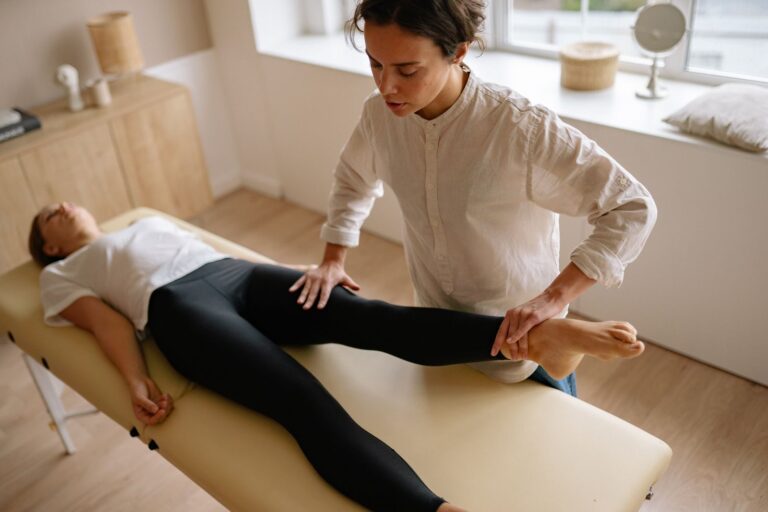
A physiotherapist can look at how you sit, stand and move, and find which muscles are tight, which are weak and which habits drive your symptoms. This makes your exercise plan specific to you.
Assessment and Treatment
Treatment may include hands-on techniques to ease stiff joints and tight muscles, a tailored exercise program, and advice on your workspace and daily routine. Our back and neck pain treatment combines all three. In Ontario, you do not need a doctor’s referral to see a physiotherapist.
Learning More
For general guidance on posture and simple fixes, the NHS page on common posture mistakes and fixes is a useful starting point. If you are new to treatment, read what to expect at your first physiotherapy appointment.
When to See a Doctor or Go to Emergency
Aches from posture usually ease with movement, exercise and better habits. Some symptoms, however, point to something other than posture.
See a Doctor If You Notice
- A visible change in the shape of your spine, such as a new curve or hump
- Numbness, tingling or weakness in your arms or legs
- Pain that wakes you at night or does not ease with rest or changing position
- Back or neck pain with fever, unexplained weight loss or a history of cancer
When to Go to Emergency
Go to emergency for neck or back pain after a fall or accident, sudden severe headache, loss of bladder or bowel control, or sudden weakness in the arms or legs.
Building Better Posture for the Long Term
Fixing bad posture is less about holding one perfect position and more about moving often, setting up your day well and keeping your muscles strong. Start with one or two habits and a few exercises, and build from there.
Book an Assessment
If posture-related aches are affecting your work or sleep, you can book an appointment online.