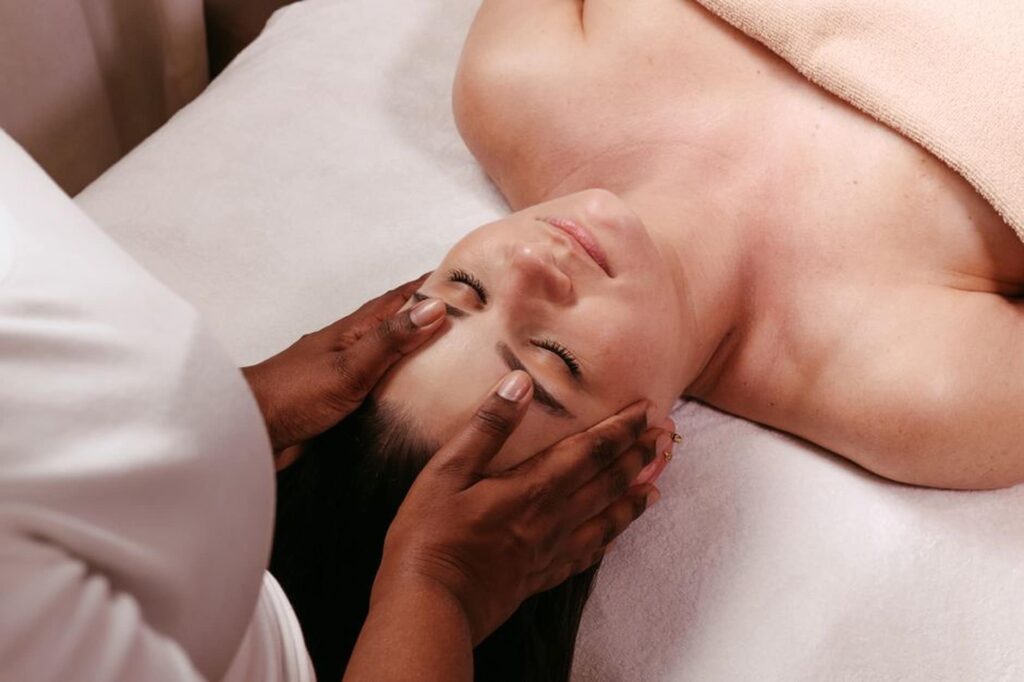
Indian head massage, also called champissage, works on the head, neck, shoulders and face. These are the areas where many people hold the most tension. This guide explains the main benefits of Indian head massage for stress, tension headaches and sleep, what a session involves and how often it may help.
Key Takeaway: Indian head massage may help ease stress, relieve tension headaches and support better sleep by relaxing tight muscles in the upper back, neck, scalp and face. A session usually takes 30 to 45 minutes, and you stay fully clothed and seated. Effects are often felt straight away, and regular sessions with simple self-care can help them last.
What Is Indian Head Massage?
Indian head massage uses kneading, gentle pressure and rhythmic strokes on the upper back, shoulders, neck, scalp and face. Unlike most massage, you stay fully clothed and sit in a supportive chair. No oil is needed unless you ask for it.
Where It Comes From
The technique has roots in traditional Indian family grooming and Ayurvedic practice, where scalp massage was part of everyday care. It was introduced to the UK in the 1970s and has since been adapted into modern massage therapy. Today, the focus is on easing the neck, shoulder and head tension that comes with desk work, screens and stress.
How It Compares With Other Massage
| Feature | Indian Head | Swedish | Deep Tissue |
|---|---|---|---|
| Focus area | Head, neck, face, shoulders | Full body | Specific problem areas |
| Clothing | Fully clothed | Undressed (draped) | Undressed (draped) |
| Pressure | Light to medium | Light to firm | Firm to deep |
| Session length | 30 to 45 minutes | 45 to 90 minutes | 45 to 60 minutes |
| Best for | Headaches, stress, neck tension | General relaxation | Chronic pain, adhesions |
Indian Head Massage Benefits for Stress
Stress is not only felt in the mind. It shows up in the body as tight shoulders, a clenched jaw and a stiff neck.
How Stress Builds Tension
When you are under pressure, your body shifts into a fight-or-flight state and the muscles of the neck, shoulders and face tighten without you noticing. Over time, this tension can become constant. Tight muscles then feel uncomfortable, which adds to stress, and the cycle continues.
How the Massage Helps You Relax
Slow, rhythmic touch may help the body switch towards its rest-and-recover state, known as the parasympathetic nervous system. Breathing often slows and muscles soften as the session goes on. Many people describe feeling calm and clear-headed afterwards.
A review published in the International Journal of Neuroscience in 2005 reported lower levels of the stress hormone cortisol after massage therapy in general. That research looked at many types of massage rather than Indian head massage alone, so results should be seen as a guide rather than a promise.
Indian Head Massage for Tension Headaches
Tension headaches are the most common type of headache. They often feel like a tight band around the head or pressure behind the eyes.
What Causes Tension Headaches
Tight muscles in the neck, scalp and jaw can refer pain to the temples, forehead and back of the head. Long periods looking down at a screen, poor sleep and stress all make this more likely. Because Indian head massage works directly on these muscles, it suits this type of headache well.
Muscles Worked During a Session
- Trapezius: The large muscle across the upper back and shoulders that tightens with stress and carrying bags
- Levator scapulae: Lifts the shoulder blade and often forms a sore knot at the side of the neck
- Suboccipitals: Four small muscles at the base of the skull that are a common source of tension headaches
- Splenius capitis: A deeper neck muscle that tightens with long computer use
- Temporalis: The fan-shaped muscle on the side of the head that works hard when you clench or grind your teeth
- Frontalis and occipitalis: The forehead and back-of-scalp muscles that tighten when you frown or concentrate
- Sternocleidomastoid: The large muscle at the side of the neck that tightens with repeated head turning, such as when driving
What the Research Suggests
Small studies of neck and shoulder massage suggest it may reduce how often tension headaches occur in some people. Many find relief during the session itself. For frequent headaches, massage works best alongside a full headache treatment program that looks at posture, neck movement and triggers.
See a doctor about a headache that is sudden and severe, follows a head injury, or comes with fever, confusion, weakness or changes in vision. Massage is not the right first step for these.
Indian Head Massage and Sleep
Many people say they sleep more deeply after an Indian head massage. This is one of the benefits clients mention most often.
Why Tension Affects Sleep
A tight neck and shoulders can make it hard to get comfortable in bed. A busy, stressed mind can also make it hard to switch off. Easing both may make it easier to fall asleep and stay asleep.
Getting the Most Sleep Benefit
- Book later in the day: An afternoon or early evening session lets you carry the calm into the night
- Keep the evening quiet: Avoid caffeine, heavy exercise and bright screens after your session
- Repeat the routine: Gentle scalp massage at home before bed can recreate some of the effect
Massage may support better sleep, but it is not a treatment for sleep disorders. If poor sleep lasts for weeks, speak with your doctor.
Other Possible Benefits
Beyond stress, headaches and sleep, people often notice a few other effects after a session.
For Desk and Screen Workers
- Less neck stiffness: Loosens muscles that tighten from long hours at a desk or on a phone
- Reduced eye strain: Gentle work around the temples and brow may ease tension from screen time
- Clearer focus: Many people feel more alert and less mentally tired afterwards
- Jaw comfort: Work on the temples and face may help people who clench their teeth
What to Expect During a Session
An Indian head massage is short and simple. You can return to work or your day straight afterwards.
Step by Step
- Seated position: You stay fully clothed and sit in a comfortable chair
- Upper back and shoulders: Your therapist starts here to release the supporting muscles
- Neck release: Gentle kneading and stretching loosen tight neck muscles
- Scalp massage: Rhythmic pressure and kneading across the whole scalp
- Face massage: Light pressure on the temples, forehead and around the eyes
- Session length: Treatment takes 30 to 45 minutes
When to Wait or Check First
Let your therapist know beforehand if you have a recent head or neck injury, a scalp infection or open wound, a fever, or recent surgery on the head or neck. You may need to wait or have the session adapted.
How Often Should You Have Indian Head Massage?
The right frequency depends on your goals. These are common starting points.
Typical Frequencies
- A stressful period: 2 to 3 sessions over 2 weeks
- Frequent tension headaches: Weekly for 4 to 6 weeks, then about once a month
- General stress relief: Once a month to stop tension building up
For general guidance across all massage types, read our guide to how often you should book a massage.
Self-Care Between Sessions
A few minutes of self-care each day can help the benefits last longer. Your therapist can show you how to do these safely.
Simple Techniques to Try
- Scalp circles: Use your fingertips to make small circles across your whole scalp for 2 minutes
- Temple pressure: Press gently on your temples for 10 seconds, then release
- Shoulder shrugs: Lift your shoulders towards your ears, hold for 5 seconds, then let them drop
- Base of skull release: Apply gentle pressure with two fingers just below the back of your skull
- Slow breathing: Breathe in for 4 counts and out for 6 to 8 counts to help your body relax
Trying Indian Head Massage
If stress, tension headaches or poor sleep are wearing you down, a short session is an easy way to see how your body responds. At Tonic Physiotherapy in Milton, our massage therapists tailor each session to where you hold tension. You can read more about our Indian head massage or call (905) 878-7775 with any questions.