Massage frequency has no universal rule, and anyone selling you one is guessing. What exists instead is a decision framework: your goal decides your rhythm, your body’s response fine-tunes it, and the rhythm shifts with training, stress, and seasons. This article gives you the framework and the starting points that actually work.
Key Takeaway: For general maintenance and stress, one massage every 3 to 4 weeks sustains the benefits. For specific problems like chronic tension or training recovery, weekly sessions for 2 to 4 weeks build momentum before spacing out. Athletes in heavy training blocks benefit from 1 to 2 sessions weekly. There is no overdose risk; there is only budget and goals.
The goal decides the schedule
Massage is not one product with one dose. A relaxation session, a recovery session, and a therapeutic deep-tissue session do different jobs on different timelines, and the frequency question answers itself once the goal is named.
Goal 1: stress and general maintenance
The nervous system benefits of massage, lower stress, better sleep, that general reset feeling, fade over roughly two to three weeks. A session every 3 to 4 weeks keeps the baseline elevated. This is the most common rhythm, and it works because it matches the fade curve rather than fighting it.
Goal 2: resolving a specific problem
Chronic shoulder tension, a stubborn low back, or forearm tightness from typing need momentum. Weekly sessions for 2 to 4 weeks build change faster than spaced sessions, because each session starts from the last one’s progress instead of from zero. Once the problem settles, spacing extends to the maintenance rhythm.
Goal 3: supporting training
Athletes and gym-goers time sessions around training: recovery-focused work 24 to 48 hours after hard sessions, and lighter work in race or competition weeks. During heavy training blocks, 1 to 2 sessions weekly manages the accumulation; off-season, the maintenance rhythm suffices.
| Goal | Starting frequency | After it settles |
|---|---|---|
| Stress and maintenance | Every 3-4 weeks | Same rhythm ongoing |
| Specific problem | Weekly for 2-4 weeks | Every 4-6 weeks |
| Training support | 1-2 weekly in season | Every 2-4 weeks off-season |
| Injury rehabilitation | As part of physio plan | Per physiotherapist guidance |
What the research says about frequency
Massage research rarely tests frequency directly, but the mechanisms give honest guidance. The measurable effects, reduced muscle tension, improved range of motion, lowered stress markers, and better sleep, follow dose-response patterns: they build with repetition and decay without it. No study shows harm from frequent sessions; the practical limit is budget and the occasional post-session soreness.
Why the every-3-to-4-weeks rhythm keeps appearing
It matches the physiology: tissue tension and stress markers drift back toward baseline over two to three weeks in most people. Booking inside that window means each session starts from maintained ground. Stretch the gap to six or eight weeks, and each session spends its first half undoing the rebuild.
Signs your current rhythm is wrong
Your body reports on the schedule if you listen. Both directions carry signals.
Too infrequent: the accumulation pattern
- The same Tuesday shoulders return between every session
- Each appointment spends 20 minutes just unwinding the rebuild
- Sleep and stress benefits feel gone within a week of each visit
Fix: shorten the interval by a week or two and hold it for three cycles. The math often works out even: shorter intervals that hold their gains beat longer intervals that keep resetting.
More than needed: the plateau
- Sessions feel pleasant but change nothing measurable
- Soreness after each visit without performance or comfort gains
Fix: extend the interval. The budget often serves better spent on the strength work that holds the gains.
How session type changes the frequency math
Deep tissue sessions create more tissue disruption and need more recovery; relaxation sessions barely register as load. The same weekly rhythm feels different across styles:
- Deep tissue: 48 to 72 hours of pleasant soreness is normal; weekly is the practical maximum during problem-solving phases
- Relaxation massage: no recovery cost; could be weekly indefinitely if budget allowed
- Sports massage: timed to training, hard sessions 24 to 48 hours after key workouts, lighter sessions before events
The massage-plus-everything stack
Massage works inside a system, and the system’s other parts decide how much the massage must carry:
We cover hot stone massage versus Swedish massage in a separate guide.
- Movement: the desk worker who stands hourly needs less massage than the one who does not
- Strength: two weekly strength sessions reduce the tension load massage has to clear
- Sleep: the recovery currency; massage helps sleep, and sleep helps everything
- Hydration and warmups: small inputs, real effects on how tissue responds to both training and treatment
Patients who stack these need less massage for the same result, which is the goal: the massage is a tool, not a subscription you cannot exit.
Massage and physiotherapy: when they team up
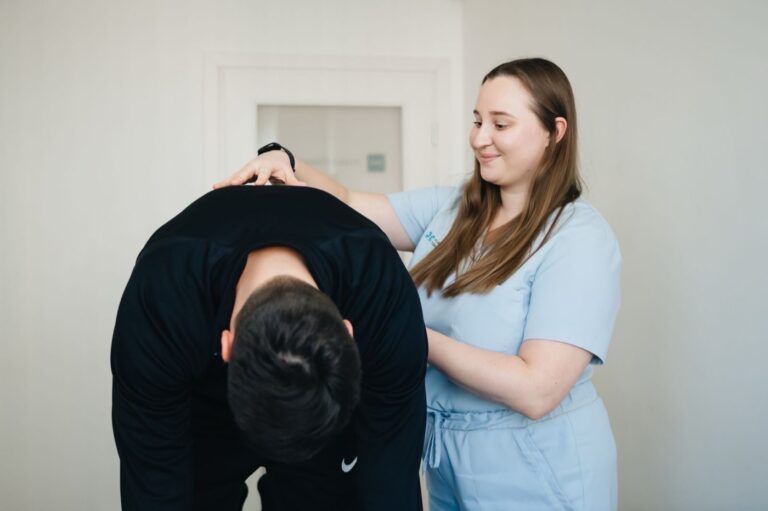
Some problems want both disciplines. The pattern we see in Milton: the massage relieves what has knotted, the physiotherapy strengthens what keeps failing, and the two share notes so the programs do not fight. Stubborn desk necks, training shoulders, and post-injury stiffness all run this pairing.
Frequency by life season: the Halton calendar
Massage needs shift with the seasons, and Milton’s rhythm gives the calendar its shape.
Winter: the tension season
Cold muscles guard, shoveling adds its load, and the indoor months compress activity. Sessions tend to tighten to every 2 to 3 weeks through January and February, especially for desk workers whose commutes turned white-knuckle.
Spring: the return-to-activity wave
April’s outdoor rush loads tissues that spent winter resting. Sessions support the transition: recovery work after the first big hikes and runs, and therapeutic attention on whatever the first month of golf or running reawakened.
Summer: the active maintenance stretch
With activity high and stress often lower, the 4-week rhythm usually holds easily. Sports-focused patients run their training-timed sessions around events.
Fall: the return-to-structure crunch
September’s schedule rebuild, kids, commutes, work ramps, shows up in shoulders within two weeks. Booking the fall rhythm early keeps the accumulation honest.
Building the habit that the calendar protects
The people who keep long-term massage habits share one tactic: the next appointment gets booked before leaving the clinic. The rhythm lives in the calendar, not in memory. Two supporting habits:
- Anchor sessions to something recurring: the first Friday of the month, the day after the long run
- Downgrade rather than skip in busy weeks: a 30-minute session beats a skipped 60
What your first appointment should produce
A first session of registered massage therapy at Tonic Physio runs on a short intake: your goal, your symptom map, your training or desk reality, and your pressure preferences. The treatment targets what the intake found, and it ends with a recommended rhythm, specific, honest, and yours to adjust as your body reports back.
Most first-time patients book every 2 weeks for two sessions, then settle into their maintenance interval once they can feel the fade curve themselves. The rhythm you keep is the one your calendar and your body agree on; everything else is negotiation.
Massage frequency myths, corrected
Myth: massage is just a luxury you schedule whenever
For stress and maintenance, rhythm is the active ingredient. Random sessions deliver random results; the calendar is part of the treatment.
Myth: deep tissue needs a week of recovery, so monthly is the max
The soreness window is 48 to 72 hours, not a week. Weekly deep sessions during problem-solving phases are standard clinical practice.
This ties in closely with what to expect from deep tissue massage, covered in a separate article.
Myth: if it hurts, it is working
Productive intensity, yes; white-knuckle pain, no. Pressure that makes you guard fights the treatment. The best sessions work at the edge of comfort, not past it.
Myth: one massage can undo months of tension
Tension is cumulative and so is its undoing. The first session makes a dent; the rhythm makes the change. Anyone promising a single-session fix is selling the exception as the rule.
The budget-honest version of the frequency question
Massage competes with other recovery spending, and the honest math favors rhythm over intensity: two 30-minute sessions a month outperform one 60-minute session for the same spend, because the fade curve gets interrupted twice. When budget tightens, shorten the sessions before stretching the interval.
Direct billing changes this math for most extended plans: with the insurer paying its share, the maintenance rhythm costs less than most people assume, and the habit becomes sustainable by default rather than by discipline.
Massage frequency by age and life stage
The rhythm shifts across decades, mostly because goals shift.
Students and early career (20s)
Recovery is fast and budgets are tight. Sessions cluster around training blocks and exam-season stress rather than a fixed rhythm. The habit formed now pays dividends later.
The building years (30s and 40s)
Career load, young kids, and training compete for the same shoulders. This is the decade where the 3 to 4 week maintenance rhythm earns its keep, because the load is real and the recovery time is scarce.
The 50s and 60s
Tissue recovery slows, arthritis enters the conversation, and massage pairs increasingly with physiotherapy. Sessions focus on maintaining range and managing the wear patterns, with pressure adjusted honestly.
The active 70s and beyond
Massage supports circulation, sleep, and mobility maintenance. Gentle styles dominate, and the rhythm often tightens to every 2 to 3 weeks precisely because the benefits compound for this group more than any other.
The one-question test for your current rhythm
Ask yourself one question the day before your next massage: “Am I looking forward to relief, or to maintenance?” Relief means the gap was too long; maintenance means the rhythm is right. Track that answer across three cycles and your personal interval writes itself.
Choosing your massage therapist for a long-term rhythm
A maintenance rhythm only survives with the right therapist, because consistency of approach is part of the treatment. What to look for:
- A registered massage therapist (RMT) whose intake actually changes your treatment plan
- Pressure that adapts to the day’s tissue rather than a fixed setting
- Notes that carry forward: your third session should know what the first found
- Honest scope: a therapist who says “this needs physiotherapy” is worth keeping
The clinic setting adds the coordination advantage: when the RMT and the physiotherapist share notes, the massage rhythm and the rehab plan pull in the same direction instead of working blind.
Your first month: a concrete starting plan
For readers who want the decision made: book two sessions, 14 days apart, deep tissue or therapeutic style for a specific problem, relaxation style for stress. Track three things after each: sleep that night, the symptom map’s next morning, and how long the relief lasted.
Those two data points set your interval. Relief lasting under a week means tighten the rhythm; relief holding three weeks means stretch it. By your third session, you are not guessing anymore; you are running your own program, and the massage does exactly what you booked it for.
Answers to the questions people actually ask
Can you get too many massages?
Practically, no health risk exists at any reasonable frequency. The limits are budget, the 48-hour deep tissue recovery window, and diminishing returns. If weekly sessions stopped changing anything, the interval is telling you something.
Is weekly massage wasteful if I feel great?
Wasteful only by budget logic. Some athletes and high-stress professionals keep weekly sessions deliberately, the way some people keep weekly cleaning: maintenance as habit. The honest test is whether the sessions still deliver what you book them for.
How do I stretch the gap between sessions?
The between-session habits carry real weight: the 2-minute movement breaks, the evening stretch routine, the sleep discipline, and honest warmups before training. Every one of them extends the session’s life.
Should I get a massage before or after a race?
After, by 24 to 48 hours, for the recovery work. Before, only light relaxation-style work, and never a deep session on race week: pre-event tissue work is gentle by design, and the deep stuff waits for the finish line.
What if I am sore after a massage?
Mild soreness for a day after deep work is normal, the same family as post-workout soreness. It should ease within 48 hours and leave you looser than before. Soreness that lasts longer means the pressure was too aggressive; say so at the next visit.