Swollen ankles after a long flight, puffy legs after surgery, or a heavy feeling in your arms or legs that never quite goes away. These are common signs that fluid is not draining as well as it should. Lymphatic drainage massage is a gentle, hands-on technique designed to help.
This guide explains how the lymphatic system works, the main benefits of lymphatic drainage massage, who it helps, what a session feels like, how often to book and who should avoid it.
Key Takeaway: Lymphatic drainage massage uses very light, rhythmic strokes to help move lymph fluid toward the lymph nodes. It is most useful for swelling after surgery, lymphedema, postpartum swelling and fluid build-up from long hours of sitting or standing. Many people feel lighter after one session, and a short course usually gives longer-lasting results.
How the Lymphatic System Works
Your Body’s Drainage Network
The lymphatic system is a network of vessels and nodes that carries lymph, a clear fluid containing white blood cells, proteins and waste products. It collects excess fluid from your tissues and returns it to your bloodstream. Along the way, lymph nodes filter the fluid and help your immune system respond to infection.
Why Flow Can Slow Down
Unlike blood, lymph has no heart to pump it. It relies on muscle movement, breathing and the gentle squeeze of the vessels themselves. Surgery, injury, inactivity or damage to lymph nodes can slow this flow, so fluid collects in the tissues and causes swelling, heaviness and discomfort.
What Lymphatic Drainage Massage Does
The Technique
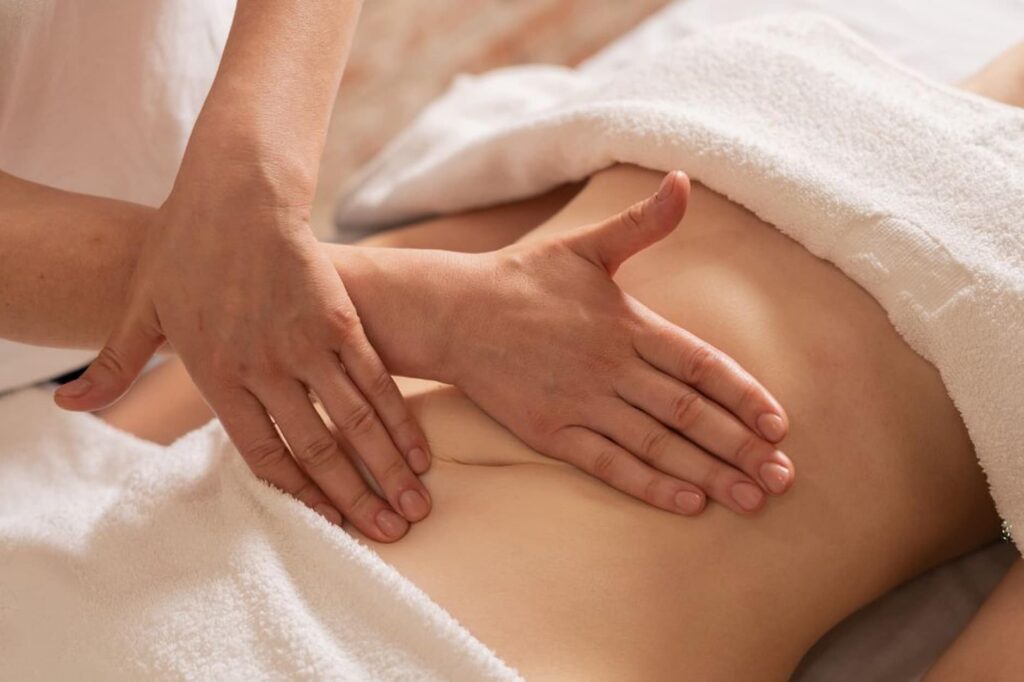
The therapist uses slow, light, repetitive strokes that gently stretch the skin in the direction lymph naturally flows. The aim is to guide fluid toward groups of lymph nodes, such as those in the neck, armpits and groin, where it can be processed. The method was developed in the 1930s by Danish practitioners Emil and Estrid Vodder.
Main Benefits
- Less swelling: helps move excess fluid out of swollen areas.
- More comfort after surgery: can ease tightness and bruising as swelling settles.
- Lymphedema care: a standard part of managing lymphedema, alongside compression and exercise.
- Lighter-feeling legs: relief from fluid build-up after long days of sitting or standing.
- Less facial puffiness and sinus pressure: gentle work on the face and neck can ease congestion.
- Relaxation: the slow rhythm calms the nervous system, and many people drift off.
Lymphatic drainage is not a cure for disease, and it does not “detox” the body in any dramatic way. Its strength is helping fluid move where the body is struggling to clear it.
Who Lymphatic Drainage Massage Helps
After Surgery
After cosmetic surgery such as liposuction or a tummy tuck, or orthopedic surgery such as a knee or hip replacement, fluid often collects around the surgical area. Lymphatic drainage helps move it along, so swelling settles and normal movement returns more comfortably. It can also help after dental or jaw surgery.
Always wait for your surgeon’s clearance before starting. Many surgeons clear patients one to two weeks after surgery, but timing varies by procedure. For cosmetic procedures, see our guide to lymphatic massage after liposuction.
Lymphedema After Cancer Treatment
Breast cancer surgery or radiation can remove or damage lymph nodes, leading to lymphedema, a long-term build-up of fluid in the arm, chest or torso. Lymphatic drainage, combined with compression garments, skin care and exercise, is a well-established part of lymphedema care. Treatment should always be planned with your oncology team.
Postpartum, Desk Days and Active Lives
- Postpartum swelling: many new mothers notice swollen legs, feet and hands in the weeks after delivery, especially after a C-section or a long labour. Gentle lymphatic work can help the body return to its usual fluid balance.
- Long days on your feet or at a desk: hours of sitting or standing can leave ankles and legs swollen by evening. Regular sessions, plus movement and compression socks where advised, help keep fluid moving.
- Athletes: after a race or a hard training block, worked muscles can feel puffy and heavy. Lymphatic drainage may help you feel recovered sooner, and it pairs well with deep tissue massage for muscle tension.
- Sinus pressure and facial puffiness: lymph nodes around the face, jaw and neck help drain the sinuses. Gentle work here can ease pressure from allergies or colds and reduce under-eye puffiness.
Lymphatic Drainage vs Regular Massage
Side-by-Side Comparison
| Feature | Lymphatic Drainage Massage | Regular (Swedish) Massage |
|---|---|---|
| Pressure | Very light, just enough to move the skin | Light to firm, depending on the goal |
| Primary technique | Slow, repetitive strokes following lymph vessel pathways | Kneading, long flowing strokes, circular friction |
| Main goal | Move lymph fluid and reduce swelling | Relax muscles, reduce tension, improve circulation |
| Best for | Swelling, post-surgery, lymphedema, sinus congestion | Stress relief, muscle tension, general wellness |
| Typical session length | 45 to 75 minutes | 60 to 90 minutes |
| How it feels | Gentle and calming, sometimes barely noticeable pressure | Firmer pressure, deeper work into muscle tissue |
The two are often used together. If your main problem is swelling, lymphatic drainage is the better fit. If it is muscle tension, a firmer massage usually helps more.
What to Expect at Your First Session
Before Treatment
Your massage therapist reviews your health history, medications and reason for your visit, and screens for anything that would make treatment unsafe. Be specific about what you want help with, such as post-surgical swelling, leg heaviness or sinus pressure. Bring any notes or instructions from your surgeon or doctor.
During Treatment
You lie on a massage table in a private room. Treatment often begins near the neck or the nearest group of lymph nodes, clearing that area first, then works toward the swollen area. The pressure is very light, and most people find it deeply relaxing.
After Treatment
Many people feel lighter and less puffy right away, while others notice change over the next day or two. You may need to urinate more often for a few hours, which is normal as the body clears the fluid. Drink water and take a gentle walk to keep things moving.
How Often to Book
Typical Starting Points
How often you book depends on why you are having treatment. These are typical starting points, and your therapist will tailor the plan as you respond.
| Reason for Treatment | Typical Frequency | Typical Course |
|---|---|---|
| Recovery after cosmetic surgery | 2 to 3 sessions per week | 2 to 4 weeks |
| Lymphedema after cancer treatment | 1 to 2 sessions per week at first | Ongoing, with maintenance |
| Postpartum swelling | 1 session per week | 2 to 4 weeks |
| Seasonal sinus congestion | 1 session every 2 weeks | During allergy season |
| Athletic recovery | 1 session per week | During heavy training |
| General wellness | 1 session every 4 to 6 weeks | As needed |
If you notice no change after about three sessions, your therapist should review the approach with you.
Who Should Not Have Lymphatic Drainage Massage
Conditions That Need Medical Clearance First
Lymphatic drainage is very safe for most people, but it is not right for everyone. Avoid it, or get clear medical approval first, if you have:
- An active infection, fever or cellulitis in the area to be treated
- Congestive heart failure, since extra fluid returning to the heart can strain it
- A known or suspected blood clot or deep vein thrombosis
- Recent surgery without your surgeon’s clearance
- Active cancer, without approval from your oncology team
- Kidney disease with fluid restrictions, without your specialist’s approval
- An untreated thyroid condition
When to Seek Care Instead
A hot, swollen, painful calf can be a sign of a blood clot and needs urgent medical care, not a massage. Sudden swelling with shortness of breath also needs emergency help.
Supporting Lymph Flow at Home
Simple Daily Habits
- Deep breathing: slow belly breaths create pressure changes in the chest that help lymph move.
- Regular movement: walking and calf raises activate the muscle pump in your legs.
- Elevation: raise swollen legs above heart level for short periods.
- Hydration: drink enough water through the day.
- Neck clearing: gently stretch the skin just above your collarbones in a downward motion.
- Light self-massage: soft strokes toward the nearest lymph nodes, such as from ankle toward knee, once your therapist has shown you how.
A few minutes every day works better than a long session once a week. If you have lymphedema, follow the home plan your care team gives you.
Frequently Asked Questions
Does lymphatic drainage massage really work?
For lymphedema and swelling after surgery, lymphatic drainage has a long track record as part of standard care. For general wellness, results vary from person to person. Most people can tell within a few sessions whether it helps them.
Does lymphatic drainage massage hurt?
No. The pressure is very light, much lighter than a Swedish or deep tissue massage. If anything feels uncomfortable, tell your therapist.
Is lymphatic drainage safe during pregnancy?
Modified techniques can be used in pregnancy, usually after the first trimester and with clearance from your prenatal care provider. Many people use it for ankle and foot swelling later in pregnancy. Sudden swelling of the face or hands in pregnancy should always be checked by your care provider first.
How soon will I see results?
Many people feel lighter after the first session. Longer-lasting change usually takes a course of three to six sessions, and long-term conditions may need ongoing maintenance.
Can I combine it with other treatments?
Yes. Lymphatic drainage often works well alongside physiotherapy, compression garments and other types of massage. Your care team can help you plan the order and timing.
Is Lymphatic Drainage Right for You?
If swelling, heaviness or a slow recovery after surgery is holding you back, our massage therapists in Milton offer lymphatic drainage massage, with a full health screen before treatment and a plan that fits your recovery.