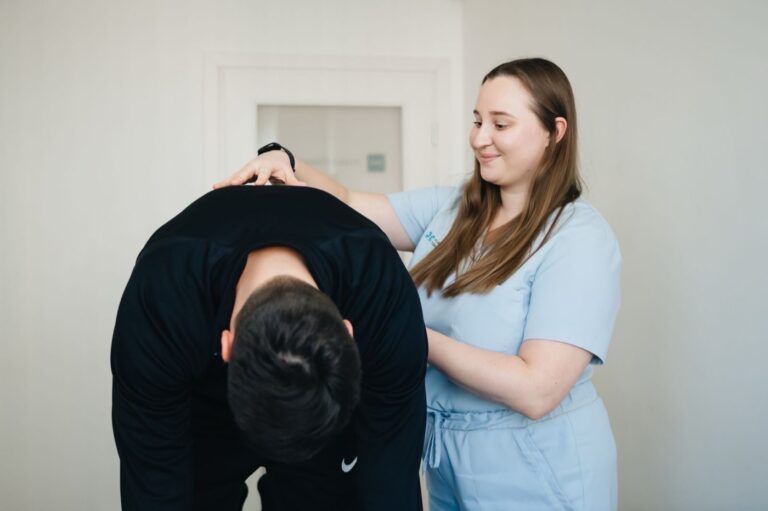
Ontario’s Statutory Accident Benefits Schedule (SABS) can feel overwhelming after a motor vehicle accident. This guide explains your rights, your coverage limits and the claims process. It helps you get the medical care and money support you need to recover.
For a fuller picture, see the motor vehicle accident recovery timeline.
At Tonic Physio in Milton, we guide MVA patients through the insurance process. We also provide the rehab services these benefits cover. This guide explains Ontario’s accident benefits system. It also shows how to get the most from your coverage.
Understanding SABS Coverage
SABS gives mandatory coverage for all registered vehicles in Ontario. It is no-fault insurance. This means your own insurer pays benefits, no matter who caused the accident.
SABS has several kinds of benefits:
- Medical and rehab benefits: These cover physiotherapy, chiropractic care, massage therapy, counselling and other treatments
- Income replacement benefits: These pay part of your wages when injuries stop you from working
- Attendant care benefits: These pay for personal care help when injuries make daily tasks hard
- Caregiver benefits: These help people who can no longer care for dependents because of injuries
- Other expenses: These include travel to medical visits, the cost of medication and medical devices
Accessing Medical and Rehabilitation Benefits
For most accident victims, medical and rehab benefits matter most right away. These benefits pay for treatment that helps you recover and get back to normal activities.
Covered Treatments
SABS covers many treatments, such as:
- Physiotherapy for muscle and joint injuries, exercise rehab and pain management
- Massage therapy for soft tissue injuries and stress relief
- Chiropractic care for spine alignment and joint problems
- Acupuncture for pain relief and calming the nervous system
- Counselling for trauma, anxiety and depression
- Occupational therapy to plan your return to work
- Medical supplies and assistive devices
Standard vs. Catastrophic Benefits
Your benefit limits depend on how severe your injury is:
- Minor injuries: $3,500 limit for medical and rehab benefits within five years
- Non-catastrophic injuries: $65,000 for medical, rehab and attendant care over five years
- Catastrophic injuries: $1,000,000 for lifetime medical, rehab and attendant care
Your injury category is set by an assessment against set criteria. Your insurer makes the first decision. You can dispute it through the Licence Appeal Tribunal if you disagree.
The Claims Process
Immediate Steps After Accident
Protect your benefits right after the collision:
- Report the accident to your insurance company within seven days
- Send in the Application for Accident Benefits (OCF-1) within thirty days
- Attend assessments your insurer asks for
- Keep records of all medical visits and expenses
- Follow your treatment plans
Late reports or late applications can put your claim at risk. You may be unsure how severe your injury is. Tell your insurer promptly anyway and start keeping records.
We cover what to do after a car accident in a separate guide.
Independent Examinations
Your insurer may ask you to see professionals they choose. These exams look at your injuries and decide if you qualify for benefits. They are needed to process your claim. But remember that these assessors work for the insurer.
During independent exams, you have rights. You can have your own representative with you. You can ask for exam details ahead of time. You can also get copies of reports. If an assessment seems unfair or wrong, you can dispute the findings through an appeal.
Treatment Plans
Healthcare providers send treatment plans (OCF-18) to insurers. These outline the care they propose. Standard plans for minor injuries do not need pre-approval. Larger plans for serious injuries need your insurer’s approval.
At Tonic Physio, we prepare thorough treatment plans with a clear clinical reason for each step. Our experience with SABS paperwork helps avoid delays and disputes. We talk directly with adjusters when they have questions about proposed care.
Working with Your Insurance Adjuster
Insurance adjusters manage your claim and make benefit decisions. They serve the insurer’s interests. Even so, a professional relationship helps your claim move more smoothly.
Good ways to communicate include:
- Write down all conversations with the date, time and what was said
- Confirm spoken agreements in writing
- Give requested information quickly and in full
- Know your policy coverage before disputes arise
- Ask for help when an explanation seems unclear
At Tonic Physio, we keep professional relationships with major insurers. We also speak up for our patients’ needs. This balanced approach helps your claim move forward. It does not cost you access to the care you need.
Disputing Benefit Decisions
An insurer may deny benefits or offer too little coverage. You have options to dispute this:
Negotiation
Talking directly with adjusters can sometimes settle a disagreement without formal steps. You can add medical evidence or explain why the treatment is needed. This may reverse an bad decision.
Mediation
In mediation, a neutral mediator helps both sides reach agreement. This is less formal. It can settle disputes faster than arbitration or litigation. It also avoids a fight between the sides.
Arbitration
The Licence Appeal Tribunal (LAT) handles most SABS disputes through arbitration. This is a formal process. You present evidence to adjudicators, who make binding decisions.
You can represent yourself. But a lawyer greatly improves your results in complex disputes. Many personal injury lawyers offer free consultations for LAT matters. They work on contingency when money recovery is involved.
Tips for Maximizing Your Benefits
Document Everything
Thorough records support your claim:
- Keep a daily symptom diary of pain levels, limits and effects
- Save all medical receipts and treatment records
- Photograph visible injuries as you recover
- Record work absences and lost income
- Note how injuries affect daily activities and relationships
Attend All Appointments
Missing treatments without a good reason suggests your injuries are not serious. Regular attendance shows real need. It also supports your benefits going on.
Follow Treatment Recommendations
If you ignore prescribed exercises or home care, recovery slows. It also casts doubt on your commitment. Follow your treatment plan. Speak openly about any difficulties or concerns.
Be Honest
Exaggerating symptoms or hiding improvement is fraud. It destroys trust in your claim. Describe your condition accurately, including good days and bad days. Honesty protects your integrity and your long-term interests.
Understanding Optional Benefits
Beyond mandatory coverage, optional benefits give extra protection. Review your policy to see your options:
- Income replacement top-up: Raises the standard 70% wage replacement rate
- Medical rehab enhancement: Raises coverage limits above standard amounts
- Caregiver benefit extension: Adds coverage for those caring for dependents
- Dependent care benefit: Pays for childcare when injuries stop normal care
- Death and funeral benefits: Gives added support for fatal accidents
Think about these options with care when you buy or renew auto insurance. Extra coverage gives valuable protection if serious injuries occur.
Tonic Physio’s Role in Your SABS Claim
We are your rehab provider. Tonic Physio supports your recovery and helps your claim move along:
- Assessment and records: Thorough first assessments set a baseline of your injuries for insurance records
- Treatment planning: We prepare detailed treatment plans with a clear clinical reason
- Progress reporting: Regular reports show improvement or ongoing limits
- Direct billing: We bill insurers directly when possible. This cuts your out-of-pocket costs
- Dispute support: We give medical opinions and records when claims are questioned
- Care coordination: We talk with other providers so your records are complete
Our experience with Ontario’s accident benefits system helps you handle complexities that overwhelm many accident victims. We explain your coverage and speak up for the right care. We also support your recovery journey.
Frequently Asked Questions About SABS
How long do I have to apply for accident benefits?
You should tell your insurer within seven days. Then send in the Application for Accident Benefits within thirty days. Late applications may be accepted with a reasonable explanation. But they delay benefit processing.
Can I choose my own treatment providers?
Yes. You have the right to pick your healthcare providers. Choose experienced providers who know SABS paperwork, like Tonic Physio. Then your care is properly recorded and shared with insurers.
What if my insurer denies treatment?
Insurers sometimes deny requested treatments over cost or a disagreement about need. You can appeal these decisions through negotiation, mediation or LAT arbitration. Our team helps gather evidence to support your appeal.
Do I need a lawyer for my SABS claim?
Simple claims with clear injuries often settle without legal help. Complex claims, disputed benefits or catastrophic injuries usually do better with a lawyer. Many lawyers offer free consultations to look at your situation.
Can I sue the at-fault driver?
Yes. SABS gives no-fault benefits whatever the cause. But you may also bring a tort action against negligent drivers. This covers damages above your insurance benefits. It includes pain and suffering, future care costs and income loss beyond SABS limits.
What happens when my benefits run out?
When benefits run out, you need a plan for the change. Extended health insurance, private funds or community resources may pay for needed care. Our team helps plan the change and look at other ways to pay.
The Evolution of Ontario’s Accident Benefits System
Knowing how Ontario’s accident benefits system has changed explains today’s coverage limits and recent reforms. The system has changed a great deal over the past decade.
Our team has also written about the car accident recovery timeline.
Before 2010, Ontario gave generous accident benefits, including $100,000 in medical rehab coverage and large attendant care benefits. The 2010 reforms cut these limits sharply to control rising insurance costs. Medical benefits dropped to $50,000 for non-catastrophic injuries. Attendant care and medical benefits were joined under a single cap.
More changes in 2016 brought in the minor injury guideline. It limits treatment for sprains, strains and whiplash to $3,500. This matters for many MVA patients whose injuries fall within this definition. They still feel real pain and have real trouble moving.
Recent reforms keep adjusting the system. The move to a care-not-cash model puts the focus on paying for treatment directly. It replaces lump-sum settlements. The aim is to make sure benefits support recovery. Cash payments may not meet medical needs.
Knowing these changes helps you set realistic goals about available coverage. Benefits have dropped from past levels. Still, the right care stays within reach when it is properly recorded and justified.
The Minor Injury Guideline
The minor injury guideline (MIG) affects many MVA claims. Knowing this group helps you know what to expect if your injuries fall within it.
What Qualifies as a Minor Injury
The guideline defines minor injuries as:
- Sprains, strains and whiplash-associated disorders without nerve symptoms
- Scrapes, bruises and cuts without lasting scars
- Minor mental health conditions that do not pass set severity criteria
- Partial or complete tears that heal within the expected time
Injuries that do NOT count as minor include fractures, dislocations, nerve harm and chronic pain syndromes. They also include psychological conditions that meet set severity thresholds.
Treatment Under the Guideline
The $3,500 treatment cap covers standard physiotherapy, chiropractic care and massage therapy within set protocols. Treatment plans follow set guidelines with fixed visit limits.
Pre-approved frameworks let you start care right away, without insurer approval, for the first twelve weeks. This quick access helps you begin treatment promptly. It also cuts paperwork.
Your injuries may not respond to standard treatment in the expected time. Your healthcare provider can then ask for more care beyond the minor injury cap. Records that show you still need care may move you outside the guideline.
Income Replacement Benefits
Your injuries may stop you from working. Income replacement benefits then pay part of your wages. Knowing who qualifies and how it is worked out helps you plan your money during recovery.
Eligibility Requirements
To qualify for income replacement, you must:
- Be employed or self-employed at the time of the accident, OR have worked at least 26 weeks in the year before the accident
- Be unable to do key job duties because of accident-related injuries
- Be at least sixteen years old or receiving employment insurance benefits at the time of the accident
Benefit Calculation
Standard income replacement pays 70% of gross weekly earnings, up to a maximum. As of recent updates, the maximum weekly benefit is $400 unless optional coverage was purchased.
The calculation uses your earnings before the accident. It uses the year before the accident or the fifty-two weeks before the collision, whichever is higher. Self-employed people must give extra records to show their income.
Duration of Benefits
Income replacement goes on until you can return to work, reach maximum medical recovery or use up your benefit limits. Non-catastrophic injuries have a two-year limit. The limit is longer only if you are completely unable to work after that.
For catastrophic injuries, income replacement may go on longer. But other disability benefits affect the total support you can get. You need careful planning to understand how they work together.
Non-Earner and Caregiver Benefits
Other accident victims, not just those with jobs, may qualify for money support.
Non-Earner Benefits
You may have been unemployed at the time of the accident. If injuries stop you from keeping up normal activities, you may qualify for non-earner benefits. This includes students, retirees and homemakers whose injuries stop normal functioning.
Non-earner benefits pay weekly, after a six-month waiting period from the accident date. This delay often causes money hardship for those without other income.
Caregiver Benefits
Some people gave full-time care to dependents before the accident. They may get caregiver benefits when injuries stop them from continuing. These benefits cover the reasonable cost of hiring replacement care.
Caregiver benefits are not fixed-rate. They repay the actual cost of replacement care, up to monthly maximums. You need records of care needs and replacement services for your claim.
Attendant Care Benefits
Your injuries may mean you need help with daily activities. Attendant care benefits then pay for personal support services. These benefits matter most for severe injuries that affect independence.
Services Covered
Attendant care includes help with:
- Personal hygiene, such as bathing, dressing and grooming
- Meal prep and help with eating
- Mobility, such as transfers, positioning and wheelchair use
- Medication management and health checks
- Communication help for those with speech or hearing impairments
- Supervision for thinking or safety concerns
Benefit Limits
Attendant care limits match medical rehab caps. Non-catastrophic injuries share a combined $65,000 limit with medical rehab benefits. Catastrophic injuries can use the $1,000,000 lifetime maximum.
Attendant care needs a formal assessment with standard tools. Healthcare professionals certified in these assessments decide who qualifies and how much they get.
The Catastrophic Impairment Designation
A catastrophic impairment designation gives much higher benefits. Knowing this group helps severely injured people get the support they need.
Qualifying Criteria
Catastrophic impairment includes:
- Paraplegia or tetraplegia from spinal cord injury
- Severe brain injury with set Glasgow Coma Scale or functional criteria
- Loss of both arms or both legs, or one arm and one leg
- Blindness in both eyes
- Psychiatric or cognitive impairment that meets set severity criteria
Qualified professionals must assess you under set guidelines. The process involves a full evaluation and may need several specialists.
Enhanced Benefits
A catastrophic designation gives:
- $1,000,000 lifetime medical and rehab benefits
- Up to $6,000 monthly for attendant care
- Housekeeping and home maintenance benefits
- Case management services to coordinate complex care needs
- Enhanced income replacement options
Tort Claims and SABS Coordination
Beyond accident benefits, injured people may take legal action against negligent drivers. Knowing how tort claims work with SABS helps you get the most total recovery.
Tort claims can include damages for pain and suffering and future care costs above SABS limits. They can also include past and future income loss beyond insurance benefits. Family law claims can cover family members affected by injuries.
Ontario’s threshold for pain and suffering requires injuries that meet set severity criteria. This is the verbal threshold. It means minor injuries cannot recover general damages. Medical expenses and income loss can still be claimed.
The deductible for pain and suffering cuts smaller awards a great deal. Knowing how this deductible affects your recovery helps you set realistic goals about lawsuit outcomes.
Choosing the Right Healthcare Provider
Your choice of provider affects both recovery and the success of your claim. Think about these factors when you choose rehab providers.
SABS Experience
Providers who know SABS rules prepare proper records. They understand what insurers expect. They also talk well with adjusters. This experience reduces claim delays and denials.
Treatment Approach
Proven care based on current research gives the best results. Providers should combine manual therapy, exercise rehab and education. They should not rely only on passive treatments.
Communication Style
Choose providers who explain why they treat you as they do. They should listen to your concerns and adjust plans based on your response. Teamwork gives better results than a bossy approach.
At Tonic Physio, our MVA rehab program combines clinical skill with knowledge of the insurance system. We speak up for the right care. We also make sure thorough records support your claim.
Conclusion: Navigating Your Recovery
Knowing Ontario’s accident benefits system helps you get the care and support you need after a motor vehicle accident. The system looks complex. But with proper guidance, you receive the benefits you are owed without needless delay or dispute.
At Tonic Physio in Milton, we combine rehab skill with knowledge of the insurance system to support your recovery. We help from your first assessment through return-to-work planning. We handle both your physical healing and the admin steps that make it possible.
You may have been injured in a motor vehicle accident and need help with your SABS benefits. If so, contact Tonic Physio today. Our team will explain your coverage, coordinate your care and support your journey toward recovery and restored function.