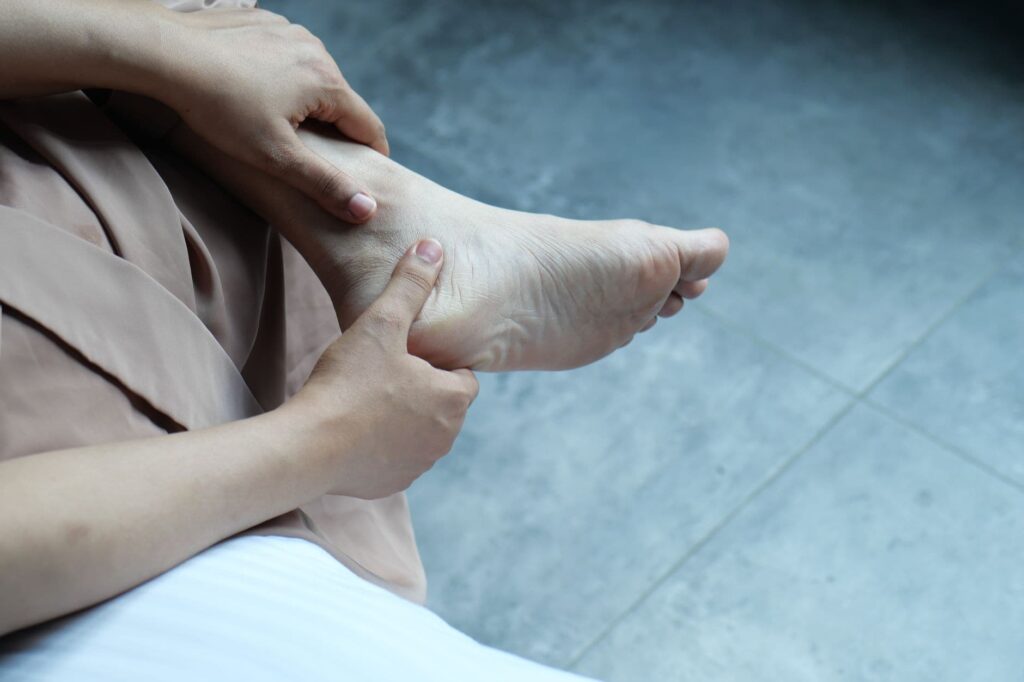
Plantar fasciitis that has lasted for months, despite stretching, ice and new shoes, can be frustrating. This guide is for that stage: when extracorporeal shockwave therapy (ESWT) may be considered for long-standing heel pain, what the evidence says, and what your physiotherapist checks before suggesting it.
Key takeaway: Shockwave may be considered for heel pain that has not settled with exercise and other usual care. Evidence is mixed, results vary, and it is used alongside a loading program, not on its own. Your physiotherapist will recommend the number of sessions after your assessment.
Why Plantar Fasciitis Can Stop Responding to the Usual Advice
Plantar fasciitis is a common cause of stubborn heel pain. Standard advice, such as stretching, relative rest, ice and supportive shoes, often helps in the early weeks. When pain lasts for months, the tissue can behave more like a long-standing tendon problem than a fresh injury, which is why researchers often call it plantar fasciopathy.
For some people, custom orthotics can support the arch and ease strain on the plantar fascia. The classic symptom is sharp pain with the first steps in the morning or after sitting.
Who Tends to Develop the Long-Standing Version
- Runners increasing mileage, especially with hills or speed added quickly
- Workers standing for long hours on hard surfaces
- People carrying extra body weight, which adds load to the fascia
- Tight calves, which limit ankle range
- Shoe changes: flat shoes, worn-out runners or a sudden switch to minimalist shoes
What Shockwave Involves
Shockwave sends quick pulses of sound waves through the skin into the sore area. The pulses are mechanical, not electric. A gel helps the waves pass through the skin, and most people feel strong tapping and pressure. Your physiotherapist adjusts the intensity to your feedback, and the treatment can stop at any time.
What the Evidence Says
Evidence for shockwave in long-standing plantar fasciitis is mixed, and results vary between studies and devices (CADTH 2016 rapid review). It may ease pain and improve walking for some people with long-standing heel pain. Results are not guaranteed, and shockwave is usually combined with calf and foot loading exercises.
When Shockwave May Be Considered
- Heel pain that has lasted for months despite consistent conservative care
- The typical first-steps morning pain pattern, confirmed on assessment
- People who want to discuss options other than, or as well as, cortisone injections with their doctor
- Runners and workers who want a plan that keeps them active while the heel settles
What Your Physiotherapist Checks First
Heel pain has look-alikes, and shockwave aimed at the wrong structure will not help. Your assessment checks for:
- Fat pad pain: pain more central under the heel, often worse on hard floors
- Nerve irritation: burning or tingling rather than sharp mechanical pain
- Stress fracture of the heel bone: constant pain that needs medical review and imaging, not shockwave
- Achilles insertion pain: this changes the treatment target and the exercises
The assessment also checks calf flexibility and ankle range, because both can keep heel pain going. If you have not been assessed by a Tonic physiotherapist before, your first visit is a 30 minute Shockwave Initial Assessment for $120. Follow-up visits are $90 for 15 minutes, or $125 for 45 mins shockwave therapy.
Fees, session length and booking are on our shockwave therapy in Milton page.
Who Should Not Have Shockwave
Shockwave is not used over a pregnancy in the treatment field, a tumour or malignancy at the site, or a pacemaker or similar device in the field. Tell us first about bleeding or clotting disorders, blood thinners, thrombosis, infection or wounds at the site, or a recent cortisone injection to the area. Your physiotherapist decides timing and suitability under clinic policy.
The Loading Program That Goes With Shockwave
Shockwave is one part of a plan. The exercise side usually includes:
- Calf stretching for both the straight-knee and bent-knee positions
- Calf strengthening, such as slow calf raises, progressed over time
- Exercises for the small muscles of the foot
- Load management: running or standing volume is graded, not banned
Your physiotherapist sets the exercises, the dose and how they progress, based on your assessment.
Other Options for Long-Standing Heel Pain
Shockwave
What to know: Evidence is mixed; it may help some long-standing cases when combined with exercise.
Cortisone Injection
What to know: May give short-term relief for some people; discuss the benefits and risks with your doctor.
Stretching and Loading
What to know: The base of most plans; progress is gradual.
Night Splints, Taping or Heel Cups
What to know: Sometimes used for short-term support alongside exercise.
Heel Pain in Milton: Common Triggers
Long hours sitting at a desk or in the car can leave calves tight. The spring return to trails and road running adds load quickly, and winter shovelling and icy footing change how you walk. Your assessment includes your actual week, because your heel’s load history matters.
The Running Return
Many runners switch from treadmill to road volume in spring and add hills at the same time. Reintroducing hills and speed separately, and building volume gradually, can help protect the heel.
Standing Jobs
Warehouse, retail and trades workers load their heels for full shifts. A plan may include floor-surface strategies, anti-fatigue matting, rotating shoes and short breaks.
Frequently Asked Questions
Does shockwave hurt?
It can be uncomfortable, especially over the sorest spot. Your physiotherapist adjusts the strength to what you can tolerate, and soreness afterwards is usually mild and short-lived.
How many sessions will I need?
Your physiotherapist will recommend the number of sessions after your assessment.
When might I notice a difference?
Some people feel a little easier soon after a session, but the main change can take weeks. Results are not guaranteed.
Can I keep running during treatment?
Often, with modified volume. Ask your physiotherapist when and how much to run, and avoid strenuous or high-impact activity for about 48 hours after a session unless your physiotherapist advises otherwise.
Is it covered by insurance?
At Tonic, shockwave is billed as physiotherapy. Coverage depends on your insurer and plan, so confirm before you book.
Sources
CADTH rapid review on extracorporeal shockwave therapy (2016)