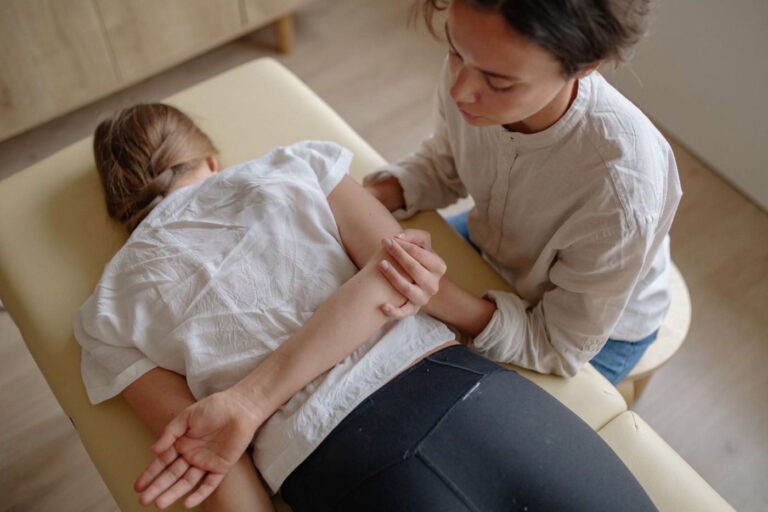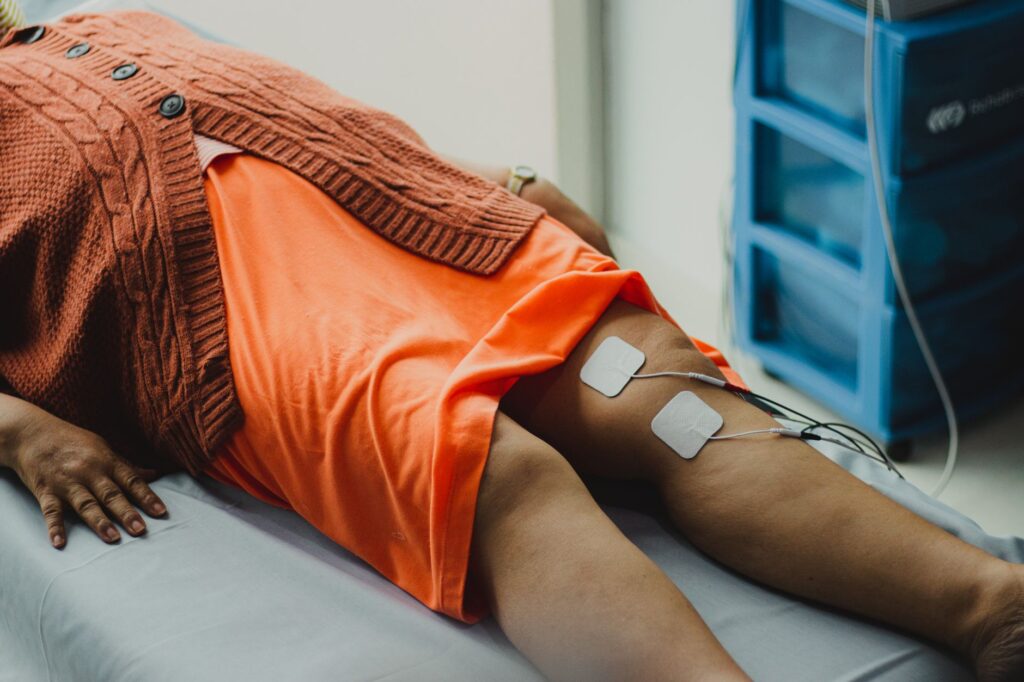
A TENS unit is a small battery-powered device that sends mild electrical pulses through pads on your skin to ease pain. Many people find the tingling feeling helpful for short-term relief, though research on how well it works is mixed. TENS targets pain, while NMES, a similar-looking device, is used to make muscles contract.
Key Takeaway: A TENS unit sends mild electrical pulses through skin pads to ease pain, and it helps some people for short-term relief although the research is mixed. NMES looks similar but makes muscles contract, so ask a physiotherapist which one fits your goal before you buy.
What is a TENS unit and how does it work?
TENS, short for transcutaneous electrical nerve stimulation, is a method of easing pain with low-voltage electrical pulses sent through sticky electrode pads on the skin. The pads sit on or near the sore area. You control the strength with a dial or buttons, and the sensation is usually described as buzzing or tingling.
The gate control idea
One popular explanation is gate control. Touch-type signals from the skin travel to the spinal cord and may compete with pain signals, so the pain message can feel quieter while the unit is on.
This is a theory that helps explain why rubbing a bumped elbow feels better. It does not mean the tissue underneath has healed.
The body’s own pain chemistry
Some lower-frequency settings may also prompt the nervous system to release its own pain-dampening chemicals. People who use these settings often feel a pulsing or tapping sensation, and the effect may last a little after the session ends.
Common settings in plain language
- High frequency: a steady, strong-but-comfortable tingle, usually used for quick relief during activity
- Low frequency: slower pulses that feel like gentle tapping, sometimes used for longer-lasting effects
- Pulse width and intensity: adjusted so the feeling is clear but never painful or causing muscle jumping
Your physiotherapist can pick a starting program for your problem and show you how to change it safely.
Most home units come with preset programs. Presets are a sensible starting point because they use settings that are generally comfortable. Ask your clinician which preset suits your problem, and avoid changing several settings at once so you can tell what makes the difference.
Does a TENS unit really work for pain?
The honest answer is that it helps some people and not others. A TENS unit is a pain-management tool, not a treatment that repairs tissue, so it works best as one part of a broader plan.
What the research says
A Cochrane overview of reviews on TENS for chronic pain looked at 51 trials. The authors rated the evidence as very low quality because many studies were small and had weaknesses, so firm conclusions were not possible.
That finding does not prove TENS is useless. It means we cannot promise a result, and it is a reasonable low-risk option to try for some people when used as directed.
Who tends to try it
TENS is commonly tried for muscle and joint pain, such as low back pain, neck pain, knee arthritis and pain after some procedures. People also use it during a flare to get through a day, or to sleep more comfortably.
If a unit helps you do more gentle movement, that benefit may matter more than the electrical effect itself. Moving is a core part of recovery for most musculoskeletal problems.
When it may not help
Pain that is mostly linked to fear, poor sleep or stress may respond less to a device. Nerve damage or numb skin can also make the sensation hard to judge.
If you have used a unit properly for a couple of weeks with no noticeable change, it is reasonable to stop and talk to your clinician about other options. Our post on physiotherapy and medication for chronic pain explains how treatments can fit together.
What is the difference between TENS and NMES?
TENS and NMES units look nearly the same, but they do different jobs. TENS acts on sensory nerves to change how pain feels, while NMES acts on motor nerves to make a muscle contract.
What NMES does
NMES stands for neuromuscular electrical stimulation. The current is strong enough to make a muscle tighten and release in a set pattern, much like a voluntary contraction.
Clinicians often use it when a muscle has trouble switching on, for example the thigh muscle after a knee operation. Our overview of knee replacement rehab describes where muscle activation fits into recovery.
Side-by-side summary and why it matters
| Feature | TENS | NMES |
|---|---|---|
| Main aim | Reduce pain | Activate a muscle |
| Nerves targeted | Sensory nerves | Motor nerves |
| What it feels like | Tingling or buzzing | A strong squeeze or contraction |
| Pad position | Over or around the sore area | Over the muscle belly |
| Typical use | Making movement more comfortable | Helping a weak muscle switch on |
Both are used under guidance, adjusted to comfort, and combined with exercise rather than replacing it.
If you buy the wrong type, you may get either a pleasant tingle that does not build strength, or a muscle contraction when you only wanted pain relief. Ask your physiotherapist which one matches your goal before buying a unit for home.
Some rehab plans use both, for different tasks, within the same week.
Where each fits in a rehab plan
Early after an injury or surgery, a clinician may use TENS to make gentle movement more comfortable. Later, NMES may be added to help a weak muscle activate while you work on strength.
Neither device replaces exercise. They are tools that help you do the exercise that actually rebuilds the area.
How do you use a TENS unit?
Using a unit well is mostly about pad position, a comfortable strength and sensible timing. Read the manufacturer’s instructions first, because models differ.
Placing the pads
Clean and dry the skin, then place two pads on either side of the painful area, a few centimetres apart. Avoid putting pads on broken, irritated or numb skin, and do not let pads overlap.
Switch the unit off before you move or remove a pad. Wires should never be pulled to unplug a pad.
Setting the intensity
Start at the lowest level and turn it up slowly until you feel a clear, strong tingle that is comfortable. It should not hurt and should not make your muscle jump.
Your body may adapt after a few minutes, so the feeling can seem weaker. A small increase is fine, but stay within a comfortable range.
How long and how often
Sessions are often 20 to 30 minutes, though some people use a unit for longer during the day under guidance. Check the unit’s guidance and your clinician’s advice, and give your skin a break if it looks red.
Keep a simple log of pain level, activity and unit use for a week or two. It makes it easier to judge whether the unit is helping.
Care of the pads matters. Keep the electrode pads on their plastic sheet when not in use, replace them when they stop sticking well, and avoid placing them on skin that is oily or covered in lotion. Poor contact can make the current feel patchy or sharp.
How do you get the most out of a TENS unit?
A unit works best when it supports movement and daily activity, not when it replaces them. Think of it as a way to make the next step easier.
Pair it with movement
Many people find that using a unit before a walk, a stretching session or an exercise routine makes the first few minutes more comfortable. That lets you move more, which is what builds strength and confidence over time.
Sitting still with the unit on all day and skipping activity usually gives a weaker result. Ask your physiotherapist how to fit it into your routine.
Track what changes
Write down your pain score, what you did and how long you used the unit. After two weeks, look at the pattern and ask whether you are moving more, sleeping better or needing less pain medication.
Those practical changes are better markers than the tingling feeling itself. Bring the log to your next appointment so the plan can be adjusted.
Know when to change the plan
If your pain is slowly improving and you are more active, you may be able to use the unit less often. If nothing changes, or the problem is spreading or worsening, it is a sign to have the cause re-checked.
A device should never be the only response to ongoing pain. Early assessment can rule out causes that need different care.
Using a unit at a desk or on the couch is fine, but it does not replace changing position often. Short breaks to stand, walk and stretch usually matter more than the device.
Can you buy a TENS unit for home use?
Yes, many TENS units are sold in Canada through pharmacies and online stores. Choosing one with a clear licence and good instructions is a reasonable first step.
Checking the device
Health Canada regulates medical devices, and the department runs a medical device licensing system that lists licensed products. Look for a licensed brand rather than a very cheap unit with no information.
A physiotherapist can also help you choose features that fit your needs, such as adjustable settings and a timer.
Home use with guidance
Many people start with supervised sessions, then continue at home once they know where to place pads and what settings feel right. This avoids the common mistakes of too much intensity or poor pad position.
If you have an ongoing condition, check that a unit is safe for you before starting. Extended health plans sometimes help with the cost, so check your coverage first.
Before buying, check the return policy and whether replacement pads are easy to find in Canada. Cheaper units can run out of compatible pads, which leaves you with a device you cannot use.
Who should not use a TENS unit?
TENS is generally low risk, but it is not suitable for everyone. Talk to a doctor or physiotherapist before using one if any of the following apply to you.
Check with a clinician first if you have
- A pacemaker, implanted defibrillator or other implanted electrical device
- Epilepsy, or a history of seizures
- A heart rhythm problem or other heart condition
- Pregnancy, especially for pads on the abdomen or lower back
- Numb skin, a skin condition, or an open wound in the area
Places and times to avoid
Do not place pads on the front or sides of the neck, across the chest, over the eyes, or on the head unless a clinician has told you to. Never use a unit while driving, in the shower or bath, or while asleep unless the manufacturer says it is designed for that.
Stop using it if you notice skin irritation, burning, or a feeling you do not like.
When should you see a doctor or go to emergency?
Pain relief from a device can mask a problem that needs checking. Please do not use a unit to push through warning signs.
Go to emergency or call 911
Seek emergency care for chest pain, shortness of breath, sudden weakness or numbness on one side, loss of bladder or bowel control, or severe pain after a fall or injury. These are not problems for a TENS unit.
See a doctor or physiotherapist soon
Book an assessment if pain is getting worse, has lasted more than a few weeks, wakes you at night, or comes with unexplained weight loss or fever. You can also call Health811 at 8-1-1 for free nursing advice in Ontario if you are unsure what to do.
The College of Physiotherapists of Ontario regulates the profession, and you can book physiotherapy in Ontario without a doctor’s referral.
How can physiotherapy in Milton use electrical stimulation?
At Tonic Physio in Milton, electrical stimulation is one tool among several, and your plan is built around movement, strength and daily activities.
What a session may include
A physiotherapist will first assess what is causing your pain, then decide whether TENS, NMES or neither fits. If a device is used, it is usually combined with exercise, hands-on care and advice you can use at home.
Our electrical stimulation therapy service explains the options. For persistent pain, our chronic pain management guide offers more context.
Booking
If you are unsure whether a TENS unit is right for you, you can book an assessment online and talk it through with a physiotherapist.