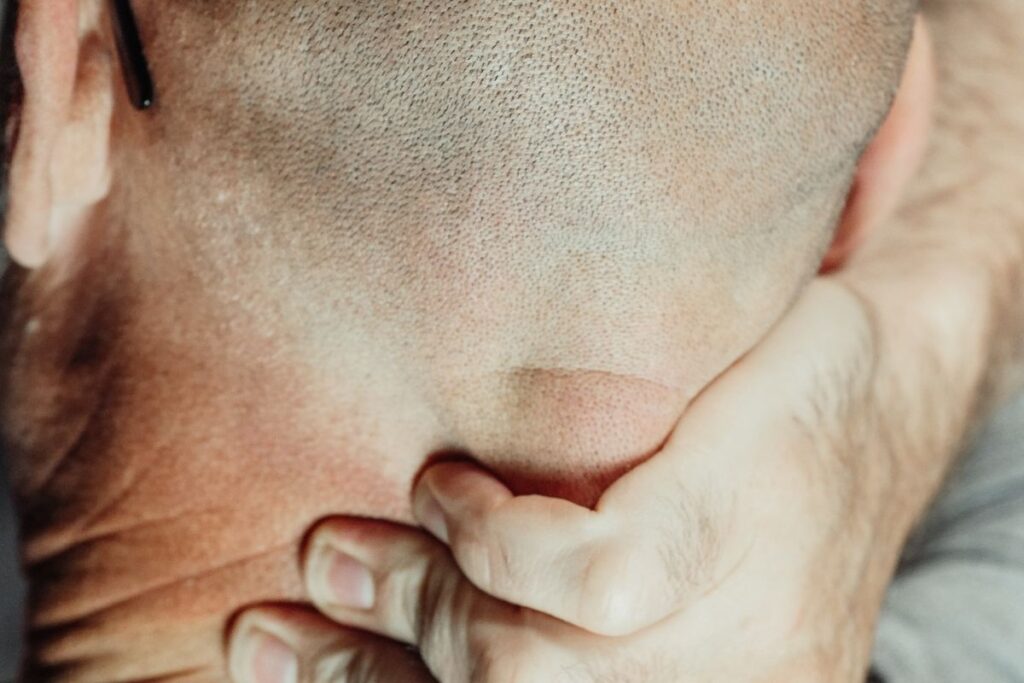
Tension headache treatment usually starts with simple steps: regular movement, better sleep and stress habits, and sometimes over-the-counter pain relief advised by a pharmacist. Physiotherapy may help when neck and shoulder tension feeds your headaches, using manual therapy, posture work and strengthening. A sudden or severe headache needs urgent medical care.
Key Takeaway: A tension headache is a steady, pressing ache that usually responds to movement, sleep, stress habits and simple self-care. Physiotherapy may help when neck and shoulder tension feeds your headaches, but a sudden or severe headache needs urgent medical care.
What is a tension headache?
A tension headache is the most common type of headache. It is usually a steady, pressing ache rather than a throbbing pain. It tends to be mild to moderate and can last from thirty minutes to several days.
What a tension headache feels like
- A band-like pressure around the forehead or the sides of the head
- Dull pain at the base of the skull that can spread to the neck
- Tight, tender muscles in the neck, shoulders and jaw
- Pain on both sides of the head
- Little or no nausea, and usually no vomiting
Ordinary activity does not usually make the pain much worse, which helps tell it apart from a migraine.
Tension headache, migraine or neck-related headache?
Headaches overlap, so it helps to look at the pattern. A migraine often throbs on one side and may come with nausea, light sensitivity or visual changes. A neck-related headache, sometimes called cervicogenic, often starts in the neck, is usually one-sided, and flares with certain neck positions.
Many people have more than one type. An assessment can sort out which pattern fits you, and a doctor should be involved if the picture is unclear.
The table below compares the three patterns people most often confuse.
| Type | Typical pattern | Common clues |
|---|---|---|
| Tension-type | Steady, pressing ache on both sides, often like a band around the head | Usually little or no nausea, and routine activity does not make it much worse |
| Migraine | Throbbing pain, often on one side | May come with nausea, light sensitivity or visual changes |
| Neck-related (cervicogenic) | Starts in the neck, usually one-sided | Flares with certain neck positions or movements |
Episodic and chronic tension headaches
Episodic tension headaches happen on fewer than 15 days a month. Chronic tension headaches happen on 15 or more days a month for at least three months. The chronic pattern deserves a medical review, because other causes, including medication overuse, can sit behind it.
The pattern matters because treatment choices and follow-up differ. Tracking how many headache days you have each month gives your care team a clear starting point.
What triggers tension headaches?
Triggers differ for each person. Muscle tension, stress, long screen days and poor sleep are among the most common. Keeping a short headache diary for two weeks can show you your own patterns.
Common triggers include the following. Most people have two or three that matter most.
- Long periods of sitting or driving
- Poor or short sleep
- Stress, worry or a heavy workload
- Skipped meals and low fluid intake
- Jaw clenching and teeth grinding
- Uncorrected vision or long screen sessions
Neck, shoulder and posture strain
Long periods of sitting with the head forward can overload the muscles at the back of the neck. Many Milton commuters and desk workers notice headaches by mid-afternoon. Our guides on workplace ergonomics and forward head posture explain simple fixes.
Stress, sleep and daily habits
Stress often leads to clenched jaws and raised shoulders. Missing meals, drinking little water, too much caffeine and irregular sleep can add to the load. Eye strain from long screen use is another common trigger.
Jaw clenching is worth noticing, because jaw muscles refer pain to the temples. Our guide on TMJ exercises you can do at home may help if this sounds familiar.
Eyes, jaw and screens
If you squint, lean toward the screen or get headaches late in the day, book an eye exam. A small change in prescription can lower eye strain. Large monitors, glare and low light also add to the load.
Take a screen break every 20 minutes and look at something far away for 20 seconds. This simple habit costs nothing and may reduce strain.
How are tension headaches treated?
Most tension headaches settle with self-care. Treatment aims to ease the current headache and to lower how often they come. Plans usually combine several small changes rather than one big fix.
Self-care for a headache that has started
- Rest in a quiet place and sip water
- Apply warmth to the neck and shoulders for 10 to 15 minutes
- Take a short walk and loosen your shoulders
- Try slow breathing for a few minutes
- Step away from the screen
The NHS page on tension headaches describes similar steps and when to seek help.
Regular meals and steady fluids through the day may also help. Skipped meals and dehydration are common headache triggers, so keep water at your desk and avoid long gaps between eating. Limit caffeine late in the day, and avoid cutting it out suddenly, which can bring on headaches of its own.
Medication and medication-overuse headache
Over-the-counter pain relievers can help some people. Your pharmacist or doctor can advise which option is safe for you. Using pain relievers on many days each month can itself lead to more headaches, so talk to a professional if you rely on them often.
Longer-term strategies and a headache diary
A short diary can reveal patterns you would otherwise miss. Write down a few details each time a headache starts.
- The date, time and how long the headache lasted
- Pain from 0 to 10 and where you felt it
- What you ate, drank and slept the day before
- Stress level, screen time and any jaw clenching
- What helped and what you took, if anything
Bring the diary to your doctor or physiotherapist. It makes the assessment faster and more accurate.
After two to four weeks, look for patterns together. You may notice that headaches cluster on long screen days, after poor sleep or around stressful deadlines. Those patterns point to the changes worth trying first.
Regular exercise, consistent sleep, stress management and breaks from screens help many people over time. A doctor may discuss other treatments if headaches are frequent or disabling. Physiotherapy can sit alongside that care.
Can physiotherapy help tension headaches?
Physiotherapy may help when the neck and shoulders contribute to your headaches. It does not replace medical care, and it is not suitable for every headache. An assessment decides whether your pattern fits.
What the research says
A 2025 systematic review and meta-analysis looked at physiotherapy approaches in chronic tension-type headache. It reported that neck and shoulder strengthening exercises and muscle relaxation approaches were linked to lower headache intensity, duration and frequency compared with control groups.
The review also found electroacupuncture helped with intensity and duration. Study methods varied, so these results suggest what may help some people, not what will happen for you.
In practice, this means exercise is usually the backbone of a plan. A few minutes most days can matter more than an occasional long session. Consistency over several weeks is what the research tends to reward.
Hands-on treatment
Physiotherapists may use gentle joint mobilisation, soft tissue techniques and trigger point work for the neck and upper back. The aim is to reduce stiffness and tenderness so exercise feels easier. Hands-on care works best with an exercise plan you continue at home.
Physiotherapy cannot diagnose every cause of headache. If something does not fit a tension or neck pattern, we refer you back to your doctor. That safety check is part of good care.
Some people also add massage for tight neck and shoulder muscles. Our registered massage therapists offer deep tissue massage in Milton, which some patients combine with exercise.
What a physiotherapy visit includes
We ask about your headache pattern, sleep, stress and work setup. We then check neck movement, posture, muscle tension and strength. You leave with a plan that may include manual therapy, exercises and desk changes, plus clear guidance on when to see your doctor.
After hands-on treatment, some people feel mildly sore or tired for a day. This usually settles on its own. Tell your physiotherapist if the soreness lasts longer or a headache gets worse, so the plan can be changed.
Which exercises and habits may ease tension headaches?
Choose movements that feel comfortable and stop if you get sharp pain, dizziness or new tingling. Gentle, regular practice often helps more than occasional hard stretching.
Neck and shoulder exercises
- Chin tuck: glide your head straight back, hold 5 seconds, repeat 8 to 10 times.
- Upper trapezius stretch: tilt your ear toward your shoulder, hold 20 to 30 seconds each side.
- Shoulder blade squeeze: squeeze your shoulder blades together, hold 5 seconds, repeat 10 times.
- Band row: 2 sets of 10 to 12 with a light resistance band.
Do the gentle moves daily and the strengthening three days a week. Your physiotherapist can adjust them to you.
Warm showers, a heat pack on the upper back and a short walk outdoors also help many people. Cold packs suit some people better, so use whichever feels better for you.
If you want a simple routine, try this ten-minute sequence once or twice a day.
- Three slow breaths with your shoulders relaxed
- Eight chin tucks
- Two upper trapezius stretches on each side
- Ten shoulder blade squeezes
- One minute of walking or marching on the spot
Desk setup and movement breaks
Place your screen at eye level and keep your elbows near your sides. Stand up every 30 to 45 minutes, roll your shoulders and look at something far away. A short walk at lunch is also useful.
Pay attention to how you hold your shoulders when you are busy. Many people lift them without noticing, especially while typing, driving or checking a phone. A quick check every hour to drop the shoulders and unclench the jaw takes seconds and can break the tension cycle.
Relaxation and sleep
Slow breathing for five minutes, a regular bedtime and a pillow that keeps your neck in a neutral line may all help. If you clench or grind at night, mention it to your dentist or physiotherapist.
When is a headache an emergency?
Most headaches are not dangerous. A few patterns need urgent medical review, so know them in advance. If you are unsure, it is safest to get checked.
Call 911 or go to emergency if you have
- A sudden, severe headache that peaks within seconds or minutes
- A headache after a head injury
- A fever with a stiff neck, confusion or a rash
- Weakness, numbness, face drooping, trouble speaking or vision loss
- Fainting, a seizure or repeated vomiting with the headache
Some of these signs can point to a stroke. Learn the signs of stroke from Heart and Stroke.
Remember that most sudden headaches are harmless, but the emergency list exists because a few are not. Do not wait to see whether it passes if any of those signs are present.
See a doctor soon if
Book a medical visit if headaches are new after age 50, are getting more frequent, wake you from sleep, or change in character. See a doctor too if painkillers are not helping or you use them most days. Physiotherapy does not replace this review.
How can Tonic Physio help in Milton?
You do not need a referral to see a physiotherapist in Ontario. Our team sees many headache patients with neck and posture contributors. We work with your doctor when you need other care.
Assessment and a plan you can follow
We keep plans short and realistic, so you can fit them into work and family life. Learn more about headache and migraine treatment in Milton. Our guide to effective neck pain treatments also covers common neck contributors.
Progress is usually gradual. Many people first notice that headaches are shorter or easier to settle, and later that they come less often. If nothing changes after several visits and a steady home routine, we will talk with you about other options and ask your doctor to review.
Coverage and billing
OHIP covers physiotherapy only in limited situations, so many people use extended health benefits. Direct billing may be available with some insurers, and work-related cases may fall under WSIB. Bring your plan details to your visit.
If headaches keep returning, you can book a physiotherapy visit online to check whether your neck is part of the story.