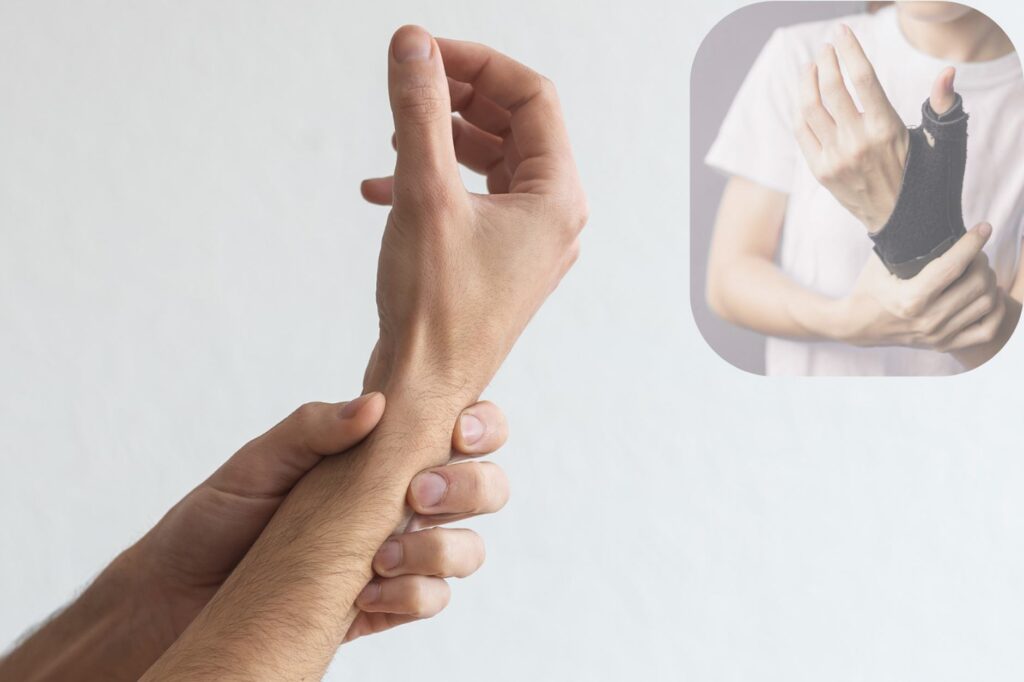
De Quervain’s tenosynovitis is irritation of two tendons on the thumb side of the wrist, causing pain when you grip, pinch, twist or lift with the thumb. It is common in new parents and people with hand-heavy work, and it often settles with load changes, a thumb splint and graded exercise.
This article explains what causes De Quervain’s tenosynovitis, how to tell it apart from other thumb pain, what self-care, splints and exercises involve, and when injections or surgery come into the conversation.
Key Takeaway: De Quervain’s causes pain at the base of the thumb that worsens with gripping and lifting with the thumb out wide. Most people start with changing how they use the hand, a thumb splint and gentle exercise. If pain persists, a doctor may discuss an injection, and surgery is usually a later option.
What Is De Quervain’s Tenosynovitis?
De Quervain’s tenosynovitis is a condition in which two thumb tendons and their protective sheath become irritated and thickened. The tendons, called abductor pollicis longus and extensor pollicis brevis, share a narrow tunnel near the bony bump on the thumb side of the wrist.
What Happens Inside the Wrist
One tendon pulls the thumb away from the hand and the other straightens it. Each slides inside a slippery sheath. When the sheath thickens, the tunnel does not get any bigger, so the tendons rub as they move and every grip, pinch or sideways wrist bend causes pain.
Other Names You May Hear
You may hear it called mommy thumb, mother’s wrist or texting thumb. These nicknames all describe the same condition. They usually reflect what the person was doing when the pain started rather than a different problem.
What Are the Signs of De Quervain’s?
The pain has a clear home on the thumb side of the wrist, right where the thumb meets the forearm. It often builds over days or weeks rather than starting with a single injury.
Common Symptoms
- Pain at the base of the thumb that worsens with gripping, pinching or twisting
- Pain lifting with the thumbs pointing up, such as picking up a baby or a full pot
- Tenderness over the bony bump on the thumb side of the wrist
- Swelling over that spot, sometimes with a small lump
- A catching or snapping feeling when the thumb moves
- Pain spreading up the forearm on bad days
The Finkelstein Test
Clinicians often use a movement called the Finkelstein test. You tuck your thumb into your palm, close your fingers over it and gently bend your wrist toward your little finger.
Sharp pain on the thumb side suggests these tendons are involved, but it is a clue rather than a diagnosis, and pushing hard into a painful test can flare symptoms.
Conditions That Can Feel Similar
Thumb base arthritis causes deep, achy pain with pinching. Intersection syndrome hurts a few centimetres higher up the forearm. Carpal tunnel syndrome mainly causes numbness and tingling in the thumb and first fingers, which our guide to carpal tunnel relief without surgery explains in detail.
What Causes De Quervain’s Tenosynovitis?
The exact cause is not fully understood. It tends to flare with repeated thumb and wrist movements, especially gripping while the wrist bends side to side.
According to OrthoInfo from the American Academy of Orthopaedic Surgeons, it is most common in people in their 40s and 50s, affects women more often and is linked to pregnancy and the months after birth.
New Parents and Caregivers
Lifting, feeding and bathing a baby many times a day holds the thumb out wide in an L shape while the wrist takes the weight. Broken sleep leaves little time to recover. Fathers, grandparents and other caregivers can develop it too.
Phones, Typing and Hand-Heavy Work
Long scrolling sessions, one-thumb texting, gaming controllers and a mouse held with a bent wrist all load the same two tendons, often for hours with few breaks. Racquet sports, golf, rowing, weight training and a weekend of gardening after a quiet winter are other common triggers.
Who Is More Likely to Get It
People with rheumatoid arthritis may be more likely to develop De Quervain’s. Hormone and fluid changes during pregnancy and breastfeeding are also thought to play a part. A sudden jump in how much you use your hands, such as a new job, hobby or baby, is one of the most common patterns.
What Self-Care Helps Thumb Tendon Pain?
Self-care aims to lower the load on the tendons enough for them to settle, without stopping use of the hand. Small changes to daily tasks often make the biggest difference.
Changing How You Use the Hand
- Lift a baby with your palms up and forearms under the body, rather than scooping with the thumbs out wide
- Use a nursing pillow so your wrists are not holding the weight during feeds
- Swap hands, use both thumbs or try voice typing for long messages
- Choose larger grips on tools, pens and garden equipment
- Take short breaks during long phone, typing or gripping tasks
Ice and Medication
Ice for 10 to 15 minutes after a busy day may ease pain. Some people talk with their doctor or pharmacist about anti-inflammatory medicine, which is a decision best made with someone who knows your health history.
Your Desk Set-Up
Keep the wrist close to straight when typing and using the mouse, and try a mouse shape that lets the thumb relax. Our article on workplace ergonomics to prevent desk pain covers simple set-up changes that reduce strain on the hands.
How Do Splints and Exercises Compare?
Most plans combine several pieces rather than relying on one. The table below shows how common options usually fit together.
Treatment Options at a Glance
| Option | What it involves | Where it usually fits |
|---|---|---|
| Activity changes | Adjusting the tasks that hurt most | First step for almost everyone |
| Thumb spica splint | Holds the wrist straight and rests the thumb | Early on, often at night and for painful tasks |
| Gentle range of motion | Slow thumb and finger movements | Once sharp pain has eased |
| Strength exercises | Band, grip and wrist work | After movement no longer hurts |
| Hands-on therapy | Soft tissue work and gentle joint mobilization | Alongside exercise and load changes |
| Steroid injection | Medication into the tendon sheath by a doctor | When pain stays stubborn despite other care |
| Surgery | Releasing the tunnel to give the tendons room | When other options have not helped |
Thumb Splints
A thumb spica splint holds the wrist straight and keeps the thumb in a comfortable position. Many people wear it at night and during tasks that flare their pain, then take it off for gentle movement and exercise.
Fit matters, because a splint that is too tight can rub or press on a small nerve near the thumb.
What the Research Shows
A 2026 systematic review of conservative treatments found that all active treatments outperformed waiting, and that a splint combined with a steroid injection ranked highest. The authors rated the certainty of evidence as low, so results vary and treatment choices are best made with your care team.
A randomised trial comparing a splint, an injection and both together is one of the studies that has looked at how these options work side by side.
Which Exercises Help De Quervain’s?
Once pain has calmed, the tendons need to be loaded again slowly so they cope with daily tasks. These are examples of exercises often used, not a personal plan. Mild discomfort that settles within a day is usually fine, while sharp or lingering pain means stop and check in with your therapist.
Gentle Thumb Range of Motion
Rest your forearm on a table, thumb side up. Slowly move your thumb across your palm toward your little finger, then back out. Then touch the tip of your thumb to the tip of each finger in turn, staying in a comfortable range.
Thumb Lifts With a Band
Place a light rubber band around your thumb and fingers. Slowly open your thumb away from your hand against the band, hold briefly and return. This is usually added once basic movement no longer hurts.
Grip and Forearm Strength
Squeeze a soft ball, hold for a few seconds and relax. Later, a plan may add light wrist curls with a water bottle, then real tasks such as lifting and carrying. Your therapist will set the amount and decide when to progress.
What About De Quervain’s After Having a Baby?
De Quervain’s often appears in the weeks and months after birth. OrthoInfo notes that symptoms commonly begin within four to six weeks of delivery, when lifting and feeding are at their peak.
Protecting Your Wrists During Baby Care
- Scoop your baby with both forearms under the body and your palms facing up
- Support your baby’s weight on a pillow during feeds rather than with your wrists
- Lift the car seat close to your body with both hands, or let a partner carry it
- Change sides when holding or rocking your baby
- Take a moment to rest your hands between tasks when you can
Splints and Breastfeeding
Many parents wear a thumb splint at night and during the most painful tasks. A splint can usually be worn while holding or feeding a baby, as long as it is clean and comfortable. If you are breastfeeding, ask your doctor or pharmacist which medicines are suitable before you take any for pain.
Will It Go Away on Its Own?
For some parents, pain eases as the baby grows, needs less lifting and starts to sit up independently. Others find symptoms linger and benefit from a structured plan. Either way, early changes to how you lift tend to make the months ahead more comfortable.
When Do Injections or Surgery Come Up?
Many people improve with load changes, splinting and exercise. When pain stays stubborn or stops you using the hand, a doctor may discuss other options.
Steroid Injections
A doctor may suggest a steroid injection into the tendon sheath to calm irritation. Physiotherapy can often continue alongside it, focusing on how you use the hand, splint fit and a gradual return to everyday tasks. Follow your doctor’s advice on activity after the injection.
Surgery
According to OrthoInfo, surgery may be recommended if symptoms are severe or do not improve after a period of nonsurgical treatment. The operation releases the tunnel so the tendons have more room to glide. After surgery, physiotherapy can help with swelling, scar care and rebuilding grip strength.
How Long Does De Quervain’s Take to Settle?
Recovery time varies from person to person. How long you have had symptoms, how much load your hands face each day and how closely you can follow the plan all play a part.
Factors That Affect Recovery
Pain that started recently and has a clear trigger often settles sooner once that load changes. Symptoms tied to a newborn or a hand-heavy job can take longer because the load is hard to avoid. Some people find pain eases as a baby grows and needs less lifting.
Tracking Progress
Keep a short note of the tasks that hurt and how sore they are from 0 to 10. Comparing notes every week or two shows whether the plan is working. If there is no real change after several weeks of consistent care, it is worth reviewing the plan with your doctor or therapist.
When Should You See a Doctor?
Many people start with physiotherapy, but some signs need a medical check. Go to the emergency department for a hand that is very swollen, hot and red with fever, or for a suspected fracture.
Signs That Need a Medical Check
See your family doctor or a walk-in clinic if you notice:
- Pain that started after a fall or a direct blow to the wrist
- Redness, heat and swelling with fever or feeling unwell
- Numbness, tingling or weakness that keeps getting worse
- Swelling in several joints, or long-lasting morning stiffness
- Severe pain that stops you using the hand at all
How Physiotherapy Fits In
A physiotherapist can check where the pain comes from, rule out similar conditions and build a plan with load changes, splinting, hands-on care and exercise. If finger catching or locking is part of your symptoms, our guide to trigger finger symptoms and treatment may help. Learn more on our wrist and hand pain treatment page.
When you are ready, you can book an assessment online. Bring a list of the tasks that hurt most and any splint you already use.
This article is general information and is not a substitute for a personal assessment or medical advice.