Prenatal massage is massage therapy adapted for the body changes of pregnancy, using safe positions and gentle pressure. It may help ease back pain, leg cramps, swelling and stress. This article explains the benefits, safety points, what happens in a session and when to check with your doctor or midwife first.
Key Takeaway: Prenatal massage is generally considered safe in a healthy, low-risk pregnancy when a trained therapist uses side-lying or supported positions. It may help relieve back and hip pain, ease muscle tension and support rest and sleep. Check with your care team first if your pregnancy is high risk.
What Is Prenatal Massage?
Prenatal massage is hands-on soft tissue treatment for pregnant people, shaped around how the body changes from trimester to trimester. The therapist adjusts position, pressure and focus areas to keep you comfortable and safe.
How It Differs From a Regular Massage
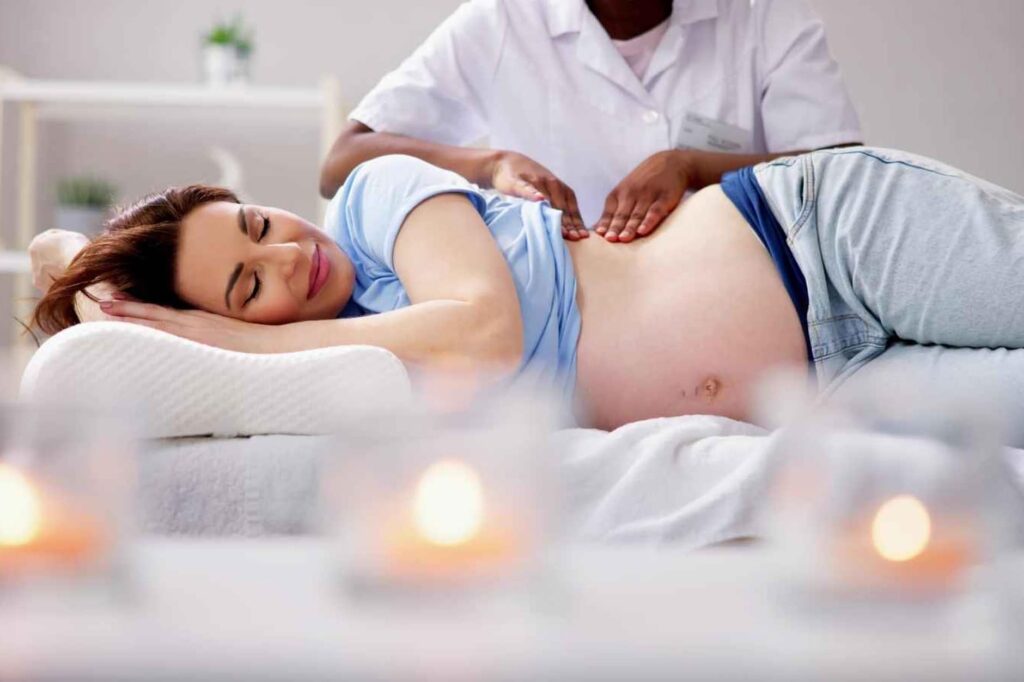
The biggest difference is positioning. After the first trimester, most people should not lie flat on their back or stomach for long, so the therapist uses side-lying positions with pillows between the knees and under the bump. Some clinics also use a semi-reclined position with the upper body raised.
Pressure is usually lighter to moderate. Deep, sustained pressure on the inner legs and calves is avoided, because blood clots are more common in pregnancy. The therapist also checks in more often about comfort, warmth and the need for a bathroom break.
Who Provides It
Prenatal massage should be given by a massage therapist with training in pregnancy care. In Ontario this is usually a registered massage therapist (RMT) who has completed extra study in prenatal positioning and safety screening. Ask about this training when you book.
Why Pregnancy Changes Muscle Comfort
During pregnancy the hormone relaxin softens ligaments so the pelvis can widen for birth. This extra joint movement means muscles often work harder to hold you steady. Weight gain, a shifting centre of gravity and changes in sleep add to the load, which is why aches in the back, hips and legs are so common.
These changes are normal, but they can make daily tasks tiring. Massage does not change the hormones or the posture itself. It focuses on the tight, overworked muscles that come with them, which may help you feel looser and more at ease.
Is Prenatal Massage Safe During Pregnancy?
For most people with an uncomplicated pregnancy, massage from a trained therapist is considered a low-risk way to manage aches and stress. Safety comes from good screening, correct positioning and avoiding certain techniques.
Safety Steps a Therapist Takes
Before the first treatment, your therapist will ask about your due date, your health history and any concerns raised by your doctor or midwife. They will ask about bleeding, swelling, headaches and high blood pressure. This screening helps decide whether massage is suitable that day.
During treatment, the therapist supports your body with pillows or bolsters, keeps pressure moderate and avoids deep work on the legs. Strong pressure on the belly is not used. You can ask to change position or stop at any time.
Massage in the First Trimester
Many therapists are happy to treat in the first trimester, using gentle techniques and a comfortable position. Some people prefer to wait until after 12 weeks because nausea and tiredness are common early on. If you have a history of miscarriage or bleeding, speak with your doctor or midwife before booking.
When Massage May Not Be Suitable
Massage may need to be postponed or changed if you have any of the following. Your doctor or midwife can advise on what is right for you.
- High blood pressure or a diagnosis of pre-eclampsia
- Vaginal bleeding, fluid leaking or cramping
- A history of blood clots, or a calf that is red, warm, swollen or painful
- Placenta problems, such as placenta previa
- Signs of preterm labour
- A high-risk pregnancy where your care team has advised rest
What Are the Benefits of Prenatal Massage?
Pregnancy brings changes in posture, weight, hormones and sleep that can leave muscles tight and sore. Massage works on these soft tissues and may help you feel more comfortable from week to week.
Relief From Back, Hip and Neck Pain
As the bump grows, your centre of gravity moves forward and the curve in your lower back often increases. The muscles of the lower back, hips and buttocks work harder to keep you upright. Gentle kneading and stretching of these areas may help ease aching and stiffness.
The upper back and neck can also tighten as breast tissue grows and sleep positions change. Many people find relief when the therapist works on the shoulders, neck and the muscles between the shoulder blades. The NHS lists back pain in pregnancy as common and suggests massage as one option for easing it.
Help With Swelling and Leg Cramps
Mild swelling in the feet and ankles is common in later pregnancy, especially at the end of the day. Light strokes moving towards the heart may help some people feel less heavy and puffy. Leg cramps, often at night, may also ease with gentle work on the calves and feet.
Swelling that comes on suddenly, or swelling in the face and hands, needs medical checking rather than massage. The NHS page on swollen ankles, feet and fingers in pregnancy explains which signs need urgent care.
Better Rest, Sleep and Mood
Pregnancy can make sleep harder because of discomfort, heartburn and frequent bathroom trips. Many people report feeling calm and drowsy after massage, which may make it easier to rest that night. Research on sleep and massage in pregnancy is still growing, and results vary between studies.
Massage also gives you a set time to slow down and focus on your own body. For many people this time to relax is one of the most valued parts of treatment.
Benefits and Safety at a Glance
The table below sums up common reasons people book prenatal massage and what the therapist keeps in mind for each.
| Concern | How massage may help | Safety point |
|---|---|---|
| — | — | — |
| Lower back and hip pain | Eases tight back, hip and buttock muscles | Side-lying with pillows after the first trimester |
| Neck and shoulder tension | Relaxes upper back and neck muscles | Supported head and arm position |
| Mild ankle swelling | Light strokes may ease heaviness | Sudden or facial swelling needs a doctor first |
| Leg cramps | Gentle calf and foot work | No deep pressure on the inner calf |
| Stress and poor sleep | Calming touch and quiet time | Session can stop or change at any time |
Choosing the Right Focus
You do not need to pick a technique. Tell your therapist where you feel the most discomfort and what you hope to change, such as sleep or hip pain. They will plan the session around that and adjust it as your pregnancy moves on.
What Happens During a Prenatal Massage Session?
Knowing what to expect can help you relax before your first visit. Most sessions follow a similar pattern, with time for questions at the start and the end.
Before the Massage
Your therapist will review your health form and explain the positions they plan to use and how you can let them know if anything is uncomfortable. You will undress to your comfort level and be covered with a sheet the whole time, with only the area being treated uncovered.
During the Massage
In most cases you will lie on your side, with a pillow between your knees, one under your bump and one to hug. The therapist may work on one side, help you turn, then work on the other side. Some people prefer a semi-reclined position with the head and shoulders raised.
Common techniques include long gliding strokes, gentle kneading and light stretching. The pressure should feel comfortable, never sharp. Speak up if you feel dizzy, too warm, nauseous or need the bathroom.
After the Massage
Take your time getting up, as rising too quickly can make you lightheaded. Drink some water if you are thirsty and move gently for the rest of the day. Your therapist may suggest simple stretches or positions to try at home.
How Often Can You Have Prenatal Massage?
There is no single right schedule, and the best plan depends on your comfort, your goals and your health. Your therapist can suggest a rhythm that suits you.
Typical Patterns by Trimester
Some people book once a month in the second trimester and more often in the third, when back and hip pain tend to increase. Others come only when a flare of pain makes daily life harder. Session length is often 45 to 60 minutes, as lying in one position for longer can become uncomfortable.
Working Alongside Other Care
Massage can be one part of a wider plan for pregnancy comfort. If you have pelvic girdle pain, physiotherapy exercises may help build support around the pelvis. Our article on pelvic girdle pain in pregnancy and safe exercises explains this in more detail.
Persistent low back pain that does not settle with massage may benefit from an assessment. You can read about physiotherapy for lower back pain to learn how exercise and posture advice can help.
How Can You Ease Pregnancy Aches at Home?
Simple habits between sessions can help the effects of massage last longer. These ideas are general, so check with your care team if anything causes pain.
Positions and Daily Habits
- Sleep on your side with a pillow between your knees and another under your bump.
- Sit with your back supported and both feet flat on the floor.
- Wear low, supportive shoes rather than high heels.
- Change position often if you sit or stand for long periods.
- Raise your feet for a while in the evening if your ankles swell.
Gentle Movement
Walking, swimming and prenatal yoga or exercise classes can help keep muscles strong and joints moving. Start slowly if you are new to exercise and stop any movement that causes pain. Your doctor or midwife can tell you which activities are safe for your pregnancy.
Warmth and Rest
A warm, not hot, shower or a warm pack on the lower back may ease muscle tightness. Avoid hot tubs and saunas during pregnancy. Short rests with your feet up can also help when you feel sore or tired.
Prenatal and Other Types of Massage
Prenatal massage is one of several massage styles. Each has a different aim and level of pressure.
How It Compares
Relaxation massage uses flowing strokes and is often a good fit in pregnancy once adapted for positioning. Deep tissue massage uses firmer pressure and is usually toned down or avoided in some areas during pregnancy. Our guide to types of massage therapy explains these styles side by side.
After the Baby Arrives
Massage can also help after birth, when feeding, carrying and broken sleep strain the neck, shoulders and back. Timing depends on the type of birth and how you are healing. Read when to start postpartum massage for the details.
When Should You See a Doctor Instead?
Massage is for comfort, not for diagnosing pregnancy problems. Some symptoms need medical care first, even if they feel like simple muscle pain.
Symptoms That Need Urgent Care
Go to emergency or call your doctor or midwife right away if you have:
- Vaginal bleeding or fluid leaking
- Severe or constant belly pain, or regular tightening before 37 weeks
- A severe headache, changes in vision, or sudden swelling of the face, hands or feet
- A calf that is painful, warm, red or swollen
- Chest pain or shortness of breath
- A change in your baby’s usual movements
Some of these can be signs of pre-eclampsia or a blood clot. The NHS page on pre-eclampsia describes the warning signs in plain language.
Pain That Does Not Settle
See a doctor or midwife if back or pelvic pain is severe, keeps getting worse or comes with fever or pain when passing urine. These can point to problems other than tight muscles. Once you are cleared, massage can still be part of your comfort plan.
Starting Prenatal Massage
A first visit is a good time to ask questions and find positions that work for you. Bring any notes from your doctor or midwife if your pregnancy has special care needs.
Booking Your Visit
You can read more about our prenatal massage service and what each visit includes. When you are ready, book a prenatal massage online at a time that suits you.