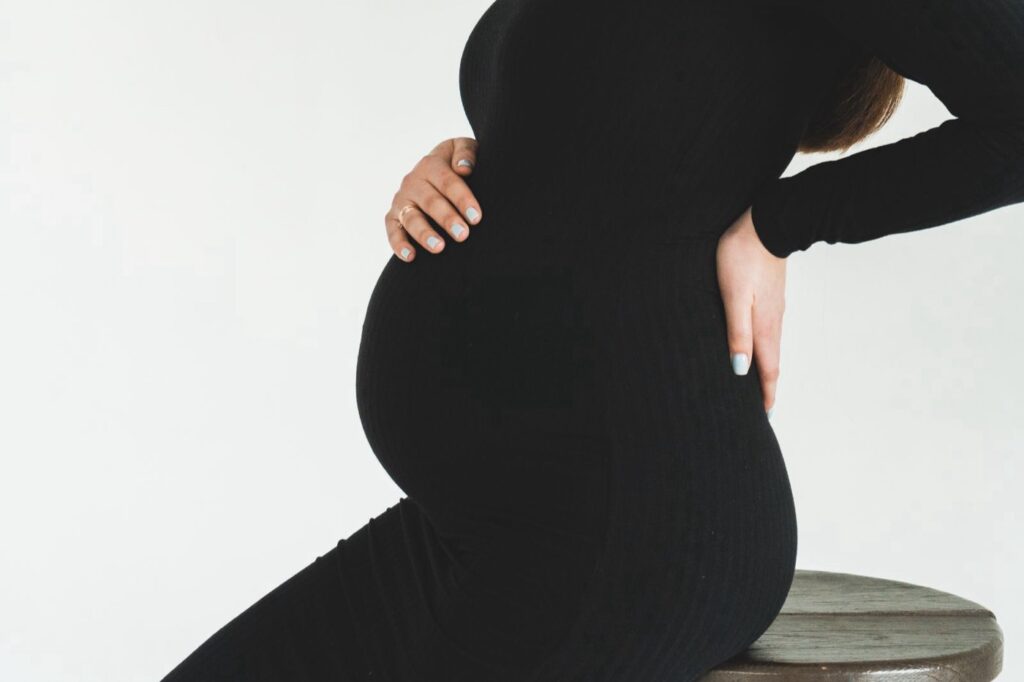
Pelvic girdle pain is pain in the pelvic joints during pregnancy, felt at the front over the pubic bone, across the lower back, or in the buttocks and thighs. It is common, it is not harmful to your baby, and it often responds to targeted exercises, daily movement changes and support. Care from a physiotherapist can help you stay active.
Key Takeaway: Pelvic girdle pain is common in pregnancy and is not harmful to your baby. Targeted exercises, smaller everyday movements and, for some people, a support belt may help you stay active. Tell your midwife or doctor about new pain, and seek urgent care for bleeding, severe abdominal pain or reduced baby movements.
What is pelvic girdle pain in pregnancy?
Pelvic girdle pain, often shortened to PGP, is a collection of symptoms linked to the pelvic joints during pregnancy. The National Health Service in England describes it as caused by stiffness of the pelvic joints, or the joints moving unevenly at the back or front of the pelvis. It is sometimes called symphysis pubis dysfunction.
| Where it hurts | Often described as | Often worse with |
|---|---|---|
| Over the pubic bone | Sharp or deep pain at the front | Walking, stairs, standing on one leg |
| Lower back and hips | An ache on one or both sides | Turning over in bed, getting out of a car |
| Buttocks and thighs | Burning or deep ache | Long periods of standing or sitting |
How common is it?
The NHS estimates that pelvic girdle pain affects up to 1 in 5 pregnant women to some degree. It can start early or later in pregnancy, and it varies from a mild ache to pain that makes walking difficult. Having it does not mean you are doing anything wrong.
Many women find the pain changes from day to day. A busy day on your feet may bring it on the next morning, while a day of pacing yourself can feel easier. Keeping a note of what helps is a useful first step.
Is it harmful to the baby?
The NHS says pelvic girdle pain is not harmful to your baby, though it can be painful and make it hard to get around. It also notes that most women with it can have a vaginal birth. Talk with your midwife or doctor about your birth plan and mention that you have pelvic pain.
What are the symptoms of pelvic girdle pain?
Symptoms vary, but they often follow a pattern of pain with certain movements. The pain may feel sharp, deep or burning, and it can be on one side or both. Many women notice it first with walking or turning over in bed.
Where you may feel it
- Over the pubic bone at the front, in the centre
- Across one or both sides of the lower back, around the hips
- Between the vagina and anus (the perineum)
- Spreading into the thighs
Some women also feel or hear clicking or grinding in the pelvic area.
Movements that often bring it on
The NHS lists walking, going up or down stairs, standing on one leg, turning over in bed and moving the legs apart as common triggers. Getting out of a car, or dressing while standing on one leg, can be especially hard. Pain that is easing with rest and returning with these movements fits the pattern.
Contact your midwife or doctor if you have pelvic pain that makes it hard to move around, and they can refer you on for physiotherapy.
Why does pregnancy cause pelvic girdle pain?
No single cause has been identified, and it likely comes from several factors. The NHS says it is thought to be linked to previous damage to the pelvis, pelvic joints moving unevenly, and the weight or position of the baby. Hormones that soften ligaments during pregnancy are often mentioned as a factor too, though research is still developing.
What may raise the chance
According to the NHS, factors that may make it more likely include a history of low back or pelvic girdle pain, a previous pelvic injury from a fall or accident, and having pelvic girdle pain in an earlier pregnancy. A physically demanding job and being overweight are also listed. None of these mean you will definitely develop it.
Why movement can feel uneven
The pelvis is a ring of bones joined at the pubic bone in front and at the sacroiliac joints behind. When the joints share load unevenly, one side can feel more strained than the other. This is why one-legged movements such as stairs and getting dressed often feel worst.
Which exercises are safe for pelvic girdle pain?
Gentle, well-chosen exercises can help, but the right ones depend on your symptoms and how far along you are. Always check with your doctor or midwife before starting an exercise program in pregnancy. A physiotherapist can tailor the choices and the amount to your pain.
What the research suggests
A 2023 systematic review of 16 randomised trials, involving 1,885 pregnant people with low back or pelvic girdle pain, found lower pain scores in the exercise groups. The authors noted the overall result was not significantly different, so the evidence is mixed.
An older Swedish trial of 386 women found that stabilising exercises or acupuncture, added to standard treatment, gave extra pain relief.
These findings suggest exercise is worth trying, but results vary between people.
Gentle exercises many people tolerate
- Pelvic tilts on hands and knees, rocking slowly and keeping the movement small
- Side-lying leg lifts or clamshells with a pillow between the knees
- Gentle glute squeezes while standing with your weight even on both feet
- Slow, supported pelvic floor contractions, without holding your breath
- Short, easy walks on flat ground at a pace that stays comfortable
Keep the range small and stay within comfortable pain. Stop any exercise that sharpens the pain or leaves it worse the next day.
Movements to go carefully with
The NHS advises avoiding sitting or standing for long periods, going up and down stairs too often, and lifting heavy objects such as shopping bags. Many physiotherapists also suggest limiting wide-leg movements, deep lunges and one-legged loading when they provoke pain. Swimming and water exercise often feel easier because the water supports your weight.
If you can reach a pool, ask whether gentle water walking or a prenatal class is offered. Check with your midwife or doctor before you start.
How can daily movement changes help?
Small changes to everyday tasks can lower the strain on the pelvis. They are free, quick to try and often make a noticeable difference. Many physiotherapists place these tips ahead of any equipment.
Around the house
- Sit down to get dressed, especially when putting on trousers or underwear
- Put a pillow between your legs in bed for extra support
- Roll over in bed with your knees together, rather than parting your legs
- Put equal weight on each leg when standing, and avoid standing on one leg
- Take smaller steps and avoid long strides when walking
The NHS also suggests resting when you can and wearing supportive shoes.
Getting in and out of the car
The NHS advises keeping your knees together when getting in and out of the car. Sitting down first, then swinging both legs in together, spares the pelvis a sudden wide stretch.
Plan trips so that you stand and walk less in one go, and ask for help with heavy items.
Shopping and school runs can be shared or spread across the day. Online grocery orders, a trolley rather than a basket, and sitting while you wait for the kettle all save pelvic load. Small savings add up across a week.
Sleeping and sitting
Sleep can be difficult with pelvic pain. Lying on your side with a pillow between your knees, and another under your bump if it feels better, keeps the hips level. Some women find a satin sheet or a nightdress makes turning over easier.
When sitting, choose a chair with good support and change position often. Try to avoid crossing your legs or sitting on one hip for long stretches.
At a desk, set the chair so your feet rest flat and both hips sit evenly. Stand up and walk slowly for a minute every half hour. A small cushion behind the lower back may add comfort.
Do belts and supports help?
Some women find a support belt helpful, and physiotherapists sometimes recommend one. The NHS says your physiotherapist may suggest a pelvic support belt to help ease pain, or crutches to help you get around. Equipment works best when it is fitted properly and combined with exercise and activity changes.
Pelvic support belts
A support belt sits low around the hips and gives gentle compression to the pelvis. Some people find it makes walking and standing easier, though others do not notice a difference. It should feel snug and supportive, not tight, and should never cause pain or numbness.
Crutches and mobility aids
For severe pain, short-term use of crutches or a walking aid can take load off the pelvis. A physiotherapist can show you how to use them safely. They are usually a temporary measure while other treatment takes effect.
How can pelvic floor physiotherapy help during and after pregnancy?
The NHS says physiotherapy aims to relieve pain, improve muscle function and improve pelvic joint position and stability. That can include exercises to strengthen the pelvic floor, stomach, back and hip muscles. It also notes these problems tend not to get completely better until the baby is born, but treatment can improve symptoms during pregnancy.
During pregnancy
Pelvic health physiotherapists assess how your pelvis, hips, back and pelvic floor are working together. They can teach you exercises, check technique and advise on work and sleep positions. Our pelvic floor physiotherapy service looks after women before and after birth.
Our complete guide to pelvic floor therapy in Milton explains what an assessment involves. Some women also find gentle massage therapy for pregnancy eases surrounding muscle tension.
After the baby arrives
Many women find pelvic pain eases after birth, though some still feel it for weeks or longer. A postpartum check helps you return to activity safely and look after your pelvic floor. Our guide to postpartum pelvic floor recovery covers what to expect.
When should you see a doctor or go to emergency?
Pelvic girdle pain is common, but some pain in pregnancy is not from the pelvic joints. Always tell your midwife or doctor about new pain, and do not assume it is pelvic girdle pain. If you are unsure how urgent it is, call Health811 at 8-1-1 for free advice from a registered nurse.
Contact your midwife or doctor soon if
- The pain makes it hard to walk, climb stairs or turn over in bed
- The pain is getting worse or keeps returning despite rest
- You notice numbness, tingling or weakness in the legs
- Pain or burning when you pass urine, or you have a fever
Your midwife or doctor can check for other causes and refer you to a physiotherapist.
Before the appointment, jot down which movements hurt, when the pain started and how it affects sleep and work. This helps the clinician decide what to check. Bring your list of medicines too.
Go to emergency or call 911 if
Seek urgent care for vaginal bleeding, fluid leaking, severe or constant abdominal pain, or a drop in your baby’s movements. The same applies to a severe headache with vision changes, sudden swelling of the face or hands, or a hot, swollen, painful calf. Do not wait to see if it passes.
How can physiotherapy in Milton help with pelvic girdle pain?
A physiotherapist looks at how your pelvis, back, hips and pelvic floor move and share load. We then build a plan that fits your stage of pregnancy, your work and your daily routine. The goal is to ease pain and help you stay active.
What a visit includes
At Tonic Physio in Milton, a visit usually covers your history, a check of your movement and posture, and hands-on assessment where it suits you. We teach gentle exercises, daily movement changes and, where helpful, advise on belts or support. Extended health benefits often include physiotherapy, though coverage differs, so check your policy.
Booking
In Ontario you can see a physiotherapist without a physician referral, though some insurers ask for one. The College of Physiotherapists of Ontario regulates physiotherapists in the province. If pelvic pain is slowing you down, you can book an assessment online to talk through your options.
Sources
This article draws on the NHS guidance on pelvic pain in pregnancy, a 2023 systematic review of exercise for low back and pelvic girdle pain in pregnancy and a randomised trial of acupuncture and stabilising exercises. It is general information and does not replace advice from your midwife or doctor.