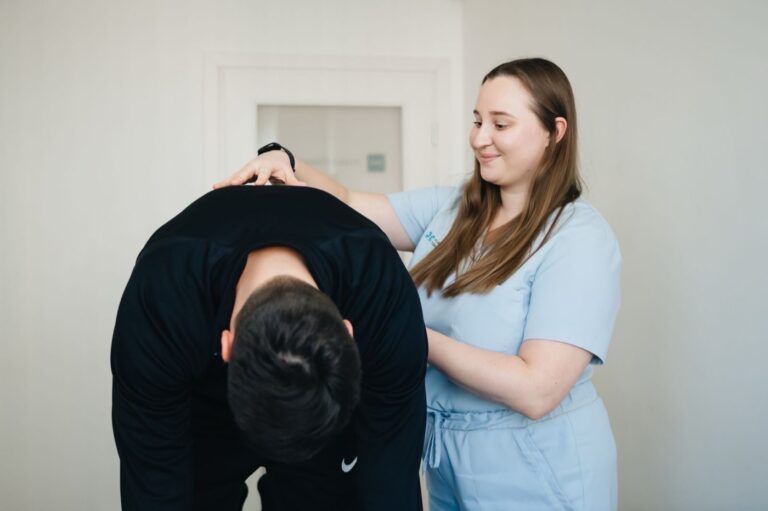
The pelvic floor is the group of muscles and connective tissue at the base of the pelvis that supports the bladder, bowel and uterus. Postpartum pelvic floor recovery usually takes about six weeks for healing and three to six months for strength, sometimes longer. Below is a week-by-week timeline, what is normal and when to get assessed.
Key Takeaway: Most tissue healing after birth happens in the first six weeks, and pelvic floor strength and control usually keep improving for three to six months or longer. Some leaking and heaviness in the early weeks is common. Symptoms that last beyond three months, loss of bowel control, a bulge or ongoing pain are worth an assessment.
What Happens to the Pelvic Floor During Pregnancy and Birth?
The pelvic floor works hard long before labour begins. Understanding the changes helps explain why recovery takes time, whatever kind of birth you had.
Changes During Pregnancy
As the baby grows, the pelvic floor carries steadily more weight for months. Pregnancy hormones also soften connective tissue so the pelvis can widen for birth. By the third trimester, many people notice leaking with a cough or sneeze, a sign the muscles are already under strain.
Changes During a Vaginal Birth
During a vaginal birth, the pelvic floor muscles stretch to well beyond their resting length. Some people have a tear or a cut (episiotomy) that needs stitches. A long pushing stage, a large baby or an assisted birth with forceps or ventouse can add to the strain and lengthen recovery.
What About a Caesarean Birth?
A caesarean birth avoids the stretch of a vaginal delivery, but the pelvic floor has still carried the pregnancy for nine months. Leaking and weakness can still happen after a caesarean. Recovery also involves healing the abdominal wound and the deeper layers beneath it.
How Long Does Postpartum Pelvic Floor Recovery Take, Week by Week?
The timeline below is a general guide for an uncomplicated birth. Every body is different, and a significant tear, a difficult delivery or a caesarean can shift these time frames.
| Time after birth | What is often happening | What usually helps |
|---|---|---|
| Days 1 to 7 | Soreness, swelling and bleeding (lochia); stitches may sting; leaking and weak control are common | Rest, ice packs wrapped in a cloth, gentle breathing, short pelvic floor squeezes when comfortable |
| Weeks 2 to 3 | Swelling eases; most stitches dissolve and the perineum feels less tender; bleeding lightens | Short walks, regular gentle pelvic floor exercises, good bladder and bowel habits |
| Weeks 4 to 6 | Bleeding usually stops by about six weeks; many feel more control; a postnatal check is due | Building to longer holds and quick squeezes; discuss any concerns at the six-week check |
| Weeks 6 to 12 | Muscles are healed enough to train harder; endurance and control often improve steadily | Progressive pelvic floor training, low-impact exercise, core and hip strength work |
| Months 3 to 6 | Many people feel close to normal for daily life; higher-impact activity may be reintroduced | A gradual return to running or impact if symptom-free, ideally after an assessment |
| Months 6 to 12 | Tissue continues to strengthen; breastfeeding can keep tissues more sensitive for a while | Ongoing exercise; assessment for any symptom that has not settled |
The First Six Weeks
This is the main healing window for skin, stitches and the stretched muscles. The focus is comfort, rest and gentle activity rather than training. Pelvic floor squeezes can often begin within days, as long as they do not cause pain.
Six Weeks to Three Months
By now, most wounds have healed and the muscles can be trained with more intent. Many people notice the biggest improvement in leaking during this period, especially with daily exercise. Low-impact activities such as walking, swimming once bleeding has stopped and gentle strength work usually fit well here.
Three Months and Beyond
Strength and endurance keep building for many months. Returning to running and jumping is often best left until at least 12 weeks and only once there is no leaking, heaviness or pain with everyday tasks. Our post on why you may leak urine when running explains what impact asks of the pelvic floor.
How Is Recovery Different After a Caesarean Birth?
Recovery after a caesarean follows a slightly different path, because you are healing from major abdominal surgery as well as from pregnancy.
The Abdominal Wound
The skin wound usually heals in the first few weeks, but the deeper layers take longer. Most people are advised to avoid lifting anything heavier than their baby for around six weeks. Supporting the wound with a hand or pillow when you cough, sneeze or laugh can make these moments more comfortable.
The Pelvic Floor Still Needs Attention
Because the pelvic floor carried the weight of pregnancy, leaking and weakness can still happen after a caesarean. Gentle pelvic floor exercises and deep breathing can usually start soon after surgery, as long as they are comfortable. The same timeline for building strength and returning to impact applies.
Scar Care and Sensation
Numbness, itching or pulling around the scar is common for several months. Once the wound has fully healed, gentle scar massage and movement may help with comfort and mobility. Ask your doctor or midwife before starting if you are unsure the wound has closed.
What Is Normal During Recovery?
Many early symptoms are part of normal healing. Knowing what to expect can make the first weeks less worrying.
Common in the First Weeks
Leaking a little urine when you cough, sneeze or laugh is very common in the early weeks. So is a sore perineum, tenderness around stitches and a feeling that the area is “different” or loose. These usually improve week by week as swelling settles and the muscles recover.
Heaviness at the End of the Day
A dragging or heavy feeling in the vagina, often worse by evening or after standing, is common in the first weeks. It tends to ease with rest and as the muscles strengthen. If it persists beyond the early weeks, or you can feel or see a bulge, an assessment is a good idea.
Changes Linked With Breastfeeding
While breastfeeding, oestrogen levels are lower, which can make vaginal tissue feel dry and more sensitive. This can affect comfort during sex and may make symptoms feel slower to settle. These changes usually ease once breastfeeding reduces or stops, and lubricants can help in the meantime.
When Should You Get a Pelvic Floor Assessment?
Some symptoms are common but not something you have to live with. A pelvic floor assessment can find the cause and guide the right exercises.
Symptoms That Have Not Settled
It is worth getting assessed if leaking is still happening three months after birth, or is getting worse rather than better. The same applies to needing to rush to the toilet, getting up often at night to pass urine or feeling that you never fully empty your bladder.
Bowel Symptoms and Tears
Trouble controlling wind or stool needs prompt assessment, ideally well before three months, especially after a significant tear. Pain when opening your bowels, constipation that does not ease or a feeling of incomplete emptying are also good reasons to check in.
Pain, Bulging or Separation
Pain during sex once you have healed, ongoing pelvic or scar pain and a bulge at the vaginal opening all warrant assessment. A gap down the middle of the tummy that does not close may be diastasis recti, which is covered in our post on diastasis recti exercises.
What Does the Research Say About Pelvic Floor Training After Birth?
Pelvic floor muscle training is the most studied way to support recovery. The evidence is clearer for some groups than others.
Training During and After Pregnancy
A Cochrane review of pelvic floor muscle training in pregnancy and after birth found that training during pregnancy probably lowers the risk of leaking urine in late pregnancy and in the months after birth. For people who already have ongoing leaking after birth, the benefit was less certain, partly because studies varied a lot.
What Guidelines Recommend
The NICE guideline on pelvic floor dysfunction recommends that people are given information about the pelvic floor during and after pregnancy. For stress urinary incontinence, it advises a supervised pelvic floor muscle training programme lasting at least three months as a first step. Supervision matters, because many people squeeze the wrong muscles without feedback.
Why Technique Matters
Studies suggest that a fair number of people cannot contract the pelvic floor correctly from written instructions alone. Some bear down instead of lifting, which can make symptoms worse. A hands-on or guided assessment can check your technique and set the right starting level.
How Can You Support Your Recovery at Home?
Small daily habits can make a real difference to how your pelvic floor recovers. They are safe for most people after an uncomplicated birth.
Start With Gentle Pelvic Floor Exercises
Lie on your side or back, breathe out and gently lift and squeeze as if stopping wind and the flow of urine, then fully relax. Start with a few short holds and gradually build up the length and number. For step-by-step routines, see pelvic floor exercises you can do at home.
Protect the Pelvic Floor Day to Day
Avoid straining on the toilet by keeping stools soft with fluids and fibre, and try a small footstool to raise your knees. Breathe out as you lift your baby, car seat or stroller. Squeezing the pelvic floor just before a cough or sneeze, sometimes called “the knack”, may reduce leaking.
Rest, Sleep and Recovery
Healing tissue needs rest, which is not easy with a newborn. Lying down for short periods during the day takes pressure off the pelvic floor and can ease heaviness. Gentle hands-on care may also help you feel more comfortable, and our post on when to start postpartum massage covers timing.
What Slows Postpartum Pelvic Floor Recovery?
Several factors can make recovery take longer. None of them mean you will not recover, but they may mean extra support is helpful.
Birth-Related Factors
A third or fourth degree tear, an assisted delivery, a long second stage of labour and a large baby are all linked with a slower recovery. Previous births and a short gap between pregnancies can also play a part. After a significant tear, a follow-up plan is usually arranged before you leave hospital.
Everyday Factors
Chronic constipation, a long-lasting cough, heavy lifting too soon and returning to high-impact exercise before the muscles are ready all add load to the pelvic floor. Being very tired and short on sleep can also make it harder to keep up with exercises.
Going Back to Exercise Too Fast
It is natural to want to return to your usual routine. Building up gradually, and stopping if you notice leaking, heaviness or pain, helps the pelvic floor keep up with the demands you place on it.
A useful approach is to master each level before moving on: walking, then brisk walking, then light strength work, then low-impact classes and only then running or jumping. Many people find a short check before returning to impact gives them confidence and a clear plan.
When Should You See a Doctor or Go to Emergency?
Most pelvic floor symptoms after birth are not urgent, but some signs in the postpartum period need medical help straight away.
Go to Emergency or Call 911
Seek emergency care for very heavy bleeding, such as soaking a pad within an hour or passing large clots, or for feeling faint or dizzy. Call 911 for chest pain, sudden shortness of breath or a severe headache with vision changes. A painful, swollen calf also needs same-day care.
See a Doctor Soon
Contact your doctor or midwife for a fever, foul-smelling discharge, a wound that is red, hot or opening, or being unable to pass urine. Seek help too if your mood is very low or you have frightening thoughts, as support is available and these feelings are common.
Booking a Pelvic Floor Assessment
For symptoms that are not urgent but have not settled, our pelvic floor physiotherapy team in Milton offers private, one-to-one assessment and treatment after birth. When you are ready, you can book a pelvic floor appointment online.