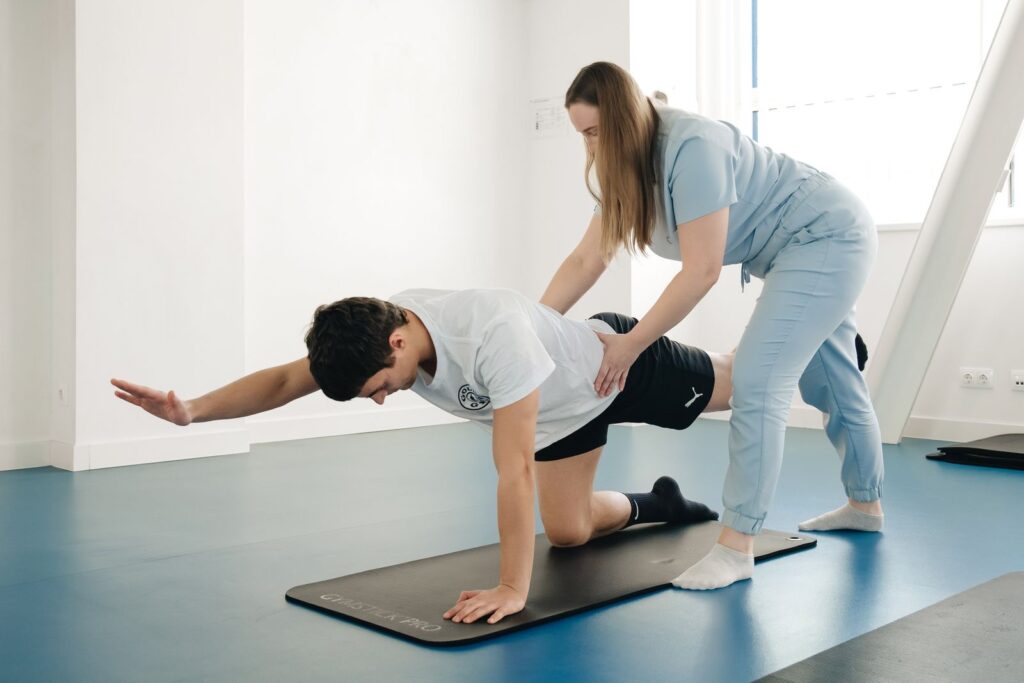
Pelvic floor physiotherapy helps pelvic organ prolapse by strengthening and coordinating the muscles that support the bladder, uterus and bowel, and by teaching you habits that reduce downward pressure. It may ease heaviness, bulging and bladder or bowel symptoms, although it does not suit every case. Many people use it first, before considering a pessary or surgery.
Hearing the word prolapse can be worrying, but it is common and often manageable. This guide explains what it is, what causes it, what treatment options exist and where physiotherapy fits.
Key Takeaway: Pelvic organ prolapse happens when the support around the pelvic organs weakens and one or more of them bulge into the vagina. Pelvic floor muscle training is a first-line option for many people, and a trained physiotherapist can tailor it to you. See a doctor for any new bulge, pain or trouble emptying your bladder or bowel.
What is pelvic organ prolapse?
Pelvic organ prolapse is a condition in which the bladder, uterus, bowel or top of the vagina bulges down into the vagina because the muscles and tissues that hold them in place have weakened or stretched.
The pelvic floor is a sling of muscle and connective tissue that stretches from the pubic bone to the tailbone. It supports the pelvic organs and helps control the bladder and bowel. When that support lets go a little, an organ can drop from its usual position.
Types of prolapse
The name of the prolapse depends on which organ is moving. More than one can be involved at the same time.
| Type | Organ involved | What you may notice |
|---|---|---|
| Cystocele | Bladder bulging into the front wall of the vagina | Pressure, a bulge, leaking or a feeling the bladder does not empty fully |
| Rectocele | Rectum bulging into the back wall of the vagina | Constipation, a need to press on the vagina to pass a stool |
| Uterine prolapse | Uterus (womb) sinking down | Heaviness, a dragging feeling, a lump at the vaginal opening |
| Vaginal vault prolapse | Top of the vagina, after a hysterectomy | Pressure or a bulge deep in the vagina |
How common is it?
Prolapse is more common than many people expect. A Cochrane review of pessaries reports that about 40% of women will experience prolapse in their lifetime.
The NHS notes that it is common in women over 50 and can affect anyone with a vagina. Many people have a mild prolapse and no symptoms at all.
What are the symptoms of pelvic organ prolapse?
Symptoms range from nothing at all to a daily feeling of pressure. The NHS list of symptoms is a helpful guide, and a clinician can tell you which ones fit a prolapse.
Feelings in the vagina and pelvis
- A feeling of heaviness, dragging or pressure in the lower tummy or vagina
- Feeling or seeing a bulge or lump inside, or coming out of, the vagina
- Discomfort, pain or numbness during sex
- Symptoms that feel worse at the end of the day or after standing for a long time
Bladder and bowel symptoms
Prolapse can change how your bladder and bowel work. You might feel that your bladder is not emptying fully, need to go more often or leak a little when you cough, sneeze or exercise.
Bowel changes can include constipation or difficulty passing stool. Because several pelvic conditions share these symptoms, an examination is the only way to know the cause.
How prolapse is graded
When prolapse is found, clinicians often give it a stage from 1 to 4, with 4 being the most severe, according to the NHS. The stage does not always match how you feel. Some people with a higher stage have few symptoms, while others with a mild stage find it very bothersome.
What causes pelvic organ prolapse?
Prolapse usually develops over time from a mix of factors that stress the pelvic floor or weaken its support. There is rarely one single cause, and having a risk factor does not mean you will develop prolapse.
Pregnancy and childbirth
Pregnancy and vaginal birth stretch and load the pelvic floor, and they are among the best-known risk factors. Prolapse can appear soon afterwards or many years later. Postpartum recovery is a good time to have your pelvic floor checked, as we describe in our guide to postpartum pelvic floor recovery.
Ageing, menopause and ongoing pressure
- Falling oestrogen after menopause, which can thin and weaken pelvic tissues
- Long-term constipation and regular straining on the toilet
- A chronic cough, such as from smoking or lung conditions
- Repeated heavy lifting at work or in the gym
- Excess body weight, which adds pressure on the pelvic floor
- A family history of prolapse or looser connective tissue
How does pelvic floor physiotherapy help prolapse?
Pelvic floor physiotherapy is specialist rehabilitation that uses assessment, exercise, education and habit changes to improve how the pelvic floor muscles support the pelvic organs. It targets the muscles, pressure habits and daily movements that you can change. It cannot reverse every prolapse, but it can reduce symptoms for many people.
Assessment: what the physiotherapist checks
Your first visit starts with a conversation about your symptoms, births, bladder and bowel habits, activity and goals. With your consent, the physiotherapist may assess the pelvic floor muscles with an internal examination, or use other methods if you prefer.
You are always in control of what happens. You can ask questions, pause or stop at any point, and you can bring a support person.
Pelvic floor muscle training
Pelvic floor muscle training teaches you to contract, hold and fully relax the right muscles, then builds strength and endurance in steps. A systematic review and meta-analysis of 13 randomized trials with 2,340 patients found that women who did this training had greater improvement in prolapse symptoms and prolapse stage than controls.
The same review found that the training did not clearly reduce the need for further treatment, so results vary. Good technique matters, which is why guided training often works better than trying to guess.
Pressure management and daily habits
A physiotherapist also looks at what raises pressure on the pelvic floor. This includes breath holding while lifting, straining on the toilet and certain exercises. You learn simple changes, such as breathing out on effort and using a better toilet position.
What other treatments are there for prolapse?
Prolapse treatment depends on which organs are involved, how severe the symptoms are and your age, health and plans for future pregnancies, according to the NHS. If you have no symptoms or the prolapse is not bothering you, you may not need treatment. Doctors often discuss these options together.
| Option | What it involves | May suit |
|---|---|---|
| Watchful waiting | Monitoring, with lifestyle changes | Mild or no symptoms |
| Pelvic floor physiotherapy | Guided exercise, education and habit changes | Mild to moderate symptoms, or alongside other care |
| Vaginal pessary | A silicone or plastic support worn inside the vagina | People who want a non-surgical option or are waiting for surgery |
| Vaginal oestrogen | A cream, tablet or ring, as prescribed | Some people after menopause |
| Surgery | An operation to lift and support the organs | Severe prolapse or when other options have not helped |
Pessaries
A pessary is a passive device that supports the vagina and holds the organs in place. The Cochrane review notes that many clinicians offer one as a first-line option. A doctor or trained clinician fits it, and it needs regular checks.
Surgery and physiotherapy around surgery
An operation may be offered when the prolapse is severe or other treatments have not helped. A 2022 systematic review of 18 randomized trials found that pelvic floor training improved symptoms in people treated without surgery. It found no clear extra benefit when added to surgery, and it called for larger, better-quality studies.
Can prolapse improve, or will it get worse?
Prolapse does not follow one fixed path. Some people stay the same for years, some notice symptoms settle with exercise and habit changes, and some find symptoms slowly increase. Regular review helps you catch changes early.
What may help symptoms settle
Many people feel better when they build pelvic floor strength, manage constipation and cough, and avoid repeated straining. Symptoms often feel worse after a long day on your feet and better after lying down. Tracking when they flare gives you and your physiotherapist useful clues.
What may make symptoms worse
- Regular heavy lifting without good breathing and technique
- Ongoing constipation or hard straining on the toilet
- A cough that does not settle
- Gaining weight, or standing for very long periods
- Skipping your exercises once things feel easier
Why follow-up matters
Check in with your physiotherapist or doctor if your symptoms change, especially after pregnancy, illness or a big change in activity. A plan that worked last year may need updating. Small adjustments are usually easier than waiting until symptoms are hard to ignore.
What exercise and lifting habits help with prolapse?
Gentle, regular movement and smart lifting habits can ease the load on a weakened pelvic floor. The NHS advises avoiding activities that put a lot of strain on the pelvic floor, such as heavy lifting, running and trampolining. Your own limits depend on your symptoms, so ask your physiotherapist what to keep, change or pause.
Pelvic floor exercise basics
- Imagine holding in wind and stopping the flow of urine, then lift up and in
- Hold the squeeze for a few seconds while you keep breathing
- Relax fully for the same time before the next squeeze
- Avoid squeezing your buttocks, thighs or tummy hard, and do not hold your breath
- Do not practise by stopping your urine stream on the toilet, which can upset normal emptying
Our complete guide to pelvic floor therapy explains how the muscles work in more detail.
Lifting and everyday habits
Breathe out as you lift, bend your knees and keep the load close. Eat more fibre, drink enough water and walk regularly to avoid constipation, as the NHS suggests. Stopping smoking can reduce a chronic cough, and a healthy weight reduces pressure on the pelvic floor.
Running, impact and exercise
Many people want to stay active, and often they can with changes. Walking, swimming, cycling and strength training are usually well tolerated. If running brings on heaviness or leaking, a physiotherapist can help you adjust, and our post on why you may leak urine when running covers the topic.
When should you see a doctor about prolapse?
Book a visit with a doctor if you notice a new lump or bulge, or if you have any symptom described above. The NHS advises seeing a doctor if you have a lump in or around the vagina or any other prolapse symptoms. Early assessment makes the options clearer.
See a doctor soon if
- You see or feel a bulge or lump in or outside the vagina
- You have trouble emptying your bladder or bowel
- You have repeated urinary tract infections
- You have pain, bleeding or discharge that is new for you
- Prolapse symptoms are affecting your work, sleep or sex life
Get urgent medical help if
Go to an emergency department or call 911 if you cannot pass urine at all, have severe pelvic pain, or have a fever with pain. Also go if you develop numbness around your genitals or inner thighs, or sudden loss of bladder or bowel control.
In Ontario, you can call Health811 at 8-1-1 for free advice from a registered nurse at any time.
How can pelvic floor physiotherapy in Milton help?
A physiotherapist at Tonic Physio can assess your pelvic floor, explain what is happening in plain language and build a plan around your daily life. We work with your doctor when a pessary, hormone treatment or surgery may also be needed. Our pelvic floor physiotherapy service in Milton covers assessment and treatment.
What a plan may include
- A private, unhurried assessment and a clear explanation of your findings
- A pelvic floor exercise program that is progressed as you get stronger
- Advice on breathing, lifting, bowel habits and exercise
- Tips for pregnancy, postpartum or menopause, if they apply to you
- A plan for when to review and when to ask your doctor about other options
Coverage and booking
You can see a physiotherapist in Ontario without a doctor’s referral, though some insurers ask for one. Many extended health plans include physiotherapy, so it helps to check your coverage before you book.
If prolapse symptoms are worrying you, you can book an assessment online to talk through your options.