Sever’s disease is a common cause of heel pain in growing, active children, usually between about 8 and 15 years old. It is not a disease in the usual sense. It is irritation of the heel’s growth plate from repeated stress, and it tends to ease with activity changes, stretching and better heel support.
Key Takeaway: Sever’s disease is irritation of the growth plate at the back of the heel and is a common cause of heel pain in active children. It usually settles with adjusted activity, calf stretching and cushioned shoes, and it eases once growth slows. Pain at rest, after a fall or with swelling needs a doctor.
What is Sever’s disease?
Sever’s disease, also called calcaneal apophysitis, is irritation of the growth plate at the back of the heel bone. The American Academy of Orthopaedic Surgeons calls it one of the most common causes of heel pain in growing children. It is an overuse problem, not a sign of serious damage.
What is happening in the heel
Children’s bones grow from soft areas of cartilage called growth plates, which are weaker than the tendons and ligaments next to them. The Achilles tendon attaches to the heel near the growth plate at the back of the bone. Running, jumping and quick changes of direction pull on that area again and again.
When the pull is greater than the area can comfortably handle, the heel becomes sore and tender. The pain usually settles once the child stops growing and the growth plate closes.
Is it a disease or an injury?
The name is misleading. Researchers describe Sever’s disease as an overuse condition rather than an infection, a break or a long-term illness. Symptoms may come and go, and it can return during later growth spurts.
Because it is related to growth, it does not usually cause lasting problems. A proper assessment still matters, since other causes of heel pain look similar.
Why do active kids aged 8 to 15 get it?
Heel pain from Sever’s disease tends to appear when growth and activity both peak. A review of treatments describes it as seen in children usually aged between 8 and 15 years. Active children who run and jump a lot are at higher risk, though less active children can also be affected.
Growth spurts and the Achilles tendon
During a growth spurt the bones can lengthen faster than the calf muscles and Achilles tendon can keep up. The muscle and tendon then become relatively tight and pull harder on the heel’s growth plate. This is one reason the pain often shows up in a season of fast growth.
The American Academy of Orthopaedic Surgeons notes that growing bones, muscles and tendons are changing rapidly at this stage.
Sport, surfaces and footwear
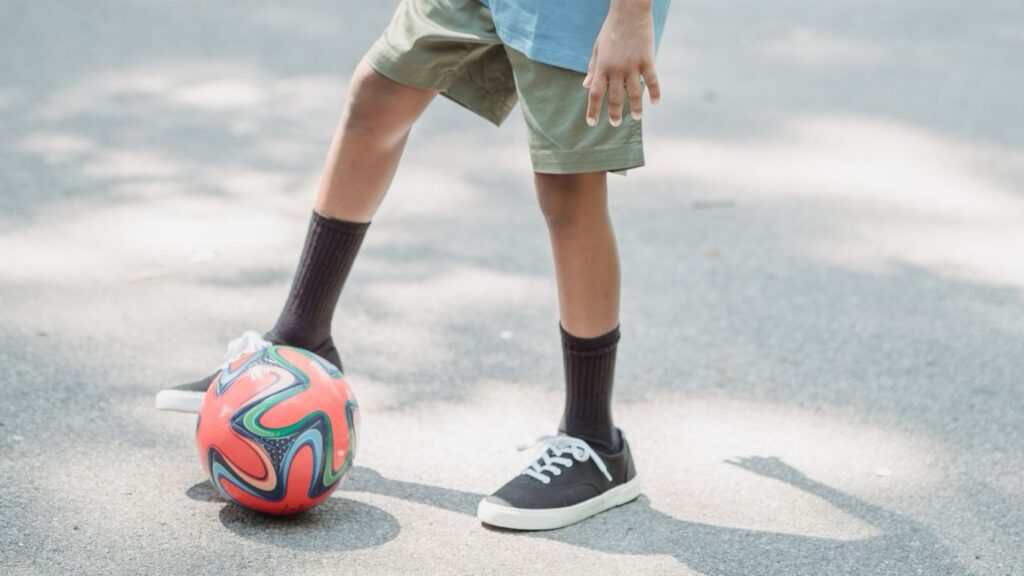
Soccer, basketball, gymnastics, track and dance involve a lot of running and jumping, and the heel absorbs the impact. Hard surfaces, a sudden jump in training, cleats with little cushioning or very flat shoes can all add to the load. Children who play several sports, or train year-round, may have little time for the heel to settle.
A German study of a youth soccer academy found 22 cases of Sever’s disease among 612 players over 10 years, at an average age of about 12. It is an example of how the condition shows up in young athletes, not a figure for every child.
What are the symptoms of Sever’s disease?
The main symptom is pain and tenderness at the back or underside of the heel. It usually builds with activity and eases with rest. Pain often appears during or after running, jumping or sport.
What children and parents often notice
- Heel pain during or after sport, often worse after running or jumping
- Tenderness when the sides or back of the heel are squeezed
- Mild swelling at the heel in some children
- Limping or walking on tiptoes to avoid pressing the heel
- Stiffness first thing in the morning or after sitting
One heel may hurt more than the other, and both can be affected at once.
Pain is often worst at the start of activity or after a long spell of sitting, such as after a school day. Some children say it feels like a bruise on the heel. Asking where it hurts and when it flares gives useful clues.
How it is usually diagnosed
A health professional will ask about activity, growth and where it hurts, then examine the foot and ankle. Squeezing the heel from both sides is often enough to point to Sever’s disease. An X-ray is not always needed, though a doctor may order one to rule out a fracture or another cause.
The American Academy of Orthopaedic Surgeons notes that the X-ray of a heel with Sever’s disease can look the same as one without symptoms.
How is Sever’s disease treated?
Treatment aims to ease the strain on the heel while the growth plate settles. Most children manage with simple steps such as adjusting activity, stretching, heel cushioning and sensible footwear. The right mix depends on how much pain your child has.
Adjusting activity and sharing the load
Rest does not always mean stopping everything. Often it means cutting back on the running and jumping that bring on the pain, and swapping in lower-impact activity such as swimming or cycling. In some children, a break of several weeks to months is needed before a gradual return.
Aim to keep pain low during and after activity. If it is climbing or lingering, lower the load further.
Talk with the coach about the training plan, including a smaller share of drills and games for a while. Most coaches are glad to adjust when they understand the reason. Keeping your child involved in the team, perhaps in a lighter role, also helps them stay positive.
Stretching and strengthening
The American Academy of Orthopaedic Surgeons says stretching the calf muscles may help reduce stress on the heel. Once the pain is easing, gentle strengthening of the calf, foot and leg muscles helps the heel handle load again. A physiotherapist can show your child safe versions and how often to do them.
Good starter exercises include slow calf raises on both feet and gentle ankle movements. Short, regular sessions are easier for children to keep up than long ones. Praise effort and consistency rather than how far the stretch goes.
Heel cups, heel pads and orthotics
Cushioned heel cups or pads inside the shoes can absorb impact. A slightly raised heel may also take pressure off the growth plate. Custom or prefabricated orthotics are sometimes used when foot mechanics add to the load.
A systematic review found only limited evidence that heel raises and orthoses help, and noted that studies were small and of mixed quality. One limited finding was that orthoses gave more short-term pain relief than heel raises. In practice, a trial of simple cushioning is a reasonable first step.
Can your child keep playing sport?
Often yes, with changes, if pain is mild and your child is not limping. The American Academy of Orthopaedic Surgeons says that if a child does not have a lot of pain or a limp, it may be safe to continue sport. Pain that builds or changes how they move means a break is needed.
| What you notice | What it suggests | What to do |
|---|---|---|
| Mild ache after sport, no limp | The heel is coping with the load | Continue with sensible limits and calf stretches |
| Pain during sport that settles overnight | The load is a little high | Cut back running and jumping for now |
| Limping, or pain lingering into the evening | The load is too high | Pause impact sport and book an assessment |
| Pain at rest, after a fall, or swelling | Possibly another cause | See a doctor |
A simple pain guide for parents
A practical rule is to keep pain at a low level during sport and settled by the next morning. If your child is limping, avoiding the heel or complaining that the pain lingers into the evening, reduce the activity. Asking a child to rate pain from 0 to 10 helps them describe it clearly.
Encourage them to tell a coach or parent early rather than playing through pain.
Returning to full training
Bring back running and jumping in steps, such as shorter sessions, softer surfaces and a slower build in intensity. Add sprinting and sharp jumping last. Return times vary widely, and in the German youth soccer study the average time back to play was about two months, with wide differences between players.
Recurring heel pain is common during growth. Keeping up calf stretches and sensible footwear helps lower the chance of a flare-up.
What can parents do at home?
Simple habits at home make a real difference, and most of them cost very little. They work best when your child understands why they matter. Keep the tone positive, since children often worry that heel pain means missing the season.
Choose shoes with care
Look for shoes with a cushioned heel and some arch support, and replace them when the sole is worn flat. The American Academy of Orthopaedic Surgeons notes that very flat shoes can bother the heel. Avoid barefoot walking on hard floors while the heel is sore.
Check sport cleats too, since thin soles with little heel cushioning add to the impact.
Rotate between two pairs of everyday shoes when you can, so that no pair wears flat too quickly. Growing feet also change size fast, so check the fit every few months. Shoes that pinch or slip at the heel can add to the irritation.
A simple calf stretch
Have your child stand facing a wall with one foot back, heel flat on the floor, and lean forward until the calf stretches. Hold for about 30 seconds and repeat a few times on each leg, once or twice a day. It should feel like a pull in the calf, not a sharp heel pain.
If it hurts the heel, stop and ask a physiotherapist to check the technique.
Tie the stretch to a daily habit, such as after brushing teeth or before bed. Habits linked to a fixed moment are easier to keep.
Ice after activity
Some children find an ice pack wrapped in a towel helpful for about 15 to 20 minutes after sport. Never place ice directly on the skin. If the heel is red, hot or swelling, see a doctor rather than treating it at home.
When should you see a doctor?
Most heel pain in active children is not dangerous, but a few signs need a medical check. Do not assume heel pain is Sever’s disease without an assessment. Other causes include stress fractures, tendon problems, infection and, rarely, other conditions.
Signs that need a doctor’s check
- Pain after a fall or twist, or a heel that is swollen, red or warm
- Pain at rest or at night that is not settling
- A child who cannot put weight on the foot or is limping badly
- Numbness or tingling in the foot
- Pain that has not improved after a few weeks of adjusted activity
- Pain in only one heel that keeps getting worse
If you are unsure how urgent it is, you can call Health811 at 8-1-1 for free advice from a registered nurse.
Signs that need urgent care
Go to the nearest emergency department or call 911 if your child has severe pain after an injury, an obvious deformity, or cannot bear weight at all. The same applies to a hot, red, swollen heel together with a fever.
Painkillers such as ibuprofen are sometimes suggested by doctors for short-term relief. Check with a pharmacist or doctor first, since the right dose depends on your child’s age and weight.
How can physiotherapy in Milton help with Sever’s disease?
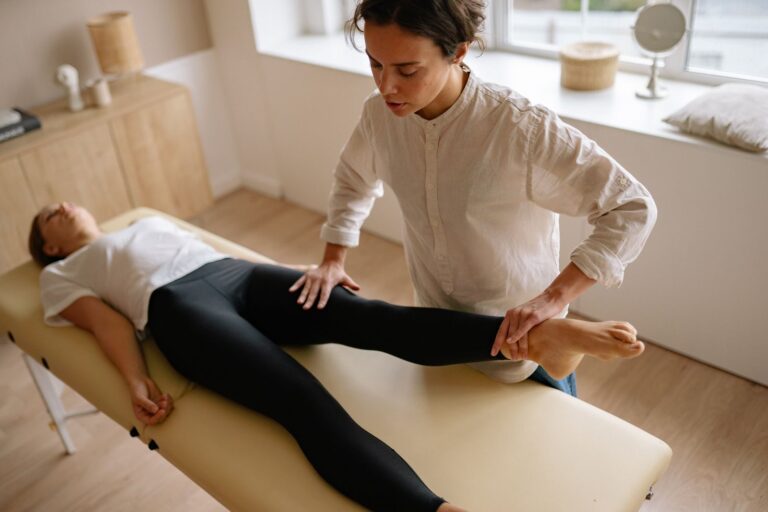
A physiotherapist can confirm that the heel pain fits Sever’s disease, rule out other problems and explain how to adjust activity. We look at how your child moves, how strong and flexible their calves and feet are, and what sport they play. The goal is a plan that keeps them playing as safely as possible.
What an assessment includes
At Tonic Physio in Milton, a visit usually covers your child’s activity and growth history, ankle and foot movement, calf flexibility and strength, and footwear. We then set out stretches, exercises, load changes and heel support, and explain when to return to full sport. Our pediatric physiotherapy service looks after children from toddlers through teens.
Our guide to kids physiotherapy in Milton explains what to expect at a visit. If footwear is a question, our comparison of custom orthotics and drugstore insoles covers the differences.
Booking and insurance
In Ontario you can see a physiotherapist without a doctor’s referral, though some insurers ask for one. Extended health benefits often cover physiotherapy for children under a family plan, so it is worth checking your policy. The College of Physiotherapists of Ontario regulates physiotherapists in the province.
If your child’s heel pain is getting in the way of sport, you can book an assessment online to see whether a plan fits.
Sources
This article draws on guidance from the American Academy of Orthopaedic Surgeons, a systematic review of treatments for calcaneal apophysitis and a study of calcaneal apophysitis in a youth soccer academy. It is general information and does not replace an assessment of your child.