Shoulder pain that has lasted for months can make dressing, reaching and sleeping hard. This guide covers two shoulder problems people often ask about shockwave for: calcific shoulder tendinopathy, where calcium deposits form in a rotator cuff tendon, and frozen shoulder. It explains what the research says for each, and how a physiotherapist decides whether shockwave suits you.
Key takeaway: Most shockwave research on the shoulder is in calcific tendinopathy, and reviews disagree on how much it helps. For non-calcific shoulder tendon pain, a Canadian review found no clear benefit over placebo, and evidence for frozen shoulder is limited. Exercise-based physiotherapy remains the main treatment.
Understanding Frozen Shoulder and Common Shoulder Pain
In frozen shoulder, the shoulder capsule thickens and becomes stiff and tight, so the shoulder is hard to move on your own or with help. It typically moves through three stages:
- Freezing: pain slowly increases and movement is lost
- Frozen: pain may ease, but stiffness remains and daily tasks can be hard
- Thawing: movement slowly improves
Frozen shoulder tends to get better over time, although full recovery can take a long time, sometimes up to a few years. People with diabetes or thyroid conditions are at higher risk. Physiotherapy for shoulder movement and flexibility is the main treatment. See our frozen shoulder physiotherapy program.
Other shoulder pain can come from the rotator cuff tendons, the bursa or irritation with overhead movement. If calcium deposits in a rotator cuff tendon are confirmed and recovery is slow, your physiotherapist may discuss adding shockwave sessions at our clinic to your exercise plan.
What Is Shockwave Therapy?
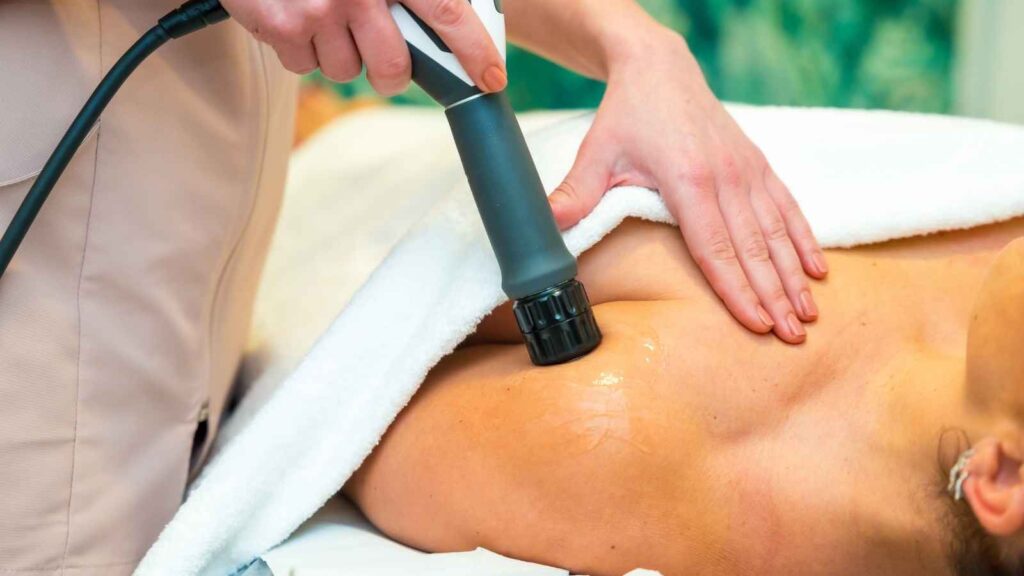
Shockwave sends quick pulses of sound waves through the skin into the sore area using a handheld applicator and gel. The exact way it works is not fully understood. For a general overview, see what shockwave therapy is and how it works.
What the Research Says
Calcific Shoulder Tendinopathy
A Canadian (CADTH) review reported that high-energy shockwave reduced pain compared with placebo in calcific shoulder tendinitis. NICE guidance from the UK, which looked at the evidence more recently, found no major short-term safety concerns but judged the evidence on how well it works as inadequate, and recommends it only in research. In short, some people with calcific tendinopathy may benefit, but results vary and are not guaranteed.
Non-Calcific Shoulder Tendon Pain
The same CADTH review reported that shockwave was not more effective than placebo for non-calcific shoulder tendinitis. For this group, exercise-based physiotherapy is the usual focus.
Frozen Shoulder
Evidence on shockwave for frozen shoulder is limited. The main treatments are physiotherapy to restore movement, pain relief, and in some cases injections or other procedures discussed with your doctor.
What to Expect During Treatment
- An assessment first, to confirm the cause of your shoulder pain
- Gel on the skin, then pulses from a handheld applicator over the sore area
- The intensity is adjusted to your feedback, and treatment can stop at any time
- You can usually return to daily activity afterwards, with strenuous activity eased for a short time
Your physiotherapist will recommend the number of sessions after your assessment.
If you have not been assessed by a Tonic physiotherapist before, your first visit is a 30 minute Shockwave Initial Assessment for $120. Follow-up visits are $90 for 15 minutes, or $125 for 45 mins shockwave therapy.
Who Should Not Have Shockwave
Shockwave is not used over a pregnancy in the treatment field, a tumour or malignancy at the site, or a pacemaker or similar device in the field. Tell us first about bleeding or clotting disorders, blood thinners, thrombosis, infection or wounds at the site, or a recent cortisone injection to the area. Your physiotherapist decides timing and suitability under clinic policy.
Shockwave and Physiotherapy Together
Shockwave is not a stand-alone fix. It is used alongside stretching, strengthening and movement work suited to your stage of recovery. Because frozen shoulder often comes with stiffness, our joint pain and stiffness treatment may be part of your plan.
Is Shockwave Right for You?
Shockwave may be discussed if you have chronic shoulder pain that has not settled with exercise-based care, especially when calcific tendinopathy is confirmed. Your physiotherapist will explain the uncertain evidence and other options before you decide.
Recovery Timeline
Recovery varies. Calcific tendinopathy and frozen shoulder can both take months, and frozen shoulder can take longer. Your physiotherapist reviews your progress and adjusts the plan as you go.
Insurance and Booking
Physiotherapy is often covered by extended health plans. Direct billing may be available depending on your insurer and plan; confirm coverage before you book.
For approved workplace injury claims, WSIB may cover physiotherapy. After a motor vehicle accident, treatment may be covered through your auto insurance claim.
Tonic Physio is a physiotherapy clinic at 100 Nipissing Rd #5, Milton. Call (905) 878-7775 or use our contact page to book.
Frequently Asked Questions
Does shockwave work for frozen shoulder?
Evidence is limited. Physiotherapy to restore movement is the main treatment, and your physiotherapist can explain whether shockwave is worth discussing for you.
Does shockwave break down calcium deposits?
It is thought to be one possible effect, but the exact mechanism is not fully understood, and reviews disagree on how much shockwave helps calcific tendinopathy.
Will I need to do exercises at home?
Yes. Your physiotherapist prescribes exercises that suit your stage of recovery, and shows you how to do them before you start.
Can frozen shoulder come back?
It is uncommon, but it can recur, especially if a contributing factor such as diabetes is still present.
Sources
CADTH rapid review: shockwave therapy for upper extremity orthopedic disorders (2016)
NICE guidance: extracorporeal shockwave therapy for calcific tendinopathy in the shoulder