If a tendon or heel has been sore for months despite rest, stretching and exercise, you may have heard of shockwave therapy. This guide explains what it is, how a session works, which conditions it is used for, and what the research says, so you can have an informed conversation with your physiotherapist.
Key takeaway: Shockwave sends quick pulses of sound waves through the skin into a sore area. It is used for some long-standing tendon and heel problems, alongside exercise rather than instead of it. Evidence is mixed and differs by condition, and results vary.
What Is Shockwave Therapy?
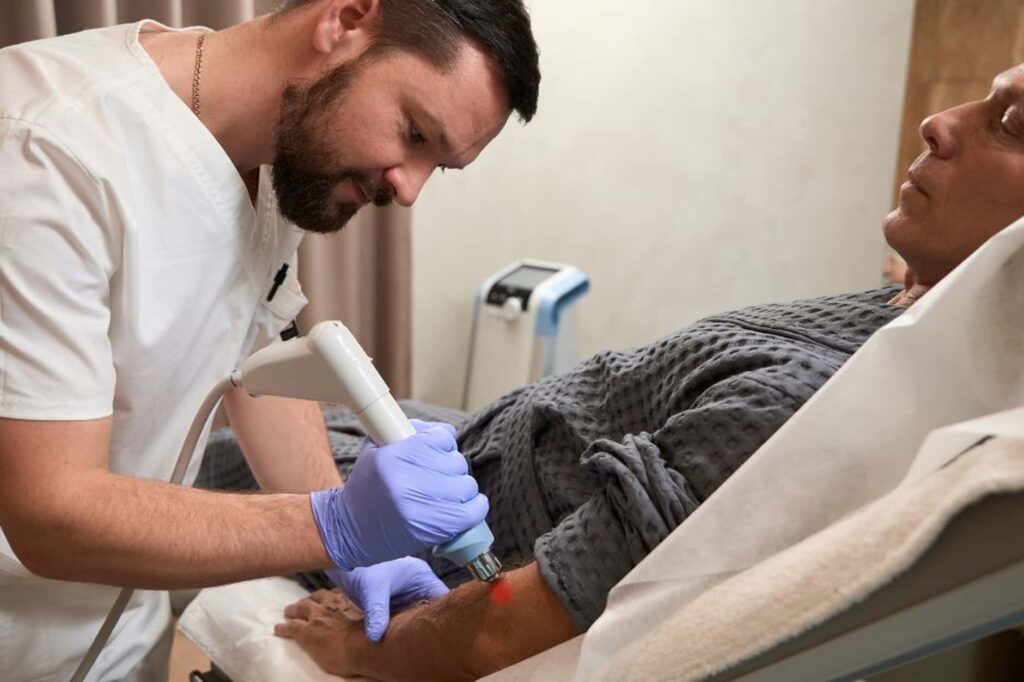
The full name is extracorporeal shockwave therapy (ESWT); “extracorporeal” means the pulses are delivered from outside the body. A handheld applicator and a layer of gel pass sound waves in quick pulses through the skin. It is mechanical, not electrical, and there are no needles or cuts.
How it works is not fully understood. Suggested effects include stimulating tissue repair and reducing pain signals. Your physiotherapist will be clear about what is known and what is not.
Conditions Shockwave Is Used For
Plantar Fasciitis (Heel Pain)
For long-standing heel pain, evidence is mixed and results vary between studies. See shockwave for long-standing plantar fasciitis, and our guide to plantar fasciitis causes and treatment.
Tennis Elbow and Golfer’s Elbow
Tennis elbow affects the tendons on the outer elbow and golfer’s elbow the inner side. A Canadian (CADTH) review found the evidence for shockwave in elbow pain inconsistent, and NICE describes the evidence for long-standing tennis elbow the same way. Read more about tennis elbow treatment options and golfer’s elbow tips.
Achilles Tendinopathy
NICE describes the evidence on shockwave for Achilles tendinopathy as inconsistent and limited. Loading exercise remains the main treatment. See Achilles tendonitis treatment.
Calcific Shoulder Tendinopathy
Here calcium deposits form in a rotator cuff tendon. A CADTH review reported that high-energy shockwave reduced pain compared with placebo in calcific shoulder tendinitis, but not in non-calcific shoulder tendinitis. NICE judges the evidence for calcific shoulder tendinopathy as inadequate. If calcium deposits are confirmed and recovery is slow, your physiotherapist may discuss shockwave. See shockwave for calcific shoulder tendinopathy and frozen shoulder.
How Shockwave Fits With Other Treatment
Shockwave is one part of a plan, not a stand-alone fix. It is usually combined with:
- Exercise rehab: progressive strengthening and mobility work for the tendon and the muscles around it
- Manual therapy: hands-on techniques, such as manual osteopathy, for stiffness
- Massage: our registered massage therapists may help with muscle tightness
- Load advice: how to adjust work, sport and training while the tissue settles
What to Expect During Your First Shockwave Therapy Session
Your physiotherapist assesses the problem first and checks that shockwave suits you. If it does, gel goes on the skin and the applicator is moved over the sore area. Most people feel strong tapping or pressure; it can be uncomfortable over the sorest spot. The intensity is adjusted to your feedback, and treatment can stop at any time.
Some tenderness afterwards is common and is usually short-lived. Your physiotherapist will recommend the number of sessions after your assessment.
If you have not been assessed by a Tonic physiotherapist before, your first visit is a 30 minute Shockwave Initial Assessment for $120. Follow-up visits are $90 for 15 minutes, or $125 for 45 mins shockwave therapy.
Prices and appointment lengths are listed on our shockwave therapy in Milton page.
Who Should Not Have Shockwave
Shockwave is not used over a pregnancy in the treatment field, a tumour or malignancy at the site, or a pacemaker or similar device in the field. Tell us first about bleeding or clotting disorders, blood thinners, thrombosis, infection or wounds at the site, or a recent cortisone injection to the area. Your physiotherapist decides timing and suitability under clinic policy.
Who May Be a Candidate
- Long-standing tendon or heel pain that has not settled with a good exercise program
- A diagnosis confirmed on assessment, such as plantar fasciitis, tennis elbow, Achilles tendinopathy or confirmed calcific shoulder tendinopathy
- People who understand the evidence is mixed and want to try it alongside exercise
It is not used for every kind of chronic pain. Your physiotherapist will tell you if another approach suits you better.
Insurance and Booking
Physiotherapy is often covered by extended health plans. Direct billing may be available depending on your insurer and plan; confirm coverage before you book.
For workplace injuries, ask us about WSIB claims. Tonic Physio is at 100 Nipissing Rd #5, Milton. Call (905) 878-7775 or use our contact page to book.
Frequently Asked Questions
Does shockwave hurt?
It can be uncomfortable, especially over the sorest spot. The intensity is adjusted to what you can tolerate.
How many sessions will I need?
Your physiotherapist will recommend the number of sessions after your assessment.
Is shockwave a replacement for exercise?
No. It is used alongside an exercise program, which remains the main treatment for most tendon problems.
Is it guaranteed to work?
No. Evidence is mixed and differs by condition, and results vary from person to person.
Sources
CADTH rapid review: shockwave therapy for upper extremity orthopedic disorders (2016)
CADTH rapid review: shockwave therapy for lower extremity orthopedic disorders (2016)
NICE guidance: extracorporeal shockwave therapy for Achilles tendinopathy
NICE guidance: extracorporeal shockwave therapy for refractory tennis elbow
NICE guidance: extracorporeal shockwave therapy for calcific tendinopathy in the shoulder