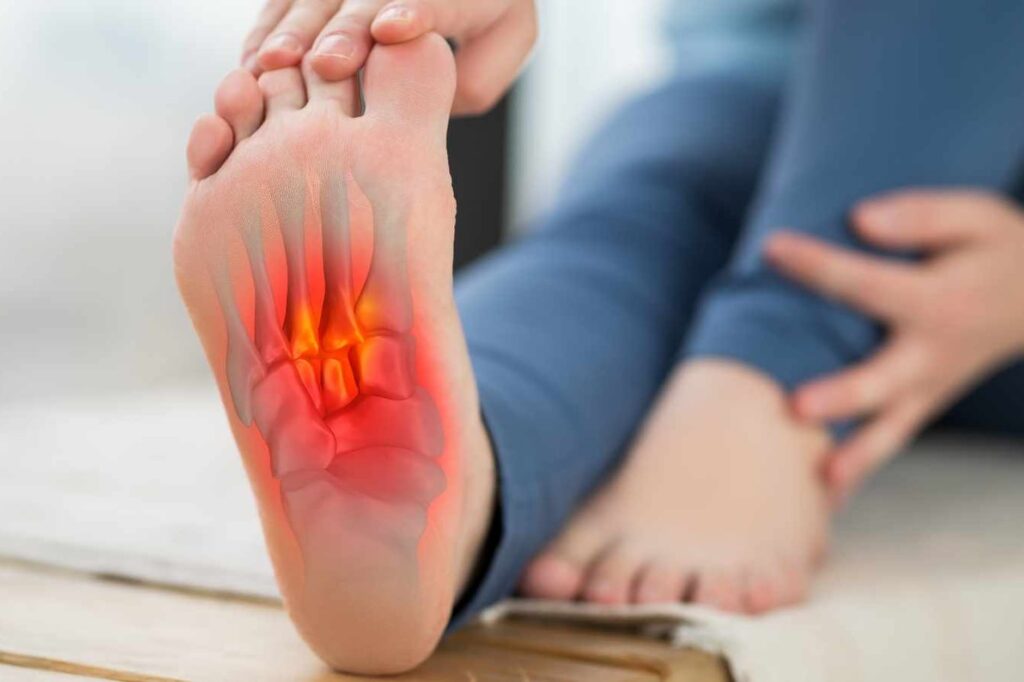
Plantar fasciitis causes pain on the bottom of the foot, around the heel and arch. It is common, especially in people aged 40 to 60 and in people who stand, walk or run a lot. This guide explains what it is, why it develops, how to ease it yourself, which treatments may help, and when to get it checked.
Key takeaway: Most people with plantar fasciitis improve with simple treatment, such as stretching, supportive shoes and activity changes. If it does not improve, a physiotherapist can help. Shockwave may be considered for cases that have not responded, but evidence is mixed.
What Is Plantar Fasciitis?
The plantar fascia is a strong band of tissue under the foot that connects the heel to the front of the foot and supports the arch. Plantar fasciitis happens when this tissue is strained and becomes irritated. It is not always clear why it happens.
Common Causes and Risk Factors
- Being 40 to 60 years of age
- New or increased activity, or recently starting exercise on hard surfaces
- Lots of standing, walking or running, including jobs on hard floors
- Tight calf muscles
- Flat feet or a high arch
- Shoes with poor cushioning or support
- Being overweight
Recognizing the Symptoms
- Pain on the bottom of the foot near the heel
- Pain that is much worse with the first steps after sleeping or resting
- Pain that eases as you move around but returns if you stand, walk or run for a long time
- More pain after activity than during it
- Pain when stretching the sole of the foot, for example on stairs
Other problems can cause heel pain, such as Achilles pain at the heel, a heel stress fracture or a trapped nerve, which is why an assessment helps. See our foot and ankle pain treatment.
How to Ease It Yourself
- Rest and raise your foot when you can, and avoid long periods of standing or walking
- Use an ice pack wrapped in a towel on the sore area for up to 20 minutes at a time
- Wear shoes with cushioned heels and good arch support, and avoid flip-flops, high heels and walking barefoot on hard floors
- Use insoles or heel pads
- Do gentle stretches for the sole of the foot and the calf
- Choose low-impact exercise, such as swimming or cycling
- Ask a pharmacist about pain relief that suits you
Treatment Options
Stretching
Stretching the calf and the plantar fascia is a key part of treatment. A common plantar fascia stretch is done sitting, by crossing the sore foot over the other knee and gently pulling the toes back. It is often done in the morning before standing.
Physiotherapy
A physiotherapist can show you exercises to ease your symptoms and build an exercise plan around stretching the calf and plantar fascia. Treatment may also include massage and other hands-on care. Learn more about the physiotherapy we offer.
Insoles and Orthotics
Cushioned shoes, heel pads and pre-made or custom orthotics can help reduce pain with standing and walking. See also our post on signs you may need orthotics for heel pain.
Night Splints
A night splint holds the foot so the plantar fascia is gently stretched while you sleep, which can help morning heel pain.
Shockwave Therapy
For plantar fasciitis that has not responded to conservative treatment, shockwave therapy may be considered. Evidence is mixed and results vary. It is used alongside stretching and other care, not instead of them. We explain more in shockwave for stubborn heel pain.
Your physiotherapist will recommend the number of sessions after your assessment.
If you have not been assessed by a Tonic physiotherapist before, your first visit is a 30 minute Shockwave Initial Assessment for $120. Follow-up visits are $90 for 15 minutes, or $125 for 45 mins shockwave therapy.
Shockwave is not used over a pregnancy in the treatment field, a tumour or malignancy at the site, or a pacemaker or similar device in the field. Tell us first about bleeding or clotting disorders, blood thinners, thrombosis, infection or wounds at the site, or a recent cortisone injection to the area. Your physiotherapist decides timing and suitability under clinic policy.
Other Medical Treatments
If symptoms continue after several months, a doctor may discuss options such as injections. Cortisone injections are used with caution because they can weaken the plantar fascia. Surgery is uncommon and is usually considered only after a long period of non-surgical treatment.
Recovery Timeline
Most people with plantar fasciitis improve with simple treatment, but it can take several months. Your physiotherapist reviews your progress and adjusts the plan as you go.
Preventing It From Coming Back
- Wear supportive, cushioned shoes and replace worn-out athletic shoes
- Keep stretching your calves and the soles of your feet
- Increase new activity gradually
- Avoid walking barefoot on hard surfaces
- Aim for a healthy weight if you are overweight
When to Get Your Heel Pain Checked
See a doctor or physiotherapist if your foot pain is severe or stops you doing normal activities, is getting worse or keeps coming back, or has not improved after two weeks of self-care.
See a doctor promptly if you have tingling or loss of feeling in your foot, or if you have diabetes and foot pain, because foot problems can be more serious with diabetes.
Insurance and Booking
Physiotherapy is often covered by extended health plans. Direct billing may be available depending on your insurer and plan; confirm coverage before you book.
Tonic Physio is at 100 Nipissing Rd #5, Milton. Call (905) 878-7775 or use our contact page to book an assessment.
Frequently Asked Questions
Is a heel spur the cause of my pain?
Usually not. Many people with heel spurs on an X-ray have no heel pain, and plantar fasciitis can be treated without removing a spur.
Do I need an X-ray or scan?
Not always. Imaging may be used to rule out other causes of heel pain, such as a fracture, but MRI and ultrasound are not routinely used to diagnose plantar fasciitis.
How long does plantar fasciitis take to get better?
It varies. Most people improve with simple treatment, but recovery can take several months.
Does shockwave work for plantar fasciitis?
Evidence is mixed and results vary. It may be considered when plantar fasciitis has not responded to conservative treatment.
Sources
AAOS OrthoInfo: plantar fasciitis and bone spurs
CADTH: Shockwave Therapy for Pain Associated with Lower Extremity Orthopedic Disorders (2016)