Feet announce their problems politely at first: the heel that complains on the first morning steps, the arch that aches after work, the knees that feel worse in certain shoes. Most people ignore these announcements until the body raises its voice. This article lists the signs, explains what each one means mechanically, and tells you when the answer is custom orthotics, when it is something simpler, and when it is physiotherapy.
Key Takeaway: The clearest signs you may need orthotics: recurring heel or arch pain (especially plantar fasciitis), uneven shoe wear, knees that hurt when feet roll, standing fatigue that shoes never fixed, and a visible arch collapse when standing versus sitting. The diagnosis comes from assessment, not from the list; the list is the reason to book it.
Sign 1: the morning heel pain that returns daily
Plantar fasciitis’s signature, and the foot’s most common complaint: a sharp ache under the heel with the first steps of the morning or after sitting, easing as you move, returning the next day. It is the fascia’s overload report, and it usually has mechanical drivers: the arch that rolls too far, the tight calves that feed it, the hours standing on hard floors.
- What it means: the fascia is strained by mechanics that cushioning alone does not change
- What assessment checks: the arch’s behavior, the calf flexibility, the foot strike pattern
- What usually helps: the support (orthotic or prefabricated, per assessment) plus the calf and foot loading program
Sign 2: your shoes wear unevenly, every pair
Shoe soles are honest witnesses. The patterns worth noticing:
- Inner edge worn down: the rolling-in (overpronation) pattern that loads knees and shins
- Outer edge worn: the rolling-out pattern that loads ankles and the knee’s outer side
- One shoe worn differently from the other: the asymmetry that rides up the chain
- Extreme wear in months: mechanics loading specific spots far beyond normal
Patients seeking orthotic assessment in Milton are asked to bring a worn pair for exactly this reason: the soles describe what the feet do thousands of times per day.
Sign 3: the arch collapses when you stand
The sitting-versus-standing test is the classic: look at your arch seated, then standing. A visible arch sitting that disappears standing describes flexible flatfoot, the most common pattern, and the one that responds to support:
- Flexible flatfoot: the arch exists off-weight-bearing and collapses standing; the mechanics load the fascia, knees, and shins
- Rigid flatfoot: the arch is absent either way; this version needs professional assessment before any device
- High, rigid arches: the opposite pattern, poor shock absorption, its own assessment conversation
Sign 4: your knees track the story your feet started
The foot’s roll rotates the shin, and the kneecap follows: the mechanics behind much patellofemoral pain. The pattern:
- Knee pain that worsens with running, stairs, or specific shoes
- Knee pain that physiotherapy improved but never fully resolved
- The knee pain that changes when you try different insoles, the experiment that reveals the foot’s role
If your foundation is triggering pain further up the leg, integrating targeted knee pain treatment with proper foot support is the fastest route to relief.
Sign 5: standing fatigue that no shoe fixed
The workers who stand for hours know the end-of-shift foot ache, and the shoe upgrades helped briefly or not at all. Fatigue that survives every shoe usually means the foot’s mechanics are working harder than they should: the arch collapsing and rebuilding with every step, the muscles overworking to compensate.
Sign 6: the recurring sprains and the ankle that rolls
The ankle that rolls on every curb has a stability story, and the foot’s position is often its opening chapter: the mechanics that set the ankle up for each roll. Assessment plus a dedicated balance and fall prevention program is the treatment; the support is the bridge.
Sign 7: pain that travels: shins, knees, hips, back
The foundation story: the foot’s mechanics load the shins (shin splints), the knees, the hips, and eventually the low back. The chain symptoms that improve with foot support are the ones that moved when the foundation moved.
The signs that point somewhere else first
Honesty requires the other column, the complaints that orthotics do not fix:
- Numbness and burning in the toes: nerve presentations need assessment before devices
- Sudden severe pain, redness, and warmth: gout and infection live here; medical assessment
- Pain following trauma: imaging conversation first
- Stiffness that ignores position entirely: the arthritis conversation, which orthotics support but do not lead
What the assessment actually checks
- The arch behavior: standing, sitting, single-leg, and walking
- Joint range: the ankle’s dorsiflexion, the midfoot’s give, the big toe’s extension
- Strength: the foot’s own muscles and the hip’s control of the leg below
- Gait: filmed walking or running, the mechanics visible and explained
- Shoe wear: the patterns on the worn pair you brought
The output: a verdict. Orthotics, prefabricated support, physiotherapy, a shoe change, or some combination, with the reasoning clear. Most assessments end with a plan rather than a sale, because most feet are more interesting than a menu.
The plantar fasciitis deep dive: the most common sign
Because heel pain drives most orthotics assessments, the condition deserves its own section:
To learn more, read about plantar fasciitis causes, symptoms and treatment.
- The anatomy: the fascia runs from the heel to the toes, absorbing load with every step
- The mechanics: the rolling-in arch and the tight calves strain the fascia’s attachment at the heel
- The timeline: early-stage responds to stretching and support; chronic cases add the loading program and sometimes shockwave therapy to accelerate tissue healing
- The orthotic’s role: reduce the strain with every step while the program heals the tissue
What makes plantar fasciitis worse, and what to stop
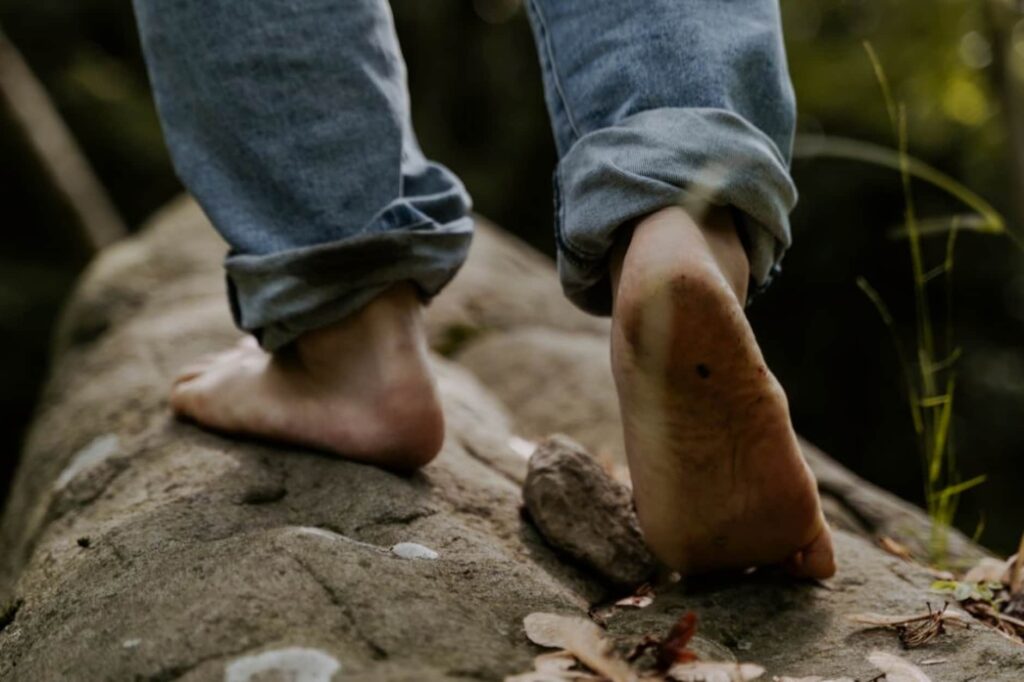
- The barefoot mornings on hard floors: the first steps of the day, unsupported
- The worn-out runners: the cushioning that retired months ago
- The calf stretching skipped: the single most evidence-backed home treatment, ignored
- The load spikes: the weekend’s 15,000 steps after the sedentary week
Shin splints, knees, and hips: the chain conditions
The foot’s roll travels up the leg, and the chain conditions are the roll’s receipts:
- Shin splints: the rolling-in foot overloading the shin’s muscles with every stride
- Runner’s knee: the patellofemoral tracking that the foot’s rotation feeds
- Hip and IT band complaints: the asymmetric foundation’s longer reach
- The test: symptoms that changed when you changed shoes or insoles are chain symptoms, and the foot’s role is confirmed
The chain cases usually need the combined plan: the support underneath, the strength above, and the gait retraining that ties them together as part of a comprehensive ankle and foot pain treatment protocol.
Who assesses feet, and what each profession adds
- Physiotherapy: the biomechanical assessment, the gait analysis, and the exercise program that treats the chain
- Chiropody and podiatry: the foot-specific medical layer, especially for diabetic and nail conditions
- The multidisciplinary clinic: both under one roof, which is why the complex feet land here
The arch support myth-busting section
The orthotics conversation carries inherited myths, and the honest corrections:
“Everyone with flat feet needs arch support”
False. Flexible flat feet without symptoms are common and usually fine. The support follows the symptoms, not the shape.
“Orthotics are for old people”
The athlete population wears orthotics as often as anyone: the mechanics that fail under load are young mechanics too. The assessment’s population is everyone whose feet complain.
We cover choosing between orthotics and insoles in a separate guide.
“Once you start orthotics, you can never stop”
The dependence myth has a kernel of truth worth naming: orthotics change your mechanics, and stopping abruptly can feel like losing a floor. The transition is gradual when it happens, and the strengthening program is what makes feet self-sufficient. Patients whose mechanics improve with training sometimes retire their devices; the assessment follows up.
“Custom orthotics are just expensive insoles”
The expensive-insole version exists, built without assessment, sold on the same promise. The device’s value lives in the assessment behind it, which is why this article’s whole argument is the assessment first.
Our article on how custom orthotics are made and fitted goes into more detail.
Your two-week self-experiment before booking
For the undecided, a simple test gathers data the assessment will want:
- Week 1: note the symptom map daily, and try a quality prefabricated support in your main shoes
- Track: does the morning heel change? Does the knee notice? Does anything worsen?
- Bring the notes: the experiment’s results are the assessment’s best starting data, whichever direction it points
The self-experiment does not replace assessment; it feeds it, and it sometimes answers the question on its own: the feet that love the prefabricated support and stay quiet may have found their answer at the pharmacy, and the honest clinic says so.
The shoe wear reading guide: reading your own soles tonight
Before your assessment, tonight’s homework takes two minutes: turn over your most-worn shoes and read the story:
- Inner heel and inner forefoot worn smooth: the rolling-in pattern, the chain’s classic start
- Outer edge worn heavily: the rolling-out pattern, the ankle’s and knee’s outer load
- Center worn in a wedge: the foot strike’s angle, worth seeing on video too
- One shoe dramatically different from the other: the asymmetry that deserves the leg-length and hip questions
Photograph the soles and bring the shoes. The soles are your gait’s longest-running data set, and the assessment reads them alongside everything else the visit measures.
Getting your feet assessed in Milton
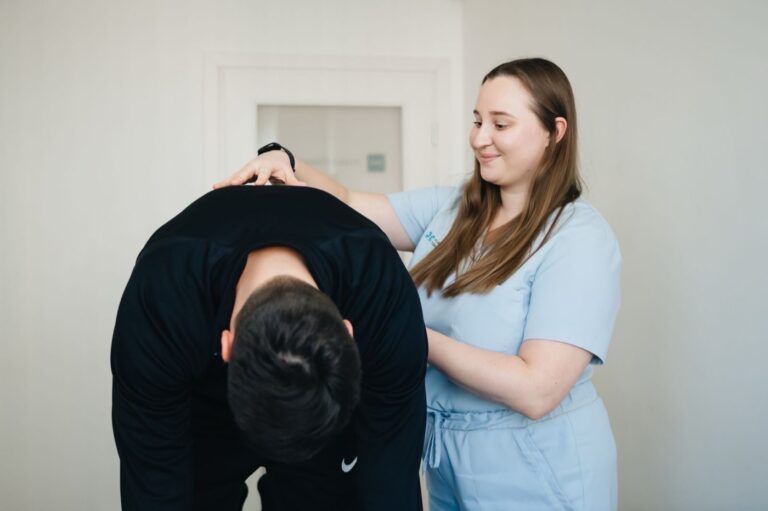
Tonic Physio assesses foot mechanics for Milton, Oakville, and Halton patients: the gait analysis, the joint and strength testing, the shoe wear reading, and the honest verdict. If the verdict is custom orthotics, the device follows the assessment; if it is physiotherapy or a shoe change, the verdict says that instead.
Bring the worn shoes and the symptom list. The feet have been filing complaints for months; the assessment is where someone finally reads them.
The standing-worker’s guide: fatigue that shoes never fixed
Halton’s workforce stands: warehouse floors, retail counters, salon stations, kitchen lines. The standing day loads feet differently than the running day, and the fatigue pattern has its own mechanics:
- Static standing loads the fascia and joints continuously, without the running gait’s spring
- The hard floors: concrete and tile return nothing; the cushioning conversation starts here
- The anti-fatigue matting, the shoe rotation, and the micro-breaks: the employer-side fixes that pair with the foot-side support
The standing worker’s assessment includes the shift math: hours, surfaces, and the shoes the shift actually sees. The support that works for a runner sometimes fails a worker, and the assessment knows the difference.
The athlete’s version: the signs runners and athletes notice
- The mileage-limit symptom: pain that arrives at a consistent distance, every time, regardless of pace
- The shoe-change sensitivity: symptoms that shift with every shoe experiment
- The one-sided pattern: the same leg’s complaints, season after season
Athletes’ feet earn their assessments through load: the mechanics that survive 20 kilometers per week may not survive 50, and integrating proper support into sports physiotherapy maps where the ceiling is and what raises it.
The bottom line: the list is the invitation
Seven signs, one message: the feet are describing mechanics, and mechanics are assessable. The list does not diagnose; it directs. The assessment takes the signs, tests the mechanics, and returns a plan that names the actual driver: support, strength, shoes, or a combination.
If two or more signs on this list live at your address, the assessment is the next step, and it is one visit. The feet that have been complaining since last spring deserve the reading they have been asking for.
Answers to the questions patients ask most
Do flat feet always need orthotics?
No. Many flat feet are asymptomatic and functional, and many people with flat arches run and live pain-free. Orthotics are for the flat foot that produces symptoms, not for the shape itself.
Can I test insoles before committing to custom?
Yes, and it is a reasonable path: a quality prefabricated support worn for 4 to 6 weeks tells you whether support changes your complaint. If it helps but incompletely, the custom device is the upgrade. If it changes nothing, the mechanics may not be the driver.
My heel pain went away on its own. Do I still need orthotics?
Maybe not: the fascia that healed with rest and stretching may not need permanent support. The assessment considers the recurrence history, because the heel that returns every spring is a different conversation from the one-time episode.
Are orthotics uncomfortable at first?
The break-in takes 2 to 4 weeks of gradually increasing wear, with some muscle awareness normal. Devices that hurt consistently past that window need adjustment, and the refinement visit is part of the process.
Can orthotics fix my back pain?
When the back pain rides on foot-driven mechanics, meaningfully; the research is honest that this is a subgroup, not a rule. The assessment tests whether your foundation is the driver, and the answer is spoken before any device is made.