What does acupuncture feel like? Most people describe a brief tap or nothing at insertion, since the needles are far finer than an injection needle. Some points then bring a dull ache, warmth or tingling, and you can ask your practitioner to pause or adjust at any time.
Key Takeaway: Acupuncture needles are very fine, so many people feel a light tap or nothing at insertion. A dull ache, warmth or tingling may follow at some points, and sharp or burning pain is a cue to speak up. Tell your practitioner about blood thinners, pregnancy or fainting before the first needle.
What does acupuncture feel like when the needles go in?
Acupuncture is a treatment that places very thin, solid needles at chosen points on the body, unlike the hollow needles used for injections. Because they are so fine, many people feel only a light tap or a tiny pinch, and some feel nothing. Sensations differ from person to person and from one point on the body to the next.
The needle itself
An acupuncture needle is solid and flexible, with a smooth, tapered tip. It is not designed to draw blood or deliver medicine, so it does not feel like the needles you may remember from a vaccine or blood draw. In Canada and the United States, acupuncture needles are sterile and single-use.
If needles make you nervous, ask to see one before you begin. Looking at it and holding it for a moment often takes away much of the fear.
You can also ask the practitioner to explain each step as it happens. Knowing what comes next removes much of the uncertainty for many people. You stay in control, and you can ask to stop at any point.
The first few seconds
Most practitioners clean the skin, then place the needle quickly with a light tap. You may notice a brief prick, a flick of warmth or a pressure that fades within seconds. Hands, feet and the lower legs tend to feel a little more sensitive than the back or shoulders.
Tell your practitioner if any point feels sharp, burning or lingering. A small adjustment usually settles it straight away.
What sensations can you feel during a session?
After the needles are in place, some people feel very little while others notice a range of mild sensations. Traditional practice often calls the dull, spreading feeling “de qi”, while a modern view is that it reflects a response in the nerves and local tissue. Neither description means something is wrong.
Common sensations people describe
- A dull ache or heaviness around the needle
- A spreading warmth
- Mild tingling or a faint electrical feeling
- Pressure that comes and goes
- No sensation at all, which is also normal
These feelings tend to be short and mild. If a sensation turns sharp, burning or frightening, speak up and the needle can be adjusted or removed.
Why it feels different for each person
The National Center for Complementary and Integrative Health says it is not fully understood how acupuncture works. Research suggests it may affect the nervous system and nearby tissue, and that expectations also play a part. That mix may explain why two people feel different things.
What happens at a first acupuncture session?
A first visit usually begins with a conversation and a physical check, not with needles. The practitioner needs to understand your symptoms, your health history and your goals before choosing points. You can expect it to take a little longer than follow-up visits.
| Stage | What happens | What you may feel |
|---|---|---|
| Conversation and check | Questions about symptoms, health history and medicines, plus movement tests | Nothing from needles yet |
| Needle placement | Fine needles are placed at chosen points | A light tap, brief prick or pressure |
| Resting | The needles stay still for a period | Calm, warmth or a dull ache; some people doze |
| After removal | The practitioner checks how you feel | Relaxed, tired or slightly sore |
The conversation and assessment
You will be asked about your pain or symptoms, how long you have had them, what makes them better or worse, and your medical history. Mention any medicines, especially blood thinners, as well as pregnancy, skin conditions, a pacemaker or a history of fainting. The practitioner may also test movement and feel the muscles around the sore area.
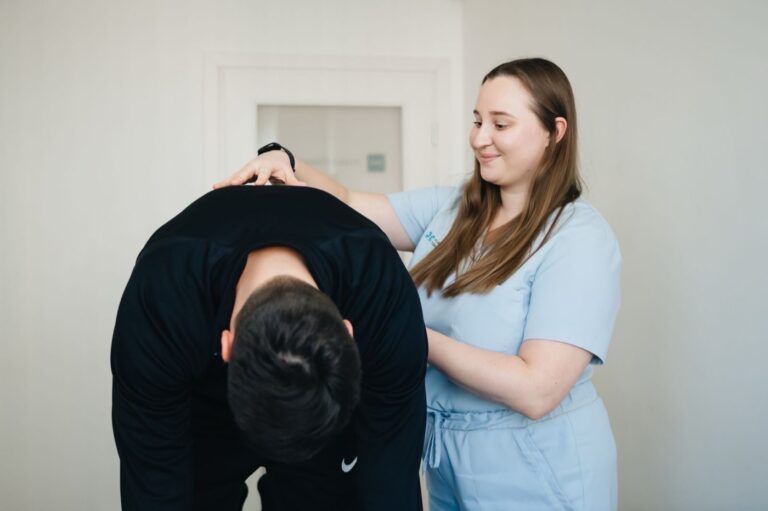
In a physiotherapy clinic, this assessment often overlaps with the exam you would get for any other treatment. Your practitioner can explain whether acupuncture suits your situation or whether another approach may serve you better.
Positioning and placing the needles
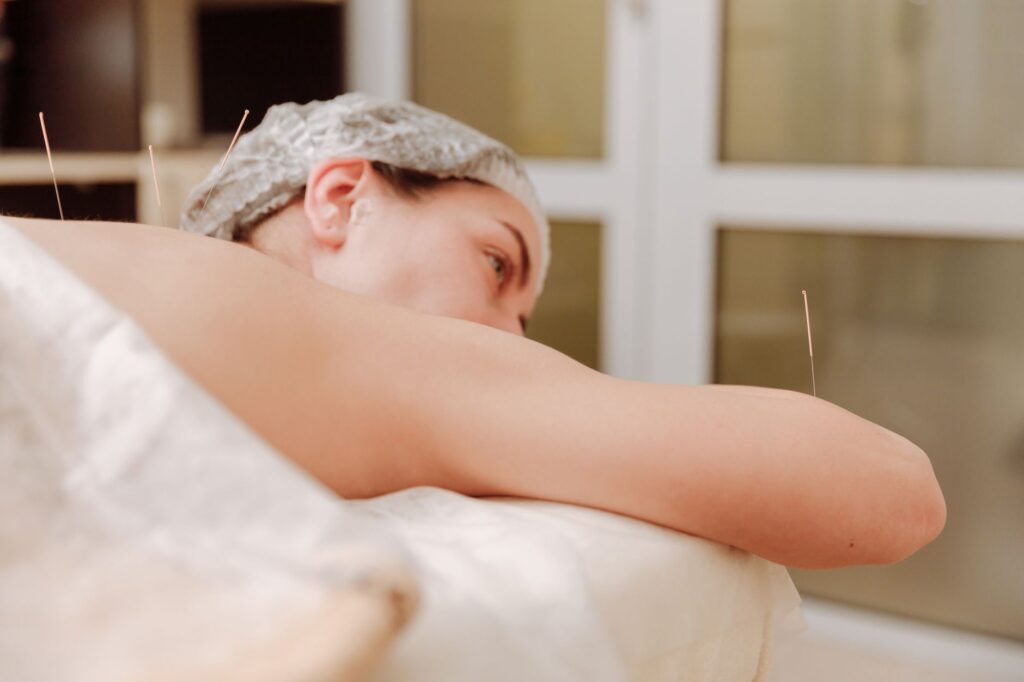
You will be positioned comfortably, often lying on your back, side or front, with a blanket to keep you warm. The practitioner places the needles at points chosen from your assessment, not from a fixed routine. These may be near the sore area or in other places such as the hands, feet or lower legs.
The number of needles depends on your plan. A first session often uses a modest set so you can see how your body responds.
Resting with the needles in
Once the needles are in place, you usually rest for a period while they stay still. Many people find this part calm and quiet, and some drift into a light doze. Your practitioner will check on you and can add warmth or gentle stimulation if it suits your plan.
If you feel uncomfortable, dizzy or anxious, say so. Needles can be removed quickly at any point.
How can you get ready for your first session?
A little preparation helps you feel more at ease. Most of it is common sense, and your clinic can answer any questions when you book. Nothing about your first visit needs to be perfect.
Before you arrive
- Eat a light meal beforehand, because going in hungry can make some people feel light-headed
- Wear loose, comfortable clothing that rolls up easily at the arms, legs and back
- Avoid a heavy workout or a lot of caffeine right before the visit
- Bring a list of your medicines and any diagnoses
- Tell the clinic if you are pregnant, if you take blood thinners, or if you faint easily
You do not need a referral to book physiotherapy in Ontario, though some insurance plans ask for one when you claim.
Tips if you are nervous
Say so at the start. A practitioner can slow the pace, use fewer needles at first, or begin with points on the arms or legs while you settle.
Slow, steady breathing during insertion helps many people. Lying down also lowers the chance of feeling faint, so it is worth asking to start in a reclined position.
How will you feel after acupuncture?
Most people feel fine afterwards and can go about their day. How you feel can vary, and the effect on symptoms often shows over several visits rather than in the first hour. Your practitioner will explain what to expect for your situation.
Common after-effects
You may feel relaxed, a little tired or lightly sore around some of the points. Some people notice a small bruise or a tiny spot of bleeding where a needle was placed. These effects are usually mild and settle within a day or two.
The National Center for Complementary and Integrative Health notes that relatively few complications are reported. It also says serious problems have come from non-sterile needles or improper delivery, which is why a trained, regulated practitioner matters.
Light-headedness and aftercare
Some people feel dizzy or faint during or just after a session, especially if they are hungry, dehydrated or very nervous. Sit up slowly, drink some water and eat something light if you feel unsteady. Mention it to your practitioner so they can adjust your next visit.
Plan a gentle rest of the day after your first visit, as a precaution, until you know how you respond.
Drink water, avoid a strenuous workout that evening and notice how your symptoms behave over the next day or two. Jot down any changes in pain, sleep or movement. These notes help your practitioner shape the next session.
Who should be careful with acupuncture?
Acupuncture is not suitable for everyone, and some conditions call for extra care or a doctor’s advice first. The National Health Service in England says acupuncture may not be safe if you take blood-thinning medicine, are at increased risk of bleeding, or have a skin condition or skin infection. Always tell your practitioner about your health before the first needle.
Questions to raise before your visit
- Blood thinners, bleeding disorders or easy bruising
- Pregnancy, because some points are avoided
- Pacemakers or other implanted devices
- Skin infections or open wounds near the treatment area
- A history of fainting or a strong needle phobia
Your practitioner can adapt the plan or suggest a different approach where acupuncture is not a good fit.
If you are unsure about a medical condition or a medicine, ask your doctor before your first visit. Bring any questions with you, and expect a good practitioner to welcome them.
Choosing a regulated practitioner
In Ontario, physiotherapists are regulated by the College of Physiotherapists of Ontario, which sets standards for safe practice. Ask whether the person treating you is registered and has acupuncture training. Do not use acupuncture to put off seeing a doctor about a symptom that needs a medical check.
What can acupuncture help with, and how many sessions do people need?
Research suggests acupuncture may help some people with pain conditions such as back pain, neck pain and knee osteoarthritis. Results vary, and no one can promise a benefit for any one person. The number of visits depends on your condition, how long you have had it and how you respond.
What the research shows
The National Center for Complementary and Integrative Health says research has shown acupuncture may be helpful for several pain conditions, including back or neck pain and knee pain from osteoarthritis. It also notes that in many studies, acupuncture beat no treatment by a wider margin than it beat sham acupuncture.
In plain terms, part of the benefit may come from effects beyond the needle itself, such as relaxation and expectation.
The NHS notes that acupuncture may be offered for long-term pain and migraine-type headaches. Evidence is stronger for some conditions than for others.
How many visits to expect
There is no single number that suits everyone. Your practitioner will usually suggest a short series, then review how you are doing and decide whether to continue, space visits out or change approach. If you notice no change after a fair trial, it is reasonable to ask whether a different treatment fits better.
Acupuncture often works alongside exercise, hands-on therapy and advice, not instead of them. Our guides to acupuncture for chronic pain and the difference between dry needling and acupuncture explain how it compares with similar options.
Between visits, keep up the exercises and habits agreed at your assessment. Treatment tends to fit best alongside staying active and pacing your day. Tell your practitioner what you notice, whether it is better, worse or unchanged.
When should you see a doctor?
See a doctor first if your pain is new, severe or unexplained, or if you have symptoms that could point to a more serious cause. Acupuncture is not a substitute for a medical assessment. A practitioner should also stop and refer you on if something does not look right.
Symptoms that need medical attention first
- Pain after a fall, accident or injury, especially with swelling, deformity or inability to use the limb
- Numbness, weakness or loss of bladder or bowel control
- Fever, unexplained weight loss or pain that wakes you at night and keeps worsening
- Chest pain, trouble breathing or sudden severe headache
Go to the nearest emergency department or call 911 for any of these if they come on suddenly or feel severe. You can also call Health811 at 8-1-1 for free advice from a registered nurse if you are unsure how urgent your symptoms are.
After treatment
Contact your clinic or doctor if you develop redness, heat, swelling or pus at a needle site, a fever, or pain that is getting steadily worse after a session. Most after-effects are mild, but infection, though uncommon, needs prompt attention.
How can physiotherapy in Milton include acupuncture?
At Tonic Physio in Milton, acupuncture is offered by physiotherapists as one part of a wider plan. It sits alongside manual therapy, exercise and education so that treatment fits your goals. Your practitioner can explain what to expect before you decide.
What a visit usually includes
Your first visit covers your history, an assessment and a clear explanation of how acupuncture might fit. If it is a good match, treatment can begin the same day, or you can take time to think it over. Our page on acupuncture therapy in Milton describes the service in more detail.
Extended health benefits often include physiotherapy, though coverage differs between plans, so check your policy before your visit.
Booking
If you are curious but unsure, you can book an assessment online and talk it through with your practitioner first. It is fine to say you are nervous. Going at your own pace is part of good care.
On the day, arrive a few minutes early so you are not rushed. Use the washroom beforehand and let the front desk know if you would like a quiet room. A calm start can make the session feel easier.