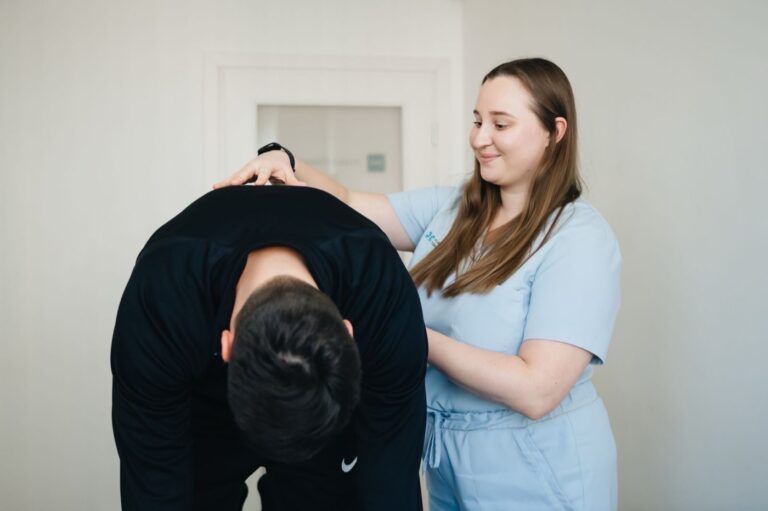
Active physiotherapy is treatment where you do the work, such as exercise and movement training, while passive physiotherapy is treatment done to you, such as hands-on therapy, heat or electrical stimulation. Understanding active vs passive physiotherapy helps you know what to expect from a treatment plan. Most plans use both.
Key Takeaway: Passive treatments such as manual therapy, heat, TENS and shockwave can ease pain and stiffness. Active treatments such as exercise and movement retraining build strength, control and confidence. Most people do best using passive care to calm symptoms and active care to build lasting function.
What Is Physiotherapy Trying to Achieve?
Physiotherapy aims to reduce pain, restore movement and help you return to the activities that matter to you. Both active and passive treatments serve these goals, but they do so in different ways.
Short-Term and Long-Term Goals
In the short term, the goal is often to calm pain and swelling so you can move more comfortably. In the long term, the goal is to build strength, flexibility and control so the problem is less likely to return. A good plan links these two stages together.
Your physiotherapist will usually explain which stage you are in and what the next step looks like. Knowing this can make the plan feel clearer and easier to follow.
Why the Mix Matters
The right balance between active and passive treatment depends on your condition, how long you have had it and how sore it is. A fresh injury may need more passive care at first. A long-standing problem often needs more active work to change how the body handles load.
What Is Passive Physiotherapy?
Passive physiotherapy includes treatments where you rest while the physiotherapist or a device does the work. These are often used early in recovery or during a flare of pain.
Common Passive Treatments
- Manual therapy, such as joint mobilisation and soft tissue work
- Massage and trigger point release
- Heat and ice
- TENS (transcutaneous electrical nerve stimulation)
- Ultrasound and other electrical modalities
- Shockwave therapy for some tendon problems
- Acupuncture and dry needling
- Taping and bracing for support
Our article on TENS vs NMES explains how electrical stimulation is used for pain and muscle activation.
Benefits of Passive Treatment
Passive treatments may help reduce pain, ease muscle spasm and loosen stiff joints. This short-term relief can make it easier to start moving and exercising. Many people also find hands-on care reassuring, especially when pain is high and movement feels worrying.
Where Passive Treatment Fits Best
Passive care is often most useful in the early stage of an injury, during a flare-up or when pain stops you from exercising. It can also ease stiffness before exercise. Results vary from person to person, and effects are usually strongest when passive care is paired with movement.
What Is Active Physiotherapy?
Active physiotherapy includes treatments where you move, lift or practise skills yourself, guided by your physiotherapist. It is the part of care you take home and keep doing.
Common Active Treatments
- Strength exercises with body weight, bands or weights
- Stretching and mobility work
- Balance and coordination training
- Core and postural control exercises
- Movement retraining for tasks like lifting, running or reaching
- Cardiovascular exercise such as walking or cycling
- Education about pain, pacing and activity
Our guide to exercises to continue at home after physiotherapy shares examples you may be given.
Benefits of Active Treatment
Exercise builds strength and endurance in muscles, tendons and bones. It improves how joints move and how well the body controls movement. It also helps people feel more confident and less worried about pain, which can make daily tasks easier.
A Cochrane review of exercise for chronic low back pain found that exercise is likely to reduce pain compared with no treatment or usual care. Another overview of Cochrane reviews on exercise for chronic pain found few harms and some improvement in pain and function, although the quality of the evidence varied.
Where Active Treatment Fits Best
Active care is useful at almost every stage of recovery. Early on, it might be gentle range of motion or walking. Later, it builds up to strength, power and sport-specific drills that match what you want to get back to.
Active vs Passive Physiotherapy: How Do They Compare?
Active and passive treatments are not rivals. They do different jobs, and the table below shows how they compare.
| Feature | Passive physiotherapy | Active physiotherapy |
|---|---|---|
| — | — | — |
| Who does the work | The physiotherapist or a device | You, with guidance |
| Main effect | Short-term pain relief and easier movement | Strength, control and lasting function |
| Best timing | Early injury, flare-ups, high pain | Every stage, building up over time |
| Examples | Manual therapy, TENS, heat, shockwave | Exercise, stretching, balance work |
| Home role | Little or none | Home program is central |
How They Support Each Other
Passive care can lower pain enough to let you do exercises you could not manage before. Exercise then builds the strength and tolerance that help the gains last. When both are used together, each one makes the other more useful.
What Guidelines Suggest
The UK guideline on low back pain from NICE suggests exercise as a core treatment and manual therapy as part of a package that includes exercise. This matches the way many physiotherapists combine both approaches.
Which Approach Is Better for You?
The best mix depends on your condition, your pain levels and your goals. Your physiotherapist will adjust the balance as you improve.
When More Passive Care May Help
A higher share of passive care may suit you if pain is high, the injury is very recent or you are having a flare. It may also help if fear of movement is making it hard to start exercising. As pain settles, the plan usually shifts toward more active work.
When More Active Care May Help
A higher share of active care often suits long-standing pain, recovery after surgery and return to sport. It also suits people who want to prevent the problem from coming back. Even with long-term pain, short periods of passive care can still help during flare-ups.
Your Preferences Matter
Some people enjoy exercise and want a program they can do alone. Others need more support or reassurance at first. Tell your physiotherapist what you prefer and what has worked before, so the plan suits you.
Which Conditions Benefit From Both Approaches?
Most muscle and joint problems respond well to a combination. Here are a few common examples.
Back and Neck Pain
Manual therapy or heat may ease stiffness and spasm early on. Strength, mobility and posture exercises then help the spine handle daily loads. Education about staying active is also a key part of care.
Sports Injuries and Tendon Problems
For sprains, strains and tendon pain, passive care such as taping, shockwave or soft tissue work may ease symptoms. Gradual loading exercises then help the tissue adapt and get stronger. A staged return to sport completes the plan.
Recovery After Surgery
After joint replacement or ligament repair, passive care may help with swelling and stiffness in the first weeks. Active exercises build range, strength and walking ability. Over time, the plan becomes almost fully active as you return to normal life.
What Does a Combined Session Look Like?
A typical session uses both approaches, with the balance changing over time.
A Sample Early Session
An early session might start with assessment of how you are feeling, then manual therapy or heat to ease pain. The physiotherapist then teaches two or three gentle exercises and checks your form. You leave with a short home program.
A Sample Later Session
A later session might include a short warm-up and a quick hands-on check of a stiff area. Most of the time is spent on harder exercises, movement drills and practising the tasks you want to get back to. Your home program is updated to match.
By this stage, hands-on care may only take a few minutes of the session. Some people still find it helpful for a stiff area, while others no longer need it at all. Your physiotherapist will adjust the mix based on how you respond.
How Progress Is Measured
Your physiotherapist will track pain, movement, strength and your ability to do key tasks. Clear measures help show when to make exercises harder and when passive care can be reduced. You can read more about how this starts in what to expect at your first physiotherapy appointment.
How Can You Get the Most From Active Physiotherapy?
The active part of care works best when it becomes part of your routine.
Keep It Simple
A short program done most days usually beats a long one done rarely. Ask your physiotherapist to limit your program to the exercises that matter most. Picture or video reminders can help you remember the details.
Linking exercises to daily habits, such as brushing your teeth, makes them easier to remember.
Expect Some Discomfort
Mild discomfort during exercise is often normal, especially with tendon or long-standing pain. Your physiotherapist can explain how much is acceptable and what to do if pain flares. Sharp or worsening pain is a sign to stop and check in.
Build Up Gradually
Increase the amount or difficulty of exercise in small steps. Sudden big jumps can cause flare-ups. Steady progress over weeks tends to give the best results.
If you miss a few days, simply restart at a slightly easier level rather than jumping back to where you left off. Consistency over time matters more than any single session.
What Are Common Myths About Active and Passive Care?
A few common beliefs can make it harder to choose the right mix. Here is what each one misses.
“Passive Treatment Is a Waste of Time”
Passive care has a clear role, especially when pain is high or an injury is new. Easing pain and stiffness can make the first exercises possible and help people feel more confident. It simply works best as one part of a plan rather than the whole plan.
“Exercise Will Make My Pain Worse”
Many people worry that moving will cause more damage. In most muscle and joint problems, well-chosen exercise that starts gently and builds up slowly is safe and helpful. Your physiotherapist will choose a starting level that suits your pain and adjust it as you go.
“If It Hurts, I Should Rest Completely”
Short rest after a new injury can help, but long periods of complete rest often lead to stiffness and weakness. For many conditions, staying gently active supports healing. The key is finding the right amount of movement for each stage.
What Questions Should You Ask Your Physiotherapist?
Asking a few simple questions helps you understand your plan and take part in your own recovery.
About Your Plan
- What do you think is causing my pain?
- Which treatments will you use, and why?
- How will the balance between hands-on care and exercise change over time?
About Your Home Program
- Which exercises matter most if I only have a few minutes?
- How much discomfort is acceptable while exercising?
- What should I do if my pain flares up?
About Your Progress
- How will we measure whether I am improving?
- What signs would mean we need to change the plan?
- When can I return to sport, work or other key activities?
When Should You See a Doctor?
Physiotherapy suits most muscle and joint problems, but some signs need a medical check first.
Warning Signs
Go to emergency or see a doctor right away if pain comes with numbness around the groin, new bladder or bowel problems, leg weakness that is getting worse, fever, weight loss you cannot explain or pain after a major fall or accident. These are rare, but they need prompt care.
Pain That Is Not Improving
See a doctor if pain keeps getting worse despite treatment or wakes you every night. Your doctor can check for other causes and arrange tests if needed. Physiotherapy can continue once serious problems are ruled out.
Starting a Balanced Treatment Plan
A physiotherapy assessment can help you find the right mix of active and passive care for your condition. In Ontario you do not need a doctor’s referral to see a physiotherapist.
Booking Your Visit
Learn more about our orthopedic physiotherapy service for muscle, bone and joint problems. When you are ready, you can book an assessment online.