Graston Technique is the stainless-steel instrument therapy patients describe as “the scraping one,” and the description undersells the method. Six shaped tools glide over soft tissue with specific strokes, locating and treating restrictions that hands feel vaguely and instruments feel precisely. For scar tissue, chronic tendinopathy, and stubborn soft tissue restrictions, it is one of the most effective tools in the manual therapy shelf.
Key Takeaway: Graston Technique uses shaped stainless-steel instruments with specific strokes to detect and treat soft tissue restrictions: scar tissue, fascial adhesions, and chronic tendinopathy changes. Sessions are short (10 to 15 minutes of instrument work), often paired with exercise, and typically run 4 to 6 treatments. Expect temporary redness and mild soreness, the technique’s signature, followed by measurably better tissue glide.
What Graston actually does to tissue
The instruments do two jobs at once:
- Detection: the tools amplify what hands feel, vibrating differently over restrictions, letting the clinician map the exact boundaries of adhesions and dense tissue
- Treatment: the strokes apply controlled microtrauma to the restriction, stimulating the remodeling response: collagen synthesis, blood flow, and the reorganization of disorganized tissue
The mechanism rhymes with shockwave’s therapy: controlled stimulus to tissue that stopped healing. The difference is the delivery, mechanical and local where shockwave is acoustic and deep, and the pairing: Graston works best followed immediately by exercise, which organizes the tissue it just stimulated.
What Graston treats best
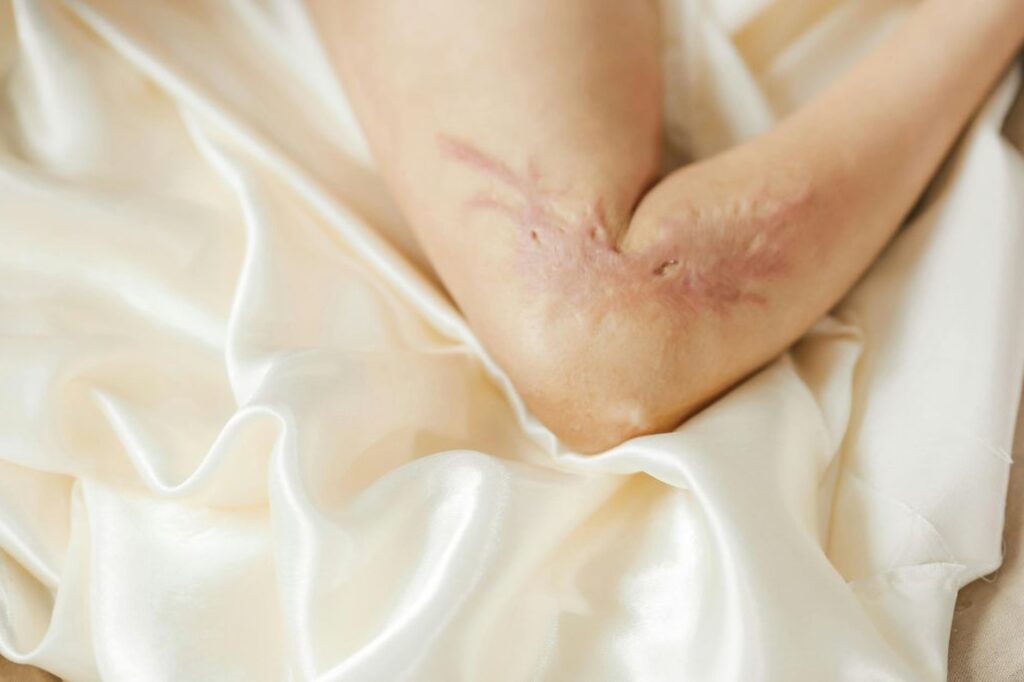
- Scar tissue: surgical scars, injury scars, and the adhesions they leave in the web
- Chronic tendinopathy: Achilles, patellar, elbow, and rotator cuff presentations past the acute phase
- Fascial adhesions: the dense, localized restrictions that sustained holds address slowly and instruments address efficiently
- Muscle strains’ residual fibrosis: the lumpy, stiff tissue a healed strain leaves behind
- IT band and lateral hip restrictions: the dense lateral line the roller surrendered on
What a Graston session actually looks like
- Warm-up: brief tissue warming by hand or heat, because instruments work better on warm tissue
- Lotion or emollient: the glide medium that lets the tools work without tearing skin
- The strokes: 6 tool shapes, each matched to a body region, stroked along and across the restriction, 30 to 60 seconds per zone
- The signature response: temporary redness or light bruising (ecchymosis) as circulation floods the treated tissue; expected, harmless, and gone within days
- The pairing: exercise immediately after, because the freshly remodeled tissue needs the movement to organize
The instrument work itself runs 10 to 15 minutes; the session with exercise runs 30 to 45. The soreness afterwards lands in the next-day window, the same family as a hard workout, and it fades as the tissue remodels.
What the evidence shows
Graston’s research profile is honest: growing, positive, and strongest for chronic soft tissue:
- Studies show range-of-motion and pain improvements for chronic tendinopathy and soft tissue restrictions when combined with exercise
- The strongest findings sit where the technique is used most: chronic tendinopathies, scar mobility, and post-injury fibrosis
- The honest limit: instrument-assisted therapy is a component of rehabilitation, not a standalone cure; the trials that paired it with exercise produced the results patients should expect
Patients seeking Graston Technique in Milton receive it inside a plan: the instrument work, the exercise pairing, and the load management that keeps the restriction from rebuilding.
Graston versus its neighbors: choosing the right tool
| Treatment | Best for | Feel |
|---|---|---|
| Graston (instruments) | Specific adhesions, scars, dense restrictions | Intense stroking, temporary redness |
| Myofascial release (hands) | Regional chains, whole-pattern restrictions | Gentle sustained holds |
| Shockwave (acoustic) | Deep tendinopathy, chronic degenerative tissue | Deep tapping pulses |
| Massage (hands) | Muscle tension, recovery, stress | Familiar and rhythmic |
The tools complement: a chronic Achilles might get shockwave for the tendon, Graston for the scar band beside it, and massage for the guarding around both. The assessment sequences them, because the order matters: the instrument work lands differently in warmed, relaxed tissue.
Our article on pre-event versus recovery sports massage goes into more detail.
The conditions, case by case
Achilles tendinopathy with a palpable band
The chronic Achilles often carries a thickened, tender band that the roller manages and never resolves. Graston’s strokes along and across the band, paired with the calf loading program, address the fibrosis directly. The typical course: 4 to 6 sessions, weekly, with the loading program running throughout.
Post-surgical scar restrictions
Knee replacements, ankle surgeries, and abdominal scars leave adhesive architecture that limits range beyond the joint. Graston mobilizes the scar itself and the tissues it glued down, with the changes showing up in range measurements within a few sessions.
IT band and lateral hip pain
The runner’s lateral line restriction, the one the foam roller punishes weekly without resolution, responds to instrument work along the line plus the hip strengthening that stops the friction pattern. The roller maintains; the instruments correct.
Tennis and golfer’s elbow
The chronic elbow tendons with their palpable fibrosis respond to instrument work plus the eccentric loading program, the same pairing the tendinopathy evidence describes.
What Graston feels like, honestly
- During: a distinct, sometimes sharp scraping sensation over the restriction, intense but brief per zone. Patients describe it as “a good hurt” or “uncomfortable but productive”
- The pressure is calibrated: the tool’s edge is precise, and the clinician modulates continuously
- After: warmth, redness, possible light bruising, and a looseness that arrives within a day
- Next-day soreness in the treated tissue, fading across the course as the tissue remodels
Who should wait or modify
- Acute injuries and fresh inflammation: the technique targets chronic tissue; the acute phase gets other tools
- Blood thinners and bruising disorders: modification or physician conversation first
- Open wounds, rashes, or fragile skin in the treatment zone
- Varicose veins and some vascular conditions in the treatment path
Full screening happens at assessment, and the technique’s safety record in trained hands is excellent: the instrument cannot apply more pressure than the clinician chooses, and the tissue’s response is visible in real time.
The instrument-assisted family: Graston and its cousins
Graston is the trademarked name for instrument-assisted soft tissue mobilization (IASTM), and the family includes clinics’ own tool sets and related brands. The principles are shared: shaped edges, specific strokes, and the remodeling stimulus. The differences are in training depth and the certification’s rigor, and patients choosing between them should ask one question: who is holding the tool, and what was their training?
- Certified Graston providers: trained in the full protocol, the six tools, and the tissue-response reading the technique was built on
- General IASTM training: competent tool work, variable depth of training
- The tool does not treat; the clinician’s map does. The same steel in different hands produces different outcomes
Graston inside a rehabilitation plan
The technique’s results multiply inside a physiotherapy rehabilitation plan, and the sequence matters:
- Assessment: the restriction mapped, the stage confirmed, the plan’s targets named
- Instrument work: the strokes, followed immediately by the tissue’s first new movement
- Exercise pairing: the loading or range work that organizes the freshly remodeled tissue
- Load management: the daily habits that stop the restriction from rebuilding between sessions
The patients who report “Graston changed everything” are almost always the ones running the full sequence; the instrument is the stimulus, and the plan is the treatment.
The home care between sessions
- Gentle range work in the treated regions: the movement the tissue just learned
- The roller or ball on the lighter restrictions, not the freshly treated ones
- Hydration and heat if the soreness asks for it: the tissue is remodeling, and it drinks while it works
- No aggressive self-scraping: the home tools maintain, the professional ones correct
The six tools and their jobs
The Graston set’s shapes are not decoration: each contour matches a body region and a stroke style. Patients recognize them by feel:
- The large curved tools for the big muscle groups: quads, hamstrings, back
- The smaller convex tools for around joints and smaller regions
- The narrow-edged tools for precise work along tendons and between structures
- The double-beveled tools for crossing fibers and mapping edges
The stroke styles matter as much as the tools: long strokes along the tissue for general mobilization, short strokes across the restriction for the dense adhesions, and the sweeps that map boundaries before treating. The clinician reads the tissue’s vibration through the instrument, and the treatment follows the reading rather than a template.
The tissue’s response curve across a course
- Sessions 1 and 2: the restriction is dense, the marks strong, the soreness notable, the changes modest but real
- Sessions 3 and 4: the tissue softens between sessions now, the marks lighten, the range gains hold longer
- Sessions 5 and 6: the restriction resolves or shrinks to its stubborn core, and the plan shifts toward the strengthening that finishes the job
The response curve is the technique’s honesty: tissue changes across a course, not in a session, and the curve is measurable at each visit. Patients who expected single-session miracles and left at visit two missed the curve their tissue was already on.
Graston and the scar: a closer look
Surgical scars deserve their own paragraph because their effects travel farther than patients believe. The healing process glues layers together, and the pull transmits through the web: the knee scar that limits the hip, the abdominal scar that holds the low back. Instrument work mobilizes the scar itself and the tissue paths it glued, and the changes register in ranges the patient stopped asking about years ago. The assessment asks about every scar for this reason; the body keeps the receipts.
Getting Graston in Milton
Tonic Physio’s certified providers deliver Graston inside massage therapy and physiotherapy plans for Milton, Oakville, and Halton patients: the instrument work, the exercise pairing, and the direct billing that keeps the course affordable.
If you have a lump, a band, or a scar that years of rolling have not moved, one assessment maps it, and the first session usually shows you the difference between general pressure and a tool that can feel exactly where the problem lives.
Answers to the questions patients ask most
Will it bruise me?
Light redness is expected; small bruises are common and harmless, fading in 3 to 7 days. The bruising is the technique’s signature, not a complication, and it tracks the density of the restriction: dense tissue marks more, and marks less each session as it releases.
How is this different from massage?
Massage kneads and strokes with hands at massage intensity; Graston strokes with instruments at a precise, localized intensity that maps the restriction as it treats. The tools find and work the dense spots hands generalize over. Most plans use both: the instruments for the specific restrictions, the hands for everything around them.
How many sessions will I need?
Typically 4 to 6 for chronic restrictions, paired with exercise. Fresh post-surgical adhesions sometimes resolve faster; long-standing dense tissue takes its course. The reassessment at session 3 tells the honest story.
Does it work on old injuries?
Old fibrosis is exactly the target: the tissue that healed poorly years ago responds to the remodeling stimulus, sometimes dramatically. The scar from the 2019 ankle sprain is fair game.
Is it covered by insurance?
Yes, as part of physiotherapy or massage therapy treatment under extended plans. The technique rides inside the visit, not as a separate bill.
Graston and the athlete’s maintenance calendar
The athletes who use Graston preventively book it around their seasons, and the pattern works:
- The pre-season session: the restrictions mapped and treated before the volume builds
- The mid-season tune-ups: the areas the load is accumulating on, treated before they become the season’s complaint
- The post-season cleanup: the fibrosis the season left, resolved while the off-season has time
The maintenance rhythm is lighter than the corrective course: single sessions at the season’s edges, and the assessment decides the depth each visit needs.
Graston versus foam rolling: the honest comparison
The home tools maintain; the professional instruments correct. The honest division of labor:
We cover myofascial release versus regular massage in a separate guide.
- The foam roller: broad, moderate, daily maintenance of tissue that is already gliding
- The instruments: specific, intense, corrective work on the restrictions the roller has surrendered on
- The pattern: professional correction first, home maintenance after, and the tissue stays where the treatment put it
The runners who roll the same IT band weekly for years are describing the roller’s ceiling; the instrument work is what moves the restriction the roller has been politely knocking on.
The skin and the marks: aftercare in detail
- The redness: expected, fading within hours to a day
- The bruising: common with dense restrictions, fading across a week, harmless
- The care: hydration, gentle movement, and no aggressive rolling on the freshly treated tissue
- The reporting: anything sharp, lasting, or unusual gets mentioned at the next visit
The aftercare is simple because the technique is controlled: the instruments apply what the clinician chooses, and the tissue’s response is visible throughout the session.
Ready to resolve the restrictions holding you back? Book your assessment today and find out exactly what your tissue needs.