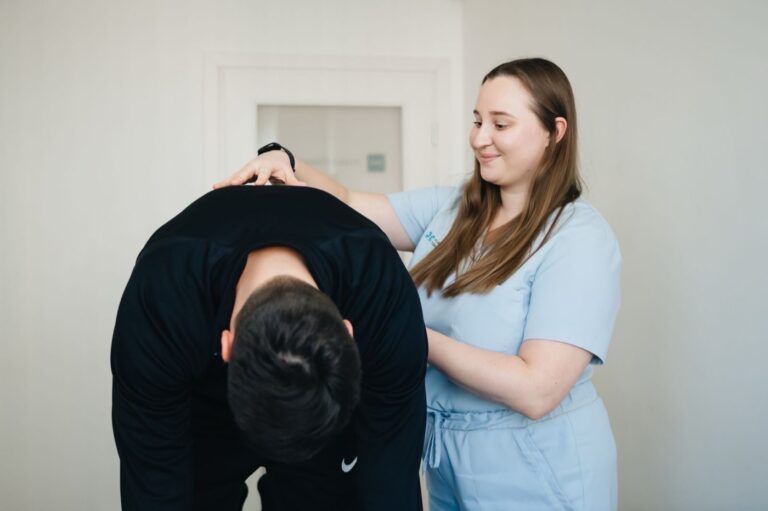
Patients book “a massage” expecting muscle relief, and some leave disappointed that the knots returned by Friday. The disappointment usually traces to a mismatch: the treatment addressed the muscle when the problem lived in the fascia, the connective tissue web that wraps everything and holds patterns muscles alone cannot explain. Myofascial release and regular massage are different tools for different tissues, and knowing which one you need changes the outcome.
Key Takeaway: Regular massage works muscle tissue through kneading, stroking, and pressure: excellent for circulation, general tension, and relaxation. Myofascial release works the fascial web through sustained, slow holds that allow the connective tissue to lengthen and release, addressing restrictions massage glides over. Choose myofascial release for persistent restrictions, referral patterns, and stiffness that massage only temporarily changes; choose massage for general tension and recovery. Many sessions blend both.
What fascia is, and why it matters
Fascia is the connective tissue that wraps every muscle, organ, and fiber: a continuous three-dimensional web from head to heel. It transmits force, stores tension, and, when it becomes restricted, it binds structures together in ways muscles cannot explain.
How fascia becomes restricted
- Repetition: the same motion thousands of times lays down tension patterns in the web
- Injury and guarding: healing tissue glues to its neighbors, and the guarding posture becomes architecture
- Immobility: hours of sitting set the fascia into the shape it holds longest
- Inflammation: injured areas produce the sticky extracellular matrix that stiffens the web
Restricted fascia produces symptoms muscle work alone does not resolve: the stiffness that returns within hours, the referral patterns that follow fascial lines rather than nerve paths, and the sense of being “stuck” that stretching cannot reach.
What regular massage does best
Massage therapy works muscle tissue through mechanical pressure and rhythm. Because massage therapy works muscle tissue, it excels at:
To learn more, read about relaxation massage versus deep tissue massage.
- Circulation: bringing blood and oxygen to tense, tired muscle
- Muscle tone reduction: the relaxation response that lowers resting tension
- Recovery: clearing the metabolic byproducts training leaves behind
- Stress relief: the nervous-system shift that makes massage a monthly habit for millions
Massage is the right tool when the complaint is muscle: soreness, tension, recovery, stress. It is the wrong single tool when the complaint is restriction: the stuck, short, glued quality that returns no matter how well the muscles are kneaded.
This ties in closely with pre-event versus recovery sports massage, covered in a separate article.
What myofascial release does differently
Myofascial release (MFR) applies sustained, gentle pressure into the fascial restriction and waits: often 90 seconds to 5 minutes per hold, while the tissue lengthens at its own pace. The technique’s logic is fascial: the web releases under sustained load, not under repeated force.
What MFR treats best
- Persistent restrictions: the areas that feel “glued” or “stuck” rather than merely tight
- Referral patterns: the fascial tensions that produce distant symptoms
- Post-surgical and post-injury stiffness: the scar tissue and guarding architecture
- Whole-body stiffness patterns: the fascial web’s regional pull chains
The session feels slower and stranger than massage: fewer strokes, longer holds, and sensations that travel, the release in one region opening another. Patients sometimes report unexpected emotional releases; the fascia holds more than mechanics, and the response is normal.
The side-by-side comparison
| Feature | Regular massage | Myofascial release |
|---|---|---|
| Primary tissue | Muscle | Fascial web |
| Technique | Kneading, stroking, rhythm | Sustained holds, waiting for release |
| Pressure feel | Familiar massage intensity | Gentle, slow, sometimes surprising depth |
| Best for | Tension, recovery, stress | Restrictions, stiffness patterns, referrals |
| Session feel | Productive and relaxing | Quiet, meditative, occasionally emotional |
| After-effects | Loose, relaxed | Longer-lasting change, sometimes next-day tenderness |
How to choose: the decision path
Question 1: Does the relief last?
If regular massage helps but the same tightness returns within a day or two, the restriction lives deeper than the kneading reaches. That pattern is MFR’s signal.
Question 2: Can you point, or is it a region?
A specific point responds to massage and trigger point work; a whole region that feels glued, the entire IT band line, the whole low back jacket, points to the fascia.
Question 3: What is your history there?
Old injuries, surgeries, and scars leave fascial architecture that massage glides over. The tissue that changed after the event is the tissue MFR addresses.
Patients seeking myofascial release therapy in Milton often arrive after years of massages that helped for a day. The assessment that finds the restriction pattern is what redirects the plan.
What MFR feels like, honestly
The pressure is gentle, which surprises patients expecting intensity: the technique works with sustained weight rather than force. The sensations during a hold:
- A slow stretch that deepens without the therapist moving
- Warmth and sometimes a spreading ease along the region
- The occasional “burn” of tissue lengthening, described as intense but bearable
- Unexpected referrals: sensations appearing in distant regions as the web releases
Afterwards: longer-lasting change than massage produces, sometimes next-day tenderness in the released regions, and occasionally an emotional response during or after the session. The fascia holds posture, injury history, and stress patterns; the release sometimes lets them go audibly.
When the two are combined: the blended session
Most complex patients get both in one session: massage to warm and relax the muscle layer, MFR to address the web beneath it, and targeted release where the assessment found the drivers. The blend is standard practice in clinics where the RMT is trained in both, and it is the reason “just a massage” at a multidisciplinary clinic often achieves what years of spa massage did not.
The self-release tools that maintain between sessions
- Foam rolling: sustained holds on restricted lines rather than fast passes; the hold is what MFR taught the industry
- Ball release: the smaller tool for the smaller restrictions, 90-second holds
- Positional release: lying positions that let the web lengthen passively, 3 to 5 minutes each
The home holds maintain the professional releases: the fascia lengthens with consistency, and the rhythm of sessions-plus-daily-holds is what rewires the restrictions permanently.
The fascial lines: how one region becomes another region’s problem
The fascial web connects regions that anatomy textbooks treat separately, and MFR’s referral patterns follow those lines. The classic chains patients recognize when named:
- The back line: from the soles up the calves, hamstrings, low back, and skull; the plantar fascia restriction that holds the neck
- The front line: from the feet through the quads, hip flexors, chest, and throat; the sitting posture’s whole-body signature
- The lateral line: from the foot through the IT band, the waist, and the neck; the standing-tilt pattern
- The arm lines: from the chest and back through the shoulder, arm, and hand; the desk grip’s whole-chain load
A restriction anywhere in a chain pulls the whole line, which is why the foot work relieves the neck and the hip release changes the shoulder. The chains are also why local treatment of the painful spot sometimes fails: the restriction lives up the line, and the assessment that follows the chain is what finds it.
The scar tissue connection
Surgery and injury leave fascial adhesions: tissue that healed glued to its neighbors, restricting the glide the web needs. The classic presentations:
We cover what to expect from Graston technique in a separate guide.
- Abdominal surgery scars pulling on the low back and hips years later
- Knee and hip surgery scars limiting range beyond the joint itself
- C-section and other scars whose regional effects patients never connect
MFR around scars (never through fresh ones) releases the adhesions, and the changes often surprise the patient: range returning that stretching never touched, in regions far from the scar. The assessment asks about scars for exactly this reason.
The desk worker’s fascial pattern
The sitting day sets the web into its most common modern shape: the short hip flexors, the closed chest, the forward head, and the back line stretched taut behind. Massage kneads the muscles in that shape; MFR addresses the shape itself. The patients who combine both with the movement breaks and the setup fixes report the pattern finally shifting after years of holding.
Choosing your therapist for either style
Both styles live inside registered massage therapy, and the practitioner’s training matters more than the menu:
- Ask whether the RMT has specific MFR training and how they blend it with their massage work
- Describe your history: the relief that does not last, the old injury, the surgery, the referral patterns
- Expect assessment before treatment: the restriction map comes from palpation, not from the booking menu
The clinic setting adds the physiotherapy coordination: when the MFR sits inside a rehab plan, the releases happen where the program needs them, and the strengthening keeps the releases from being temporary.
MFR versus the tool-based cousins
The fascia-treatment family has grown popular tools, and patients compare them all. The honest map:
- MFR (hands): the original; sustained holds tuned continuously to the tissue’s response
- Cupping: decompresses the fascial layers with suction; pairs well with MFR for dense restrictions
- IASTM/Graston-style instruments: tool-assisted release for specific adhesions and scar tissue
- Foam rollers and balls: the self-maintenance layer
They are complements, not competitors: the dense adhesive responds to the instrument or the cup, the regional chain responds to the sustained holds, and the home tools maintain everything. The assessment decides which layer each session needs.
Your first MFR session: what to expect
- The assessment: palpation that follows your complaint up and down its chains, plus the history that finds the pattern’s origin
- The treatment: fewer regions than a massage covers, each held longer, with the pace set by your tissue
- The homework: the holds and positions that maintain the release between sessions
- The rhythm: sessions 1 to 2 weeks apart for active correction, extending as the pattern holds
Wear comfortable clothing: MFR works through light clothing or skin, and the regions treated may surprise you, the feet for the neck, the hips for the back. The plan is written from the assessment, and the first session usually shows you a sensation you have not had in a treatment room before: tissue changing under a still hand.
The Milton reality: who benefits most from each
Local patterns give the choice its texture, and the two treatments sort neatly across them:
The desk-commuter pattern
The front-line shortening and the upper-back glue: MFR for the chains, massage for the surface tension, and the movement breaks that stop the shape from resetting. The combination is this region’s most common prescription.
The athlete pattern
Training recovery responds to massage; the restrictions that limit range and alter mechanics respond to MFR and its tool-based cousins. The training calendar decides which, and the assessment finds the restrictions the foam roller has surrendered on.
The post-surgical and post-injury pattern
The scar architecture and guarding: MFR inside a physiotherapy plan, timed to the healing stage. The releases restore what the surgery’s healing glued down, and the strengthening keeps it restored.
The stress-carrying pattern
The whole-body guard: massage for the nervous system, MFR for the shapes the stress has held for years. The two alternate through the stressful seasons, and the patients who blend them report the patterns finally softening.
The choice is not a preference; it is a tissue question, and the assessment answers it. If your massages have been lasting a day and a half, the fascia has been trying to tell you something: now you know what it was saying.
Answers to the questions patients ask most
Is myofascial release painful?
It is intense in places and gentle in others, and the intensity is the tissue’s, not the therapist’s force. The classic description: a strong stretching sensation that eases as the tissue releases. Pain that makes you guard means the hold is too aggressive; the technique works at the edge of comfort, not past it.
Why does the therapist hold so long without moving?
Fascia releases under sustained load, not force: the collagen network lengthens after 90 seconds to 2 minutes of steady pressure. The stillness is the technique; the therapist is waiting for your tissue to finish, which it announces by softening under the hold.
Can I just foam roll instead?
Rolling maintains and prevents; it rarely resolves the deep or old restrictions that MFR treats. The roller is the maintenance tool, the professional session is the corrective one, and the combination is what changes the tissue’s architecture.
Why did I feel emotional after my session?
The fascial web holds tension patterns that include the body’s stress history, and releases sometimes trigger unexpected emotional responses. It is common, normal, and part of what patients mean when they describe MFR as different from massage. Nothing is wrong; the tissue let go of more than tension.
How many sessions before the restriction changes?
Fresh restrictions respond within 1 to 3 sessions; long-standing architectural patterns take a course of sessions plus the home program. The assessment sets the expectation, and the second session’s response confirms it.