Sports massage is not one treatment delivered at different times. Pre-event and recovery sessions are different treatments entirely: different goals, different pressure, different timing windows, and different physiology. An athlete who books “a sports massage” without specifying which is ordering half a service, and this article is the menu explained.
Key Takeaway: Pre-event massage is short (10 to 15 minutes), light-to-moderate, and stimulating, designed to wake up tissue without changing it; book it 15 to 45 minutes before competition. Recovery massage is longer (30 to 60 minutes), deeper where needed, and built to accelerate the repair process; book it 2 to 48 hours after hard effort. The two are not interchangeable, and using one where the other belongs either dulls a warmup or deepens a bruise.
What pre-event massage actually does
The pre-event session is a nervous-system and tissue warmup, not a treatment. Its goals are narrow by design:
- Raising circulation in the muscles about to work, without fatigue
- Increasing tissue temperature and elasticity ahead of performance
- Reducing pre-competition anxiety through rhythm and touch
- Sharpening the athlete’s body awareness before the gun
What pre-event massage must not do
The pre-event window has one cardinal rule: do not change the tissue. Deep work, trigger point releases, and stretching beyond familiar ranges all create micro-damage and alter proprioception, exactly what a body does not need minutes before competition. The pre-event rule is familiar, light, and fast:
- Pressure: light to moderate, rhythmic, never exploratory
- Duration: 10 to 15 minutes per athlete
- Timing window: 15 to 45 minutes before the event; earlier is a different session
- No new techniques: nothing the body has not felt a hundred times
The classic pre-event error is the “deep session the night before or morning of” that leaves legs heavy for the first hour of competition. Tissue that has just been deeply worked needs hours to return to full power, which is why the pre-event session stays in the shallow end on purpose.
What recovery massage actually does
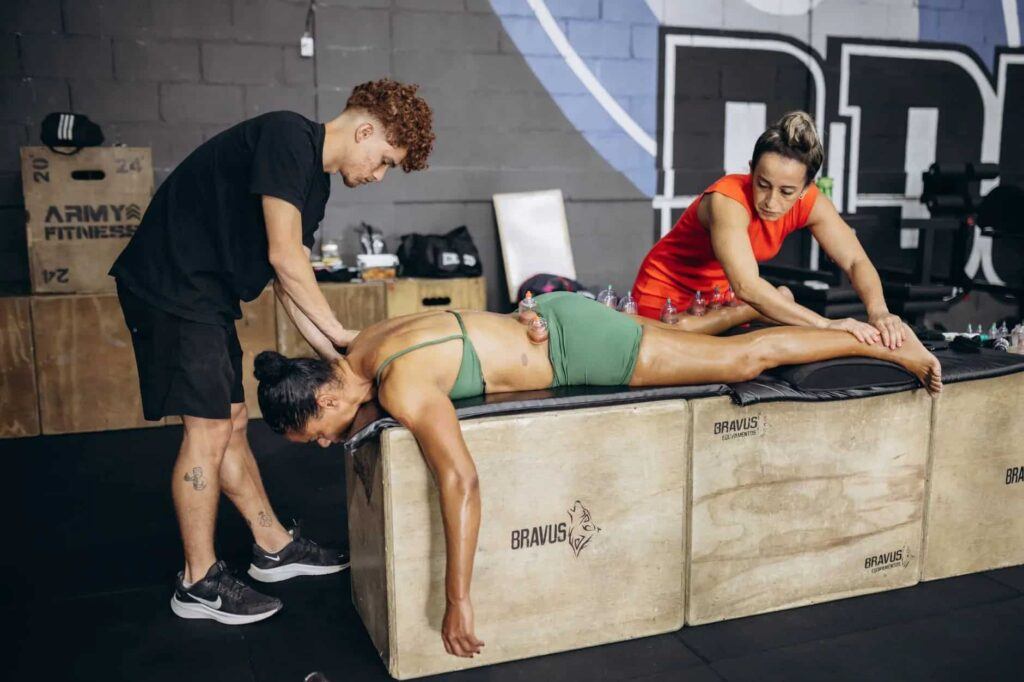
The recovery session is where sports massage earns its research support. Hard effort leaves the muscle with metabolic byproducts, micro-damage, fluid shifts, and a nervous system stuck in “on.” While pre event treatments focus on waking up the nervous system, post event recovery often utilizes techniques similar to deep tissue massage therapy to flush out toxins and reduce muscle stiffness.. Recovery massage targets each:
Find out more about registered massage therapy in Milton.
- Circulation boost: flushing metabolites and delivering repair nutrients faster
- Fluid management: moving the swelling that accumulates in worked tissue
- Tone reduction: releasing the residual guarding hard effort leaves behind
- Parasympathetic shift: moving the athlete into the rest-and-repair state where adaptation happens
The recovery timing windows
| Window | Session style | Goal |
|---|---|---|
| 0-2 hours post-event | Light flush only, 10-20 min, gentle | Circulation without adding insult to acute fatigue |
| 2-24 hours post-event | Moderate work, longer session | Byproduct clearance, tone reduction |
| 24-48 hours post-event | Deep work where the tissue allows | The deep cleanup: adhesions, specific tight spots |
The immediate post-race window deserves its note: tissue that just absorbed a race is inflamed and fragile, and deep work in the first hour adds damage rather than relief. The light flush first, the depth later, is the sequence that works.
Training vs competition: different massage calendars
Recovery massage serves two calendars, and confusing them wastes sessions.
The training week
- Recovery sessions land 24 to 48 hours after the hardest workouts, not immediately after easy ones
- One to two sessions weekly during heavy blocks, maintenance spacing in light weeks
- The weekly hard session plus next-day massage is the rhythm most team sports use
The competition week
- Deep work finishes no later than 3 to 4 days before competition: late deep tissue leaves tissue dull on game day
- The final pre-competition session is light and rhythmic, 2 to 3 days out
- Pre-event massage on the day: 15 to 45 minutes before, short and stimulating
- Recovery massage after: the flush in the first hour, the real work the next day
Patients booking Sports Massage therapy at our Milton clinic are asked where it sits in their calendar, because the same athlete needs different sessions in the same week.
The specific sports, briefly
Runners
Calves, hamstrings, and hip flexors carry the load; post-long-run sessions target them with moderate depth, and the pre-race session stays well clear of the calves’ protective tension. Escarpment training adds downhill quad damage, which responds best to the 24-to-48-hour deep session.
Hockey players
Hip flexors, groin, and shoulders absorb the season. Recovery work after games manages the adductor group carefully: deep work on a strained groin makes it worse, and the session style shifts accordingly.
Golfers and baseball players
Rotational athletes carry obliques, lats, and the trail-side hip. Pre-round work keeps the rotation loose; post-round work clears the asymmetric load before it becomes next week’s complaint.
What the research supports, honestly
Sports massage research shows clear effects on perceived recovery, soreness, and range of motion, with mixed results on performance measures. The honest summary:
- Recovery massage reliably reduces DOMS (delayed onset muscle soreness) and improves perceived recovery
- Range of motion improves acutely after sessions
- Pre-event massage does not improve performance directly; its value is in tissue prep and anxiety management, which is why it stays light
- The recovery benefits compound across a training block, which is where the calendar approach earns its keep
Self-maintenance between professional sessions
The professional session does what foam rollers cannot reach; the home work maintains what it achieves:
- Foam rolling: 24 to 48 hours post-session and post-workout, moderate pressure, never before deep work on the same tissue the same day
- The warmup that pairs with pre-event work: dynamic movements, not static stretching cold
- Sleep and hydration: the recovery multipliers that massage supports but cannot replace
The tournament weekend: massage scheduling for multi-day events
Tournament formats compress the massage calendar into 48 hours, and the plan differs from single-event logic:
For a fuller picture, see TMJ massage versus physiotherapy.
Day 1
- Pre-event: short, light, 15 to 30 minutes before the first game
- Between games: light flush only, 5 to 10 minutes, the same session style as immediate recovery
- Evening: moderate recovery session if the day was heavy, keeping depth away from any acute spot
Day 2
- Morning: light stimulating work only; the depth stays home today
- Post-final: the flush, then the real recovery work 24 to 48 hours later in the week
Teams that plan this schedule in advance, rather than improvising at the venue, report the difference in the third game, when the unmanaged legs have faded and the managed ones have not.
The Milton athlete’s season calendar
Local sports write a predictable massage year, and the athletes who plan it get more from each session:
- September to April (hockey season): recovery sessions after games, deep work early in the week, pre-event before tournaments
- April to June (running build): post-long-run recovery sessions, downhill weeks get extra attention
- June to September (golf, soccer, triathlon): rotation management and the event-week protocols
- Off-season: maintenance rhythm, the deep cleanup work the season never had time for
When sports massage hands off to physiotherapy
Massage manages the tissue’s daily state; some presentations need assessment. The handoff signals:
- A specific pain that recurs at the same spot across sessions
- Range that never recovers despite regular work
- Pain that alters mechanics during sport
- Any acute strain: assessment first, massage after the acute phase clears
The RMT and physiotherapist coordination matters most here: the massage calendar continues through rehab, adjusted by the assessment, and the two services share notes so neither undoes the other.
Our article on myofascial release versus regular massage goes into more detail.
The techniques inside each session type
The two session styles use overlapping toolkits with different dials. Knowing the techniques helps you understand what the therapist is choosing and why.
Pre-event toolkit
- Effleurage: quick, rhythmic strokes to raise circulation
- Light petrissage: brief kneading of the major muscle groups
- Active-assisted movements: taking the limb through familiar ranges, never new ones
- Compression: rhythmic pressing that stimulates without disturbing
Recovery toolkit
- Longer effleurage with real depth as the tissue allows
- Petrissage and stripping through the worked muscle groups
- Trigger point holds where specific knots have formed
- Lymphatic-style gentle strokes over any swollen regions
- Passive stretching within the tissue’s current range
What both avoid
Novel techniques. The sports session is not the place to discover new pressure styles; the athlete’s body should recognize everything the session offers. Innovation belongs in the off-season, not the competition window.
Hydration, nutrition, and the recovery stack
Massage works inside the recovery stack, and the stack’s other layers decide how much the session has to carry:
- Rehydration: the flush needs fluid to move; a dehydrated post-event body gets less from the same session
- Refueling: the carbohydrate-protein window after hard effort sets the repair the massage supports
- Sleep: the adaptation happens overnight; the recovery session’s parasympathetic shift exists partly to protect it
- Easy movement: the walk, the spin, the gentle swim that keeps circulation between sessions
Athletes who stack these need less massage for the same recovery, and the sessions they do get work better. The stack is the treatment; massage is its accelerator.
Your first sports massage at Tonic Physio
The intake asks where you are in your calendar, and the answer shapes everything: pressure, depth, regions, and duration. At Tonic Physio, new athletes often start with a training-phase session, which builds the map of their body’s tension patterns, and then run the event-week protocols from a known baseline.
Book by calendar phase rather than by convenience: the recovery session 24 hours after your hardest workout, the pre-event session before the event, and the maintenance work in the quiet weeks. The rhythm follows the sport, and the sport is why the sessions work.
The techniques inside each session type
The two session styles use overlapping toolkits with different dials. Knowing the techniques helps you understand what the therapist is choosing and why.
Pre-event toolkit
- Effleurage: quick, rhythmic strokes to raise circulation
- Light petrissage: brief kneading of the major muscle groups
- Active-assisted movements: taking the limb through familiar ranges, never new ones
- Compression: rhythmic pressing that stimulates without disturbing
Recovery toolkit
- Longer effleurage with real depth as the tissue allows
- Petrissage and stripping through the worked muscle groups
- Trigger point holds where specific knots have formed
- Lymphatic-style gentle strokes over any swollen regions
- Passive stretching within the tissue’s current range
What both avoid
Novel techniques. The sports session is not the place to discover new pressure styles; the athlete’s body should recognize everything the session offers. Innovation belongs in the off-season, not the competition window.
Hydration, nutrition, and the recovery stack
Massage works inside the recovery stack, and the stack’s other layers decide how much the session has to carry:
- Rehydration: the flush needs fluid to move; a dehydrated post-event body gets less from the same session
- Refueling: the carbohydrate-protein window after hard effort sets the repair the massage supports
- Sleep: the adaptation happens overnight; the recovery session’s parasympathetic shift exists partly to protect it
- Easy movement: the walk, the spin, the gentle swim that keeps circulation between sessions
Athletes who stack these need less massage for the same recovery, and the sessions they do get work better. The stack is the treatment; massage is its accelerator. If you are currently rehabilitating an injury, integrating customized massage into our structured return to sport program will help you get back to competition safely.
Answers to the questions athletes ask most
Can a massage before my race replace my warmup?
No. Pre-event massage complements the warmup: it raises circulation and lowers anxiety while the warmup raises temperature and primes patterns. The two stack; neither substitutes.
Why is deep work the night before a game a bad idea?
Deep tissue creates micro-disruption that needs 24 to 48 hours to resolve into better function. Game-day-eve depth can leave tissue feeling heavy and slightly weaker exactly when you need it sharp. The deep session belongs early in the week; the late-week sessions go light.
How soon after a marathon should I book?
The gentle flush within 24 hours if available, then the real session at 48 to 72 hours, when the acute inflammation has settled and the deep work helps rather than harms. The first-week plan matters more for marathoners than any single session.
Does sports massage prevent injuries?
Indirectly: it maintains range, manages the tightness that alters mechanics, and flags the areas trending toward trouble. The direct prevention comes from strength and load management; massage is the maintenance layer that keeps the system honest.
What should I tell my RMT before a session?
Where you are in your training week, what hurts, what you are preparing for, and anything that changed recently: new shoes, new program, new position. The session is built from that information, and five honest minutes make the hour twice as useful.