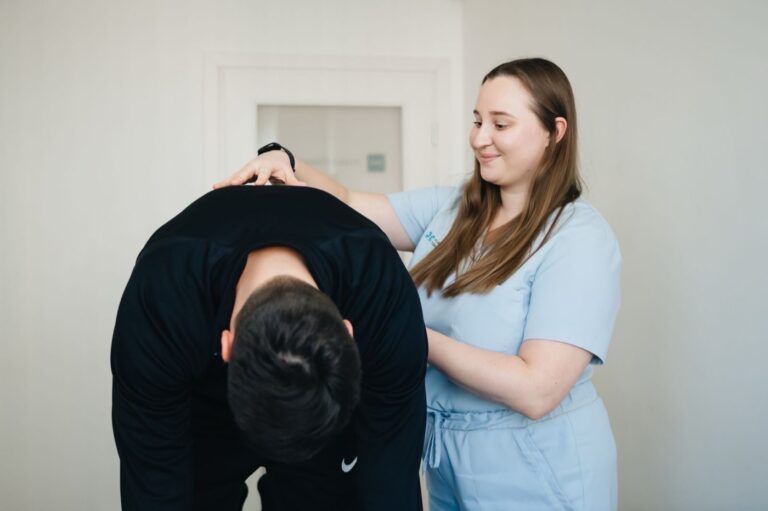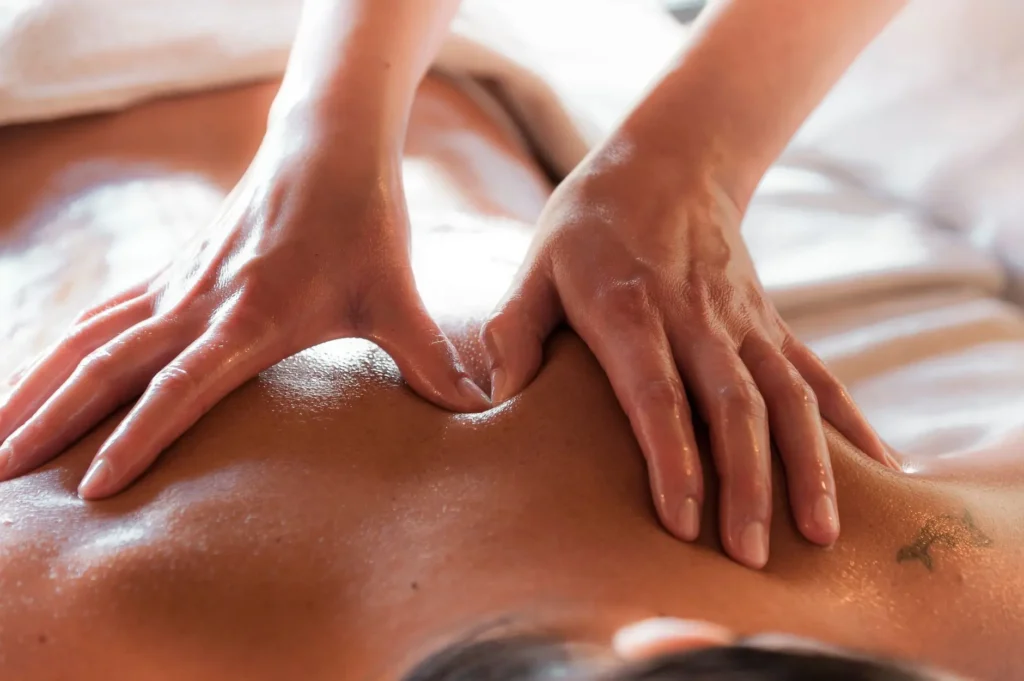
Relaxation massage and deep tissue massage look similar from the outside: a table, oils, an hour, skilled hands. Under the skin they are different treatments with different jobs, different pressure philosophies, and different after-effects. Choosing wrong does not ruin anything, but choosing right turns one hour into exactly what your body asked for.
Key Takeaway: Relaxation massage works through calm: flowing strokes at moderate pressure that shift the nervous system out of stress and ease surface tension. Deep tissue works through structure: slow, firm pressure that reaches chronic muscle knots and adhesions. Choose relaxation when stress and sleep lead the complaint; choose deep tissue when specific knots, stiffness, and chronic tension do. When unsure, tell your RMT the goal and let the session blend both.
What relaxation massage actually is
Relaxation massage, often called Swedish massage, uses flowing, rhythmic strokes, light-to-moderate pressure, and long connected movements across the whole body. The primary target is the nervous system: the treatment signals safety, and the body responds by lowering muscle tone, heart rate, and stress chemistry.
For the next step, read our guide to finding lymphatic drainage massage near you.
What relaxation massage is best at
- Whole-body stress relief that lasts into the week
- Sleep improvement, often same-night
- Gentle circulation and that loose, floating feeling afterwards
- Surface-level tension from daily life, exercise, and desk work
The pressure is honest but never aggressive: this is treatment you drift through, not endure. The common misconception is that relaxation means light and pointless; the nervous-system effects are real, measurable, and for many patients the most valuable part of the hour.
What deep tissue massage actually is
Deep tissue works the deeper muscle layers and the connective tissue between them, using slower strokes and firmer, focused pressure. The therapist works specific regions, often against the muscle fiber’s direction, and the session feels like deliberate work rather than drifting calm.
What deep tissue is best at
- Chronic knots and trigger points that surface stroking cannot reach
- Adhesions: spots where tissue layers have glued together from overuse or injury
- Training recovery for athletes carrying real training loads
- Long-standing postural tension: the desk-worker shoulders, the driver’s low back
Deep tissue works at the edge of comfort. The classic instruction, breathe through it, describes the honest experience: productive intensity, never white-knuckle pain. Pressure past your guard fights the treatment, because a guarding muscle cannot release.
The side-by-side comparison
| Feature | Relaxation massage | Deep tissue massage |
|---|---|---|
| Pressure | Light to moderate | Firm, focused |
| Tempo | Flowing, rhythmic | Slow, deliberate |
| Primary target | Nervous system, surface tension | Deep muscle layers, adhesions |
| Feels like | Calm, drifting | Productive intensity |
| After-effects | Relaxed, sleepy, immediate ease | Loose, sometimes 1-2 days of soreness |
| Best for | Stress, sleep, maintenance | Chronic knots, training load, specific problems |
How to choose: the decision path
Three questions sort almost everyone correctly.
Question 1: Is your problem specific or general?
A specific complaint, that knot under the right shoulder blade, the forearm tension from typing, points to deep tissue. A general state, stress, restless sleep, whole-body tension, points to relaxation.
Question 2: What does your week look like?
Deep tissue leaves short-term soreness; booking it the night before a big presentation or race wastes its value. Relaxation sessions carry no recovery cost, which makes them the flexible choice for busy weeks.
Question 3: What is your stress load doing?
High stress changes the answer. A stressed body holds a low-grade guard that deep pressure sometimes fights rather than releases. For those weeks, relaxation work first, deep tissue later, is the sequence that works.
The both-deep-tissue people: when stress mimics tension
A pattern repeats in clinic daily: patients book deep tissue repeatedly for shoulders that keep rebuilding, and the sessions stop making progress. The missing layer is nervous-system: chronic stress keeps the muscles guarding, and no amount of deep pressure out-presses a stressed system. Those patients improve when the sequence flips: relaxation sessions lower the guard, then deep tissue works the residue.
Can you blend the two in one session?
Yes, and it is the most common reality. Registered massage therapists blend styles by region and need: flowing work for the warm-up, focused depth where the tissue asks for it, calm strokes to close. The blend follows your body’s map, which is why the intake conversation matters more than the menu choice.
What each feels like after
- Relaxation: lighter, looser, often sleepy; no recovery needed; sleep that night usually deepens
- Deep tissue: looser with local soreness for 24 to 48 hours, similar to post-workout; hydrate, move gently, and the soreness pays off in range
Neither after-effect is a problem. The soreness of deep tissue is the honest cost of reaching tissue that has been guarded for months, and it fades into better movement than the area has had in a while.
Frequency: do the two styles differ?
They do, and the difference matters for planning.
- Relaxation: no recovery cost, so the rhythm can run as often as budget allows; the 3 to 4 week maintenance interval sustains the benefits
- Deep tissue: the 48-hour recovery window makes weekly the practical maximum during problem-solving; maintenance usually settles at every 4 to 6 weeks once the chronic knots resolve
When neither is enough: the physiotherapy handoff
Massage therapy treats muscle tension; some complaints live deeper. Numbness or tingling into the arm, pain that wakes you at night, weakness, or symptoms that ignore three good sessions all point to structures that need assessment: joints, nerves, strength deficits. That is physiotherapy’s territory, and the two services run in parallel from there. At Tonic Physio the RMTs and physiotherapists share notes, so the handoff is a conversation across the hall.
The Milton reality: which style fits which week
Local life gives the choice its texture. The QEW commute, the escarpment trails, the hockey rink, and the desk each produce their own tension signature, and the two styles answer different signatures.
The commuter profile
Driving posture loads the low back and hips for an hour daily. Deep tissue for the low back and hip region addresses the accumulation; relaxation work on the same regions keeps the guard down between sessions.
The desk profile
Shoulder girdle and forearm tension, plus the stress layer that comes with deadlines. The blend session, depth where the knots live, calm everywhere else, is usually the right call, and the setup fixes from our desk-worker guide extend every session.
The athlete profile
Training loads respond to deep tissue timed after key sessions, with relaxation work in taper weeks. The rhythm follows the training calendar rather than the calendar calendar.
The stress-carrying profile
When sleep is broken and the shoulders live near the ears, relaxation leads. The nervous system is the patient; the muscles are just its messengers.
What to say at your first appointment
Skip the menu anxiety and describe the outcome: “my shoulders build tension every week at my desk,” “I sleep badly and cannot switch off,” “I am training for a half marathon and my calves are granite.” The RMT translates your description into pressure, tempo, and regions, and the session follows your reality rather than a category.
The two details worth mentioning
- Your pressure history: what has felt right or wrong in past sessions, anywhere
- Any areas to avoid or to skip entirely: the plan respects both
First-timer’s expectations, honestly set
A first relaxation session delivers the calm and better sleep that evening. A first deep tissue session delivers noticeable change in the targeted area plus a day or two of soreness. Neither is the endpoint: the rhythm, two or three sessions in, is where the pattern-level change shows up. The first hour is the introduction; the schedule is the treatment.
The techniques behind each style, briefly
Knowing the toolkit helps you understand what the therapist is doing and why the styles feel so different.
Relaxation toolkit
- Effleurage: long, gliding strokes that spread oil, warm tissue, and set the rhythm
- Petrissage: gentle kneading and rolling of superficial layers
- Light friction and tapping where the session calls for stimulation
Deep tissue toolkit
- Slow, sustained deep strokes along and across fiber directions
- Trigger point holds: sustained pressure on a knot until it releases
- Stripping and cross-fiber work through adhesions
- Passive stretching of the treated regions
The toolkits overlap; the pressure, tempo, and intent separate them. A skilled RMT reads the tissue and switches tools mid-session, which is why describing goals beats ordering from a menu.
Contraindications: when to modify or postpone
Both styles are safe for most people, and honest clinics screen before treating. Mention, and sometimes postpone for:
- Fever or active illness: the body is busy; wait for recovery
- Recent surgery, blood thinners, or unexplained bruising: physician clearance conversation first
- Skin conditions or injuries in the treatment region: work around, not through
- Pregnancy: prenatal massage is its own trained practice; say so at booking
- Deep vein thrombosis history or suspected: medical assessment first, always
Screening takes two minutes of the intake and prevents every category of avoidable problem. A therapist who skips it is skipping your safety, and that is worth noticing.
Getting the right massage in Milton
The Relaxation Massage in Milton and deep tissue team at Tonic Physio delivers both styles, blend them by region, and direct-bill most extended plans. Book relaxation when the week demands calm, deep tissue when the knots demand work, or the blend when both are true, and the intake will find which one is true.
If this applies to you, see our post on TMJ massage versus physiotherapy.
If you have been rotating between the two styles without a plan, one session that starts with your actual week, stress load, training, and desk hours, will choose for you correctly. The right style is not a preference question; it is a diagnosis question, and your RMT answers it in the first ten minutes.
The techniques behind each style, briefly
Knowing the toolkit helps you understand what the therapist is doing and why the styles feel so different.
Relaxation toolkit
- Effleurage: long, gliding strokes that spread oil, warm tissue, and set the rhythm
- Petrissage: gentle kneading and rolling of superficial layers
- Light friction and tapping where the session calls for stimulation
Deep tissue toolkit
- Slow, sustained deep strokes along and across fiber directions
- Trigger point holds: sustained pressure on a knot until it releases
- Stripping and cross-fiber work through adhesions
- Passive stretching of the treated regions
The toolkits overlap; the pressure, tempo, and intent separate them. A skilled RMT reads the tissue and switches tools mid-session, which is why describing goals beats ordering from a menu.
Contraindications: when to modify or postpone
Both styles are safe for most people, and honest clinics screen before treating. Mention, and sometimes postpone for:
- Fever or active illness: the body is busy; wait for recovery
- Recent surgery, blood thinners, or unexplained bruising: physician clearance conversation first
- Skin conditions or injuries in the treatment region: work around, not through
- Pregnancy: prenatal massage is its own trained practice; say so at booking
- Deep vein thrombosis history or suspected: medical assessment first, always
Screening takes two minutes of the intake and prevents every category of avoidable problem. A therapist who skips it is skipping your safety, and that is worth noticing.
Getting the right massage in Milton
Tonic Physio’s registered massage therapists deliver both styles, blend them by region, and direct-bill most extended plans. Book relaxation when the week demands calm, deep tissue when the knots demand work, or the blend when both are true, and the intake will find which one is true.
Many patients also ask about pre-event versus recovery sports massage, which we cover in another post.
If you have been rotating between the two styles without a plan, one session that starts with your actual week, stress load, training, and desk hours, will choose for you correctly. The right style is not a preference question; it is a diagnosis question, and your RMT answers it in the first ten minutes.
Answers to the questions patients ask most
Will deep tissue hurt?
It should feel intense but manageable: productive pressure, never a pain you brace against. Your RMT checks in, and you should speak up the moment intensity tips past comfortable. The pressure is a dial, not a dare.
Can I request lighter pressure mid-deep-tissue session?
Always. The plan flexes in real time; a session you endured helps less than one you breathed through.
Which is better for first-time massage?
Relaxation, for most people: it teaches you what massage feels like, builds the trust that lets deeper work happen later, and delivers real benefits on its own. Deep tissue has plenty of time; the relationship starts better gently.
Why do I feel so tired after a relaxation massage?
The nervous system downshift is genuine work: your body spent the hour exiting a stressed state. The sleepiness is the shift landing, and the evening after a relaxation session is usually the best sleep of the week.
Can I get relaxation and deep tissue alternating weeks?
Yes, and alternating is a smart pattern for mixed problems: deep tissue on the specific complaint, relaxation for the system. Many Milton patients run exactly this cycle through stressful seasons.