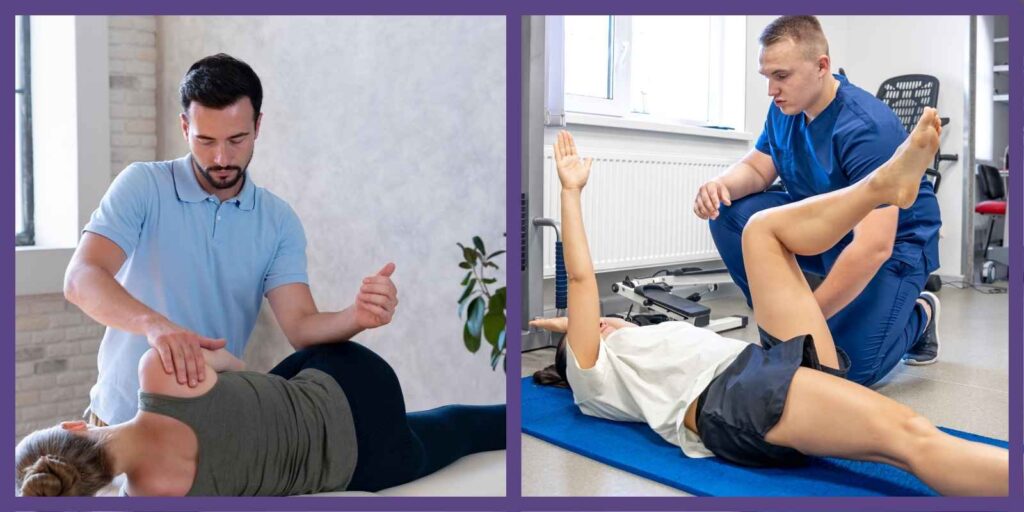
Manual osteopathy is a gentle, hands-on therapy that looks at how the body’s structure affects its function, while physiotherapy restores movement and strength mainly through exercise, hands-on care and education. Comparing manual osteopathy vs physiotherapy helps you see where each fits. This article explains how they differ, where they overlap and how to choose.
Key Takeaway: Physiotherapy and manual osteopathy share the same goals of easing pain and improving movement, but they get there in different ways. Physiotherapy leans on exercise and active rehabilitation, while manual osteopathy leans on gentle hands-on work and a whole-body view. Many people do well with one, and some benefit from both as part of one plan.
What Is Physiotherapy?
Physiotherapy is a health care approach that helps people recover movement, strength and function after injury, surgery, illness or long-term pain. It focuses on what the body can do and how to build that capacity back up.
The Main Tools
Physiotherapists use exercise prescription, manual therapy, education and, where useful, other tools such as shockwave therapy or electrical stimulation. Treatment is tailored to your lifestyle, activity level and goals. A home exercise program is almost always part of the plan.
Common Areas of Practice
Physiotherapy covers a wide range of problems. Orthopedic physiotherapy helps with sprains, fractures, tendon pain and recovery after surgery. Neurological physiotherapy supports people after a stroke or spinal cord injury, or with conditions such as multiple sclerosis.
The NHS overview of physiotherapy gives a helpful summary of the same approach.
What Is Manual Osteopathy?
Manual osteopathy is a hands-on therapy based on the idea that the body works best when its bones, muscles, ligaments and connective tissues move well together. Practitioners use gentle techniques to help joints move better, ease muscle tension and support blood and lymph flow.
The Core Idea
Osteopathy holds that the body has a strong ability to heal itself when its structures are balanced and moving freely. A manual osteopath looks for areas of restriction or imbalance and works to ease them. They often look beyond the sore spot to see how one area affects another.
Common Techniques
- Soft tissue work: gentle pressure and stretching of muscles and fascia
- Joint mobilisation: slow, rhythmic movement of joints to improve range
- Visceral techniques: gentle work around the abdomen aimed at easing tension near the organs
- Gentle positioning: holding the body in comfortable positions to help tissues relax
Research on some of these techniques, such as visceral work, is still developing. The NHS overview of osteopathy describes the approach and the problems people most often seek it for.
What Are the Core Differences?
Both therapies aim to reduce pain and improve movement. Their methods, focus and session style differ in some important ways.
Side by Side
| Area | Physiotherapy | Manual osteopathy |
|---|---|---|
| Main approach | Exercise and active rehabilitation | Gentle hands-on structural work |
| Focus | The injured tissue and how it handles load | The whole body and how areas affect each other |
| Typical tools | Exercise, manual therapy, education, modalities | Soft tissue work, joint mobilisation, visceral techniques |
| Your role | Active, with a home exercise program | More hands-on care, often with simple advice |
| Common uses | Sports injuries, surgery recovery, neuro conditions | Stiffness, tension, posture-related aches |
Treatment Philosophy
Physiotherapy focuses on restoring function through active exercise, education and modern tools. Manual osteopathy focuses on structural balance and the body’s natural ability to heal through hands-on care. In practice, both use some hands-on work and some advice, so the line between them is not fixed.
Tools and Equipment
Physiotherapists may use tools such as shockwave therapy for long-standing tendon pain, as well as exercise equipment. Manual osteopaths mainly rely on their hands to find and ease restrictions. This makes osteopathy sessions very hands-on, while physiotherapy sessions often include more coached exercise.
How Does Each One Assess You?
Both therapies start with an assessment, but they tend to look for slightly different things. Knowing this can help you explain your problem clearly at your first visit.
What a Physiotherapy Assessment Looks At
A physiotherapist often tests strength, flexibility, balance and control in the area that hurts and the joints around it. They may ask you to squat, lunge, reach or walk, so they can see how the problem affects real tasks. Simple scores for pain and function help track change over time.
What an Osteopathic Assessment Looks At
A manual osteopath uses touch to feel for tension, restriction and differences between one side of the body and the other. They often look at posture and how the spine, pelvis and ribs move together. They may check areas far from the pain to see whether they are adding to it.
Where They Overlap
Both ask about your history, work, sleep and stress, and both screen for warning signs that need a doctor. Both also explain what they think is going on in plain language before treatment starts.
What Happens in Each Type of Session?
Knowing what to expect can help you choose and feel comfortable at your first visit.
A Physiotherapy Session
An initial physiotherapy assessment usually takes around 60 minutes. Your physiotherapist asks about your history, then checks movement, strength, joints and posture. Treatment often starts the same day, and you leave with exercises to do at home.
Follow-up visits usually mix hands-on care with exercise progression. Your physiotherapist checks how you have responded and moves the plan forward. You can read about active versus passive physiotherapy to see how the two styles of care fit together.
A Manual Osteopathy Session
A manual osteopath also starts with your history and a hands-on assessment of posture, movement and tissue tension. Much of the session is spent on gentle treatment, often while you lie on a treatment table. Many people find sessions calm and relaxing.
You may receive simple advice on posture, stretching or daily habits. The balance tends to lean more towards hands-on care than coached exercise.
When Might Physiotherapy Suit You Best?
Physiotherapy is often the first choice when you need to rebuild strength, control and endurance to get back to a specific task or sport.
Problems Physiotherapy Often Helps
- Sports injuries such as sprains, strains and ligament tears
- Recovery after surgery, such as knee, hip or shoulder operations
- Arthritis and joint stiffness
- Neurological conditions that affect movement and balance
- Poor posture and repetitive strain from work tasks
Why the Exercise Focus Matters
For many injuries, the tissues need to be gradually loaded to recover their strength. A guided exercise program builds that capacity and lowers the chance of the problem coming back. This makes physiotherapy a strong fit for rehabilitation after injury or surgery.
When Might Manual Osteopathy Suit You Best?
Manual osteopathy often suits people who want a gentle, hands-on approach, or who have stiffness and tension that build up over time.
Problems People Often Seek Osteopathy For
- Ongoing back, neck or shoulder stiffness
- Headaches linked to muscle tension or posture
- Digestive discomfort that seems linked to body tension
- General fatigue or a sense of movement imbalance
Our article on common conditions treated by osteopaths covers these in more detail.
Who Often Prefers It
People who find exercise hard to start because of pain, older adults who want gentle care and people who carry a lot of tension often enjoy osteopathy. Our post on gentle osteopathy techniques for seniors explains how treatment can be adapted.
What Does the Research Say?
Both approaches have research behind them, and the strength of that research varies by condition. Low back pain is one area where both have been studied.
Exercise and Physiotherapy
The NICE guideline on low back pain and sciatica puts exercise at the centre of care. It also supports hands-on therapy, such as manipulation, mobilisation or soft tissue work, as part of a treatment package that includes exercise.
Osteopathic Treatment
A review of osteopathic manipulative treatment for low back pain found that it may reduce pain and improve function in people with non-specific low back pain. Results varied between studies and groups, so more research is still needed.
What This Means for You
The research suggests that hands-on care and exercise can work well together. Whichever therapy you choose, staying active and keeping up your home program tends to support the best results.
It also helps to judge progress by what you can do, not only by how much it hurts. Walking further, sleeping better or lifting with less worry are all signs that care is working.
Can You Combine Both Therapies?
In many cases, combining physiotherapy and manual osteopathy works well. Physiotherapy builds strength and movement through active rehabilitation, while osteopathy eases tension and restriction through hands-on work.
An Example
A runner recovering from a knee injury may see a physiotherapist for strength work, running drills and a staged return to sport. Osteopathy may help ease stiffness in the hips and low back that changes how they run. Together, the two can address both the injured area and the wider pattern around it.
Working as One Team
When both therapies are under one roof, your physiotherapist and osteopath can share notes and plan around each other. Some people also add massage therapy to release tight muscles or acupuncture to help ease pain. For a wider view, see our article on osteopathy for whole-body health.
What Are Common Myths About Both Therapies?
Some ideas about physiotherapy and osteopathy can make it harder to choose. Clearing them up helps you set fair expectations.
“Physiotherapy Is Only Exercise”
Exercise is central, but physiotherapy also includes hands-on care, education and pain-relief tools. Many sessions mix joint mobilisation or soft tissue work with coached exercise.
“Osteopathy Is Only for Back Pain”
Back pain is a common reason to see an osteopath, but people also seek care for neck and shoulder stiffness, tension headaches and aches linked to posture. Treatment is adapted to the person rather than to one body part.
“You Have to Pick One and Stick With It”
Your needs can change as you recover. Many people start with one therapy and add the other later, or move between them as goals shift from easing pain to building strength.
How Do You Decide Which One to Try?
There is no single right answer. Your condition, goals and comfort with different styles of care all matter.
Questions to Ask Yourself
- Do I need to rebuild strength for sport, work or after surgery?
- Do I prefer gentle, hands-on care, or coached exercise?
- Is my problem a recent injury or long-standing stiffness and tension?
- What does my insurance plan cover?
You Do Not Have to Choose Alone
If you are unsure, start with an assessment and explain your goals. Your clinician can tell you whether physiotherapy, osteopathy or a mix of both is most likely to help. The plan can change as you improve.
When Should You See a Doctor or Go to Emergency?
Both physiotherapy and osteopathy suit most muscle and joint problems, but some symptoms need medical care first.
Go to Emergency Straight Away If You Have
- New numbness in the groin or loss of bladder or bowel control
- Sudden weakness in an arm or leg, or a drooping face
- Chest pain or a sudden, severe headache
- Severe pain after a fall or accident
See a Doctor Soon If You Have
- Pain with fever or unexplained weight loss
- A history of cancer with new pain
- Pain that is worse at night and does not ease with rest
- Ongoing digestive symptoms, such as blood in the stool or changes in bowel habits
Getting Started
Both services begin with an assessment so treatment can be matched to your needs. Bring a list of your medicines and any imaging or reports you have.
Write down when your pain started, what eases it and what makes it worse, plus the activities you most want to get back to. Wear comfortable clothes that let you move freely, as both therapies may check how you bend, reach and walk.
Referral and Coverage
In Ontario, you do not need a doctor’s referral to see a physiotherapist. Insurance plans differ in what they cover for physiotherapy and osteopathy, so check your plan before your first visit.
You can learn more on our manual osteopathy page. When you are ready, you can book an assessment online.