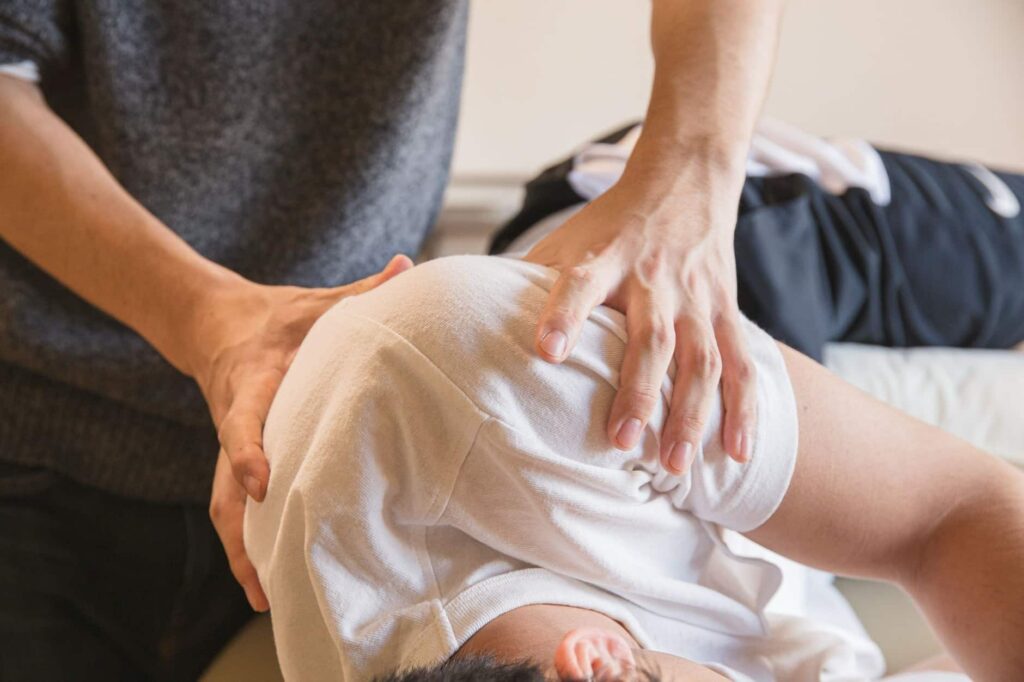
Sports massage is hands-on treatment of the muscles, tendons and connective tissue, adapted to the demands of training and competition. A massage after a sports injury can help, but timing matters, because work that eases stiffness at week three can aggravate a fresh tear. This post explains when massage is safe and when to skip it.
Key Takeaway: In the first two to three days after a sports injury, avoid massage on the injured area and focus on protection and gentle movement. After that, light massage around the injury may ease pain and stiffness, with deeper work added as healing allows. Suspected fractures, clots or nerve damage need medical care first.
How Does Healing Change After a Sports Injury?
Soft tissue such as muscle, tendon and ligament heals in overlapping stages. Each stage has a different job, so the right kind of hands-on care changes as you move through them.
The Inflammatory Stage
In the first hours to about three days, the body sends blood, fluid and repair cells to the area. Swelling, warmth and tenderness are signs of this process at work. The new tissue is very fragile, so firm pressure can disturb healing and increase bleeding.
The Repair Stage
From roughly day four to around six weeks, the body lays down new collagen fibres to bridge the damaged area. This tissue starts out weak and disorganised. Gentle loading and movement help the fibres line up in the direction of normal stress, and pain usually eases as strength returns.
The Remodelling Stage
From about six weeks and often for many months, the new tissue slowly matures and grows stronger. This is the stage when people return to sport. Stiffness, scar tissue and tight surrounding muscles can still limit movement, which is where massage often fits best.
When Is It Safe to Get a Massage After a Sports Injury?
The table below gives a general guide to timing. Every injury is different, and severe injuries heal more slowly, so these time frames are only a starting point.
| Injury stage | Typical timing | Massage on the injured area | What usually helps most |
|---|---|---|---|
| First days (acute) | 0 to 3 days | Avoid direct massage; light work on other areas only | Protection, relative rest, gentle pain-free movement, elevation |
| Sub-acute (repair) | About 4 days to 6 weeks | Light, gentle massage around the area, progressing slowly | Graded exercise, walking, mobility work, light massage |
| Return to sport (remodelling) | About 6 weeks onward | Deeper work, scar and muscle mobility as tolerated | Strength training, sport drills, sports massage as support |
| Ongoing training | Once fully back | Regular maintenance if you find it useful | Load management, sleep, recovery sessions |
Why the First Days Are Different
Current advice for soft tissue injuries, summed up in the PEACE and LOVE framework in the British Journal of Sports Medicine, focuses on protection, elevation and education early on. It also advises avoiding things that may increase bleeding or swelling in the first days. Deep massage on a fresh injury falls into that group.
Signs You Are Ready for Light Massage
You are usually ready for gentle work around the injury once swelling has stopped increasing, the area is no longer hot and you can move it with mild discomfort only. Bruising may still be visible. A massage therapist will check these signs before treating and adjust pressure to your comfort.
In this stage, work on the muscles above and below the injury is often more useful than direct pressure on the injured spot. Easing a tight calf, for example, can make walking after an ankle sprain more comfortable.
Moving On to Deeper Work
Deeper techniques, cross-fibre work and stretching are usually added in the remodelling stage, once the tissue can handle load. A good test is whether you can already do strength exercises for that area without a flare. If deeper pressure leaves you sorer the next day for more than a day or two, it was likely too much too soon.
What Can Massage Do for a Sports Injury?
Massage does not knit tissue back together on its own. What it can do is ease symptoms and help you move and train more comfortably while healing continues.
Easing Pain and Muscle Guarding
After an injury, nearby muscles often tighten to protect the area. This guarding can persist after it is no longer needed and may cause aches elsewhere. Massage can calm the nervous system response, reduce guarding and make it easier to do your rehab exercises.
The effect on pain is often short term, lasting hours to a few days. That window can still be useful, because moving and exercising with less pain helps the injured tissue load and adapt. Many people find it easiest to book massage on the same day as, or just before, a rehab or mobility session.
Improving Flexibility and Soreness
A systematic review of sports massage in BMJ Open Sport and Exercise Medicine found that massage did not directly improve performance measures such as strength or sprint speed. It did show small improvements in flexibility and in delayed onset muscle soreness. That fits how many athletes use it: as a recovery aid, not a performance booster.
Supporting Scar and Tissue Mobility
Later in healing, scar tissue and the layers around it can become stiff. Hands-on work, along with stretching and strengthening, may help restore glide between tissues. For a closer look at the techniques involved, see the comparison of deep tissue and sports massage.
When Is Massage the Wrong Choice?
Massage is low risk for most people, but some injuries and symptoms make it unsafe or unhelpful. In these cases, medical assessment or a different treatment comes first.
Injuries That Need a Diagnosis First
Do not have massage on an area with a suspected fracture, dislocation or complete tendon or ligament rupture. Signs include severe pain, deformity, a pop with immediate loss of function, or being unable to bear weight. These injuries need imaging and medical care before any hands-on treatment.
Deep Bruises and Thigh Contusions
A hard knock to a large muscle, such as a “charley horse” in the thigh, can cause deep bleeding. Firm massage on this area in the early weeks may raise the risk of a rare complication where bone forms inside the muscle. Gentle movement and medical advice are safer until the bruise has settled.
Other Reasons to Hold Off
Avoid massage on the affected area and get advice first if you notice any of the following.
- A calf that is swollen, warm, red and painful without a clear cause, which could be a blood clot
- An open wound, skin infection or a rash over the area
- Fever or feeling generally unwell
- Numbness, tingling or weakness that spreads down a limb
- Pain that is getting steadily worse rather than slowly better
Which Sports Injuries Respond Best to Massage?
Massage tends to suit injuries where muscle tightness, soreness and stiffness are a big part of the problem. It plays a smaller role where the main issue is joint instability or a structural tear.
Muscle Strains
Mild to moderate strains in the calf, hamstring, quadriceps or groin often respond well to massage in the repair and remodelling stages. Gentle work can ease the tight band that forms around the strain and make stretching and strengthening more comfortable. Severe strains with a large gap or major bruising need assessment first.
Overuse and Tendon Problems
Running, racquet sports and lifting can load tendons faster than they can adapt. With tendon pain, massage on the surrounding muscles may ease tension, but the tendon itself mainly improves with a graded strengthening plan. Firm friction directly on a sore tendon is not always helpful and is best guided by a clinician.
Sprains and Joint Injuries
After an ankle or knee sprain, massage can reduce swelling around the joint and ease the muscles that have been working overtime to protect it. The ligament itself needs time, balance work and strength training. Massage is a support here, not the main treatment.
How Does Massage Fit Into Sports Injury Rehab?
Massage works best as one part of a plan built around graded exercise. On its own, it rarely restores the strength and control needed to return to sport safely.
Exercise Does the Heavy Lifting
Loading the tissue with the right exercises is what rebuilds strength and resilience. Massage can make that loading more comfortable and help you stay on track. Many athletes book massage around their rehab sessions rather than in place of them.
Pairing Massage With Heat or Ice
In the first days, many people reach for ice for comfort, though the evidence for it is mixed. Later, heat can relax tight muscles before stretching or massage. Our guide to whether to use heat or ice for a muscle strain explains when each one makes sense.
Planning the Return to Sport
Returning too early is one of the most common reasons injuries come back. A clear plan with strength, speed and sport-specific tests helps you decide when you are ready. For a common example, read about hamstring strain grades and return to sport.
What Should You Expect From a Massage Session After an Injury?
A session for an injury looks different from a general relaxation massage. The focus is on the injured area and the parts of the body that have been compensating for it.
Assessment Before Treatment
Your massage therapist will ask how and when the injury happened, what makes it better or worse and what your sport involves. They will usually check movement, strength and tenderness before starting. If something does not add up, they may suggest you see a physiotherapist or doctor first.
Pressure and Techniques
Early on, expect lighter strokes, gentle compression and work on the muscles above and below the injury. Later, techniques may include deeper pressure, trigger point work, cross-fibre friction and assisted stretching. You should always be able to ask for less pressure, and some discomfort should ease within a day or so.
Timing Around Training and Games
Firm massage is best kept away from the day before a game or hard session, as it can leave muscles feeling heavy. Lighter, quicker work suits pre-event use, while deeper work fits recovery days. The differences are covered in pre-event versus recovery sports massage.
Is Massage Useful for Everyday Training Recovery?
Many active people use massage even without an injury, to manage the soreness and tightness that come with regular training.
What Recovery Research Shows
A review of post-exercise recovery techniques in Frontiers in Physiology found massage to be one of the more effective methods for reducing muscle soreness and perceived fatigue after exercise. The effects were modest, and the authors noted that individual responses vary.
Making It Part of Your Routine
How often you book depends on your training load, budget and how your body responds. Some athletes prefer a session every few weeks during heavy training blocks, while others book only around events. Sleep, food and sensible increases in training load still matter most.
Self-Massage at Home
Foam rollers, massage balls and handheld devices can help between sessions, especially for large muscle groups such as the calves, quads and glutes. Keep pressure moderate, roll slowly and avoid bony areas, joints and any fresh injury. If rolling makes pain sharper or causes numbness, stop and get the area checked.
When Should You See a Doctor or Go to Emergency?
Most sports strains and sprains can be managed with self-care and rehab, but some injuries need prompt medical attention.
Go to Emergency or Call 911
Go to emergency for an obvious deformity, a bone poking through the skin, a joint that looks out of place or a limb that is cold, pale or numb. Severe swelling within minutes, inability to bear any weight and a head injury with confusion, vomiting or loss of consciousness also need urgent care.
See a Doctor Soon
See a doctor if pain and swelling are not improving after a few days, if you heard a pop and the joint feels unstable, or if you cannot use the limb normally after a week. A calf that becomes swollen, warm and painful should be checked the same day for a possible clot.
Getting Sports Massage Care
Once you have been cleared, our sports massage service in Milton offers injury-focused treatment that fits around your rehab and training. When you are ready, you can book a sports massage online.