The Mulligan Concept is manual therapy’s most elegant idea: instead of moving the joint yourself, the therapist moves the joint while you move it. Mobilisation With Movement (MWM) is the technique’s name and its logic: the passive glide applied during your own active motion, sustained painlessly, restores what the joint lost. New Zealand physiotherapist Brian Mulligan built the system in the 1980s, and it has become one of manual therapy’s most practical frameworks.
Key Takeaway: The Mulligan Concept treats painful, restricted joints by applying a sustained passive glide while the patient actively moves through the previously painful motion. The technique’s rule is absolute: it must be pain-free. When the right glide meets the right motion, range returns immediately, and the gains hold with repetition and home exercise. Most conditions respond within 2 to 6 sessions alongside exercise.
The core idea: sustained glide plus active movement
Traditional mobilization moves the joint passively while you rest. Mulligan’s insight: combine a painless passive glide with your own active movement, and the joint re-learns its mechanics in the position that matters, the one you actually use.
- The therapist applies the glide: perpendicular to the joint’s plane, sustained through the whole movement
- You move: the previously painful or restricted motion, now performed without pain
- The rule: if it hurts, the technique is wrong or not indicated; Mulligan’s own standard is a pain-free technique or no technique
- The repetition: 6 to 10 repetitions, the gains tested immediately, the home program holding them
The pain-free rule is the concept’s signature: a Mulligan technique that hurts is not a Mulligan technique, and the therapist’s skill is finding the glide direction that changes the mechanics painlessly.
The techniques patients encounter
MWM: Mobilisation With Movement
The workhorse for peripheral joints: the wrist that cannot extend, the elbow that will not straighten, the ankle that lacks dorsiflexion, the knee that grinds its way to full bend. The glide is applied, the movement performed, the range re-measured, and the change is usually immediate and visible on the ruler.
NAGs and SNAGs: the spine’s versions
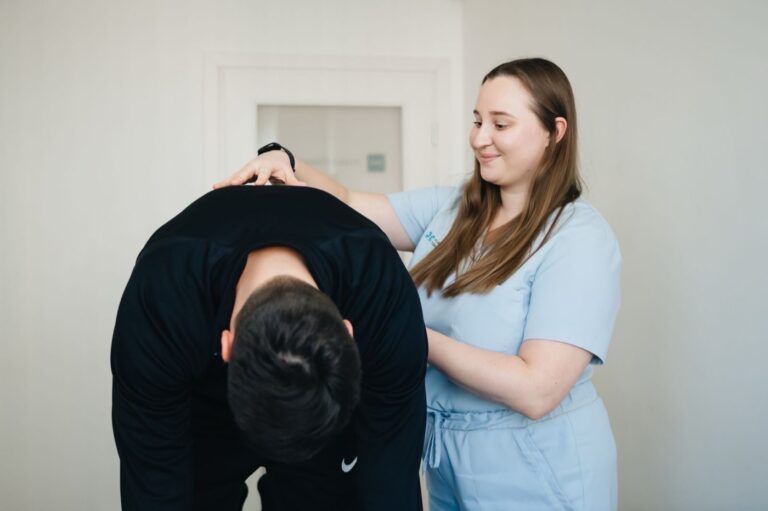
- NAGs (Natural Apophyseal Glides): gentle rhythmic glides applied to the neck and upper back’s joints, usually for the stiff, painful segments
- SNAGs (Sustained Natural Apophyseal Glides): the sustained glide applied while the patient performs their painful movement: the neck rotation that hurts, treated by gliding during the turn
- Self-SNAGs: the home versions taught with a strap or towel, the method’s signature self-treatment
Patients receiving Mulligan Concept treatment in Milton often learn their home technique in the first session, because the method treats self-treatment as part of the design rather than an add-on.
What conditions respond to the Mulligan Concept
| Region | Classic presentations | Typical response |
|---|---|---|
| Neck | Rotation restriction, headaches with neck movement | Rapid range gains, often same-session |
| Shoulder | Painful overhead reach, the painful arc | Improved glide with repeated sessions |
| Elbow and wrist | Tennis elbow’s painful grip, wrist extension limits | Painful grip often improves in-session |
| Knee and ankle | Post-injury stiffness, the ankle’s dorsiflexion limit | Range restored over 2-4 sessions |
Why the pain-free rule matters
The technique’s philosophy runs against the no-pain-no-gain tradition, and the reasoning is mechanical and neurological:
If this applies to you, see our post on sleeping positions that ease TMJ pain.
- Mechanical: the glide corrects the joint’s positional fault; pain during the glide means the fault is not corrected, so the technique is wrong
- Neurological: painless movement retrains the nervous system’s permission; painful movement feeds the guarding the treatment is trying to release
- The PILL principle: Pain-free, Instant result, Lasting effect, the concept’s own acronym for a technique working correctly
The rule makes the concept unusually honest: the response is immediate and testable, and the techniques that do not produce it are abandoned in the session rather than endured across six.
The self-treatment advantage
Mulligan’s system teaches patients to treat themselves, and the home versions are genuine treatments:
- Self-SNAGs with a strap: the neck’s rotations and extensions, performed with the strap’s glide
- Self-MWM for peripheral joints: the towel-assisted wrist and ankle versions
- The home program’s role: sustaining the in-session gains, which is what makes the range changes permanent
Patients who learn their self-treatments recover faster and maintain longer, the same finding every manual therapy discipline reports when home programs are done. The difference is Mulligan built the self-treatment into the system’s design.
Mulligan alongside the other manual therapies
The concept coexists with everything else in the manual therapy shelf:
- With exercise: the glide restores, the exercise strengthens, and the combination holds the range under load
- With dry needling and soft tissue work: addressing muscular tension with myofascial release treats muscle and joint restrictions in sequence
- With McKenzie: the two systems share the repeated-movement philosophy and differ in the hands’ role; many clinicians run both
The ankle dorsiflexion case: Mulligan’s most measured win
The ankle that lacks dorsiflexion, the bending that deep squats, running, and stairs demand, is the concept’s most-studied application. The measurement is objective: the knee-to-wall test, centimeters counted, and the MWM’s effect is usually visible in the same session.
- The technique: the therapist’s hands stabilize the lower leg while gliding the talus posteriorly as the patient’s knee drives over the toes
- The immediate test: knee-to-wall re-measured, often 2 to 4 centimeters gained in-session
- The home program: the self-mobilization with a band, repeated daily, holding what the treatment achieved
The ankle that gained its dorsiflexion squats deeper, runs with better mechanics, and loads the knee less, making it a critical component of effective ankle and foot pain treatment.
The tennis elbow connection: MWM beyond the joints
One of Mulligan’s most surprising applications: the lateral elbow’s painful grip, treated with a gliding technique at the elbow during the grip itself. The research support is real, and the mechanism is the same positional correction: the radiohumeral joint’s glide applied during the painful contraction changes the tendon’s provocation. For those seeking elbow pain treatment, tennis elbow patients who failed every brace and stretch sometimes respond to a technique that takes two minutes and leaves with a home version.
Headaches and the neck: the SNAG application
The cervicogenic headache, the one that starts at the skull base and wraps behind the eye, responds to the neck’s SNAGs:
- The sustained glide applied to the upper cervical segments during the patient’s neck movement
- The home Self-SNAG with a strap, the daily dose that holds the segment’s new behavior
- The evidence: cervical SNAGs show meaningful short-term effects for cervicogenic headaches, paired with the deep neck flexor training
The headache patient who found the jaw article useful often finds the neck in the same triangle, and the Mulligan techniques are one of the core tools in comprehensive headaches and migraines treatment.
What a Mulligan session looks like
- The assessment: the painful movement found, measured, and reproduced
- The technique hunt: the glide directions tested until the pain-free one is found; several may work, one usually works best
- The dosing: 6 to 10 repetitions, the movement re-tested, the home version taught
- The progression: the technique’s gains held by the home program, the sessions spaced as the gains persist
The session is active: the patient moves, the therapist glides, and both watch the ruler. It is manual therapy as collaboration, which is why patients learn it so well.
Mulligan’s training: who holds the certification
The Mulligan Concept is credentialled: physiotherapists complete coursework and practical examinations to hold the certification, and the teaching lineage runs through Mulligan’s own teaching faculty. Patients choosing a Mulligan practitioner can ask about the credential, and the certified clinicians list it.
- The training path: multiple courses across peripheral and spinal techniques, plus practical examinations
- The philosophy’s training: the pain-free rule and the PILL standard are taught as core, not optional
- The integration: certified practitioners usually run the concept alongside their other manual therapy training, choosing tools by response
The concept and the home program: why the pairing decides outcomes
The manual therapy evidence is consistent across techniques: in-session gains fade without home exercise. Mulligan’s system is built for the pairing:
- The self-treatment sustains the mechanics daily, which is what makes the change permanent
- The strengthening program loads the new range so it survives real life
- The sessions become progressively shorter as the home program carries more
Patients who run their home programs hold their gains; patients who skip them buy the same session twice. The concept makes the math visible, because the ruler tells everyone which half was done.
The frozen shoulder and the stiff knee: Mulligan in the stubborn cases
The stiff-joint conditions, where range has been lost for months, respond to MWM with the same logic and a longer course:
- The frozen shoulder’s rotation limits: the glides applied during the patient’s own attempts, graded to the stage, paired with a stretching program for optimal frozen shoulder treatment
- The post-injury knee stiffness: the tibiofemoral glides during active bending, restoring what the guarding stole
- The post-surgical stiffness: the glides timed to the healing stage, gentle and patient
The stubborn cases’ course runs 6 to 10 sessions, and the home program is what separates the patients who hold the gains from the ones who rent them. The stiffness that has resisted everything is often the one whose treatment was passive-only; the active component is what Mulligan adds to the shelf.
The wrist and hand: the small joints that matter
The wrist’s extension limit, the post-fracture stiffness, the hand that will not open fully: the small joints respond to the same principles with the small tools. The post-cast wrist is one of the concept’s most satisfying cases: weeks of stiffness changed in a session, held by the home program, and the grip strength follows the range it lost.
The concept’s place in the plan: when Mulligan is the right tool
- The joint-dominant presentation: the restriction that testing shows lives in the joint, not the muscle
- The pain-free-movement-required cases: the patients whose guarding makes forceful techniques counterproductive
- The self-treatment-motivated patients: the system’s design rewards the compliant, and the patients who want to treat themselves thrive in it
- The measurable patients: the ruler-and-response method suits anyone who wants to see the progress, not just feel it
The concept is one shelf among several, and the assessment decides which shelf your joint shops from. The pain-free test makes the decision fast, which is the concept’s gift to both the clinician and the patient.
The evidence summary, honestly framed
Mulligan’s research profile has grown substantially, and the honest summary:
- Ankle dorsiflexion MWM: well supported, with immediate and short-term gains measured repeatedly
- Cervicogenic headache SNAGs: supported for short-term pain and disability improvements
- Lateral epicondylalgia MWM: supported with immediate grip improvements, best paired with exercise
- Peripheral joints generally: consistent short-term effects, with the exercise pairing driving durability
The framing that serves patients: the concept produces immediate, measurable, pain-free gains in responsive joints, and the gains persist when the home program holds them. The technique is a tool with a test, and the test happens in the first minutes.
The ruler culture: measuring what manual therapy claims
The concept’s gift to rehabilitation culture is its insistence on the measurable response: the knee-to-wall centimeters, the goniometer’s degrees, the pain’s movement on the body map. The culture rewards clinicians who test and patients who track, and the joint’s response is recorded at every session.
If your joint’s movement has been stuck for weeks, the concept’s test takes ten minutes and ends the argument about whether the joint can move. Bring the complaint; leave with a measurement and a home program that keeps it.
We cover common myths about cupping in a separate guide.
Getting Mulligan treatment in Milton
Tonic Physio’s physiotherapists apply the Mulligan Concept inside physiotherapy plans for Milton, Oakville, and Halton patients: the pain-free technique hunt, the immediate testing, the home self-treatments taught, and the exercise program that holds the gains.
If your joint has a movement it refuses, the pain-free glide during that movement is the technique built to change it. One session tests the concept on your tissue, and the ruler says what the tissue thinks.
Answers to the questions patients ask most
Is it the same as cracking my joints?
No. The glides are usually painless, sustained, and without the cavitation crack. The occasional sound happens, and the technique does not require it; the range gain is the evidence, not the noise.
Why does the pain disappear when the therapist glides?
The glide corrects the joint’s positional fault during the movement, which removes the structure’s provocation. The mechanics are corrected mid-motion, and the pain’s absence is the correction’s evidence.
How fast does it work?
The PILL test says immediately: pain-free movement, instant range change, lasting effect. The lasting part builds with repetition and home work across 2 to 6 sessions for most presentations. Techniques that fail the test are dropped.
Is it safe for arthritis?
Yes, with grading: the gentle glides suit arthritic joints precisely because the force is light and the movement is the patient’s own. The assessment grades the technique to the joint’s stage.
What if the technique does not work for me?
Then it is not your technique, and the assessment moves to the next tool: the concept’s honesty is its strength, and the plan continues with whatever your tissue responds to.