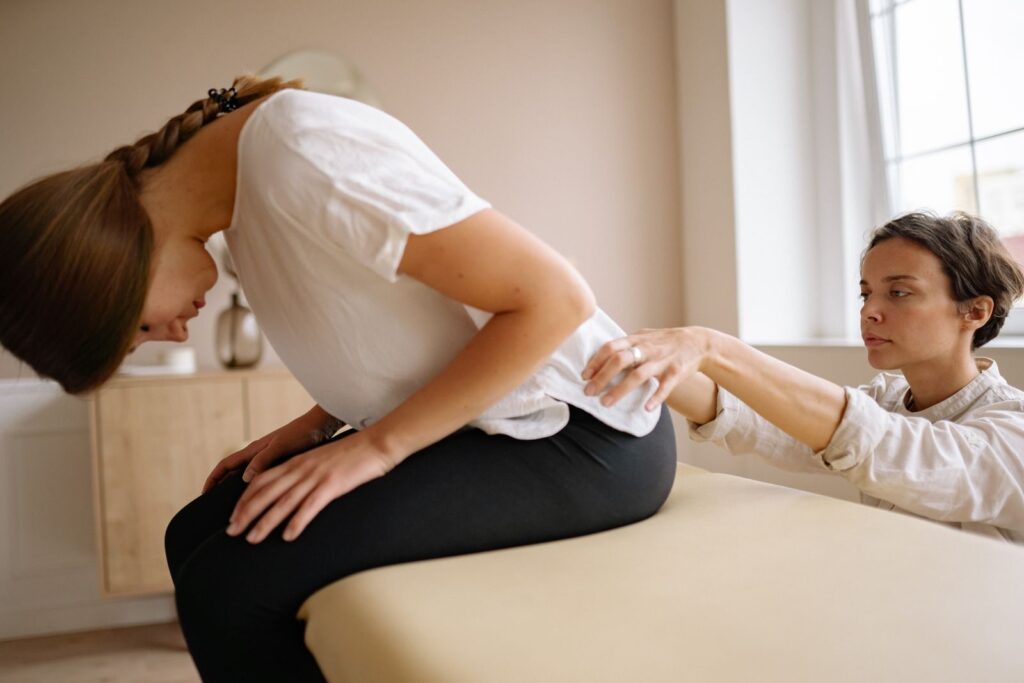
Osteopathy for sciatica uses gentle hands-on techniques, such as joint mobilization, soft tissue work and stretching, to ease the back, pelvis and hip structures around an irritated sciatic nerve. It is often combined with exercise. Research on osteopathy for back pain is encouraging, but trials on sciatica itself are limited.
Key Takeaway: Osteopathy uses gentle hands-on techniques that may ease pain and stiffness around an irritated sciatic nerve, and it works best alongside exercise. Research on osteopathy for sciatica itself is limited, so expect a trial of care with regular review. Weakness in both legs or changes in bladder or bowel control need emergency care.
What is sciatica?
Sciatica is leg pain caused by irritation or compression of the sciatic nerve, which runs from your lower back through the buttock and down the leg. The NHS describes sciatica as usually affecting the buttock and the back of one leg, often reaching the foot and toes. Back pain may be present, but the leg pain is usually worse.
Symptoms to look for
People describe sharp or burning pain down the back of the leg, tingling like pins and needles, numbness or weakness. The pain is often worse with movement, sneezing or coughing. Symptoms can start suddenly or build slowly.
Many people notice the pain changes with position. Sitting for long spells, driving or bending forward may bring it on, while walking can ease it. Making a note of these patterns helps your practitioner choose the right approach.
Common causes
The NHS notes that a slipped (herniated) disc is the most common cause, and that it becomes more likely with age. Other causes include spinal stenosis, spondylolisthesis and back injury.
Deep buttock muscles can also irritate the nerve, which we cover in our post on piriformis syndrome versus sciatica. Working out which cause applies to you is the first job of any assessment.
How long does sciatica last?
According to the NHS, sciatica usually gets better within a few weeks to a few months, but it can last longer and may come back. Staying active, rather than resting in bed, is generally encouraged.
What is osteopathy, and where does it fit?
Manual osteopathy is a hands-on approach that looks at how the joints, muscles, fascia and nerves of the body work together. At Tonic Physio in Milton, our osteopathic practitioners use techniques such as stretching, massage and joint mobilization to ease pain and improve movement.
How it differs from physiotherapy and chiropractic care
The professions overlap, and many techniques look similar. Osteopathy tends to look at the whole body for contributing factors, physiotherapy leans on exercise and movement retraining, and chiropractic care emphasizes spinal adjustments. Our guide to manual osteopathy versus physiotherapy compares them in more detail.
Why the whole-body view matters
Pain that travels down the leg may begin at the spine, but the pelvis, hip and deep buttock muscles all sit along the nerve’s path. If any of these areas is stiff or overloaded, the nerve may be more sensitive. An osteopath looks at all of them, not just the spot that hurts.
Sciatica from the spine versus the buttock
Disc-related sciatica often comes with back pain, and it may be worse with bending, sneezing or coughing. Pain that starts in the buttock and flares with hard chairs or hills may point to deep gluteal muscles instead. The two can overlap, and the pattern guides the choice of treatment.
What happens at an osteopathy visit for sciatica?
Your first visit is mostly about listening and testing. The practitioner needs to understand what is causing your symptoms and whether osteopathy is appropriate. Treatment usually starts once that picture is clear.
| Technique | What it involves | What you may feel |
|---|---|---|
| Soft tissue and fascial work | Hands-on work on the back, buttock and thigh muscles | Firm but comfortable pressure |
| Joint mobilization | Gentle repeated movement of stiff joints | A stretch or mild pressure, usually no click |
| Muscle energy technique | You press gently against light resistance | A little effort, then a stretch |
| Joint manipulation | A quick joint movement, only if suitable | Possibly a click; you can decline |
The assessment
- Your history: when it began, what aggravates it, and what you have tried
- A screen for warning signs that need a doctor first
- Nerve checks such as reflexes, sensation and muscle strength in the leg
- Movement tests of the spine, pelvis and hips
- Hands-on examination of joints and soft tissue
You should leave this visit knowing what the practitioner found and what the plan is. Ask questions if anything is unclear.
Wear loose clothing that lets you move freely, and bring a list of medicines and any scan reports. You may be asked to change position on the treatment table several times. Say so if any position is uncomfortable.
Common osteopathic techniques
- Soft tissue and fascial work on the back, buttock and thigh to ease muscle tension
- Joint mobilization, which is gentle repeated movement of stiff joints in the spine and pelvis
- Stretching and muscle energy techniques, in which you gently press against resistance
- Occasionally, a quick joint manipulation if it suits you and is appropriate
Many techniques involve no clicking sound at all. If you prefer to avoid manipulation, say so.
How treatment feels
Most people describe treatment as firm but comfortable. You may feel lighter or looser afterwards, or notice some muscle soreness the next day. Tell your practitioner if anything feels sharp or increases your leg symptoms.
After treatment, light activity such as an easy walk is usually fine, unless you are advised otherwise. Avoiding heavy lifting that evening can help you notice how your body responds. Report any change at your next visit.
What does the research say about osteopathy for sciatica?
The honest answer is that evidence specific to sciatica is limited. Most studies look at low back pain more broadly, and sciatica is often included alongside other conditions. This matters, because it affects how much any practitioner can promise.
Evidence from low back pain research
A systematic review and meta-analysis of osteopathic manipulative treatment for nonspecific low back pain found moderate-quality evidence of reduced pain and improved function in both acute and chronic cases. Nonspecific back pain is not the same as sciatica, so the results cannot be applied directly.
What guidelines suggest
The NHS lists exercise, physiotherapy and manual therapy such as massage among treatments for sciatica, alongside staying active and pain medicines. The same page notes that some people with severe symptoms are referred for injections or surgery. Manual treatment is one option among several, not a stand-alone answer.
Why evidence is hard to gather, and what to expect
Hands-on treatment is difficult to test fairly, because patients know when they are being touched and sciatica often improves by itself over time. Researchers also use different techniques and different definitions of sciatica. That makes it harder to compare studies and to say which technique works best.
Hands-on care may ease pain and stiffness so that moving and exercising feels easier. It does not remove a disc problem or promise a particular outcome. Most people do best when manual therapy is paired with a progressive exercise plan.
How can osteopathy and physiotherapy work together?
Hands-on care and exercise do different jobs. Manual therapy may reduce pain and stiffness in the short term, while exercise builds the strength and movement control that help protect your back and hip over time. Many people benefit from both.
A combined plan
A typical plan might start with osteopathic treatment to settle symptoms, then add gentle nerve glides, hip and trunk strengthening, and walking. As symptoms improve, the balance moves from hands-on care towards exercise you do yourself. Your practitioners can share notes so the plan stays consistent.
How many visits might you need?
That depends on how long you have had symptoms and what is causing them. Many practitioners reassess after a handful of visits to see whether you are improving and whether the plan should change. If there is little change, you may be referred back to your doctor.
Exercises often paired with hands-on care
- Glute bridge: lift your hips from the floor and lower slowly, 2 sets of 10
- Bird dog: reach one arm and the opposite leg while keeping your back still, 2 sets of 6 each side
- Hip flexor stretch: kneel and gently shift forward, hold 20 to 30 seconds each side
- Walking: start with 5 to 10 minutes and build up as comfort allows
These are general examples, not a prescription. A practitioner may choose different movements, such as nerve glides, after testing how your nerve responds. Stop any exercise that sends pain further down the leg.
Do exercises slowly, and breathe out as you lift. If a movement spreads your leg pain further down the leg, go back to an easier version. Pain that moves back toward the buttock is often seen as a hopeful sign, but ask your practitioner how to read it for you.
What can you do at home between visits?
Small daily habits make a real difference to sciatica. The NHS recommends carrying on with normal activities as far as you can and starting gentle exercise early. These steps suit most people, but stop anything that makes leg pain much worse.
Keep moving
Short, frequent walks are usually better than long rests. Avoid sitting or lying still for long periods, even if movement hurts. The NHS says that staying active is not harmful and can help you get better faster.
Heat, sleep and posture
The NHS suggests heat packs over the painful area. A pillow between the knees when you sleep on your side, or under the knees when you lie on your back, may feel more comfortable. Change position often when sitting at a desk.
Set a timer to stand up every 30 minutes. A small rolled towel behind the lower back can make a chair more comfortable. On long drives, plan stops to walk around.
Lifting and bending
Bend at the hips and knees, keep loads close to your body, and avoid twisting while you lift. In winter, shoveling snow is a common trigger in Halton Region, so take breaks and use a smaller scoop.
How do you choose an osteopathic practitioner?
Because manual osteopathy is practised under different titles and levels of training, it is worth asking a few questions before you book. A good practitioner will welcome them. The answers tell you how they work and whether the clinic is a good fit.
Questions to ask first
- What training do you have, and which professional association do you belong to?
- Will you assess me and explain your findings before starting treatment?
- How will you decide whether I am improving, and when will you reassess?
- Will you refer me to a doctor if my symptoms point to something else?
- Do you work with physiotherapists or other team members on a shared plan?
Signs of a cautious, patient-centred approach
Look for a thorough first visit, a clear explanation, and honest talk about what is and is not known. Be wary of any practitioner who promises a quick fix, asks you to prepay for a large block of visits, or discourages you from seeing a doctor.
When should you see a doctor or go to emergency?
Most sciatica is not dangerous, but some symptoms need medical attention first. Osteopathy is not a substitute for medical care in these situations.
Go to emergency straight away
Go to the nearest emergency department or call 911 if you have numbness around your genitals or buttocks, difficulty starting or controlling urination, loss of bowel control, or severe or worsening weakness in both legs. The NHS lists these as possible signs of a serious back problem needing urgent hospital treatment. Do not drive yourself.
See your doctor soon
See a doctor if pain has not improved after a few weeks of home care, is getting worse, or is stopping you from doing normal activities. Also see a doctor promptly for fever, unexplained weight loss, constant night pain, or symptoms after a fall or accident. You can call Health811 on 8-1-1 for free nurse advice.
How does osteopathy for sciatica work in Milton?
At Tonic Physio, our osteopathic practitioners and physiotherapists work in the same clinic, so your plan can combine hands-on care and exercise. We take a full history first, screen for warning signs, and refer you on when a medical review is needed.
Coverage and referrals
You do not need a doctor’s referral to book osteopathy with us, although some insurers ask for one. Many extended health plans cover osteopathy, and we offer direct billing to many insurers. Coverage varies by plan, so check yours or ask our team.
If your leg pain began after a car accident, auto insurance may cover treatment. To compare approaches, read our guides to physiotherapy for sciatica and chiropractic care for sciatica.
Booking
If sciatica is limiting your work or sleep, you can book an osteopathy assessment online to talk through your options.