
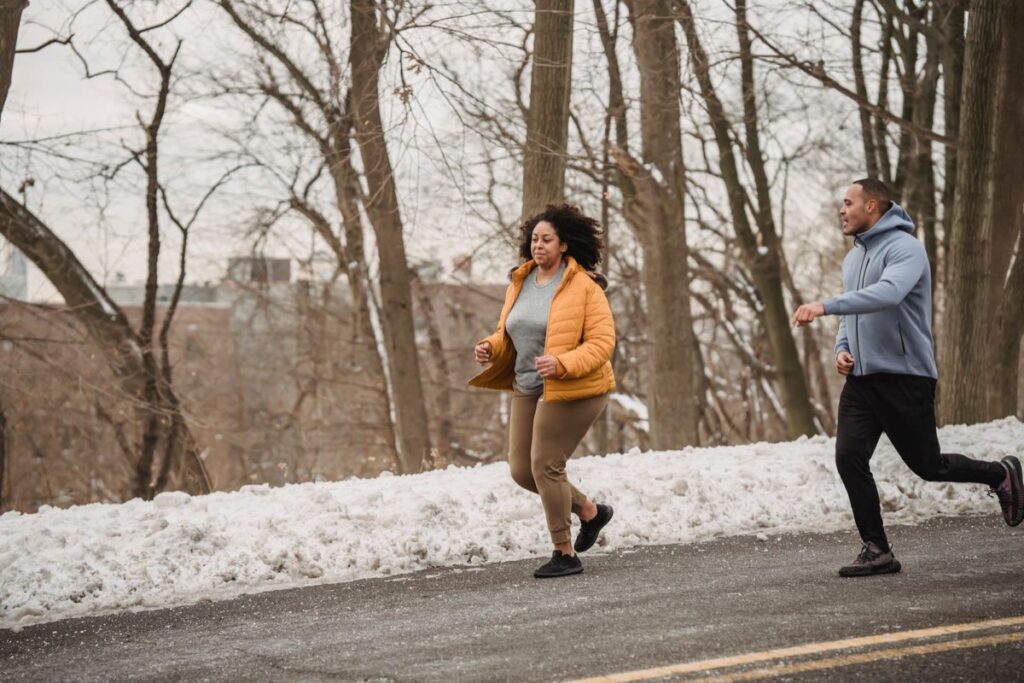
To lower your injury risk when running in cold weather, warm up longer, dress in layers, wear shoes with good grip, shorten your stride on slippery ground and add distance gradually. Cold alone is not a proven cause of injury, but stiff muscles, ice and rushed starts together raise the risk.
Milton winters bring snow, ice and short days, and many runners keep training through them. This guide covers how cold affects your body, how to prepare and which injuries are most common.
Key Takeaway: Cold weather changes how your muscles feel and how safe your footing is, so preparation matters more. Warm up thoroughly, layer your clothing, use traction on ice and build your mileage slowly. Skip the run on dangerous days and see a professional for pain that lingers.
How does cold weather affect running and injury risk?
Running in cold weather means training outdoors at low temperatures, where cold air, ice and heavy clothing change how your muscles, joints and lungs cope with running. The cold itself does not injure you directly. The risk comes from how cold changes your body and the conditions around you.
What cold does to muscles and tendons
Muscles perform best when they are warm. A review of temperature and neuromuscular function reports that, in short-duration exercise, performance improves by 2% to 5% for each 1 degree Celsius rise in muscle temperature. It also explains that cold can change the neural drive that tells the muscle to contract.
In practice, you may feel stiff, slow or clumsy in the first few minutes. That is why a longer warm-up matters in winter, especially for calves, hamstrings and Achilles tendons.
What cold does to breathing
Cold, dry air can irritate the airways. Some runners notice coughing, a tight chest or a burning throat, particularly at hard effort. If you have asthma, follow your doctor’s plan, carry your reliever medication and ask whether you need to adjust your winter routine.
Why winter risk is more than the cold
Several things stack up in winter. Muscles are cooler, footing is less certain, layers restrict movement and daylight is short. Many people also change their training when the season changes, which can matter more than the temperature.
Tendons also adapt slowly. A sudden switch to harder, faster or hillier winter sessions can overload them before any clear warning sign appears, so keep changes small and spread them across the week.
How should you warm up for a cold run?
Warm up indoors first, then ease into the run at an easy pace. A warm-up raises your heart rate and muscle temperature before you face the cold and the road. Aim for several minutes of movement, longer when it is very cold.
A simple indoor warm-up
| Move | How to do it | Why it helps |
|---|---|---|
| Marching or easy jog on the spot | 2 to 3 minutes | Raises heart rate and body warmth |
| Leg swings | Front to back and side to side, 10 each leg | Moves hips and hamstrings |
| Calf raises | 10 to 15, slow and controlled | Wakes up calves and Achilles tendons |
| Glute bridges | 10 to 12 repetitions | Activates hips and buttocks |
| Ankle circles | 10 each direction, each foot | Prepares ankles for uneven ground |
Start slowly outdoors
Spend the first 10 minutes of your run at an easy pace, even if you plan to run faster later. This lets your muscles keep warming up as you move. Save fast strides and hills for after you feel loose.
Cool down and change quickly
When you finish, walk for a few minutes and change out of damp clothes as soon as possible. Wet clothing cools you quickly once you stop moving. A warm drink and dry layers help you recover comfortably.
If you keep shivering after you stop, get indoors and warm up gradually rather than heading back out. Plan a short stretch or mobility session once you are warm and dry.
What should you wear for running in cold weather?
Dress for how you will feel once you are warm, which is usually several degrees warmer than the thermometer says. Wear thin layers you can adjust rather than one thick layer. Start slightly cool and expect to warm up within the first few minutes.
Layers for your body
- A base layer that wicks sweat away from the skin
- A light insulating layer for very cold days
- A wind-resistant or waterproof shell when it is windy or wet
- Avoid heavy cotton, which stays wet and cold
Hands, head, feet and traction
Fingers, toes, ears and the nose lose heat first. Wear gloves or mittens, a hat or headband and warm running socks. Check that shoes are not so tight that blood flow to your toes is restricted once you add thicker socks.
Choose shoes with a deeper tread, and replace worn pairs, because smooth soles slip on cold pavement. On packed snow or ice, add traction devices that fit over your shoes. Check them before each run, since they can wear down or shift.
Be seen
Daylight is short in Ontario winters, so many runs happen in the dark. Wear reflective gear and a light, and choose routes with good lighting. Snow banks and icy edges also push cars and runners closer together.
How do you stay safe on ice and snow?
The best protection on slippery ground is to slow down, shorten your stride and choose your route with care. Falls cause sprains, fractures and head injuries, so they matter more than cold. If a surface looks unsafe, walking it or skipping the run is a sensible choice.
Technique on slippery surfaces
- Shorten your stride and keep your feet closer under your body
- Land lightly and flatter on your foot, rather than reaching with your heel
- Keep your arms loose for balance and look ahead for glossy patches
- Take corners wide and slow, and avoid sudden stops
Choosing routes and times
Pick cleared paths, well-lit roads and routes you know, and run in daylight when you can. Watch for black ice, which looks like wet pavement. After a freeze-thaw cycle, shaded areas and bridges often stay slippery longest.
Know when to skip the run
Check the weather forecast for cold warnings and wind chill before you go out. On extreme cold days, or when roads and paths are icy, consider a treadmill or a rest day. Missing one run costs far less than a fall.
Which injuries are common when running in winter?
Winter running injuries fall into two groups: overuse problems that build over weeks, and sudden injuries from slips. Both are partly preventable. The table below shows common examples.
| Injury | Why it may happen in winter | Helpful step |
|---|---|---|
| Achilles or calf pain | Cold tissues, rushed warm-up, a sudden jump in hills or speed | Longer warm-up, calf strength work |
| Hamstring strain | Slipping or a sudden reach on ice | Shorter stride, strength work |
| Ankle sprain | Uneven snow, ice ruts, hidden holes | Traction, balance training |
| Shin or foot pain | New shoes, harder frozen ground, changed running style | Gradual change, supportive footwear |
| Hip or knee pain | Changed stride on snow, extra load from layers | Hip strength, easier pace |
Overuse and training load
A review of overuse injuries in sport explains that excessive loading, insufficient recovery and underpreparedness can raise injury risk by exposing athletes to large changes in load. Winter often brings such changes, for example moving from trails to hills, or from rest to a race plan. Our guide to increasing running mileage without injury explains how to build safely.
Slip-related injuries
A fall on ice can cause sprains, fractures, wrist injuries and head injuries. A fall that hurts your head, neck or back needs medical attention. Wearing traction and slowing down are your best protection.
Should you change your pace and distance in winter?
Yes, in most cases you should expect winter runs to feel different and adjust to match. Cold air, extra layers and uneven surfaces make the same pace harder, so effort is a better guide than the watch. Easing off early in the season protects tendons that are still adapting.
Run by effort, not pace
Use how hard the run feels, or your breathing, to judge intensity. A conversational pace is a good winter default. Save races, intervals and hill sessions for days when conditions are clear and your footing is secure.
Plan the route with the wind
Where possible, start into the wind and finish with it at your back, so you are not battling a cold headwind while sweaty and tired. Loops near home let you stop quickly if conditions change or a part of your body feels too cold.
Shorter runs and run-walk intervals
You do not have to give up long runs, but shorter, more frequent outings can suit very cold weeks. Run-walk intervals can lower impact and keep you moving safely on tricky surfaces. A steady routine is better than occasional heroic efforts.
What are good alternatives to running outside in winter?
Indoor options keep your fitness up on the days when the weather or the ice makes running outside unwise. Mixing them in can also reduce repeated impact on cold, hard ground. Many runners combine two or three of these each week.
Treadmill running
A treadmill gives you control over pace, surface and temperature. Start with a short warm-up, keep your stride natural and use a small incline if you like. Watch for boredom-driven speed-ups, which can push you harder than planned.
Cross-training
- Stationary cycling or elliptical to keep up aerobic fitness
- Swimming or pool running to reduce impact
- Strength training for calves, hips, glutes and core, twice a week
- Yoga or mobility sessions to keep joints moving
Strength work that supports running
Strong calves, hips and core help you absorb impact and stay steady on uneven ground. Include calf raises, single-leg squats, bridges and side-lying hip work. A running gait assessment can show which areas need the most attention.
When should you see a doctor or physiotherapist?
Some problems in the cold need urgent help, and others are best handled by a physiotherapist before they become long-term. Knowing the difference keeps you safe. Trust your instincts if something feels wrong.
Get urgent medical help for
The NHS describes frostbite as skin freezing after exposure to very cold temperatures, most often affecting fingers, toes, nose and ears.
Go to emergency or call 911 if skin is hard, frozen, white or blue, if you have swelling and loss of feeling, or if blisters appear. Also seek urgent help for constant shivering, slurred speech, slow breathing or confusion, which can point to hypothermia.
A review of weather and marathon injury reported that cold, wet conditions raise hypothermia among exhausted runners.
Also get urgent care for chest pain, shortness of breath that is unusual for you, a fall with a blow to the head, or an injury where you cannot put weight on the leg.
See a physiotherapist if
- Pain lasts more than a week or two, or gets worse as you run
- Pain wakes you at night or affects your walking
- The same spot hurts every winter
- You are returning from an injury and want a safe plan
How can physiotherapy in Milton help runners in winter?
A physiotherapist can assess your running, find weak or stiff areas and build a plan that suits your season and goals. We see many Milton runners who train on local trails, paths and roads year round. Our running injury assessment covers pain, training load and running form.
What an assessment may include
Your visit usually covers your training history, recent changes in shoes or surface, strength and movement tests, and a look at how you run. You leave with practical steps, such as exercises, a loading plan and tips for winter conditions.
Returning after a winter injury
If a slip or overuse injury has stopped you, a staged return is safer than going straight back. Our guide to return to sport testing criteria explains how we judge readiness. Extended health plans often cover physiotherapy, and no referral is needed in Ontario.
Booking
If cold-weather running has left you with pain that will not settle, you can book an assessment online and we will build a plan for you.