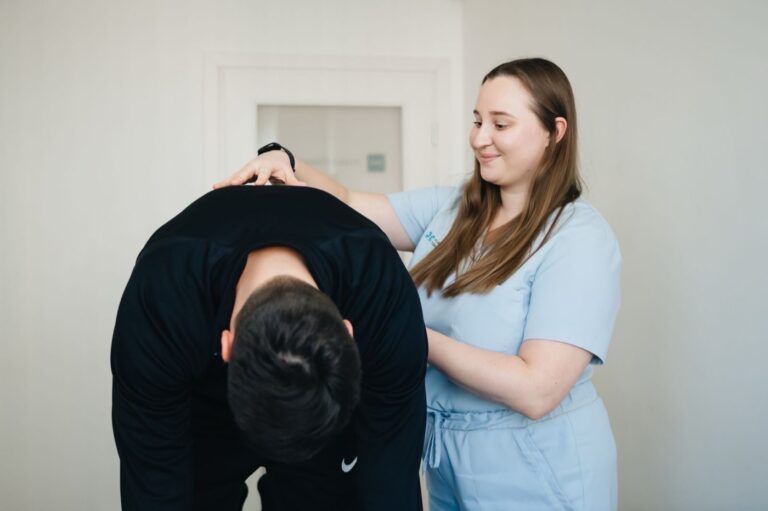
A running gait assessment is a session that films and measures how you run, then links what it finds to your strength, mobility, training and injury history. A running gait assessment turns the question “why do I keep getting hurt?” into specific findings and a plan you can act on.
Every runner has a gait, and most runners have never seen theirs. This article explains what is measured, the common findings and what they mean, what changes afterwards and the honest limits of gait analysis.
Key Takeaway: A running gait assessment looks at your stride on video alongside strength, mobility and training load. Common findings include overstriding, low cadence and hip drop, and the plan that follows usually combines small form changes, strength work and a sensible load plan. Changes are gradual, and strength often matters more than shoes.
What Does a Running Gait Assessment Measure?
A good gait assessment is really four checks in one visit. Video shows how you move, but strength, mobility and training history explain why you move that way.
The Gait Itself, Filmed
- Treadmill filming at your usual training pace, from behind, the side and the front
- Key measures: cadence (steps per minute), where your foot lands, hip drop, trunk lean and whether your feet cross the midline
- Slow-motion review, so you can see each phase of the stride and the specific patterns in your running
Strength That Supports the Stride
Running is a series of single-leg landings, so strength is tested one leg at a time. Common tests include single-leg calf raises, single-leg squats and hip strength checks. Left and right sides are compared, because differences between legs often line up with where pain shows up.
Mobility and Training Context
Mobility checks look at ankle bend, hip and calf flexibility and the big toe’s ability to bend at push-off. The training review covers your weekly distance, surfaces, shoes, injury history and race goals. A runner’s history often explains as much as the video does.
A running injury assessment brings all four parts together in one session, because the gait alone explains only part of any injury story.
What Are the Common Gait Findings?
Most runners show one or two patterns that stand out on video. None of these is automatically a problem. They matter most when they match where you feel pain or when your training load is rising.
| Finding | What it looks like on film | What it may load |
|---|---|---|
| Overstriding | Foot landing well ahead of the body | Knees and shins, through higher braking forces |
| Low cadence | Fewer, longer strides at a given pace | Higher landing forces at the knee and hip |
| Hip drop | Pelvis dipping on the side of the lifted leg | Outer hip, IT band and front of the knee |
| Crossover gait | Feet landing on or across the midline | Outer hip, IT band and ankle |
| Excessive bounce | Large up-and-down movement each stride | Calf and Achilles tendon |
| Heavy heel strike with straight knee | Heel lands far forward with the knee locked | Shins and front of the knee |
What Each Finding Means
A finding is a clue, not a diagnosis. Overstriding, for example, is common in runners with shin or knee pain, but plenty of runners overstride without problems. The assessment links each finding to your symptoms, strength results and training before deciding whether it needs to change.
Patterns Linked to Common Injuries
- Runner’s knee: often seen with hip drop and crossover patterns
- Achilles and calf pain: often seen with low cadence and a bouncy stride
- Shin splints: often seen with overstriding and rapid increases in distance
- IT band pain: often seen with hip drop and crossover running
- Plantar heel pain: often linked with foot strike, push-off and calf strength
Our article on runner’s knee causes, recovery and exercises explains one of these patterns in more depth.
What Does a Gait Assessment Not Do?
Gait analysis is useful, but it is often oversold. Knowing its limits helps you get the most out of it.
There Is No Single Perfect Gait
Runners come in many shapes, and there is no one correct way to run. The aim is to find patterns that may be adding load to a painful area, not to make everyone run the same way. A heel striker with healthy knees does not need to change to a forefoot strike.
Changes Take Time
Form changes are gradual. A new stride pattern takes weeks of practice before it feels natural, and trying to change too much at once can cause new aches. Most plans focus on one or two cues at a time.
Shoes Are a Small Lever
Shoes matter less than many runners think. Strength, load and cadence usually explain more than the shoe choice. The assessment can still review your current shoes for wear and fit, and our article on custom orthotics versus drugstore insoles covers when foot support helps.
What Changes After a Gait Assessment?
The plan is written to your findings rather than a template. Most plans combine a small form change, a strength program and a load plan.
Cadence and Form Cues
Raising cadence slightly is one of the simplest changes in running. A study on step rate found that a 5 to 10 percent increase in step rate reduced loading at the hip and knee. Many runners practise this with a metronome app on easy runs.
Form cues are kept to one or two. Examples include “land under your hips”, “run quietly” or “keep your knees apart”. Each cue is chosen because your testing shows it matters for you.
Strength, Mobility and Load
- Strength: the specific weaknesses found in testing, loaded gradually, often two or three times a week
- Mobility: work on any restrictions that limit your stride, such as ankle or hip stiffness
- Load plan: a weekly distance progression that respects your findings and goals
Our guide on how to increase running mileage without injury explains how to build distance safely.
Re-Testing
A follow-up visit often re-films your gait so you can see the changes rather than guess at them. It also checks your strength numbers against the baseline, so progress is measurable.
What Do You Take Home From the Assessment?
Findings are only useful if you can remember and use them. Most assessments end with a written summary that becomes your reference for the weeks ahead.
Your Findings Report
- Gait findings: cadence, foot strike, hip control and any specific patterns, with video stills or clips
- Strength and mobility results: your baseline numbers for each leg
- Links to your symptoms: which pattern may be loading which painful area
- The plan: your exercises, form cues, load progression and re-test date
Keeping this summary means your next assessment can compare against real numbers rather than memory.
Questions Worth Asking
Before you leave, make sure you know which one or two changes matter most, how often to do your exercises and what to do if pain flares. Ask how long each change is likely to take and what signs would mean you should check in sooner.
When Is the Best Time to Book a Gait Assessment?
You do not need to be injured to benefit. Timing the assessment around your training year often gives the most useful results.
Before a Training Block
Many runners book before their distance starts to build, such as early spring before outdoor running picks up, or a few months before a goal race. This leaves time to act on the findings before the heaviest training weeks.
When a Niggle Keeps Coming Back
If the same ache returns every season, the assessment can look for the pattern behind it. Runners whose injury was treated but whose training and stride stayed the same often see the problem return when distance rises again. Booking at the first sign of a repeat is better than waiting for it to stop you running.
How Does Cadence Training Work?
Cadence, the number of steps you take per minute, is one of the easiest gait variables to change. It is also one of the best studied.
Why Cadence Matters
Shorter, quicker steps usually mean your foot lands closer to your body. This tends to reduce braking forces and the load on the knees and shins. There is no single ideal number, and your best cadence depends on your height, speed and experience.
How to Practise It
- Find your current cadence on an easy run using a watch or app
- Set a metronome 5 percent higher and match it on part of an easy run
- Build up gradually over several weeks before trying it on faster runs
Most runners find the new rhythm feels natural after a few weeks of regular practice. If it feels forced or causes new pain, ease back and check in with your physiotherapist.
What Is Hip Drop and How Is It Treated?
Hip drop is when the pelvis dips on the side of the leg that is swinging through. It is one of the most common strength-related patterns seen on video.
What Causes It
Hip drop often reflects hip muscles that cannot fully control the pelvis during single-leg landing. It may be more marked on one side, and it tends to get worse as you tire late in a run.
How It Is Treated
- Side planks and side-lying hip exercises to build the outer hip muscles
- Single-leg work such as step-downs and single-leg squats
- Loaded progressions over 8 to 12 weeks to build capacity
- Re-filming to check whether the pelvis stays more level
A review of gait retraining found that retraining can change step rate, knee movement and loading rates without harming running performance. Combined with strength work, this is often the core of the plan.
Does Gait Assessment Help Trail and Youth Runners?
Different runners bring different questions. The assessment adapts to where and how you run.
Trail Runners
Trail running adds downhill braking, uneven ground and quick ankle reactions. A trail runner’s plan often includes more quad, calf and ankle strength work, and a gradual increase in downhill volume. Tell your physiotherapist where you usually run so the plan fits the terrain.
Runners who move indoors to a treadmill for winter should also mention it, as the change in surface and pace control can shift how the stride feels for a few weeks.
Youth Runners
Growing runners change quickly. Growth spurts can make movement look clumsy for a while, and that is usually normal. For young runners, strength and sensible training load often matter more than form changes. The assessment also screens for growth-related heel and knee pain.
How Does a Gait Assessment Help You Return From Injury?
Runners coming back from an injury have extra questions: how much the healing tissue can take, and what compensation patterns built up during the time off.
Testing Before Running Again
The return-from-injury assessment tests the injured area’s current capacity rather than assuming it is ready. It also looks for patterns that may have built up while you were limping or resting, such as favouring one leg.
A Staged Return
The plan usually starts with walk-run intervals and builds in stages based on how the tissue responds. Our article on return to sport testing criteria explains how readiness is checked.
When Should You See a Doctor or Go to Emergency?
Most running aches are overuse problems that respond to load changes and strength work. Some signs need medical care first.
Signs to See a Doctor
See a doctor if you have bone pain that is sharp and focused in one spot, pain that gets worse with each run or is present at rest, or pain that wakes you at night. These can be signs of a stress fracture that needs medical assessment and possibly imaging.
Signs to Go to Emergency
Go to emergency or call 911 if you have chest pain, fainting, severe shortness of breath or a racing heartbeat while running. Seek urgent care for a calf that is suddenly swollen, hot and painful, or if you cannot bear weight after a fall.
Book a Running Gait Assessment
If your running injuries have a pattern, a gait assessment can help explain it and set out a plan to change it. You can book online with Tonic Physio at a time that suits your training.