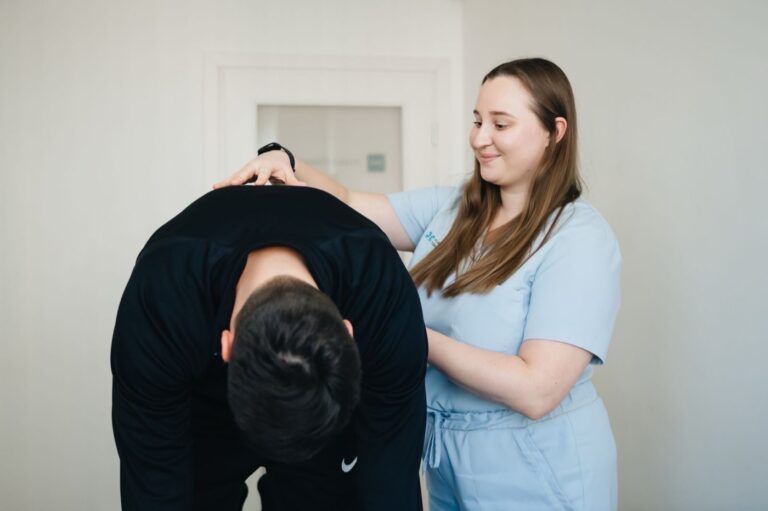
Shockwave therapy tennis elbow treatment uses short pulses of sound energy over the painful outer elbow, usually when rest and simple measures have not been enough. Research suggests it may reduce pain and improve grip, though the evidence is mixed. It tends to work best alongside a progressive strengthening plan.
Key Takeaway: Shockwave therapy for tennis elbow uses short pulses of sound energy and may help some people with long-lasting pain, but studies disagree. It is best treated as an add-on to a progressive strengthening plan, not as a stand-alone fix. Arm pain with numbness, weakness or fever needs a doctor.
What is tennis elbow?
Tennis elbow, also called lateral epicondylitis or lateral elbow tendinopathy, is pain on the outside of the elbow where the forearm tendons attach to the bone. Despite the name, most people who get it do not play tennis. The NHS lists typing, using a screwdriver, sewing and playing a musical instrument among the common triggers.
Symptoms to look for
The main symptom is pain on the outer elbow that may spread into the forearm. It is often worse when you grip, lift, bend your arm or move your wrist, and in some people it affects sleep.
Everyday tasks such as pouring a kettle, shaking hands or turning a door handle can become sore. Tenderness over the bony point on the outside of the elbow is common.
Symptoms often build slowly. You may first notice a twinge at the end of a long day of typing or gardening, then find that the same task hurts sooner each time. Noting which movements bring it on helps your clinician choose the right load changes.
Why it can linger
The NHS says tennis elbow usually gets better after a few weeks of rest but can sometimes last longer, even over a year. It is most common between the ages of 35 and 54.
Many clinicians now see long-standing cases as a tendon that has not adapted to its load, rather than a simple inflammation. Our post on tendinopathy versus tendonitis explains why rest alone often does not settle it.
What is shockwave therapy?
Extracorporeal shockwave therapy, or ESWT, delivers short acoustic pulses through the skin to a targeted area using a handheld applicator. It is used for several tendon and soft tissue problems. For a general overview, see our guide to what shockwave therapy is and where it is used.
How a session is delivered
A clinician applies gel to the skin over the sore area and moves the applicator over it, delivering pulses at an intensity you can tolerate. A treatment of the elbow usually lasts only a few minutes.
You may feel tapping or a sharp, brief discomfort that varies with the setting. We adjust the intensity with you as we go.
Wear a top with sleeves that roll up easily so the clinician can reach the elbow and forearm. You can ask us to stop or turn the intensity down at any point. You can usually carry on with light daily activity afterwards, unless your clinician advises otherwise.
How it may work
Researchers have proposed several ways shockwave could help, including changes in pain signalling, increased blood flow and stimulation of tissue repair. The exact mechanisms are not fully settled, so these should be seen as possible explanations rather than proof.
For you, the practical question is whether it helps people like you do more with less pain.
Does shockwave therapy work for tennis elbow?
The honest answer is that it may help some people, but studies disagree. Shockwave is better described as one possible tool than as a certain answer. Understanding the research helps you set realistic expectations.
What a pooled review found
A 2020 systematic review and meta-analysis pooled 13 randomized trials involving 1,035 patients. Pain scores and grip strength were better in the shockwave groups than in the comparison groups. The authors added that the quality and quantity of trials were limited and that more high-quality research is needed.
What a newer trial found
A 2026 double-blind randomized trial of 43 people with chronic tennis elbow compared a therapeutic dose of radial shockwave with a minimal dose, with both groups doing a structured progressive home exercise program. Both groups improved, and the study found no difference between them.
In that trial, average pain improved by 27% at six weeks and 52% at six months across the groups. That suggests the exercise program, time and other factors may account for a large share of the improvement.
What this means for you
Shockwave is reasonable to consider if you have had symptoms for some time and want an additional option. It should not replace a loading program, and it should not be presented as a sure fix.
If you are weighing it against other approaches, our overview of shockwave therapy versus other options for chronic tendon pain may help.
What happens during a shockwave course for tennis elbow?
A typical course starts with an assessment to make sure the elbow pain really is a tendon problem and that shockwave is suitable. Sessions are short, and the number you need depends on your response. Your clinician will review your progress regularly.
The first assessment
We take your history, test grip and wrist movements, press on the tender area and check your neck and shoulder, since arm pain can come from elsewhere. We also ask what you do for work and leisure.
If something suggests a different cause, we tell you and refer you on if needed.
Bring a note of the tasks that hurt most, any braces you have tried and any earlier treatments such as injections. A recent injection matters, because it can affect when shockwave is suitable. The more detail you share, the better the plan can fit you.
The sessions themselves
Shockwave programs often involve a short series of visits spaced out over several weeks, though protocols differ between devices and clinics. Each visit may also include hands-on care and an update to your exercises.
We adjust the plan as your symptoms change. Improvement is often gradual rather than immediate.
Aftercare
Some people feel mild soreness for a day or two. Our guide to what to expect after shockwave therapy covers soreness, activity and home care.
Avoid taking up heavy new activities straight after a session, and follow your clinician’s advice on pain relief.
How long does tennis elbow take to recover?
There is no single timeline, and it depends on how long you have had symptoms, how much your elbow is loaded and what you do about it. Plan in weeks to months, not days. Honest pacing prevents the frustration that leads people to push too hard.
Early and chronic cases
A recent flare that started after a heavy weekend of gardening may settle within a few weeks with load changes and gentle exercise. Symptoms that have lasted many months usually need a longer, more structured program.
The 2026 trial above enrolled people whose symptoms had lasted close to 32 months on average, and improvement continued through the six-month follow-up.
Questions to ask before starting shockwave
- What do you think is causing my elbow pain?
- How many visits do you expect, and how will we measure progress?
- What exercises will I do between visits?
- What are the risks for someone with my health history?
- What will we do if I am not improving after a few sessions?
A clear plan with a review point is a good sign of careful care.
A review point might come after three or four visits, when you and your clinician compare grip comfort, night pain and how well you manage the tasks that bother you. If little has changed, the plan can be adjusted or other options discussed.
Who should not have shockwave therapy, and what are the side effects?
Shockwave is generally well tolerated, but it is not right for everyone. A good clinician screens you first. Tell us about your full health history, including medicines.
Common reasons for caution
- Pregnancy
- Bleeding or clotting conditions, or taking blood thinners
- Infection, tumour or open wound near the treatment site
- A recent steroid injection in the same area
- Children or teenagers with growth plates near the area
- Implanted electronic devices, depending on the device and treatment area
This list is not complete. Your clinician decides what applies to you.
Possible side effects
The most commonly reported effects are temporary soreness, redness, mild swelling, bruising and occasional tingling. They usually settle within a few days.
Contact your clinician or doctor if pain is severe, numbness persists or skin changes worsen.
Why does exercise matter as much as the waves?
A tendon that has been overloaded needs to be rebuilt through gradually increasing load. Exercise is the part of treatment with the broadest support, and it is also the part you control. The 2026 trial above included a progressive home program for both groups.
Loading the forearm tendons
- Isometric wrist extension: with your forearm resting on a table, palm down, hold a light weight lifted level for 30 to 45 seconds, 3 to 5 repetitions
- Slow wrist extension: raise the wrist with help from your other hand, then lower it slowly over 3 to 4 seconds, 3 sets of 10 to 15
- Grip strengthening: squeeze a soft ball or putty for 5 seconds, 10 repetitions
- Progress the weight only when the current load feels manageable
These ranges are a general starting point, not a prescription. Mild discomfort is usually acceptable, but sharp or lingering pain means you should reduce the load.
Everyday habits that reduce strain
Hold tools and bags with a neutral or palm-up grip when you can. Move the mouse closer, vary your tasks and take short breaks from repetitive gripping.
If you work at a desk, check that your keyboard sits close enough that your elbows stay near your sides. Avoid resting the forearm on a hard edge for long periods. Small changes to your set-up can lower the repeated load on the tendon.
Our guide to relief and treatment options for tennis elbow covers more everyday strategies.
What other treatments are there for tennis elbow?
Shockwave is only one option. Most people try simpler measures first and move to others if they have not improved. Your doctor and physiotherapist can help you weigh these.
| Option | What it involves | Worth knowing |
|---|---|---|
| Load changes and strengthening | Gradual exercise for the forearm tendons | Broadest support, and the core of most plans |
| Strap or brace | A forearm strap or elbow brace | May ease gripping tasks while the tendon recovers |
| Shockwave therapy | Short pulses of sound energy to the sore area | Evidence is mixed, so consider it as an add-on |
| Medical options | Pain relief, injections or, rarely, surgery | Discuss benefits and risks with your doctor |
Bracing, taping and self-care
The NHS suggests reducing aggravating activities, using a hot or cold pack for up to 20 minutes, and trying a forearm strap or elbow brace from a pharmacy. It also suggests simple exercises such as bending and straightening your arm.
Some people find a counterforce strap helps with gripping tasks while the tendon recovers.
Medical and surgical options
A doctor can discuss pain relief and other options, including injections. The NHS says surgery may be an option if tennis elbow persists after 6 to 12 months.
Each option has benefits and risks. Ask your doctor what to expect for your situation.
When should you see a doctor or go to emergency?
Most tennis elbow is not dangerous, but some arm pain has other causes. Do not try to treat these signs with exercise or shockwave.
Signs that need urgent care
Go to an emergency department or call 911 if your elbow is deformed or you cannot move it after a fall, or if it is hot, red and swollen with a fever. Chest pain, shortness of breath or pain spreading into the jaw or left arm also needs emergency care.
Signs to see a doctor soon
Book an assessment if pain has not improved after about 2 weeks of rest and self-care, which is the NHS advice. See a doctor sooner if you have numbness, tingling or weakness in the arm or hand, pain that wakes you at night, or neck pain with arm symptoms.
You can call Health811 on 8-1-1 for free advice from a registered nurse if you are unsure.
How can physiotherapy in Milton help with tennis elbow?
A physiotherapist can confirm the diagnosis, design a loading program and decide whether shockwave suits you. That plan covers your work, sport and daily tasks. It also sets out how to measure progress.
Shockwave and rehab at Tonic Physio
At Tonic Physio, shockwave therapy in Milton is combined with an assessment and an exercise plan. We see patients from Milton and nearby areas across Halton Region.
Extended health benefits or WSIB may apply depending on how your elbow pain started. The College of Physiotherapists of Ontario regulates physiotherapists in the province, and you can book without a physician referral.
Booking
If tennis elbow is affecting your grip, work or sleep, you can book an assessment online to see whether shockwave and a loading plan fit your goals.