If tendon pain has lasted for months, you have probably tried rest, ice, painkillers and perhaps a cortisone injection. This guide compares the main options your physiotherapist may discuss for long-standing tendon pain: loading exercise, extracorporeal shockwave therapy (ESWT), cortisone injections and a period of wait-and-see. No single option suits everyone, and the right mix depends on your assessment.
If you would like to understand how shockwave works first, read what shockwave therapy is and how it works. This guide focuses on how it compares with other options.
Why Long-Standing Tendon Pain Is Different
Tendon pain that lasts for months often behaves differently from a fresh injury. The tendon can become thickened and less able to handle load. Rest may ease symptoms for a while, but rest alone often does not rebuild the tendon’s ability to cope with everyday and sporting loads.
That is why plans for long-standing tendon pain usually centre on gradual, progressive loading. Other treatments, including shockwave, are added around that base when needed. For more on this, read why rest alone often fails for tendon pain.
Shockwave, Loading Exercise, Cortisone and Wait-and-See Compared
The options below give a plain comparison. Evidence for shockwave is mixed and differs by condition (CADTH 2016 rapid review).
Loading exercise
What it involves: A graded strengthening programme, done at home and in clinic over several weeks to months
What to know: Usually the base of treatment for long-standing tendon pain; progress is gradual
Shockwave (ESWT)
What it involves: Short sessions of sound-wave pulses sent through the skin into the sore area, after a physiotherapy assessment
What to know: May help some long-standing tendon problems when used with exercise; benefit is uncertain and differs by condition
Cortisone injection
What it involves: An injection given by a doctor
What to know: May give short-term pain relief for some conditions; discuss the benefits and risks with your doctor
Wait-and-see
What it involves: Staying active within comfort, adjusting aggravating activities and reviewing over time
What to know: Some tendon pain settles with time; see your physiotherapist if it does not
If you are weighing these options, our page on how shockwave fits into a physiotherapy plan explains the assessment, sessions and fees.
Conditions Where Shockwave May Be Discussed
Shockwave is not a cure-all. Your physiotherapist may discuss it for some long-standing tendon and soft tissue conditions that have not settled with exercise and other usual care:
- Plantar fasciitis: long-standing heel pain. Our plantar fasciitis guide explains the wider recovery plan.
- Tennis elbow: persistent outer elbow pain (lateral elbow tendinopathy), usually alongside strengthening exercises.
- Calcific shoulder tendinopathy: calcium deposits in a rotator cuff tendon. Our shoulder shockwave guide and rotator cuff treatment guide cover the shoulder in more detail.
- Achilles tendinopathy: Achilles pain that persists despite a loading programme.
- Outer hip tendon pain: greater trochanteric pain syndrome.
Shockwave vs. Cortisone: Understanding the Difference
Cortisone injections may ease pain for a while and can be useful for some conditions, such as some types of bursitis. They do not train the tendon to handle load, so exercise still matters. Shockwave is also used as part of an exercise plan, not on its own.
If you have had a recent cortisone injection to the area, tell your physiotherapist first. Your physiotherapist decides timing and suitability under clinic policy. The best approach depends on your diagnosis, and we assess you before recommending any treatment.
What a Shockwave Visit Involves
A physiotherapy assessment comes first. At Tonic, the Shockwave Initial Assessment is 30 minutes ($120). Follow-up visits are 15 minutes ($90), or $125 for 45 mins shockwave therapy. Prices are also listed on our fees page.
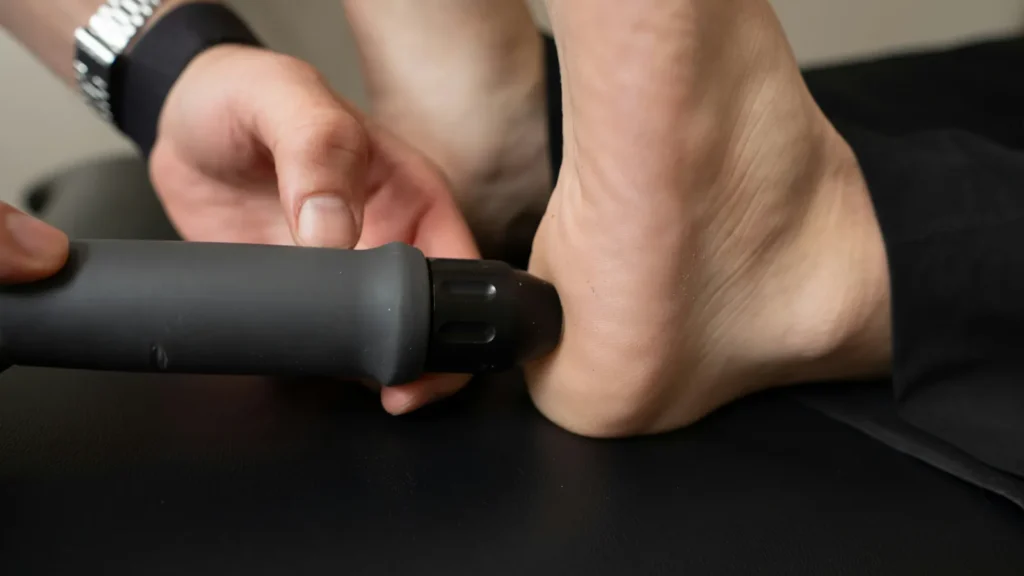
A gel is applied to the skin, and a handheld device sends quick pulses into the sore area. Most people feel strong tapping and pressure, and the intensity is adjusted to your feedback. Your physiotherapist will recommend the number of sessions after your assessment.
Side Effects and Safety Considerations
Temporary soreness, redness or bruising can happen after a session and usually settles within a few days. Avoid strenuous or high-impact activity for about 48 hours unless your physiotherapist advises otherwise.
Shockwave is not used over a pregnancy in the treatment field, a tumour or malignancy at the site, or a pacemaker or similar device in the field. Tell us first about bleeding or clotting disorders, blood thinners, thrombosis, infection or wounds at the site, or a recent cortisone injection to the area. Your physiotherapist decides timing and suitability under clinic policy.
Frequently Asked Questions
Is shockwave therapy painful?
It can be uncomfortable, especially over the sorest spot. The intensity is adjusted to what you can tolerate, and soreness afterwards is usually mild and short-lived.
How many sessions will I need?
Your physiotherapist will recommend the number of sessions after your assessment.
How soon will I notice a difference?
Some people feel a little easier soon after a session, but change can take weeks. Results are not guaranteed.
Is shockwave covered by insurance?
At Tonic, shockwave is billed as physiotherapy. Coverage depends on your insurer and plan, so check before you book.
Can I exercise after a session?
Light activity is often fine. Avoid strenuous or high-impact activity for about 48 hours unless your physiotherapist advises otherwise.
Conclusion
Long-standing tendon pain usually needs a plan built around gradual loading. Shockwave may help some long-standing tendon problems when used with exercise, and it is one option your physiotherapist may discuss alongside the others in this guide.
If you would like to talk through your options, book a consultation at Tonic Physio in Milton. We will assess your condition, review your history and explain the options that may suit you.
Treatment Options at Tonic Physiotherapy in Milton
At Tonic Physiotherapy in Milton, your physiotherapist will assess you, explain what may be causing your tendon pain and suggest a plan that fits your goals. Options may include:
- Manual therapy: Hands-on techniques may improve joint mobility and ease tissue tension
- Therapeutic exercise: Targeted strengthening and stretching to rebuild load tolerance
- Shockwave therapy: May help some long-standing tendon problems, after assessment
- Acupuncture: Fine needles may help ease pain for some people
- Education and self-management: You learn exercises and strategies to manage your symptoms independently
What to Expect During Your Recovery
Recovery from long-standing tendon pain follows a structured progression. Your physiotherapist will guide you through each phase, adjusting your plan based on your progress and symptoms. How quickly you improve depends on your condition and how long you have had symptoms, and your physiotherapist will give you a realistic timeline after your assessment.
Your plan includes both in-clinic sessions and a home exercise program. The exercises you do at home are just as important as the treatment you receive at our Milton clinic, because they help maintain your progress between visits. Your physiotherapist will demonstrate each exercise and check your technique before you begin your home program.
Preventing Future Issues
- Maintain regular exercise: Consistent strengthening and stretching may help prevent recurrence
- Listen to your body: Address minor discomfort before it becomes a major issue
- Ergonomic awareness: Set up your workspace to minimize strain on your body
- Stay active: Regular physical activity maintains joint mobility and muscle strength
- Follow your exercise program: Continue the exercises your physiotherapist prescribed even after you feel better
Book Your Appointment at Tonic Physiotherapy in Milton
If tendon pain has not settled, an assessment can help you plan the next step. Our physiotherapists will assess your condition, explain your diagnosis in plain language and suggest a plan that fits your goals.
Call (905) 878-7775 to book your appointment or visit our contact page to schedule online through JaneApp. Our clinic is at 100 Nipissing Rd #5, Milton. Direct billing may be available depending on your insurer and plan, and for workplace injuries, WSIB claims are handled directly by our administrative team.