Shockwave Therapy
Focused sound waves that may stimulate healing and ease pain in stubborn heel cases that have not settled with exercise alone.
That stabbing heel pain with your first steps out of bed is the classic sign of plantar fasciitis. At Tonic Physio in Milton we calm the sore tissue, address why it overloaded, and help you get back to walking and standing without dreading the morning.
Plantar fasciitis is irritation of the plantar fascia, a thick band of tissue that runs along the bottom of your foot from the heel to the toes. It acts like a bowstring, supporting the arch and absorbing shock with every step.
When the fascia is overloaded, tiny tears and irritation build up where it attaches to the heel bone. The result is a sharp or burning pain at the heel, usually worst with the first steps after rest and easing as you warm up.
Plantar fasciitis is one of the most common causes of heel pain. It can be stubborn, but most people improve with the right mix of loading exercise, hands-on care and support for the foot.
Plantar fasciitis builds up when the load on the fascia is greater than it can handle. Common contributors include:
It is most common between ages 40 and 60 but affects runners and active people of all ages. Weak foot and calf muscles also play a part. Your physiotherapist will find the factors behind your heel pain, because fixing only the symptoms often means it returns. If your pain is more general across the foot, see our ankle and foot pain page.
Book an assessment if heel pain lasts more than a couple of weeks, keeps returning, or limits your walking or work. You do not need a doctor’s referral to see a physiotherapist in Ontario.
See a doctor promptly if you have:
These signs can point to a stress fracture, nerve problem, infection or circulation issue that needs medical care. If we notice any during your assessment, we will refer you on.
Your first visit starts with a close look at your foot, ankle, calf and the way you walk and stand. We test where it hurts, how much your ankle and big toe move, and how strong your foot and calf muscles are. Your physiotherapist then builds a plan that may combine loading exercise, hands-on care and the treatments below.
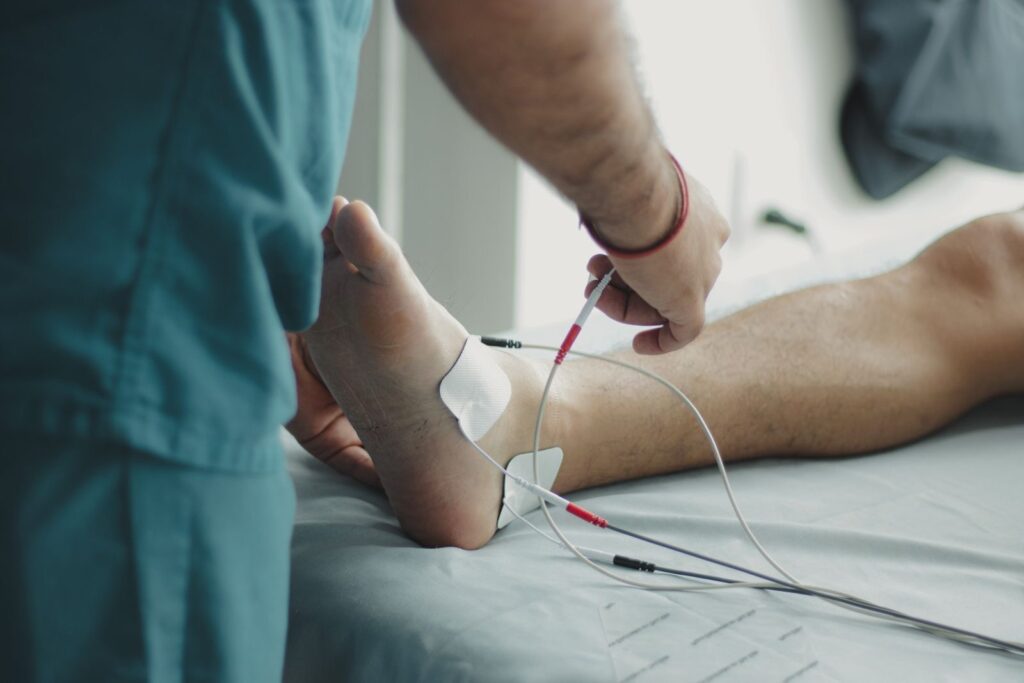
Focused sound waves that may stimulate healing and ease pain in stubborn heel cases that have not settled with exercise alone.
Custom supports made by our pedorthist that can spread pressure across the arch and take strain off the fascia.
Thin needles in tight calf and foot muscles that may reduce tension pulling on the heel and settle trigger-point pain.
Supportive tape across the arch that can give short-term relief and help you stay active while the fascia heals.
Plantar fasciitis often takes longer than people expect. Many cases improve in 6 to 12 weeks with steady treatment, and some stubborn ones take 6 months or more. Starting care early usually shortens the road.
Morning pain tends to ease first, followed by pain after long periods of standing. You may notice a clear change within the first 3 to 4 weeks, even if the heel is not yet fully comfortable.
Most people see us once or twice a week at first. Home exercises matter a great deal. Calf and foot strengthening, plantar fascia stretching and simple load management help the tissue rebuild. We will also check your shoes and show you how to build back toward walking, running or long shifts at work around Milton.






⭐⭐⭐⭐⭐ Outstanding Physiotherapy Experience – Highly Recommended! I am extremely happy with my experience at Tonic Physiotherapy and Rehabilitation. Sumi is absolutely amazing! She is professional, knowledgeable, informative, patient and genuinely caring. She takes the time to explain everything clearly and makes sure you feel comfortable and confident throughout your recovery.
I highly recommend Brenda and the entire team at Tonic! Brenda is incredibly knowledgeable, dedicated, and always goes above and beyond for her clients. She has been my go-to person through so many stages from training injuries and pre-race preparation to post-race recovery and, most recently, my recovery after surgery.
Ekta was kind and professional Physiotherapist. She is very knowledgeable about the body and made me feel safe. I highly recommend her for anyone looking for relief from body pain!!!
Amazing staff, clean environment very knowledgeable. 👍
I cannot say enough wonderful things about Tonic Physiotherapy in Milton! I have been working with this incredible team for the past two years following an MVA (motor vehicle accident), and I am genuinely grateful for the care, dedication, and expertise they have shown me throughout this journey. Randy, the osteotherapist, has been such a tremendous help to me.
My wife and I have been coming here for years, and we’ve always had a great experience. Brenda and her team are great at what they do—professional, friendly, and consistently delivering excellent service. Their commitment to their patients is unmatched.
I've had very effective sessions with Jacqueline for knee and hip inflammation with great progress. I've also had a thorough and detailed orthotics assessment with Randy. Great staff all around!
I decided to stop seeing my previous physiotherapist a few years ago because I wasn’t experiencing the improvement I had hoped for. I was recently referred to Tonic, and I’m so glad I went. After only a few treatments with Jacqueline, I noticed a significant improvement in how I felt. Jacqueline is knowledgeable and thorough.
Brenda and her team provide excellent treatment! Thank you for your extraordinary services and for being a positive, fun and healing environment.
Excellent and worth the oesteopathy service from Randy. Highly recommended.
I've never been so happy to pay someone to put me through pain. My mobility is slowly returning after years of neglect. Great staff, great facility and great therapists.
I had physio by Naiya and Sumithra for my Knee, Shoulder/Elbows, Wrist and my Thumb that were injuried side walk plowing Milton Sidewalks. I Had great results. I am impressed by the friendly staff and the fact they spend time on actually on hands physio. They are the best in opinion.
Google rating 4.8 of 5, based on 151 reviews
Many people feel clearly better within 6 to 12 weeks of treatment, though some cases need several months. Early care, calf and foot strengthening and good footwear all help shorten the time.
During sleep the fascia tightens and shortens. The first steps stretch it suddenly, which causes sharp pain. It often eases once the tissue warms up, then flares again after long rest.
Complete rest usually does not help. Cutting back on the activity that provokes it while keeping gentle movement and the right exercises works better. We will show you how much is safe.
Not everyone does. Orthotics can help when foot shape adds to the strain, and we only suggest them when your assessment supports it. Many people improve with exercise and better shoes alone.
Shockwave is often considered for heel pain that has lasted several months without settling. Your physiotherapist will tell you whether it suits your case, and how it fits with your exercises.
No. You can book directly with a physiotherapist at Tonic Physio. If your insurer asks for a doctor’s note first, we can tell you what it needs.
Most extended health plans include physiotherapy, and we bill most insurers directly. Our Fees page lists current rates and the plans we work with.

Book your assessment online, or call and our front desk will help you choose the right therapist.